Successful Aging: A Neuroscientist Explores the Power and Potential of Our Lives

Panoramica di Successful Aging
Neuroscientist Levitin's groundbreaking guide debunks aging myths, revealing it's not decline but a unique developmental stage. What if your brain's best years lie ahead? Discover the COACH principle transforming health spans worldwide - why gratitude and social connections might be your cognitive fountain of youth.
- Daniel Levitin redefines aging through health span prioritization over mere lifespan extension
- The COACH principle links curiosity and conscientiousness to neural resilience in later life
- Social engagement activates brain networks more effectively than solitary mental exercises
- Pattern recognition abilities surpass youth by mid-70s through accumulated experience
- Gratitude practice physically rewires aging brains toward positive emotional processing
- Volunteer work provides equivalent cognitive benefits to paid professional occupations
- Sleep quality directly impacts Alzheimer’s misdiagnosis rates in older populations
- Amygdala shrinkage after age 55 reduces fear responses while increasing trust
- Circadian rhythm maintenance proves more critical than sleep duration alone
- Successful aging requires continual novelty seeking to stimulate hippocampal growth
- Conscientiousness emerges as the strongest predictor of late-life health outcomes
- Levitin’s research shows personality reinvention remains possible through ninth decade
Sull'autore di Successful Aging
Daniel Joseph Levitin, neuroscientist and New York Times bestselling author of Successful Aging: A Neuroscientist Explores the Power and Potential of Our Lives, combines cognitive psychology and music cognition expertise to redefine modern understanding of aging. A James McGill Professor Emeritus at McGill University and founding dean at Minerva Schools, Levitin grounds his work in 300+ peer-reviewed studies published in Science and Nature.
His book bridges neuroscience and practical advice, reflecting decades researching memory, decision-making, and creativity.
Levitin’s authority extends through four bestselling books, including This Is Your Brain on Music (1.5 million copies sold) and The Organized Mind, which won the National Business Book Award.
A frequent NPR commentator and TED speaker, his insights shape discourse at Microsoft, Google, and governmental institutions. Successful Aging builds on his signature approach of translating complex research into accessible strategies, cementing his role as a leading voice in science communication. The book has been adopted by healthcare programs worldwide and translated into 27 languages.
FAQ su Successful Aging
What is Successful Aging by Daniel J. Levitin about?
Successful Aging challenges outdated views of aging as a period of decline, presenting it instead as a dynamic life stage with unique opportunities. Levitin, a neuroscientist, combines brain science, psychology, and real-world examples to explain how lifestyle choices, social connections, and mindset shifts can extend both lifespan and "healthspan"—years of active, fulfilling life.
Who should read Successful Aging?
This book is ideal for adults over 50 seeking science-backed strategies to thrive in later life, caregivers supporting aging relatives, and professionals in gerontology or healthcare. It also appeals to younger readers interested in proactive longevity planning, blending accessible neuroscience with actionable advice.
Is Successful Aging worth reading?
Yes—Levitin’s evidence-based approach demystifies aging with relatable insights, from optimizing brain health to redefining retirement. The book balances rigorous research (e.g., telomere studies) with practical tips, making it a valuable resource for anyone aiming to age with purpose and vitality.
What does Daniel Levitin say about retirement in Successful Aging?
Levitin argues against traditional retirement, stating that continued work or volunteering maintains cognitive sharpness and social engagement. He highlights "unretirement" trends, where seniors rejoin the workforce to preserve mental acuity and life satisfaction.
How does personality affect aging, according to Successful Aging?
Conscientiousness and optimism are linked to longevity. Conscientious individuals prioritize health checkups and financial stability, while optimism reduces stress. Levitin notes even "fake" positivity can rewire the brain over time, though unrealistic optimism carries risks.
What role do social connections play in successful aging?
Strong social ties reduce dementia risk and mortality. Levitin cites Britain’s "Minister of Loneliness" initiative, emphasizing that meaningful conversations and volunteering activate neural networks, delaying cognitive decline.
How does Successful Aging address gratitude’s impact on health?
Practicing gratitude shifts focus to positive experiences, boosting mental health. Levitin ties this to "positive psychology" research, showing grateful individuals report fewer depressive symptoms and better physical health.
What does Levitin say about genetics versus lifestyle in aging?
While genetics influence aging, lifestyle choices—like diet, exercise, and stress management—play a larger role. He details how telomere maintenance and epigenetic changes can be optimized through habits.
How does Successful Aging define "healthspan" versus lifespan?
Healthspan refers to years spent free from chronic disease, not just total lifespan. Levitin advocates prioritizing activities that enhance physical mobility, mental clarity, and emotional resilience to maximize this period.
Are there critiques of Successful Aging?
Some readers may find the dense neuroscience sections challenging without a science background. Critics also note Levitin’s focus on individual agency downplays systemic issues like healthcare access.
What are memorable quotes from Successful Aging?
Key lines include:
- "The best time to retire is... never"
- "Aging is not decay, but a developmental stage with its own advantages"
These underscore Levitin’s vision of aging as a period of growth.
Why is Successful Aging relevant in 2025?
With global life expectancy rising, Levitin’s framework helps navigate aging populations’ challenges. Updates on psychedelics for brain health and AI-driven longevity research keep the book timely.
Senti il libro attraverso la voce dell'autore
Trasforma la conoscenza in spunti coinvolgenti e ricchi di esempi
Cattura le idee chiave in un lampo per un apprendimento veloce
Goditi il libro in modo divertente e coinvolgente
Personaggi di Successful Aging
- Daniel J. LevitinAuthor and neuroscientist
- Levitin's fatherProfessor who found renewed purpose in teaching
- Levitin's grandfatherRadiologist whose health declined after retirement
- Julia "Hurricane" HawkinsRecord-breaking centenarian athlete
- George MartinBeatles producer discussed regarding memory
Temi chiave in Successful Aging
- cognitive longevity
- neuroplasticity in aging
- personality trait development
- pattern recognition wisdom
- memory system adaptation
Citazioni da Successful Aging
Aging doesn't have to be a story of decline.
Memory forms the foundation of our identity.
Our memories aren't like videotaped recordings.
Practicing compassion reduces stress.
All memory systems are easily disrupted.
Esplora il Tuo Modo di Imparare
 Modalità Riassunto Rapido
Leggi o ascolta il riassunto di Successful Aging in 9 minuti
Scomponi le idee chiave di Successful Aging in punti facili da capire per comprendere come i team innovativi creano, collaborano e crescono.

 Modalità Divertente
Lezioni da Successful Aging Raccontate in Storie di 24 Min
Vivi Successful Aging attraverso narrazioni vivide che trasformano le lezioni di innovazione in momenti che ricorderai e applicherai.
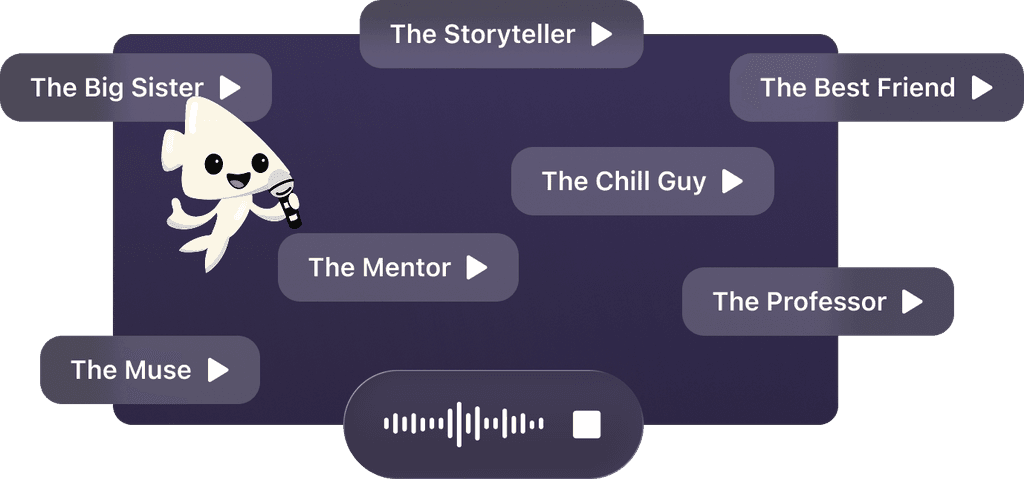
 Modalità Personalizza
Vivi Successful Aging nel tuo stile di apprendimento
Chiedi qualsiasi cosa, scegli il tuo stile di apprendimento e co-crea intuizioni che risuonano davvero con te.
Creato da alumni della Columbia University a San Francisco
"Instead of endless scrolling, I just hit play on BeFreed. It saves me so much time."


"I never knew where to start with nonfiction—BeFreed’s book lists turned into podcasts gave me a clear path."


"Perfect balance between learning and entertainment. Finished ‘Thinking, Fast and Slow’ on my commute this week."
"Crazy how much I learned while walking the dog. BeFreed = small habits → big gains."
"Reading used to feel like a chore. Now it’s just part of my lifestyle."

"Feels effortless compared to reading. I’ve finished 6 books this month already."
"BeFreed turned my guilty doomscrolling into something that feels productive and inspiring."

"BeFreed turned my commute into learning time. 20-min podcasts are perfect for finishing books I never had time for."
"BeFreed replaced my podcast queue. Imagine Spotify for books — that’s it. 🙌"

"It is great for me to learn something from the book without reading it."
"The themed book list podcasts help me connect ideas across authors—like a guided audio journey."
"Makes me feel smarter every time before going to work"
Creato da alumni della Columbia University a San Francisco
"Instead of endless scrolling, I just hit play on BeFreed. It saves me so much time."
"I never knew where to start with nonfiction—BeFreed’s book lists turned into podcasts gave me a clear path."
"Perfect balance between learning and entertainment. Finished ‘Thinking, Fast and Slow’ on my commute this week."
"Crazy how much I learned while walking the dog. BeFreed = small habits → big gains."
"Reading used to feel like a chore. Now it’s just part of my lifestyle."
"Feels effortless compared to reading. I’ve finished 6 books this month already."
"BeFreed turned my guilty doomscrolling into something that feels productive and inspiring."
"BeFreed turned my commute into learning time. 20-min podcasts are perfect for finishing books I never had time for."
"BeFreed replaced my podcast queue. Imagine Spotify for books — that’s it. 🙌"
"It is great for me to learn something from the book without reading it."
"The themed book list podcasts help me connect ideas across authors—like a guided audio journey."
"Makes me feel smarter every time before going to work"
"Instead of endless scrolling, I just hit play on BeFreed. It saves me so much time."
"I never knew where to start with nonfiction—BeFreed’s book lists turned into podcasts gave me a clear path."
"Perfect balance between learning and entertainment. Finished ‘Thinking, Fast and Slow’ on my commute this week."
"Crazy how much I learned while walking the dog. BeFreed = small habits → big gains."
"Reading used to feel like a chore. Now it’s just part of my lifestyle."
"Feels effortless compared to reading. I’ve finished 6 books this month already."
"BeFreed turned my guilty doomscrolling into something that feels productive and inspiring."
"BeFreed turned my commute into learning time. 20-min podcasts are perfect for finishing books I never had time for."
"BeFreed replaced my podcast queue. Imagine Spotify for books — that’s it. 🙌"
"It is great for me to learn something from the book without reading it."
"The themed book list podcasts help me connect ideas across authors—like a guided audio journey."
"Makes me feel smarter every time before going to work"
"Instead of endless scrolling, I just hit play on BeFreed. It saves me so much time."
"I never knew where to start with nonfiction—BeFreed’s book lists turned into podcasts gave me a clear path."
"Perfect balance between learning and entertainment. Finished ‘Thinking, Fast and Slow’ on my commute this week."
"Crazy how much I learned while walking the dog. BeFreed = small habits → big gains."
"Reading used to feel like a chore. Now it’s just part of my lifestyle."
"Feels effortless compared to reading. I’ve finished 6 books this month already."
"BeFreed turned my guilty doomscrolling into something that feels productive and inspiring."
"BeFreed turned my commute into learning time. 20-min podcasts are perfect for finishing books I never had time for."
"BeFreed replaced my podcast queue. Imagine Spotify for books — that’s it. 🙌"
"It is great for me to learn something from the book without reading it."
"The themed book list podcasts help me connect ideas across authors—like a guided audio journey."
"Makes me feel smarter every time before going to work"

Scarica il riassunto di Successful Aging
Ottieni il riassunto di Successful Aging in formato PDF o EPUB gratuito. Stampalo o leggilo offline quando vuoi.