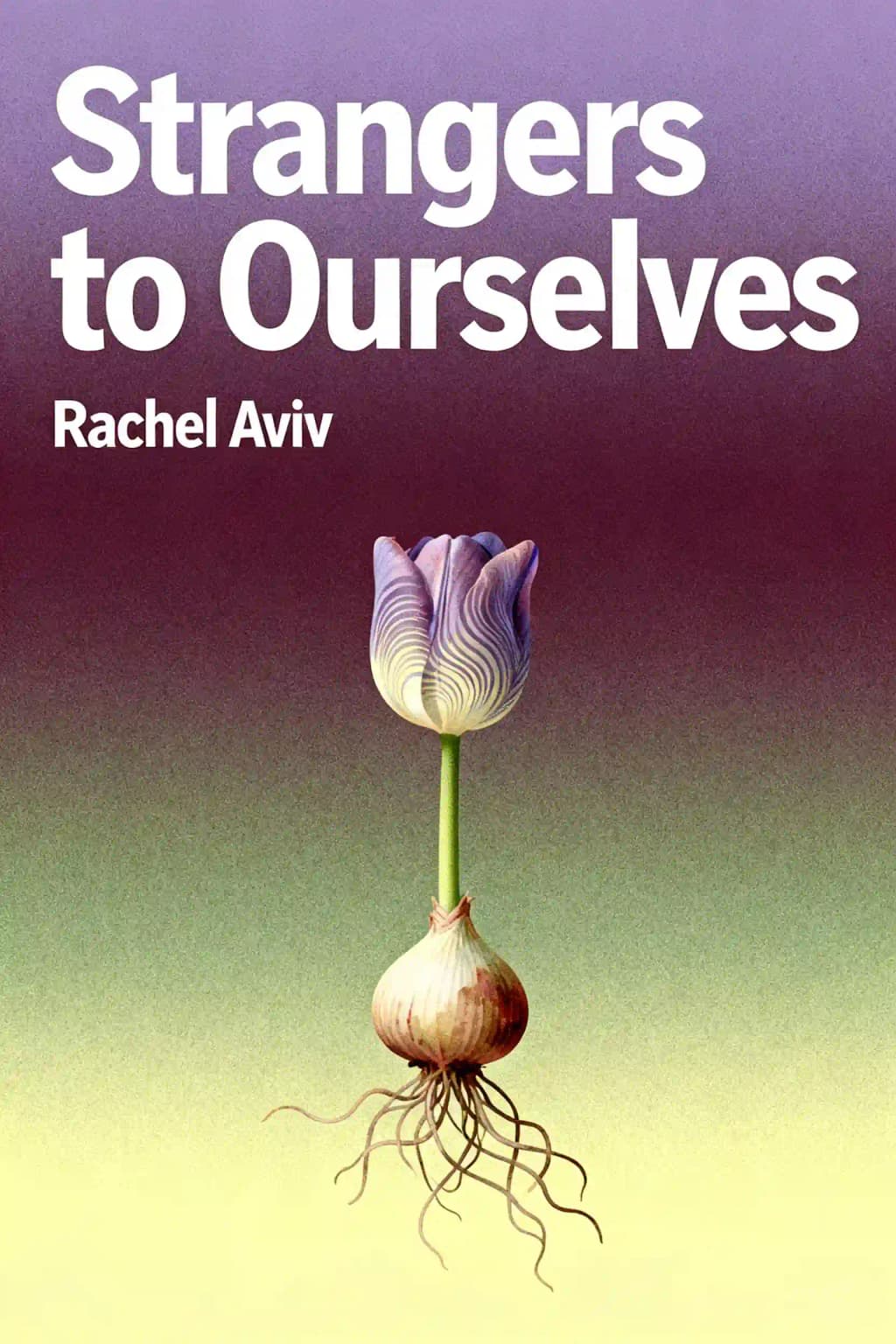
Rachel Aviv's acclaimed masterpiece explores mental illness through six intimate stories, challenging how we diagnose minds. Named among NYT's 10 Best Books of 2022, it's transforming psychiatric practice by asking: What happens when our diagnoses become our identity?
Rachel Aviv, author of Strangers to Ourselves: Unsettled Minds and the Stories That Make Us, is a celebrated staff writer at The New Yorker and a leading voice in narrative nonfiction exploring mental health, psychology, and identity. A Brown University graduate, Aviv blends rigorous investigative journalism with deeply human storytelling, informed by her early lived experience with anorexia nervosa, which she recounts in the book’s opening chapter. Her work has earned a Whiting Award, a National Magazine Award for Profile Writing, and a spot on The New York Times’ “10 Best Books of 2022” list.
Aviv’s expertise in mental health and institutional systems stems from her acclaimed reporting on psychiatry, guardianship abuse, and criminal justice for The New Yorker, where she has been a finalist for the National Magazine Award for Public Interest.
Strangers to Ourselves, her first book, melds case studies and memoir to challenge conventional narratives about mental illness, offering a nuanced examination of how diagnosis shapes self-perception. Translated into multiple languages, the book was also a finalist for the National Book Critics Circle Award for Criticism, cementing Aviv’s reputation as a successor to literary journalists like Janet Malcolm.
Strangers to Ourselves examines mental illness through intimate case studies, challenging how psychiatric diagnoses and cultural narratives shape identity. Aviv explores individuals grappling with self-understanding amid societal labels, from a woman rejecting bipolar disorder to a grieving mother redefining spirituality. The book critiques psychiatry’s historical ties to colonialism and racism while questioning the universality of diagnostic frameworks.
This book is ideal for readers interested in psychology, mental health advocacy, or narrative nonfiction. Mental health professionals, students of medical ethics, and fans of nuanced storytelling will appreciate Aviv’s compassionate analysis of how institutions and personal stories intersect. It was named a New York Times “10 Best Book of 2022,” appealing to fans of Oliver Sacks or Susan Sontag.
Yes—critics praise its “breathtakingly beautiful” prose and “radical empathy.” A National Book Critics Circle Award finalist, the book offers fresh perspectives on mental health by blending personal narratives with historical context. Aviv’s investigation into the limitations of psychiatric labels makes it a standout in contemporary nonfiction.
Key themes include:
Aviv argues that mental health frameworks often erase individual complexity, particularly for marginalized groups.
“One of the pleasures of this book is its resistance to a clear and comforting verdict” (The Atlantic) encapsulates Aviv’s embrace of ambiguity. Another pivotal line: “Diagnoses can become self-fulfilling prophecies,” reflecting her critique of how labels restrict personal growth.
Aviv exposes psychiatry’s colonial roots, such as outdated diagnoses like “drapetomania” (a fabricated slave escape disorder). She questions the globalization of Western diagnostic standards, illustrating how they marginalize non-Western expressions of distress, as seen in a Hindu woman’s spiritual crisis mislabeled as psychosis.
Notable profiles include:
Aviv draws from her experience as the youngest recorded anorexia patient at age six, detailed in the book’s opening chapter. Her career as a New Yorker investigative writer informs the rigorous reporting and ethical dilemmas explored, particularly in institutional care.
Some reviewers note the book prioritizes ambiguity over solutions, leaving readers wanting clearer takeaways. However, this approach aligns with Aviv’s argument that mental health resists simplistic narratives, encouraging deeper reflection on systemic flaws.
Aviv links schizophrenia’s misdiagnosis in Black Americans to racialized medical practices, citing studies showing disproportionate institutionalization. She contrasts this with Bapu’s story, where spiritual traditions clash with Western psychiatric frameworks, highlighting cultural bias in treatment.
The book challenges the rise of mental health awareness campaigns that oversimplify complex conditions. By questioning diagnostic expansion and pharmaceutical overreliance, Aviv’s work resonates in debates about neurodiversity, trauma-informed care, and identity politics.
Unlike memoirs or self-help guides, Aviv combines journalism with philosophical inquiry, closer to works like The Emperor of All Maladies. It diverges from typical “recovery narratives” by focusing on unresolved struggles, offering no easy answers.
Senti il libro attraverso la voce dell'autore
Trasforma la conoscenza in spunti coinvolgenti e ricchi di esempi
Cattura le idee chiave in un lampo per un apprendimento veloce
Goditi il libro in modo divertente e coinvolgente
Psychiatric labels "give you a title to live up to...and an identity!!!!"
People get caught in self-fulfilling illness narratives.
Pharmacology has no place in psychiatry.
The diagnosis becomes not just a description but a prescription.
Scomponi le idee chiave di Strangers to Themselves in punti facili da capire per comprendere come i team innovativi creano, collaborano e crescono.
Distilla Strangers to Themselves in rapidi promemoria che evidenziano i principi chiave di franchezza, lavoro di squadra e resilienza creativa.

Vivi Strangers to Themselves attraverso narrazioni vivide che trasformano le lezioni di innovazione in momenti che ricorderai e applicherai.
Chiedi qualsiasi cosa, scegli la voce e co-crea spunti che risuonino davvero con te.

Creato da alumni della Columbia University a San Francisco
"Instead of endless scrolling, I just hit play on BeFreed. It saves me so much time."
"I never knew where to start with nonfiction—BeFreed’s book lists turned into podcasts gave me a clear path."
"Perfect balance between learning and entertainment. Finished ‘Thinking, Fast and Slow’ on my commute this week."
"Crazy how much I learned while walking the dog. BeFreed = small habits → big gains."
"Reading used to feel like a chore. Now it’s just part of my lifestyle."
"Feels effortless compared to reading. I’ve finished 6 books this month already."
"BeFreed turned my guilty doomscrolling into something that feels productive and inspiring."
"BeFreed turned my commute into learning time. 20-min podcasts are perfect for finishing books I never had time for."
"BeFreed replaced my podcast queue. Imagine Spotify for books — that’s it. 🙌"
"It is great for me to learn something from the book without reading it."
"The themed book list podcasts help me connect ideas across authors—like a guided audio journey."
"Makes me feel smarter every time before going to work"
Creato da alumni della Columbia University a San Francisco

Ottieni il riassunto di Strangers to Themselves in formato PDF o EPUB gratuito. Stampalo o leggilo offline quando vuoi.
A child refuses food for three days after Yom Kippur. She finds strange pride in saying no, a small act of control in a chaotic world. Within days, she's hospitalized and diagnosed with anorexia nervosa-a term she's never heard before. At six years old, she becomes perhaps the youngest person ever given this label. This moment marks the beginning of a lifelong inquiry: What happens when a diagnosis becomes the story of who we are? Rachel Aviv's journey through psychiatric wards as a child opened her eyes to how quickly illness identities take hold. She met twelve-year-olds who taught her sophisticated avoidance techniques-never sit down, do jumping jacks at night, stay constantly in motion. She learned to read standing up and developed elaborate food superstitions, refusing even to say "eight" because it sounded too much like "ate." One girl, Hava, embraced her diagnosis with unsettling enthusiasm, writing that psychiatric labels "give you a title to live up to...and an identity!!!!" Those exclamation marks betrayed both excitement and desperation in finding a framework for understanding oneself.