Capitolo 1
The Millionaire Mindset: Unlocking Your Financial Destiny
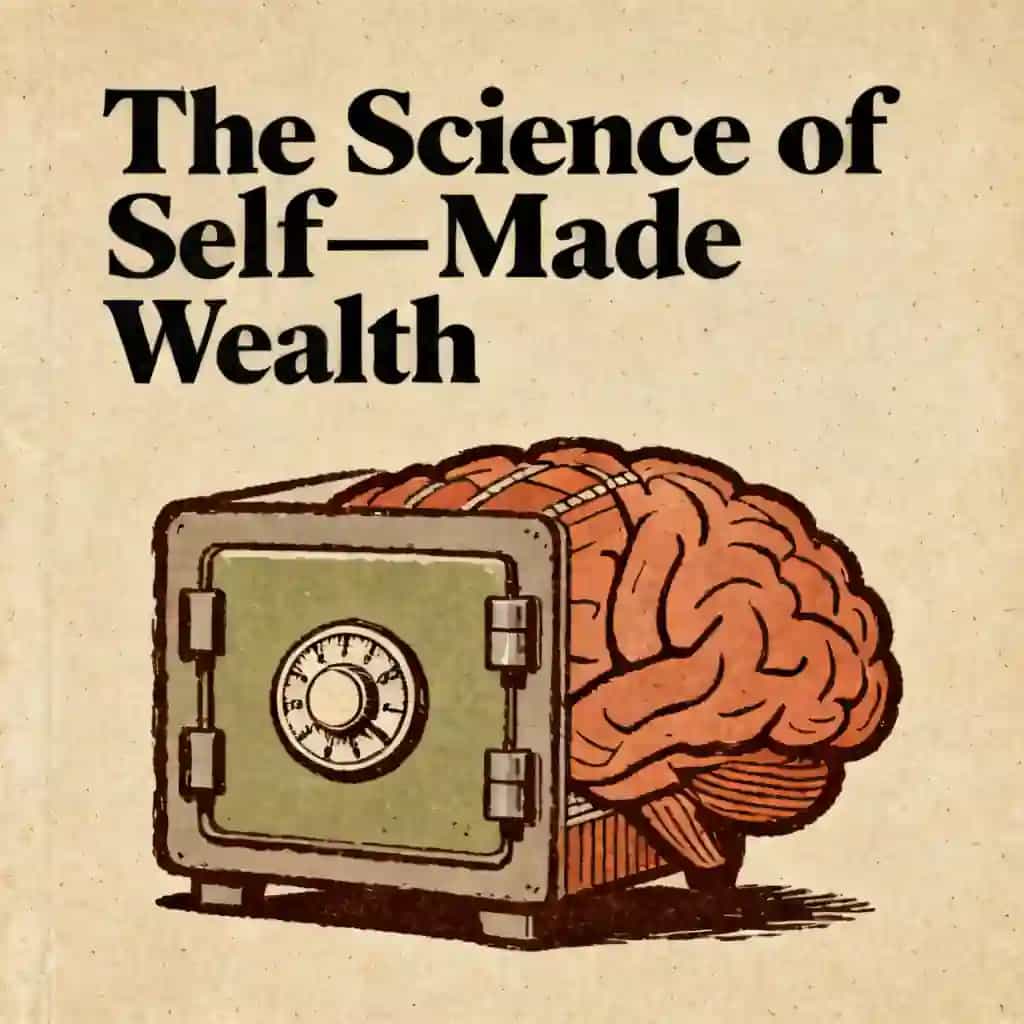
Have you ever wondered why some people seem to effortlessly attract wealth while others struggle financially despite working just as hard? The answer isn't luck, education, or even talent-it's something far more fundamental. In "Secrets of the Millionaire Mind," T. Harv Eker reveals that your financial destiny is predetermined by your mental "money blueprint"-an internal programming established in childhood that dictates your relationship with money. This international bestseller has transformed millions of lives since its publication, with celebrities like Robert Kiyosaki and Jack Canfield praising its revolutionary approach. Even Oprah Winfrey featured Eker's principles on her show, calling them "a wake-up call for anyone ready to transform their financial life." What makes this book particularly powerful is how it bridges psychology and practical finance, offering both the "why" behind financial struggles and the "how" to overcome them. Are you ready to discover what's really been holding you back from the wealth you desire?
Capitolo 2
Your Money Blueprint: The Hidden Force Controlling Your Wealth
We live in a world of duality where every external result reflects an internal reality. When it comes to financial success, most people focus entirely on external strategies-investments, business models, or market timing. But these are merely tools, and like a carpenter who needs both tools and skill to build a house, you need both financial knowledge and the right internal programming to build wealth.
Your "money blueprint" functions like a financial thermostat, preset to a specific level of wealth you'll allow yourself to have. This explains why lottery winners often lose everything within a few years-their internal blueprint wasn't calibrated for wealth. Conversely, self-made millionaires can lose everything and rebuild their fortunes quickly because their internal programming is set for abundance.
Think about it: Have you ever noticed how your income tends to hover around the same level year after year? Or how you might make progress only to sabotage yourself just as things improve? That's your money blueprint at work.
This blueprint is formed through three primary influences: verbal programming (what you heard about money growing up), modeling (what you observed about money), and specific incidents (emotional experiences connected to money). For instance, if you constantly heard "money doesn't grow on trees" or "rich people are greedy," these messages became embedded in your subconscious, creating limiting beliefs about wealth.
The good news is that unlike a tree whose roots determine what fruit it bears, you can change your internal programming. By identifying and revising these subconscious patterns, you can reset your financial thermostat to a higher level. This isn't about positive thinking-it's about recognizing that the invisible world of thoughts and beliefs creates the visible world of results.
Remember: To change the fruits, you must change the roots. To change the visible, you must change the invisible first.
Capitolo 3
Declarations: The Language That Reprograms Your Mind
Unlike passive affirmations, declarations are powerful statements spoken with conviction that literally change your energetic frequency. When you declare something with intensity-standing tall, speaking loudly, and using emotional force-you create vibrations that impact both your body and the universe around you.
Consider how different "I'm going to be wealthy" feels when whispered versus when shouted with passion and certainty. The energetic difference is palpable. This isn't mystical thinking-it's about aligning your entire being with your intentions.
The key to effective declarations is involvement. When you physically engage by touching your heart while declaring, you create a mind-body connection that bypasses intellectual resistance. Your subconscious doesn't distinguish between what's "real" and what's vividly imagined with emotion, so declarations spoken with feeling become instructions for your deeper mind.
For example, try placing your hand on your heart and declaring with conviction: "I have a millionaire mind!" Notice how this feels different from simply thinking the words. This physical-emotional connection helps embed new programming directly into your subconscious.
Make declarations part of your daily ritual. Speak them in the morning, before challenging situations, and whenever you catch yourself falling into old patterns of thinking. With repetition, these new thought patterns will begin to override your old programming, gradually shifting your money blueprint toward greater abundance.
Remember that words have power-not just the words others spoke to you that formed your original blueprint, but the words you choose to speak now that can transform it. Your declarations today are creating your financial reality tomorrow.
Capitolo 4
The First Wealth File: Taking Responsibility Creates Wealth
Rich people firmly believe "I create my life" while poor people believe "Life happens to me." This fundamental difference in perspective forms the foundation of financial destiny. When you take full responsibility for your circumstances, you claim the power to change them. When you blame external factors, you surrender that power.
Consider two individuals facing a business setback. The first says, "I made some poor decisions that led to this outcome. Now I need to learn from them and adjust my approach." The second says, "The economy turned against me, my employees let me down, and the competition played dirty." Who do you think will recover and eventually prosper?
The victim mentality manifests through three key behaviors: blaming, justifying, and complaining. Victims blame the economy, their boss, their spouse-anyone but themselves-for their financial situation. They justify their lack with statements like "Money isn't really important" or "I don't want the stress of wealth." And they constantly complain, focusing on what's wrong rather than what they can do about it.
Each of these behaviors reinforces powerlessness. When you blame others, you give away your power to change. When you justify mediocrity, you cement it as your reality. When you complain, you become a "crap magnet," attracting more of what you don't want.
Breaking free from the victim trap requires a conscious choice to take 100% responsibility for your financial life. This doesn't mean blaming yourself for past mistakes-it means acknowledging your role in creating your current circumstances and, more importantly, recognizing your power to create something different going forward.
Try this: For the next seven days, commit to a "complaint-free" challenge. Catch yourself before blaming, justifying, or complaining, and instead ask, "How did I help create this situation, and what can I do differently?" This simple shift from victim to creator mindset is your first step toward financial transformation.
Capitolo 5
Playing to Win: The Difference Between Survival and Success
Rich people play the money game to win big. Poor people play not to lose. This distinction reveals volumes about why financial outcomes differ so dramatically between these groups. When your primary financial goal is merely having "enough to pay the bills," that's exactly what you'll achieve-and often, just barely.
Consider how you approach your finances. Do you get excited about building wealth, growing investments, and creating financial abundance? Or do you focus primarily on making ends meet, avoiding debt, and maintaining financial security? The former mindset attracts wealth; the latter ensures you'll always hover just above the survival line.
The universe responds to intention. If your intention is simply "not being broke," you're focusing on the very state you're trying to avoid. It's like telling someone, "Don't think of a pink elephant"-immediately, that's exactly what they picture. Similarly, when you focus on "not being poor," your mind remains fixated on poverty.
Rich people set their financial targets astronomically high. Even if they don't hit those exact targets, they'll still achieve far more than someone whose goal was merely comfort. They understand that the purpose of having money isn't just survival or security-it's freedom, options, opportunity, and the ability to make a bigger impact in the world.
This doesn't mean abandoning practical financial management. Rather, it means infusing that management with bigger dreams and bolder goals. Instead of asking "How can I pay my bills this month?" ask "How can I increase my income tenfold in the next three years?" The questions you ask determine the answers you receive.
Start playing to win by setting financial goals that excite and even scare you a little. When you aim for massive success rather than mere survival, your actions, energy, and results will transform accordingly.
Capitolo 6
Commitment: The Bridge Between Wanting and Having
There's a world of difference between wanting to be rich and being committed to becoming rich. Poor people say they want financial abundance, but their actions reveal a lack of true commitment. Rich people, on the other hand, are unwavering in their dedication to creating wealth.
Think about relationships for a moment. Many people say they want a successful relationship, but only those who are fully committed work through the challenges when things get difficult. The same principle applies to wealth. When obstacles arise-as they inevitably will-only commitment will carry you through.
True commitment means eliminating all possibilities except success. It means burning the bridges of retreat so that moving forward is your only option. It means being willing to do whatever it takes (within ethical boundaries) to achieve your financial goals.
Most people send mixed messages to the universe. They say they want wealth, but harbor thoughts like "Rich people are greedy" or "Money is the root of all evil." They claim to want financial freedom, but aren't willing to make the necessary sacrifices or take calculated risks. These contradictory signals create contradictory results.
The universe doesn't respond to what you say you want-it responds to your deepest commitments as demonstrated by your actions. If you're truly committed to wealth, you'll educate yourself about money management. You'll associate with financially successful people. You'll work on your mindset as diligently as you work on your skills. You'll make financial growth a priority, not an afterthought.
Ask yourself honestly: Am I merely interested in becoming wealthy, or am I committed? Interest means pursuing wealth when it's convenient. Commitment means staying the course regardless of convenience, mood, or circumstance. Only commitment leads to transformation.
Capitolo 7
Think Big: The Law of Income and Value Creation
Rich people think big. Poor people think small. This difference in perspective directly impacts financial outcomes through what can be called the Law of Income: You will be paid in direct proportion to the value you deliver according to the marketplace.
Value creation comes in two forms: quality and quantity. While quality is essential, the quantity of people you serve often makes the greater financial difference. Consider a heart surgeon who helps one patient at a time versus an entrepreneur whose product improves millions of lives. Both provide value, but the scale differs dramatically.
Small thinking comes from fear-fear of failure, fear of success, fear of disappointment, fear of responsibility. But playing small doesn't serve you or the world. As Marianne Williamson famously wrote, "Your playing small does not serve the world. There is nothing enlightened about shrinking..."
Think about this: Every major invention, business, or movement began with someone thinking beyond conventional boundaries. Imagine if Steve Jobs had thought, "I'll just create a slightly better computer for a few people in my neighborhood." Instead, he envisioned changing the entire world through technology-and he did.
Expanding your thinking means asking bigger questions: Instead of "How can I make a thousand dollars?" ask "How can I make ten million?" Instead of "How can I serve ten clients?" ask "How can I serve ten thousand?" These questions stimulate creativity and open pathways to solutions you wouldn't otherwise consider.
Remember that thinking big isn't about ego or greed-it's about maximizing your potential to create value. The more lives you touch positively, the more abundance flows back to you. This is the natural order of the universe.
Challenge yourself to expand your vision today. Whatever goal you've set, multiply it by ten. Whatever impact you hope to make, envision it reaching exponentially more people. Then ask yourself what would need to change in your thinking and actions to make that expanded vision possible.
Capitolo 8
Opportunities vs. Obstacles: Where Your Focus Determines Your Reality
Rich people see opportunities everywhere. Poor people see obstacles everywhere. This fundamental difference in perception shapes not only financial outcomes but overall life experience. It's not that rich people don't encounter challenges-everyone does. The difference lies in what they choose to focus on when those challenges arise.
Consider two entrepreneurs facing the same market downturn. The first sees only problems: decreased consumer spending, tighter credit, nervous investors. The second sees opportunities: undervalued assets, less competition, motivated talent seeking employment, and consumers looking for better value. Same circumstance, dramatically different focus.
This opportunity mindset isn't about naive optimism-it's about practical problem-solving. Rich people ask empowering questions like "How can I make this work?" or "What's good about this situation?" Poor people ask disempowering questions like "Why does this always happen to me?" or "What's the use in trying?"
The opportunity-focused individual embraces a "ready, fire, aim" approach to life. Rather than waiting for perfect conditions (which never come), they take action, learn from results, and adjust accordingly. They understand that success is an iterative process, not a single perfect shot.
In contrast, obstacle-focused people often suffer from "analysis paralysis." They prepare endlessly without acting, convinced that more information will somehow eliminate all risk. But success rarely works that way. Most successful entrepreneurs will tell you that their achievements came through taking imperfect action and course-correcting along the way.
To develop an opportunity mindset, start by becoming aware of your focus. When facing challenges, consciously redirect your attention from problems to possibilities. Ask better questions: Instead of "Why is this happening?" ask "How can I use this situation to my advantage?" Train yourself to see the seed of opportunity in every obstacle, and you'll discover that what you focus on truly does expand in your life.
Capitolo 9
The Power of Association: Your Network Determines Your Net Worth
Rich people deliberately associate with positive, successful individuals. Poor people often find themselves surrounded by negative or unsuccessful people. This distinction isn't about snobbery-it's about understanding the profound influence of your social environment on your mindset, habits, and ultimately, your financial outcomes.
The people you spend time with shape your beliefs about what's possible. If you're constantly around individuals who complain about the economy, distrust wealthy people, or view financial success as a matter of luck rather than strategy, you'll likely absorb these limiting perspectives. Conversely, when you associate with successful, positive people, their mindset becomes contagious.
Consider how this works in practice: When you spend time with financially successful individuals, you naturally learn their strategies, adopt their vocabulary, and begin to see the world through their lens. You're exposed to opportunities you wouldn't otherwise encounter. You're challenged to raise your standards and think bigger.
This doesn't mean abandoning friends or family who aren't wealthy. Rather, it means being intentional about expanding your circle to include more people who can pull you up financially. Join professional organizations, attend seminars, volunteer for boards, or participate in mastermind groups where successful people gather.
Equally important is limiting exposure to chronic negativity. Energy is contagious, and negative people can drain your motivation and cloud your vision. As the saying goes, "If you're the smartest person in the room, you're in the wrong room." Seek environments where you can be the student, not always the teacher.
Make a list of the five people you spend the most time with and honestly assess their attitudes toward money and success. Are they lifting you up or holding you back? Then identify three successful individuals you could spend more time with, and create a plan to deepen those relationships. Your future net worth depends largely on your network.
Capitolo 10
Self-Promotion: Marketing Your Value Without Apology
Rich people willingly promote themselves and their value. Poor people think negatively about selling and promotion. This distinction reflects fundamentally different attitudes toward value exchange that directly impact financial success.
Many people feel uncomfortable "selling themselves" because they associate promotion with manipulation or pushiness. They've been conditioned to believe that quality work should "speak for itself" or that drawing attention to their accomplishments is somehow arrogant. But in a crowded marketplace, even exceptional value goes unnoticed without effective promotion.
Rich people understand that promotion is simply education and communication about the value they offer. They recognize that if they truly have something beneficial to share-whether a product, service, or idea-then promoting it isn't self-serving but rather a service to those who would benefit.
Consider this: Every great leader throughout history has been an excellent self-promoter. Martin Luther King Jr. promoted his vision of equality. Mother Teresa promoted her mission of compassion. Steve Jobs promoted his revolutionary products. Without effective promotion, their impact would have been drastically diminished.
The key is authenticity. Rich people don't promote exaggerated or false claims-they genuinely believe in their value proposition and communicate it with passion and integrity. They understand that promotion isn't about tricking people into buying something they don't need; it's about connecting people with solutions to their problems.
If you struggle with self-promotion, start by getting crystal clear on the value you provide. How do you improve people's lives? What problems do you solve? What benefits do you deliver? Then practice articulating this value confidently and enthusiastically. Remember that if you don't believe in your value enough to promote it, you can't expect others to recognize it either.
Ultimately, effective promotion is about service, not self-aggrandizement. When you truly believe in what you offer, promoting it becomes not just comfortable but necessary-because you recognize that those who need what you have are missing out if they don't know about it.
Capitolo 11
Becoming Bigger Than Your Problems: The Path to Freedom
Rich people are bigger than their problems. Poor people are smaller than their problems. This crucial distinction determines whether challenges become stepping stones or stumbling blocks on your financial journey.
Everyone faces problems-rich and poor alike. The difference lies not in the presence of problems but in your relationship to them. When you're bigger than your problems, you see them as temporary obstacles that strengthen you. When problems are bigger than you, they become overwhelming barriers that define and limit you.
The size of the person you become determines the size of the wealth you can create and maintain. Financial growth requires personal growth. If you want to make millions, you must develop the mindset, skills, and character of someone who can handle millions.
Consider this perspective shift: Problems are opportunities for growth. Each challenge you overcome expands your capacity, preparing you for greater success. The universe doesn't give you problems you can't handle-it gives you problems that prompt you to become more than you currently are.
Rich people embrace this growth mindset. Rather than asking, "Why is this happening to me?" they ask, "What can I learn from this?" Instead of wishing for fewer problems, they focus on developing greater capacity. They understand that the goal isn't a problem-free life but rather becoming so capable that problems no longer feel overwhelming.
This approach creates a powerful cycle: As you grow personally, you can handle bigger challenges, which leads to bigger opportunities and rewards, which then present new challenges that prompt further growth. This is the upward spiral of success.
Start viewing your current financial challenges as perfect training grounds. Ask yourself: "How is this problem helping me develop the character, skills, or wisdom I'll need for greater success?" Then focus on growing yourself rather than eliminating the problem. When you become bigger than your problems, wealth naturally follows.
Capitolo 12
The Art of Receiving: Opening to Abundance
Rich people are excellent receivers. Poor people are poor receivers. This subtle distinction profoundly impacts financial outcomes because the universe operates on a principle of flow-money, like energy, must circulate freely to grow.
Many people have been conditioned to believe that giving is virtuous but receiving is somehow selfish. They've internalized messages like "It's better to give than to receive" without realizing that this creates an imbalanced equation. True abundance requires both giving AND receiving in equal measure.
Poor receivers often suffer from worthiness issues. They subconsciously believe they don't deserve prosperity, so they block it through various behaviors: they feel uncomfortable when given gifts, they downplay compliments, they undercharge for their services, or they sabotage success just as it's arriving.
Rich people, by contrast, understand that receiving graciously is as important as giving generously. They recognize their inherent worthiness and allow abundance to flow to them without resistance. They don't apologize for their success or feel guilty about their prosperity.
The natural world demonstrates this principle perfectly. Consider a lake: it continuously receives water from streams and rain while giving water through its outflow. If it only gave without receiving, it would soon dry up. If it only received without giving, it would stagnate and overflow. Balance is key.
To become a better receiver, start by examining your beliefs about worthiness. Do you secretly feel you don't deserve abundance? Challenge these limiting beliefs by declaring your worthiness daily. Practice receiving compliments with a simple "thank you" instead of deflecting them. When opportunities for prosperity appear, resist the urge to self-sabotage.
Remember that your capacity to receive directly impacts your ability to give. The more you allow yourself to receive, the more resources you'll have to share with others. By becoming an excellent receiver, you don't diminish others-you inspire them to open to abundance as well.
Capitolo 13
Managing Your Money: The Habit That Creates Wealth
Rich people manage their money well. Poor people mismanage their money well. This distinction may seem subtle, but it represents a fundamental difference in approach that determines financial destiny.
Many people believe they'll start managing their money once they have more of it. This backward thinking ensures they'll never have more to manage. The truth is that proper money management is a prerequisite for wealth, not a result of it. You must prove you can handle what you have before the universe will trust you with more.
Financial management isn't complicated, but it requires discipline and consistency. Rich people follow a simple formula: After paying taxes, they allocate specific percentages of their income to long-term savings for wealth building, education, play (guilt-free enjoyment), and necessities. They track every dollar and make conscious choices about their spending.
Poor people, by contrast, often have no system at all. They pay bills first (often late), spend impulsively on wants, and hope something remains for savings (it rarely does). They have little awareness of where their money goes and feel perpetually stressed about finances.
The story of Emma illustrates this principle perfectly. Despite facing bankruptcy, she committed to managing even the tiniest amounts of money. Starting with just one dollar in her Financial Freedom Account, she consistently saved a percentage of everything she earned. This discipline eventually led to substantial savings that became the foundation for her wealth.
To develop this habit, start where you are-even if you're in debt. Open separate accounts for different purposes: necessities, education, play, and financial freedom. Then allocate percentages of all income to each account and honor those allocations religiously. Track your spending to increase awareness and eliminate unconscious money drains.
Remember: It's not about the amount you start with but the habit you develop. Managing $1 well creates the foundation for managing $1,000 well, which builds the skills for managing $1,000,000 well. Master this habit, and wealth will follow naturally.
Capitolo 14
Continuous Growth: The Ultimate Wealth Strategy
Rich people constantly learn and grow. Poor people think they already know. This fundamental difference in attitude toward knowledge acquisition directly impacts financial outcomes and overall life satisfaction.
The world is changing at an unprecedented rate. What worked yesterday may not work tomorrow. Those who cling to outdated information or refuse to adapt find themselves increasingly irrelevant in the marketplace. Meanwhile, those who embrace lifelong learning position themselves to capitalize on emerging opportunities.
Consider how many once-thriving industries have been disrupted by technological and social changes. The individuals who prospered through these transitions weren't necessarily the most knowledgeable at the start-they were the most willing to learn, adapt, and grow as circumstances evolved.
Rich people approach life with curiosity rather than certainty. They read extensively, attend seminars, hire coaches, and surround themselves with mentors. They understand that investment in self-education yields the highest returns possible. While poor people balk at spending $500 on a course that could transform their financial life, rich people willingly invest thousands in their personal development.
This commitment to growth extends beyond financial knowledge. Rich people develop themselves holistically-emotionally, physically, spiritually, and intellectually. They recognize that wealth is an outward manifestation of inner development and that limitations in any area of life can restrict financial growth.
The "know-it-all" mindset is particularly dangerous because it creates a closed system resistant to new information. When you believe you already have all the answers, you stop asking questions. When you stop questioning, you stop growing. When you stop growing, your wealth potential becomes fixed.
Challenge yourself to adopt a "learn-it-all" rather than "know-it-all" attitude. Allocate a percentage of your income specifically for education. Read books outside your comfort zone. Attend seminars in areas where you feel least knowledgeable. Hire mentors who have achieved what you aspire to accomplish. Remember that in a rapidly changing world, the most valuable skill isn't knowing-it's learning.