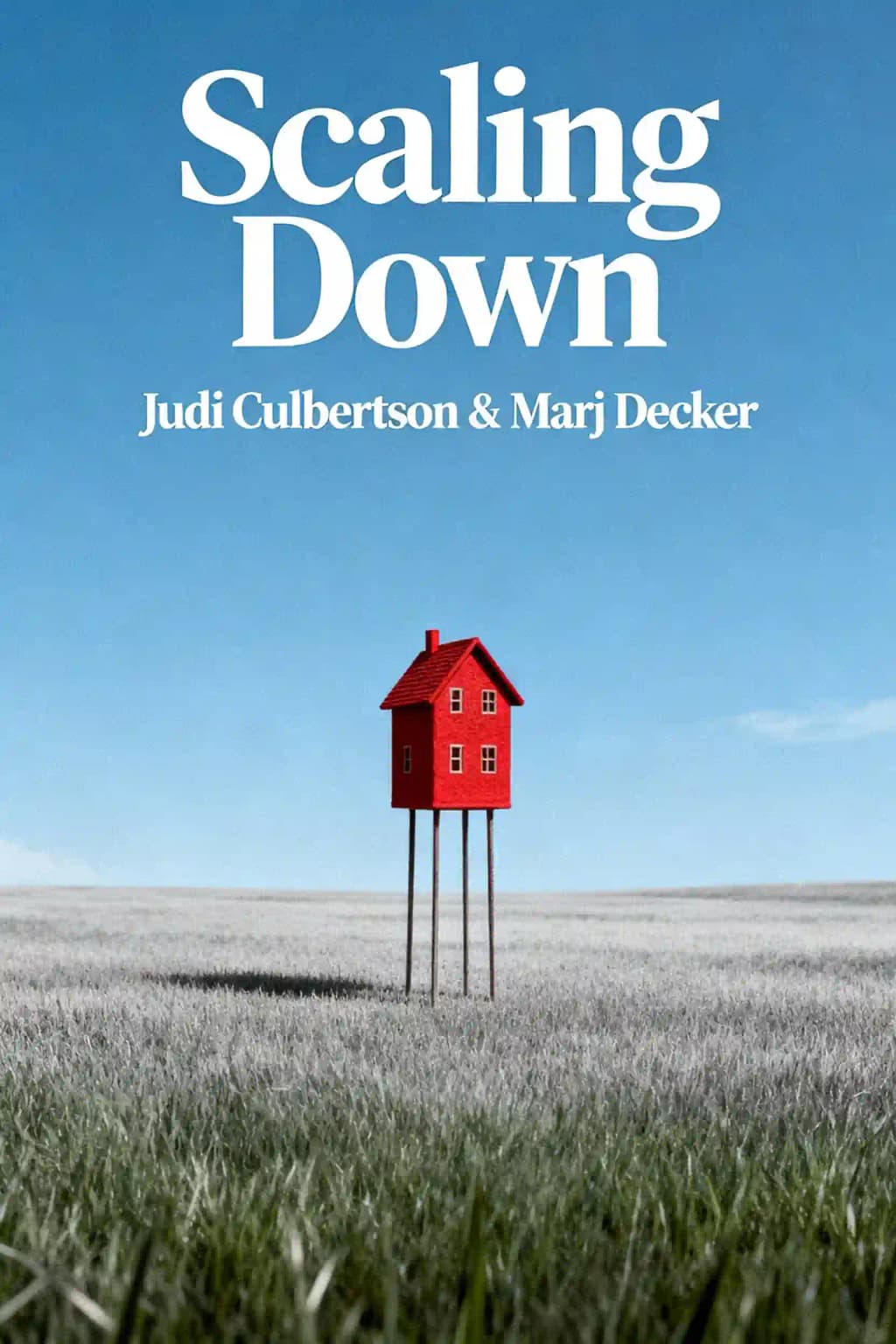
Scaling Down
Living Large in a Smaller Space
Panoramica di Scaling Down
Discover how to thrive in smaller spaces with "Scaling Down" - the 4.7-star guide transforming how we view possessions. Beyond decluttering, it tackles the emotional journey of letting go, proving that downsizing isn't about having less, but living more intentionally and stress-free.
Temi chiave in Scaling Down
- decluttering psychology
- sentimental attachment
- minimalist living
- possession management
- emotional hoarding
Citazioni da Scaling Down
Most people spend their first forty years enthusiastically accumulating and the next forty trying to shed the excess.
Our culture perpetuates the myth that more is better.
Scaling down doesn't mean abandoning your style-it actually heightens focus on what you truly love.
Action comes before motivation.
The key is recognizing that your identity isn't in your stuff-and that opening physical space invites new experiences.
Personaggi di Scaling Down
- Judi CulbertsonAuthor and professional organizer
- Marj DeckerAuthor and professional organizer
Sull'autore
Sull'autore di Scaling Down
Judi Culbertson and Marj Decker, co-authors of Scaling Down: Living Large in a Smaller Space, are acclaimed experts in decluttering, downsizing, and home organization.
Culbertson, an M.F.A. graduate in Creative Writing from Vermont College, combines her background in social work and professional speaking on attachment to material possessions with practical insights. Her earlier works, including The Nursery and The Clutter Cure, established her authority in blending personal storytelling with actionable advice.
Decker brings complementary expertise in lifestyle optimization, helping readers navigate the emotional and logistical challenges of simplifying their lives. Scaling Down, published by Rodale in 2005, emerged from their shared mission to address modern overconsumption, offering strategies for paring down belongings without sacrificing meaning.
The book remains a trusted resource for those transitioning to smaller living spaces, praised for its empathetic yet pragmatic approach. Culbertson’s later ventures include mystery novels like A Novel Death, reflecting her passion for rare books and collecting. Scaling Down has been featured on platforms like Blinkist and Goodreads, resonating with readers seeking balance in an era of excess.
Scarica il riassunto di Scaling Down
Ottieni il riassunto di Scaling Down in formato PDF o EPUB gratuito. Stampalo o leggilo offline quando vuoi.
FAQ su questo libro
Scaling Down explores downsizing possessions to reduce stress and embrace minimalism. It combines actionable decluttering methods with emotional guidance, addressing challenges like sentimental attachments and overconsumption. The book emphasizes creating a "Scaling Down Mission Statement" (SDMS) to clarify goals and overcome fears of letting go.
Judi Culbertson (a social worker-turned-author) and Marj Decker (an organizing expert) draw from decades of experience helping individuals streamline their lives. Culbertson’s background in rare books and Decker’s focus on practical organization inform their empathetic, humor-filled approach to decluttering.
This book suits baby boomers downsizing homes, millennials seeking minimalist lifestyles, or anyone overwhelmed by clutter. Its blend of psychological insights and step-by-step plans makes it ideal for readers ready to prioritize meaningful possessions over excess.
With a 4.7/5 rating, Scaling Down is praised for its witty tone, relatable cartoons, and balanced focus on practicality and emotional hurdles. Readers appreciate its actionable frameworks, like the SDMS, and compassionate advice for tackling guilt associated with discarding gifts.
- Decluttering: Prioritize items that add value.
- Intentional Living: Align possessions with life goals.
- Emotional Barriers: Address guilt, fear, and nostalgia.
- Mission Statements: Use the SDMS to define priorities.
- Category-Specific Tips: Streamline paper, clothing, and collections.
Craft an SDMS by identifying your downsizing goal (e.g., “I want a stress-free home”) and acknowledging obstacles (e.g., “but I feel guilty discarding gifts”). This clarifies intent and motivates action, turning abstract desires into achievable steps.
The authors advise honoring memories without keeping physical objects. For heirlooms or gifts, they suggest photography, repurposing, or donating to meaningful causes. This reframes letting go as a celebration of legacy rather than loss.
- Paperwork: Use a simple filing system with categories like “Action” and “Archive.”
- Clothing: Keep only items worn in the past year.
- Collections: Display one-third of items and rotate seasonally.
- Donations: Partner with local charities for efficient giving.
Some readers note the book focuses more on emotional hurdles than structural solutions (e.g., storage hacks). Its baby-boomer-centric examples may feel less relatable to younger audiences, though principles remain broadly applicable.
While both emphasize intentionality, Scaling Down delves deeper into emotional barriers (e.g., guilt over gifts) and offers collaborative frameworks like the SDMS. Kondo’s approach is more ritualistic, focusing on item-by-item joy assessment.
- “Living large is about quality, not quantity.”
- “Your home should reflect who you are, not who you were.”
These emphasize curating a purposeful environment.
As minimalism and sustainability trends grow, the book’s focus on mindful consumption resonates with eco-conscious readers. Its strategies align with remote work lifestyles, where smaller, organized spaces enhance productivity.