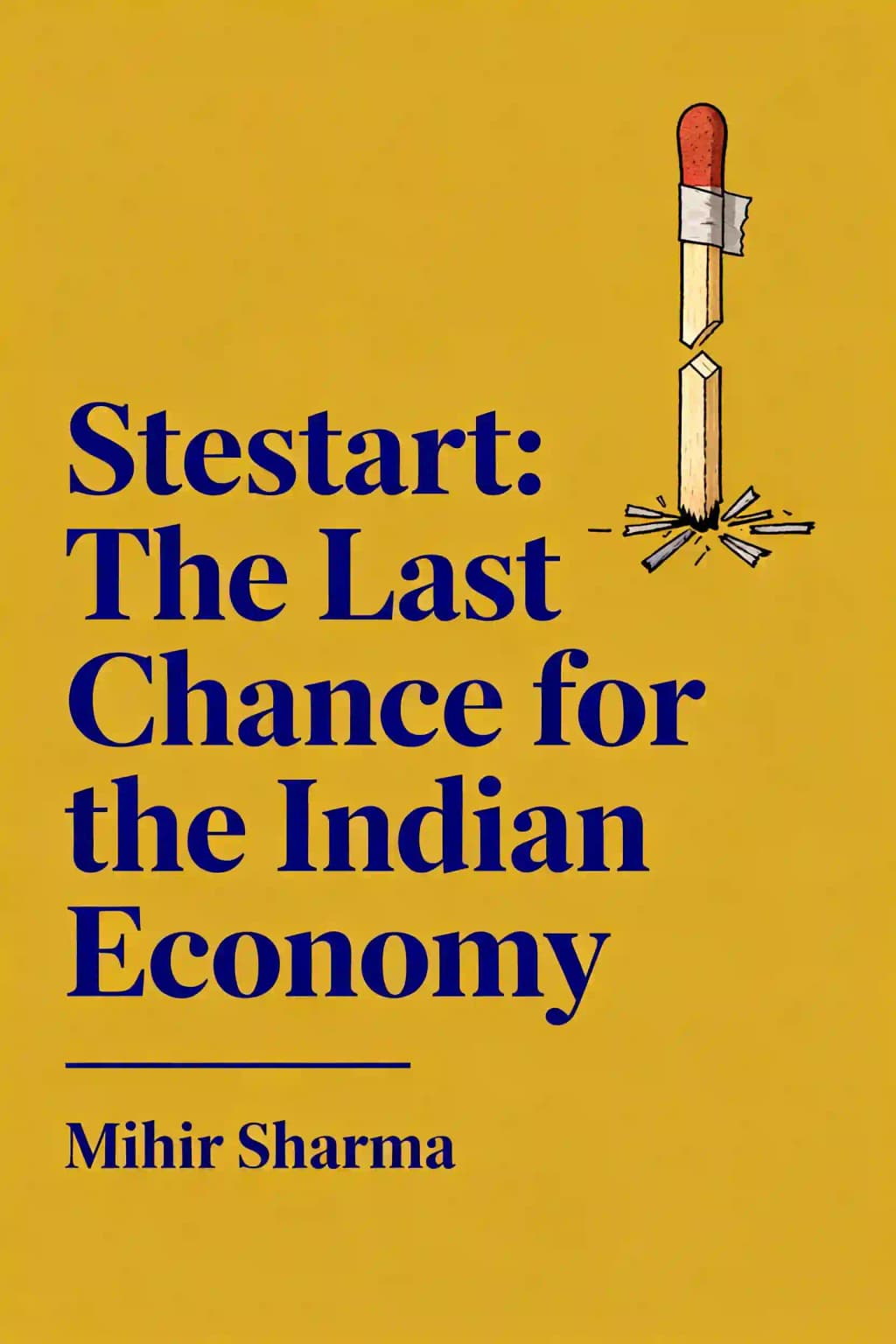
Mihir Sharma's award-winning critique dissects India's economic failures with razor-sharp wit. Longlisted for FT-McKinsey honors, this 2015 manifesto reveals why IT and pharma thrive while infrastructure crumbles. Can India's last chance for prosperity survive its own policy blunders?
Senti il libro attraverso la voce dell'autore
Trasforma la conoscenza in spunti coinvolgenti e ricchi di esempi
Cattura le idee chiave in un lampo per un apprendimento veloce
Goditi il libro in modo divertente e coinvolgente
Picture a nation where 13 million young people flood the job market every year, yet 47 million already search fruitlessly for work. Where factories stand silent while the world's largest youth population waits for opportunities that never arrive. Where a country once hailed as the next economic superpower now struggles to build a single efficient highway. This is India's paradox-a democracy racing against time, trying to achieve in decades what other nations accomplished over centuries, all while its demographic window of opportunity rapidly closes. In 2001, Goldman Sachs economist Jim O'Neill coined the term "BRICs," identifying four emerging economies poised to reshape global commerce. India stood among them, radiating promise. Yet twelve years later, O'Neill himself expressed profound disappointment. Despite lifting hundreds of millions from poverty, India's economic miracle proved fragile. After briefly approaching double-digit growth during the 2008 crisis, the economy stalled dramatically around 2012. Manufacturing flatlined, investment dried up, factories fell silent. By 2014, Narendra Modi's sweeping electoral victory-the first parliamentary majority in thirty years-sparked renewed hope. But hope alone cannot overcome the structural failures that have plagued India for decades. The fundamental question remains unanswered: can a nation build its future when it cannot even build adequate roads?
Scomponi le idee chiave di Restart: The Last Chance for the Indian Economy in punti facili da capire per comprendere come i team innovativi creano, collaborano e crescono.
Distilla Restart: The Last Chance for the Indian Economy in rapidi promemoria che evidenziano i principi chiave di franchezza, lavoro di squadra e resilienza creativa.

Vivi Restart: The Last Chance for the Indian Economy attraverso narrazioni vivide che trasformano le lezioni di innovazione in momenti che ricorderai e applicherai.
Chiedi qualsiasi cosa, scegli la voce e co-crea spunti che risuonino davvero con te.

Creato da alumni della Columbia University a San Francisco
"Instead of endless scrolling, I just hit play on BeFreed. It saves me so much time."
"I never knew where to start with nonfiction—BeFreed’s book lists turned into podcasts gave me a clear path."
"Perfect balance between learning and entertainment. Finished ‘Thinking, Fast and Slow’ on my commute this week."
"Crazy how much I learned while walking the dog. BeFreed = small habits → big gains."
"Reading used to feel like a chore. Now it’s just part of my lifestyle."
"Feels effortless compared to reading. I’ve finished 6 books this month already."
"BeFreed turned my guilty doomscrolling into something that feels productive and inspiring."
"BeFreed turned my commute into learning time. 20-min podcasts are perfect for finishing books I never had time for."
"BeFreed replaced my podcast queue. Imagine Spotify for books — that’s it. 🙌"
"It is great for me to learn something from the book without reading it."
"The themed book list podcasts help me connect ideas across authors—like a guided audio journey."
"Makes me feel smarter every time before going to work"
Creato da alumni della Columbia University a San Francisco

Ottieni il riassunto di Restart: The Last Chance for the Indian Economy in formato PDF o EPUB gratuito. Stampalo o leggilo offline quando vuoi.