Capitolo 1
When Doubt Becomes a Prison: Breaking Free from Relationship OCD
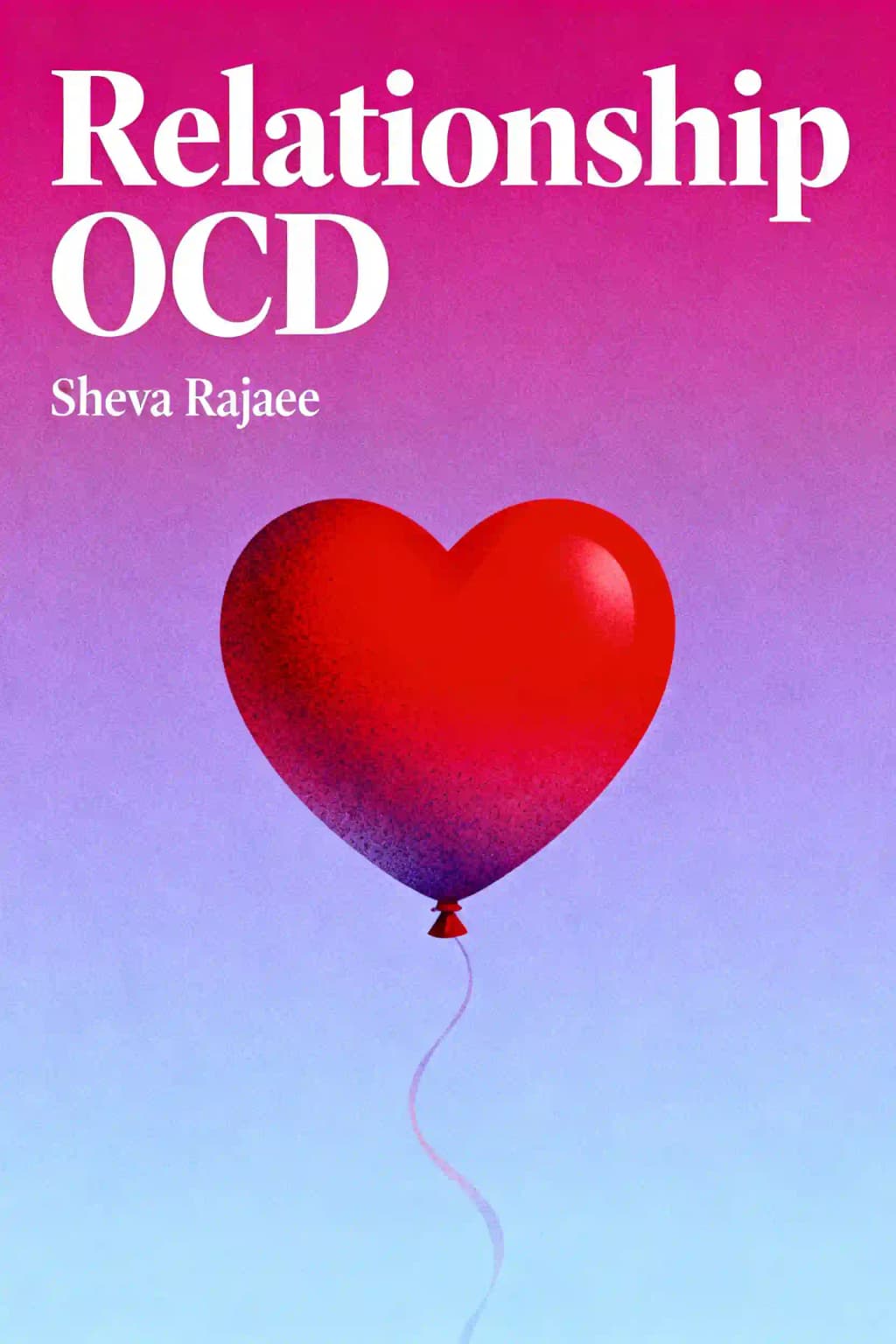
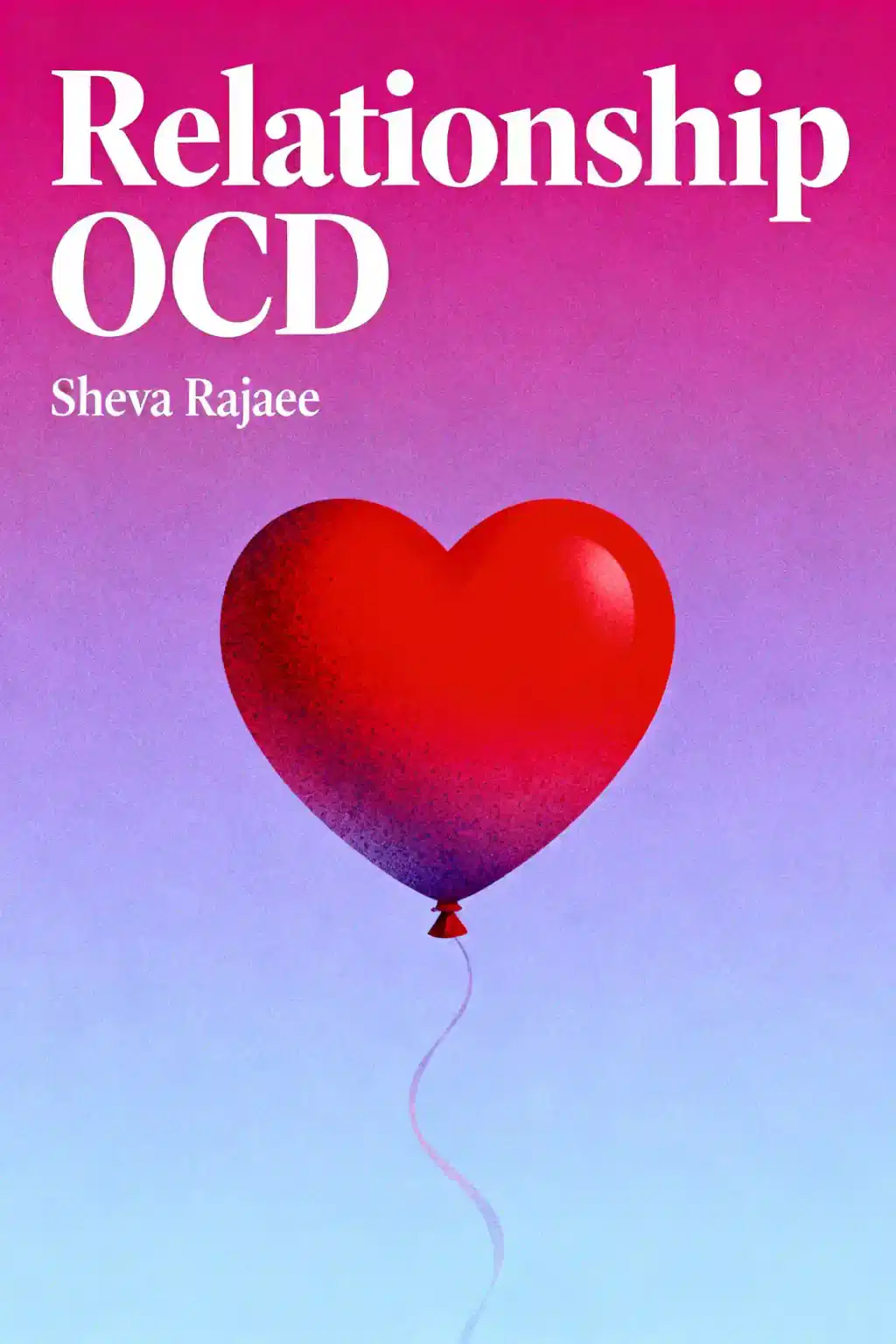
Have you ever found yourself lying awake at night, questioning if you truly love your partner? Or perhaps you've caught yourself analyzing every interaction, desperately seeking proof that you're with "The One"? You're not alone. Relationship OCD (ROCD) affects countless individuals who outwardly appear to have healthy partnerships but inwardly battle a relentless cycle of doubt and anxiety. Sheva Rajaee's groundbreaking work "Relationship OCD" has become a lifeline for those trapped in this painful cycle, earning praise from relationship experts and therapists worldwide. Even celebrities like Emma Stone have spoken about experiencing similar relationship anxieties. The book's cultural impact stems from its revolutionary premise: that certainty in love is a myth, and the path to meaningful connection requires embracing uncertainty rather than fighting it. In a world obsessed with finding perfect matches and soulmates, Rajaee's counterintuitive approach has sparked a quiet revolution in how we understand modern relationships.
Capitolo 2
The Anxious Spiral: How ROCD Hijacks Your Mind
Relationship OCD operates through a vicious cycle that begins with intrusive thoughts about your partner or relationship. These aren't ordinary concerns but persistent, distressing thoughts that trigger intense anxiety. To escape this discomfort, you engage in compulsions-subtle behaviors like mentally testing your feelings, seeking reassurance, or comparing your relationship to others. While these provide temporary relief, they ultimately reinforce two dangerous messages: that your intrusive thoughts are meaningful warnings rather than mental noise, and that you can't handle anxiety without performing these rituals.
Breaking free requires understanding three fundamental truths: you can't control your thoughts, you can't control your feelings, but you can control your response to both. By stopping compulsions, you teach your brain that relationship doubts aren't important threats requiring immediate attention. This sounds simple in theory but proves incredibly challenging in practice.
What makes ROCD particularly insidious is how it intertwines with our cultural programming about love. Modern society has elevated romantic relationships to almost spiritual importance, replacing religion as our primary source of meaning and transcendence. We expect partners to fulfill an impossible range of roles: lover, best friend, intellectual equal, emotional support, and spiritual companion. This cultural phenomenon-what Rajaee calls the "Myth of the One" (MOTO)-creates immense pressure that fuels anxiety in relationships. By challenging these unrealistic expectations, we can begin to reduce anxiety's power over our love lives.
Capitolo 3
The Butterfly Myth: Why Relationship Anxiety Flourishes Today
Relationships profoundly impact our wellbeing-positive ones inspire growth while negative ones can destroy our sense of self. Yet in modern society, finding the "right" relationship has become an obsession that triggers anxiety rather than fulfillment. We're bombarded with messages about romantic love's magical properties, creating unrealistic expectations of perfection.
Surprisingly, this romantic ideal is relatively new in human history. Until the mid-nineteenth century, marriage was primarily an economic arrangement for family survival, with love considered a pleasant bonus. The Industrial Revolution changed everything-as people moved from villages to cities, they gained independence from family constraints. Individual goals replaced collective ones, and romantic love transformed from fantasy to relationship purpose. We began expecting one person to fulfill roles an entire village once provided: friend, lover, partner, parent, identity-giver, and source of both comfort and excitement.
Those butterfly feelings we're taught to seek have absolutely no correlation with long-term happiness or compatibility. Ironically, butterflies originate from the same brain region responsible for anxiety-the amygdala. We feel them during threatening situations like skydiving or job interviews, yet when experienced romantically, we misinterpret them as signs of finding "The One."
ROCD prevents you from experiencing real love-not the idealized kind, but something richer with challenges, imperfections, and growth. It manifests in two interrelated subtypes: partner-focused ROCD preoccupies with perceived flaws in your partner, while relationship-focused ROCD fixates on the overall quality of the relationship. These obsessions drive compulsive behaviors like seeking reassurance, comparing your relationship to others, and mentally checking your feelings-all providing temporary relief but reinforcing the damaging message that you need perfect certainty for a meaningful relationship.
Capitolo 4
Attachment Wounds: The Roots of Relationship Anxiety
Not everyone with ROCD had a difficult childhood-anxiety has biological components, and relationships inherently involve vulnerability that can trigger anxiety without any specific past trauma. However, for most people, ROCD stems from a combination of nature and nurture, often tracing back to early attachment experiences.
Humans enter the world exceptionally vulnerable compared to other species, requiring an intense attachment system to ensure caregiver connection for survival. This makes us particularly susceptible to the influence of our early relationships. Attachment theory identifies four distinct styles: Secure attachment develops when caregivers are consistently available and supportive, leading to comfortable adult relationships with healthy intimacy. Anxious attachment forms when caregivers are unavailable or neglectful, creating adults who fear rejection and question their worthiness of love. Avoidant attachment results from overbearing caregivers, producing adults who find connection overwhelming and value independence above intimacy. Disorganized attachment stems from abusive or chaotic parenting, creating adults who simultaneously crave and fear connection.
While secure attachment describes about 50 percent of the population, the other half may find adult relationships particularly challenging. When you pair an insecure attachment style with a genetically hyperactive amygdala, relationships can feel overwhelmingly risky. However, neither an insecure attachment style nor a hyperactive amygdala condemns you to lovelessness. You can literally change your attachment style by forming a relationship with a healthy, consistent person-the kind who feels like a safe place rather than triggering butterflies.
Paradoxically, ROCD often appears in relationships with genuine potential rather than in doomed partnerships. Your anxiety functions as an alarm system, turning on at the possibility of pain. It would prefer you remain in safe but ultimately fruitless relationships rather than face childhood wounds or attempt personal growth. The relationships that trigger ROCD are often scary for all the right reasons-they represent risks worth taking.
Capitolo 5
When Sex Becomes Anxious: The Bedroom Battlefield
Anxiety becomes an unwelcome third wheel in the bedroom, whispering insecurities during intimate moments and constantly checking if your experience is "right." It pulls you out of your body and into your head, disrupting physical connection with intrusive thoughts. For those with ROCD, sex represents the ultimate vulnerability-being laid bare with all insecurities exposed-which triggers anxiety's protective response.
This natural vulnerability combines with generations of religious and cultural stigma, media-fueled body insecurities, and MOTO perfectionism about what sex "should" be like, creating a perfect storm of bedroom anxiety. Despite MOTO's proclamation that true connection should require no effort, the reality is that healthy sexual connection takes understanding, time, and work to achieve.
Healthy sex defies simple definition-it's not one-size-fits-all. Sometimes it's wild and passionate; other times it's a cozy cuddle. MOTO wants us believing only mind-blowing sex between perfect bodies counts, but reality is far more nuanced. In healthy sexuality, we recognize there's no "right" amount of sex-only what works for your partnership. Most crucially, arousal styles vary dramatically. Spontaneous arousal (the sudden overwhelming need portrayed in media) describes 75% of men but only 15% of women. Responsive arousal-needing sexual cues to feel turned on-represents 30% of women and 5% of men. Neither style indicates anything about chemistry; they simply reflect biological and psychological differences.
Another harmful myth is that sex must happen multiple times weekly-anything less signals relationship doom. This fixation on frequency completely disregards quality and connection. It ignores our fundamental humanness-that stress, children, health issues, and life transitions naturally affect desire. The number of sexual encounters isn't an accurate indicator of relationship health. It's far better to have sex at a frequency that suits your unique partnership and enjoy the intimacy you do share than let MOTO dictate your pace.
Capitolo 6
Rewiring Your Anxious Brain: Cognitive Strategies for ROCD
Our brains are incredible machines, processing millions of environmental stimuli every minute to help us navigate the world and stay alive. While our senses gather about eleven million bits of information per second, the brain can only process about fifty of these bits. This evolutionary adaptation creates mental shortcuts that usually work well, allowing us to perform complex tasks without thinking. However, in anxiety disorders, these shortcuts become cognitive distortions-the brain overgeneralizes, jumping from minor concerns straight to catastrophic conclusions.
Six cognitive distortions particularly fuel ROCD. All-or-nothing thinking views relationships in black-and-white terms rather than seeing the gray areas-either you're totally in love without doubts, or the relationship is doomed. Catastrophizing involves seeing a situation to its worst possible conclusion, like assuming a minor disagreement will inevitably lead to divorce. Emotional reasoning means believing something is true simply because you feel it strongly-if you feel occasional disgust toward your partner, you assume it must mean something is fundamentally wrong. Should or must statements involve having precise, fixed ideas about relationships-"I should always feel attracted to my partner." Comparison involves measuring your relationship against others' highlight reels. Mind reading is believing you know what others are thinking without considering more likely alternatives.
To correct these distortions, run intrusive thoughts through a filter that catches overgeneralizations and brings nuance to your thinking. Gray-area responses like "I don't know" or "Just because I feel something doesn't make it true" aren't comforting but are more accurate. Using a thought log with three columns (intrusive thought, identified distortion, rational response) helps balance thinking without providing reassurance. The goal isn't immediate relief but learning to tolerate uncertainty and discomfort for long-term benefit.
As you practice cognitive restructuring, your anxiety may lose steam when you stop engaging with intrusive thoughts. But remember, these tools aren't meant to eliminate anxiety completely-they help us withstand the discomfort. Eventually, you might simply notice distortions without needing to respond at all. This puts you back in the driver's seat, making you a conscious consumer of your thoughts rather than taking everything your brain says at face value.
Capitolo 7
Accepting the Unacceptable: Living with Uncertainty
Creating space between yourself and your ROCD thoughts is transformative. Cognitive restructuring provides a critical foundation, but alone isn't enough. Continuing to respond to every intrusive thought keeps you in conversation with your anxiety. True freedom comes from learning to tolerate and accept whatever anxiety remains without trying to change it. Like a fading cinema star, your anxiety craves your attention-but by willingly tolerating its doom-and-gloom messaging and focusing elsewhere, you make it irrelevant.
Acceptance and commitment therapy (ACT) blends cognitive and behavioral approaches with a less confrontational stance toward unwanted thoughts and feelings. With ROCD, the goal shifts from eliminating anxiety to peaceful coexistence with it. This approach recognizes anxiety as a necessary survival mechanism that can't be completely eliminated. Instead of fighting it, ACT teaches expansion of tolerance-like moving from a cramped apartment with an annoying roommate to a spacious mansion where their presence feels less intrusive.
We've been conditioned to believe pain and discomfort must be solved, that we should "suck it up" or "think positively." But there's nothing inherently wrong with feeling discomfort, anxiety, or doubt in relationships. Research shows 69 percent of all marital problems are perpetual, stemming from fundamental personality differences that are never solved, only managed. Perhaps happiness isn't having a perfect relationship or doubt-free mind, but willingly accepting what we cannot change while living fully anyway.
Pain is inevitable-whether from grief, intrusive thoughts, or realizing your partner can't complete you. But suffering is optional. It's our resistance to and judgment of natural pain. When ROCD triggers at a wedding, sending messages of comparison and doubt, the pain is unavoidable, but suffering comes from fighting it. Like a finger trap toy, you suffer not because of intrusive thoughts but because of attempts to escape, control, and disprove them.
Practical tools for loosening anxiety's grip include "naming the thought"-reframing "I'm in denial" as "I'm having the thought that I'm in denial" creates separation and objectivity. "Leaning in" means counterintuitively agreeing with your intrusive thoughts in an exaggerated, even sarcastic way. When ROCD says "You don't really love your partner," you might respond, "You're right, brain! I'm completely duping myself and ruining my life!" This strategy removes the power from your thoughts by making them seem absurd.
Capitolo 8
Facing Your Fears: Exposure Therapy for ROCD
After exploring cognitive restructuring and acceptance strategies, we now turn to the most powerful agent of change in overcoming anxiety disorders: exposure and response prevention (ERP). This approach moves beyond thinking and talking about anxiety to taking direct action by facing fears head-on. ERP combines exposure to feared scenarios that trigger anxiety with prevention of compulsive responses that would typically neutralize that anxiety.
The power lies less in the exposure itself and more in standing your ground as anxiety hurls its most compelling doubts your way. With repeated practice, you learn that anxiety naturally subsides-emotions last only about ninety seconds if allowed to exist without resistance. Each successful exposure redistributes power between you and ROCD, proving both that feared outcomes rarely occur and that you're strong enough to tolerate discomfort without neutralizing it.
ERP begins with creating an exposure hierarchy-a map of feared scenarios organized by increasing difficulty. Like an athlete building strength, you'll start with lighter "weights" before progressing to more challenging fears. This graduated approach helps maintain motivation for the journey ahead. The technique has proven remarkably effective, with studies showing two-thirds of patients experiencing improvement in OCD symptoms and approximately one-third achieving full recovery.
To build an effective exposure hierarchy, identify which compulsions most damage your relationship quality and the anxiety-producing situations that trigger them. The key distinction is whether behaviors are "want-based" or "need-based"-flexible choices versus rigid requirements. Need-based behaviors reinforce the belief that you can't cope with discomfort without certainty. Target these rigid behaviors that prevent genuine connection and love.
Common ROCD compulsions include counting rituals to ward off relationship bad luck, avoiding intimacy due to arousal concerns, repeatedly asking friends about relationship compatibility, checking your partner's appearance to test attraction, and mentally reviewing how your partner looked/sounded at events to measure attraction. The key to ERP isn't perfection but willingness-an openness to leap into uncertainty without self-protection. You don't need to feel ready or excited; you simply need to be willing to take action despite fear.
The ERP journey may take weeks, months or years, depending on your willingness to experience discomfort. Setbacks are inevitable-days when giving up on both ERP and perhaps your relationship seems like the only solution. Eventually, you'll discover you can tolerate all feared situations, thoughts and feelings, finding strength to face challenges without anxiety dictating your choices.
Capitolo 9
Healing Shame: Finding Self-Compassion in Vulnerability
When experiencing ROCD's painful, taboo thoughts, it's natural to feel abnormal or unlovable. Beneath intrusive thoughts often lies a deeper fear: "What if I'm not enough?" Many with ROCD worry not just that their partner isn't right for them, but that they themselves are fundamentally flawed and unworthy of love. This shame becomes fuel for ROCD, as studies show those with OCD are more likely to believe they're "mad, bad, or dangerous."
Shame differs fundamentally from guilt-while guilt says "I've done something bad," shame declares "I am fundamentally bad." In ROCD, shame manifests through beliefs like "No one else struggles this much with relationships" or "I'm too damaged to make a relationship work." The closer someone gets to your heart, the more your anxiety activates to protect you from vulnerability and potential rejection. This creates a painful bind: the more you love someone, the more you fear them discovering your "true self," yet the less you reveal yourself, the less space exists for genuine intimacy.
From childhood, we're immersed in implicit "rules of normalness" through parenting, culture, religion, and media. These rules shape our understanding of what constitutes acceptable bodies, lives, and relationships. As children, our primary goal is maintaining connection with caregivers, so we study what behaviors earn approval and which trigger rejection. When internalized, these rules crystallize into rigid beliefs about ourselves-our "shame stories." Common ROCD shame stories include "I'm not worthy of love," "I'm too much to handle," "I'm fundamentally selfish," or "My anxiety makes me crazy."
The path to healing shame begins with self-compassion-not letting yourself off the hook, but responding to vulnerable spots with love and kindness. This requires distinguishing between self-esteem (conditional worth based on achievements) and self-worth (inherent value regardless of performance). When shame appears, practice the four-step process: name the shame story, acknowledge your pain with physical comfort, speak to yourself compassionately, and affirm that struggle is universal.
The most damaging lie shame tells is that our suffering makes us uniquely flawed and separate from others. In reality, everyone experiences intrusive thoughts, fluctuations in mental health, and regrettable moments. Despite our unique histories, we all struggle with fundamentally similar challenges. This universality binds us together and transforms what we once rejected about ourselves from shameful secrets into proof of our belonging.
Capitolo 10
Living with Uncertainty: The Path to Sustainable Recovery
Recovery isn't meant to save you from yourself or make your relationship perfect. It's a spiritual path requiring daily release of what you can't control (intrusive thoughts) while focusing on what you can (your response). Good recovery isn't the absence of intrusive thoughts, absolute certainty, or elimination of discomfort. Instead, it's accepting bad days will happen, being willing to feel discomfort, recognizing doubt as an experience rather than truth, accepting uncertainty, and living by your values even when feelings don't align.
Recovery requires regular maintenance, much like a farmer's fence management. Just as a farmer must daily inspect and repair fences to keep livestock in and predators out, we must tend to our mental boundaries to contain intrusive thoughts. This isn't a one-time task but an ongoing practice. Your "fence management" might be meditation, exercise, therapy, or self-care routines. Though it sounds tedious, this practice becomes more intuitive over time.
As ROCD recovery progresses, clients talk less about their specific fears and more about noticing their brain's searching pattern-what Rajaee calls the "lighthouse effect." The brain continues scanning for something to fixate on but can't gain traction because the person no longer takes the bait. They recognize anxious thoughts as hollow content rather than responding with compulsions or resistance. This internal lighthouse-built from genetics, environment, or both-isn't entirely negative; it's the same system that keeps you alert and attuned to your environment.
Many unconsciously resist recovery because they fear what it means to feel good and safe. If you grew up needing to stay vigilant to maintain parental approval or avoid rejection, dropping your guard might feel dangerous. Recovery requires rewiring the belief that feeling relaxed inevitably leads to getting hurt. The work becomes trusting-not that everything will be okay, but that we'll be okay even if things don't end up as planned.
Capitolo 11
Rewriting Your Love Story: Beyond the Myth of "The One"
To fully manage ROCD for a lifetime, you must abandon the Myth of the One (MOTO). This final step may be the most challenging of all. Your new love story won't be as glamorous or effortless as fantasy suggests, but it will be more meaningful because it will be real. Relationships were never meant to be perfect; they're vehicles for profound personal growth, often through imperfections rather than perfections.
Our new love story redefines the three Cs of healthy love: chemistry, connection, and compatibility. MOTO claims chemistry must be instant-that you'll "know it when you feel it" from the very start. However, studies show initial attraction correlates with relationship formation but doesn't predict long-term satisfaction. The chemistry that matters isn't necessarily what you felt at first sight, but the indescribable draw that makes you willing to fight through anxiety to reach your partner.
MOTO claims ideal partnerships maintain an unbroken connection regardless of life's challenges. In reality, disconnection is normal-the Gottmans' research shows we're only emotionally available 9% of the time, with 91% of interactions open to misunderstanding. What matters most isn't avoiding conflict but how we repair afterward. Healthy partnerships involve actively expressing needs clearly rather than expecting partners to anticipate them.
MOTO promises that finding The One means the rest will be easy-your soulmate will solve all problems and save you from yourself without requiring vulnerability or growth. In reality, no partner can take away life's challenges. Often what we seek in compatibility is someone to do what we won't do ourselves-make us feel loved when we don't love ourselves. True compatibility isn't about finding someone who erases difficulties with a dazzling smile, but someone committed to growing with you, not for you.
For ROCD management, abandon the belief that emotions alone will guide you to the right partner. Our gut amplifies our mind's fears-for sensitive people with heightened threat responses, fear messages sound louder than love or attraction. Walk into love instead of falling headlong. Many with ROCD feel shame that their relationship didn't start with immediate certainty-they entered cautiously, seeking trust before diving deeper. For those with sensitive nervous systems, this careful approach aligns with their nature.
No therapy or guru can eliminate life's fundamental uncertainty. The path to healing from ROCD isn't finding perfect certainty but embracing that we cannot know what the future holds. True transformation comes from humbly conceding "I don't know the answer, and that's okay." The compulsive need to solve and organize life's burning questions was the problem all along. By letting go-not giving up-something extraordinary happens. Accepting life as an explorer's journey brings joy not from having all the answers but from embracing the adventure.