Capitolo 1
The Myth That Keeps Creatives Poor
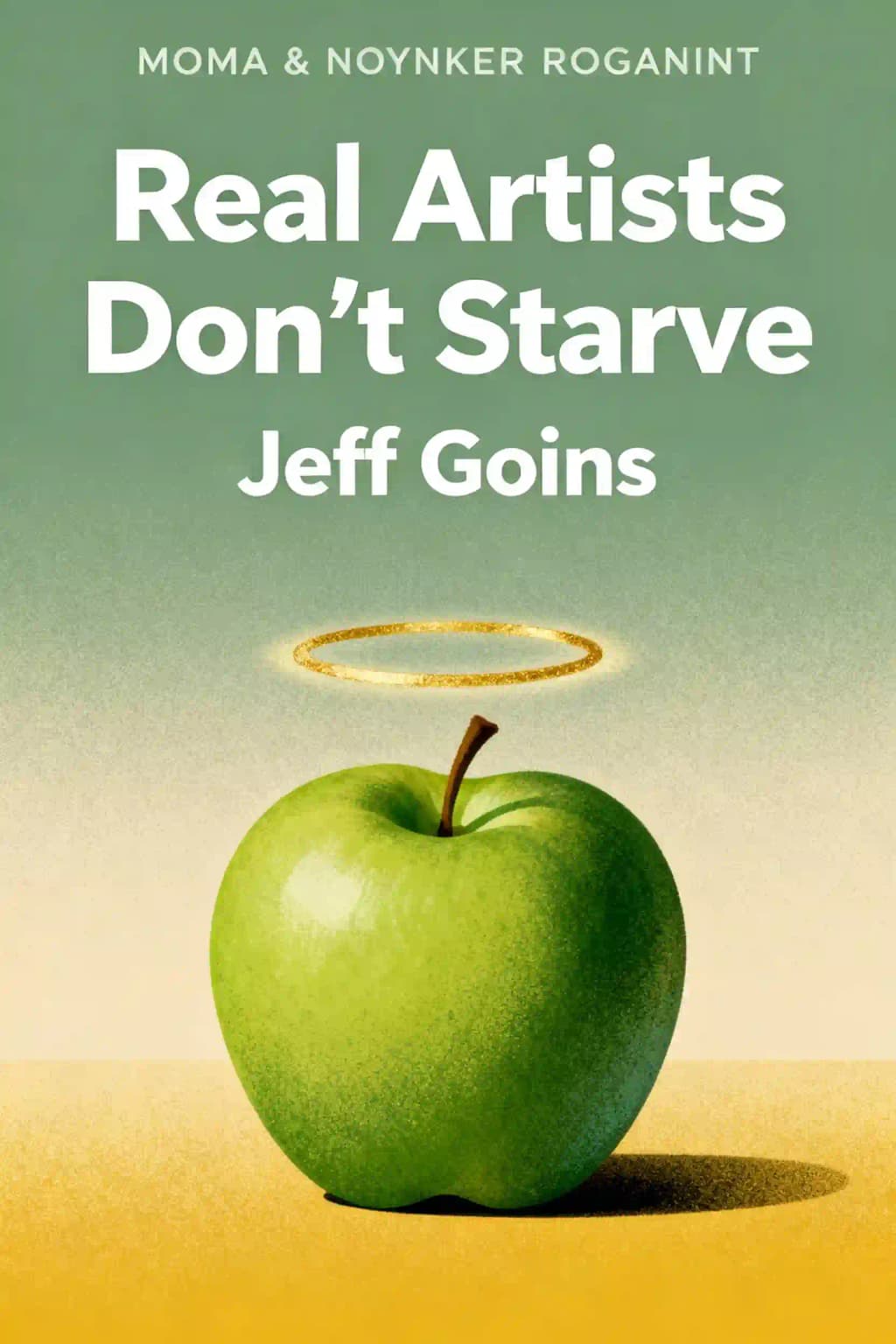
What if everything you've been told about being an artist is a lie? Imagine discovering that Michelangelo-the quintessential "starving artist" in cultural mythology-was actually worth roughly $47 million in today's currency. This revelation from Professor Rab Hatfield's discovery of Michelangelo's bank records shatters centuries of belief about creative poverty. The pervasive "Starving Artist" myth, popularized by Henri Murger's "Scenes de la vie de boheme," has misled generations into believing creativity and financial success are mutually exclusive. Jeff Goins' "Real Artists Don't Starve" has become a creative industry sensation, endorsed by bestselling authors like Seth Godin and embraced by creative professionals seeking sustainable careers. The book introduces twelve principles-the Rules of the New Renaissance-that distinguish Thriving Artists from Starving Artists, showing how creative professionals can build sustainable careers without sacrificing their art.
Capitolo 2
Becoming an Artist Through Deliberate Choice
Adrian Cardenas achieved his dream of playing Major League Baseball with the Chicago Cubs, earning nearly $1 million, but felt profoundly disconnected from his teammates who teased him for reading Tolstoy in the locker room. Despite his success, Adrian realized he had abandoned his artistic passions-writing and storytelling-to pursue baseball. In a courageous move echoing his father's escape from Cuba, Adrian left baseball to become a writer, eventually publishing in the New Yorker and New York Times.
This story perfectly illustrates the first rule of the New Renaissance: you aren't born an artist, you become one. At pivotal moments in life, we must choose between following expectations or reimagining our future. The Rule of Re-creation states that artistic identity is something we actively create, not something bestowed upon us by fate or genetics.
Psychologist Paul Torrance discovered that creative individuals tend to struggle in systems demanding blind compliance. His research showed that "creative kids are the ones who rail against the rules the hardest" and that following rules rarely produces outstanding creative work. This challenges the myth that artists are born, not made-that creativity is magic bestowed upon the chosen few.
Michelangelo's belief in his noble lineage-though historically untrue-fundamentally shaped his artistic identity and success. What we believe about ourselves has a way of becoming true. Like the author's own journey from being mistakenly identified as a girl to declaring himself a writer, we must choose our identity rather than accepting roles others give us. "We don't fake it till we make it. We believe it till we become it."
Creative dreams aren't typically launched overnight but built gradually through small, consistent steps. John Grisham wrote his first novel one page per day while working as a lawyer. Research shows cautious entrepreneurs who keep their day jobs are 33% more likely to succeed than those who "take the leap." The first step in abandoning the Starving Artist mindset is releasing who we think we are and taking small steps toward authenticity. True art always exists at the edges of our comfort zones, where real transformation happens.
Capitolo 3
The Art of Creative Theft
When Jim Henson's "Sam and Friends" debuted in 1955, audiences thought they were seeing something completely new. In reality, Henson was masterfully combining elements from his influences: his grandmother's sewing skills, Burr Tillstrom's puppetry techniques, his mother's wit, and Ernie Kovacs's camera work. As Will Durant wrote, "Nothing is new except arrangement." Creative work isn't about originality but about rearranging existing ideas in fresh ways.
Before becoming an artist, you must become a thief-but even before that, you must be a student. The Irish monk Columcille, who preserved western culture by copying ancient manuscripts, demonstrates how cultures build upon what came before. During the Renaissance, apprentices were taught to copy masters so precisely that their work was indistinguishable from the originals. When Michelangelo created a statue mimicking Roman antiquity that fooled Cardinal Riario, it wasn't seen as fraud but as impressive skill.
Not only should you steal from historical masters, but also from your peers. Twyla Tharp, one of America's foremost choreographers with a fifty-year career and numerous awards, admits she's not as original as people think. She studied every great dancer in New York, standing behind them in class, "in copying mode," letting their techniques imprint on her muscles. Writers like Hunter S. Thompson did the same, copying Fitzgerald's Great Gatsby word-for-word to understand his style. We find our voice by mimicking others first.
Creative theft requires a code of conduct. You must study the right influences-those pushing the boundaries of their craft-and honor them by acknowledging their inspiration. Let your influences know you're learning from them, cite your sources, and give credit where it's due. Don't just copy-paste; curate before you create, bringing influences together in new ways. True creative success comes when you're no longer the thief but the one being robbed-when others are compelled to steal from you.
Capitolo 4
The Power of Apprenticeship
Tia Link followed her friends to law school, believing a law degree would be versatile, only to discover it limited her to being a lawyer. After working at a Wall Street firm and experiencing personal unhappiness, she took acting classes on a whim and fell in love. Surprisingly, her legal training provided valuable skills for acting-particularly the appearance of confidence. Despite doubts about being "too old" and hearing that creative careers don't succeed, Tia designed her own informal apprenticeship, gradually building a bridge from law to acting by doing both simultaneously.
Creative success rarely comes from a mythical "Big Break." While luck plays a role, Thriving Artists become apprentices rather than waiting for serendipity. Apprenticeship is deliberately difficult, requiring patience to wait for results, perseverance to outlast those who quit early, and humility to attract masters willing to invest in your development. An apprentice does whatever is needed, including thankless work others refuse. The moment we believe we deserve success is when it eludes us.
Young Michelangelo approached the famous Florentine artist Domenico Ghirlandaio with remarkable audacity-not only requesting an apprenticeship but asking to be paid, an outrageous demand when apprentices typically paid for such opportunities. Ghirlandaio surprisingly accepted. Beyond technical skills, Michelangelo absorbed what it meant to be an artist: running a studio, managing apprentices, and handling patrons. This apprenticeship led to Michelangelo being recommended to Lorenzo de Medici, where he studied under Bertoldo di Giovanni and mingled with prominent figures like Machiavelli.
While Renaissance apprenticeships lasted about a decade, modern versions are less formal but equally vital. First, find a master worth studying and immerse yourself in their work-read everything they've written, watch everything they do. Follow their methods exactly, becoming a case study of their principles before approaching them. Don't ask to "pick their brain"; show them you've done your homework and applied their teachings successfully. Apprenticeships aren't meant to last forever-eventually you must graduate and create original work. Successful apprenticeships require patience, perseverance, and humility. Thriving Artists are humble enough to admit they need teachers yet audacious enough to seek them out.
Capitolo 5
Strategic Stubbornness: When to Persist and When to Pivot
F. Scott Fitzgerald resisted early marriage to pursue writing, yet fell in love with Zelda Sayre in 1918. She hesitated to commit to an unpublished writer with uncertain prospects. Despite accumulating 122 rejection slips from 19 stories, he covered his rented room's walls with these refusals. Rather than discouraging him, rejection fueled his determination. His secret weapon was stubbornness-a refusal to quit on either his writing or his love. When Scribner's accepted his first novel, Zelda finally agreed to marry him.
Fitzgerald's stubbornness initially served him well, bringing literary acclaim and commercial success. But when his third novel, The Great Gatsby, was critically panned and sold poorly, he lost his resilience. His confidence eroded, his personal life collapsed with Zelda's hospitalization, and he retreated to Hollywood screenwriting-work he despised. He died at 44 believing himself a failure, with Gatsby practically out of print. What Fitzgerald lacked was what Angela Duckworth calls "grit"-the ability to maintain passion and perseverance through adversity.
Jeff Bezos exemplifies strategic stubbornness through Amazon's motto: "We are stubborn on vision. We are flexible on details." After discovering the web was growing at 2300% annually, he abandoned Wall Street success to launch Amazon.com. Despite numerous failures-from unsuccessful TV campaigns to the Fire Phone-Bezos embraces experimentation, saying they're "working on much bigger failures right now." Unlike Starving Artists who stubbornly repeat the same mistakes, Thriving Artists remain flexible on details but unwavering in their vision.
At 24, Zach Prichard was stuck in an unfulfilling music industry job when he received an email about Donald Miller's struggling film adaptation of "Blue Like Jazz." Despite no experience, Zach and a friend proposed a Kickstarter campaign to save the project. Their stubborn determination paid off-the campaign raised $345,992 from 4,495 backers, breaking crowd-funding records. This led to photography work on the film set, which evolved into Zach founding a production company and eventually becoming an in-demand film editor.
Michelangelo began Pope Julius II's tomb in 1505-a grandiose three-story monument with forty life-size figures. When the pope lost interest, Michelangelo fled Rome without permission, becoming an outlaw. After reconciling, he continued working despite fatigue, writing "I live in great discomfort... work day and night." Unlike Fitzgerald who gave up, Michelangelo channeled his stubbornness into grit. Even after being reassigned to the Sistine Chapel in 1508, he returned to the tomb repeatedly until completing it forty years later at age seventy. His stubbornness became an asset when used for his work rather than his ego.
Capitolo 6
Finding Your Patrons in Unexpected Places
In 1948, the Presley family moved to Memphis where their son would play guitar in the courtyard. Meanwhile, Sam Phillips ran Sun Studio with the slogan "We record anything, anywhere, any time." When nineteen-year-old Elvis visited to record a personal record, Phillips's assistant Marion was impressed, but Phillips himself wasn't. Months later, during a break in a lackluster audition, Elvis spontaneously played "That's All Right Mama," transforming the rejection into opportunity. Phillips recorded it, shared it with a local DJ, and soon Elvis was touring with Phillips as manager, becoming a star within two years.
In creative work, quality is subjective. We need authorities-"tastemakers"-to help determine what good art is. Behind many creative geniuses is an invisible influencer making it all happen. This is the Rule of the Patron: before you reach an audience of many, you must first reach an audience of one. All creative workers need influencers who will vouch for them to an audience who doesn't know them yet.
Patrons aren't just an elite class of influencers-they're all around us. When I traveled with my band after college, ordinary people became our patrons, providing meals, beds, and donations so we could focus on our music. For Elvis, Sam Phillips was just down the road. Help is always available to those willing to look, but it's our job to recognize potential patrons and prove ourselves worthy of their investment.
When Michelangelo met Lorenzo de Medici, he demonstrated both competency and teachability by adjusting his fawn sculpture based on Lorenzo's suggestion. This willingness to learn led to Lorenzo inviting the teenage artist to work in his palace. Influencers want to help people who are worth their time-those already doing the work and willing to learn. When we allow ourselves to be teachable, we attract those who would help our work spread.
Not all patrons are wealthy investors. Sometimes your day job can serve as a patron for your art. Kabir Sehgal used his investment banking career at JP Morgan to fund his creative pursuits, writing five books and producing Grammy-winning albums while still excelling at work. He turned mundane tasks like writing investor memos into creative exercises, crafting them as haikus. Renaissance patrons weren't just benefactors-they were bosses with specific requirements. Why not see your current employer as a patron?
Creative success is rarely a solo effort-it's a partnership between artist and patron, talent and advocate. Sam Phillips needed Elvis as much as Elvis needed him. Without someone to invest in our work, we're just rolling the dice in a world unkind to such gambles.
Capitolo 7
The Importance of Creative Communities
Location matters profoundly for creative success. When Ernest Hemingway returned from WWI at nineteen, directionless and heartbroken, he followed Sherwood Anderson's advice to move to Paris-where "the most interesting people in the world lived." There, Hemingway found a community of fellow expatriates and intellectuals who transformed him from skilled writer to literary icon. In Paris, he exchanged boxing lessons with Ezra Pound for writing tips, met F. Scott Fitzgerald who introduced him to editor Maxwell Perkins, and absorbed Gertrude Stein's wisdom. This "Lost Generation" scene provided the education and connections that turned him into "Papa," the larger-than-life figure who defined a generation's literary style.
When Richard Florida saw a software company from Austin recruiting at Carnegie Mellon, he discovered that creative professionals choose locations not just for jobs but for vibrant cultural scenes. The "Creative Class"-now a third of the workforce-prioritizes place when making career decisions. For artist Hank Willis Thomas, grad school accidentally provided what every artist needs: a network. After his cousin's murder led him to process grief through art, Thomas discovered his classmates became curators, collectors, dealers and patrons-connections that launched his career. "All my great opportunities have come from friends," he explains. "You really only need one or two good advocates."
Vincent van Gogh defies the stereotype of the isolated genius. Though mentally troubled, it wasn't madness that made his art succeed-it was his network. After failing at careers as an art dealer, teacher, and missionary, Van Gogh taught himself to draw and paint at age twenty-seven. Despite criticism of his unconventional style-even from his mother-Vincent had crucial support. His brother Theo, a successful art dealer, provided financial backing, housing, and promotion, becoming Vincent's patron and chief advocate. When Vincent moved to Paris and met fellow rejected painters-the Impressionists-he found his scene. This network validated his work and helped organize exhibitions. After Vincent's death at thirty-seven, Theo's wife Johanna used their connections to sell his paintings and secure his legacy.
Creative scenes often emerge in unexpected places. As travel writer Eric Weiner notes, "Genius is a place, not a person." The most innovative locations-Florence, Silicon Valley, Paris-were once unlikely candidates for cultural revolution. In the 1970s, Tracy Weisel moved to Jerome, Arizona, selling macrame and pottery. He built the town's first new building since the 1950s and attracted other artists who transformed the economically stagnant town into a thriving creative hub.
Not everyone can relocate on a whim-sometimes the creative scene we need is already where we are. The Bronte sisters exemplify this truth. Living in bleak Haworth, a "dirty village of weavers' cottages," they created their own genius cluster. After losing their mother and two sisters, Charlotte, Emily, Anne and their brother Branwell were educated at home by their minister father. They invented imaginary kingdoms, wrote stories and poems, and eventually published novels including Jane Eyre, Agnes Grey, and Wuthering Heights-all literary classics.
Capitolo 8
The Collaborative Nature of Creative Genius
When Beyonce released her album Lemonade with seventy-two credited writers, public backlash questioned her genius. This reaction stems from our misguided belief that true artists work in isolation. However, as creativity researcher Keith Sawyer states, "You cannot be creative alone." The Rule of Collaboration says genius happens in groups-Starving Artists work alone, but Thriving Artists collaborate. Our success is closely tied to our ability to work well with others.
Creative work is often slow and discouraging, which is why the best artists involve others who can "correct their path." Research by Michael Farrell shows that many significant creative breakthroughs throughout history-from psychotherapy to French Impressionism-came from what he calls "collaborative circles." Creativity is not a solitary invention but a collaborative creation, and community offers the magic that allows creative work to thrive.
The Florida Highwaymen, a group of 26 untrained African American painters, collaborated in the segregated South of the 1960s. Alfred Hair combined the pricing strategy of his mentor A.E. Backus with Harold Newton's door-to-door selling approach to create a successful business model. The group painted together, sold together, and even competed to see who could sell the most paintings each day. Their collaboration enabled them to produce an estimated 200,000 paintings that initially sold for tens of dollars but now fetch thousands. As Gary Monroe noted, they "learned from one another's brushes," creating what historians call "the last great art movement of the twentieth century."
The myth of the solitary genius doesn't hold true even for Michelangelo. Renaissance Italy wasn't a quaint artistic community but an environment where artists had to maneuver for power and position. Michelangelo was notorious for sizing himself up against others, particularly in his famous 1504 competition with Leonardo da Vinci. Though he lost, this competitive spirit drove him throughout his life. A sense of competition often drives collaboration, as we connect with peers who share our ideals but inevitably begin comparing our work to theirs. This healthy competition is essential for mastery, requiring an attitude "that goes beyond meekness but doesn't quite become arrogance."
Sometimes we need more than loose networks of peers-we need formal teams to realize our vision. Caroline Robinson, who launched Clear Mapping Company after fifteen years in manufacturing and design, quickly discovered this reality. When success threatened to overwhelm her creativity, she faced a crucial decision: remain "just an artist" or learn to manage a team. She chose collaboration, leveraging her personal network and hiring help. Today she manages a team of three and focuses on finding new talent and opportunities. For Caroline, "it's not about credit" but about collaboration that produces better results for clients.
Capitolo 9
The Value of Practicing in Public
Stephanie Halligan transformed from financial literacy expert to successful cartoonist by sharing her work publicly. Her relatable cartoons, including one contrasting entrepreneurship dreams versus reality, built a loyal following. This illustrates how practicing in public both improves skills and builds an audience. When artists share their developing work, people often respond first with attention, then with financial support.
In early 1900s Montmartre, Pablo Picasso exemplified this principle. Though part of an art movement that embraced poverty, he understood that art needs an audience to thrive. At 17, he began exhibiting at Els Quatre Gats cafe and later strategically connected with influential collector Gertrude Stein, painting her portrait over ninety sessions. Picasso succeeded by deliberately placing his work where it could flourish.
Comedian Chris Rock demonstrates this approach today, regularly testing new material at small clubs. Despite bombing and losing audience members, he performs unpolished material 40-50 times before major tours. Musicians like Beck Hansen similarly found that public performance accelerates improvement more than private practice. Real growth happens when there's an audience waiting and deadlines matter.
Led Zeppelin proved the power of established audience trust in 1971 by releasing their fourth album anonymously - without band name or credits. Despite their label's concerns, Jimmy Page believed their music's quality would speak for itself. The strategy worked brilliantly, with the album selling over 23 million copies through word-of-mouth from their loyal fanbase.
When Halligan finally monetized her work, her audience readily supported her - but only after she'd spent two years consistently sharing daily cartoons and showing her progress. This demonstrates that while audiences won't support amateurs, they will invest in artists who prove their dedication through consistent public practice and genuine improvement.
Capitolo 10
The Dignity of Getting Paid for Your Work
Melissa Dinwiddie's journey exemplifies the principle that Thriving Artists always work for something. Starting with a $25 art commission from a friend that took 40 hours, she gradually built a creative career. After her divorce, she needed to make a living from her art, transitioning from custom ketubah art to prints and eventually helping others find their creative passions. Getting paid validated her identity as an artist. Creative success isn't about money, but charging brings dignity to our work and allows us to keep creating.
Making money from art doesn't mean selling out, but it requires befriending the business side of creativity. Studies show unpaid internships actually disadvantage college graduates compared to paid ones. Working for free sets a precedent that's hard to break. The Rule of Value states that Thriving Artists always work for something-we must value our work before others will. When we undervalue our work, resentment follows. Money becomes not the end goal but the means to creating more work.
Science-fiction writer Harlan Ellison exemplifies the principle of never working for free, even refusing "exposure" opportunities. His stance isn't just about money but dignity-taking yourself seriously so others will too. Similarly, Michelangelo insisted on being addressed by his surname rather than as a mere craftsman, distinguishing himself from manual laborers. This self-respect made him the wealthiest artist of his time. Working for free establishes a precedent that you don't value your work, and if you don't, neither will anyone else.
Paul Jarvis transitioned from building websites for corporate clients to launching his own business targeting mindful entrepreneurs. Without waiting for corporate benefactors, he took his destiny into his own hands, selling books and courses based on his freelance experience. Bill Ivey, former NEA chairman, notes that art requires resources-paint, ink, and food all cost money. The "Subsidized Artist" isn't the answer; artists must find ways to fund their work. Creativity and commerce have always coexisted, with constraints creating unique opportunities. Money and art need each other in a dance, not a balancing act. To be a Thriving Artist means adopting an entrepreneurial mindset and charging what you're worth-not out of greed, but dignity.
Capitolo 11
The Freedom That Comes from Owning Your Work
In 1598, William Shakespeare faced a pivotal decision when offered a 10% ownership stake in Chamberlain's Men acting company. At thirty-four, he risked seventy pounds to become part-owner rather than remaining a freelancer subject to landlords and theater owners. This bold move led to his most productive year in 1599, writing masterpieces like "Much Ado About Nothing" and "Julius Caesar." Similarly, Jim Henson refused to sell his puppet Rowlf to Purina for $100,000, keeping ownership until using him in the Muppets years later. The Rule of Ownership states that Thriving Artists resist selling out too soon, protecting their work for long-term success rather than short-term paydays.
John Lasseter's journey from Disney to Pixar exemplifies the power of ownership. After being fired from his dream job at Disney for pushing computer animation, he joined a struggling Lucasfilm division that Steve Jobs would later purchase and rename Pixar. Despite rejecting Disney's offer to return at quadruple his salary, Lasseter maintained creative control at Pixar, eventually partnering with Disney to create "Toy Story." When the film premiered to universal acclaim, Pixar went public and was valued at over a billion dollars by day's end-vindicating Lasseter's decision to prioritize creative ownership over immediate security.
Stephen Kellogg's story illustrates the dangers of trusting the system. After college, he formed a band that eventually signed with Universal Records-a dream come true that quickly became constraining. Despite playing 1,200 shows and recording seven albums, Kellogg felt he'd lost control of his career. "While gatekeepers may give you a payday, it always comes with a cost," and for the Sixers, that cost was freedom. By 2012, underpaid and exhausted, the band went on hiatus permanently. Kellogg later realized his mistake: "If you want to get somewhere, look at where you're trying to go and study the people who've gotten there."
George Lucas exemplifies the rewards of ownership by financing "The Empire Strikes Back" himself after Fox kept 60% of "Star Wars" profits. Investing $20 million of his own money, Lucas negotiated a deal where he would earn 50-77% of gross profits, own all TV rights, earn 90% of merchandising, and regain full rights after seven years. When asked who would write, direct, and star in Empire, Lucas replied, "None of your business." The film grossed four times what Star Wars did on opening weekend, proving that ownership gives you options. As Lucas said, "The object is to try and make the system work for you, instead of against you."
After his band dissolved, Stephen Kellogg embraced independence, releasing his first solo EP with complete creative control. "My whole philosophy with art is to make a living," he explains, now able to support his family without answering to gatekeepers. Sometimes selling out makes sense-George Lucas eventually sold Lucasfilm to Disney for $4 billion, and Jim Henson considered selling the Muppets-but only when it serves the art, not out of desperation. The principle remains: "We must own our masters or our masters will own us."
Capitolo 12
Building a Portfolio of Creative Skills
We've been told to commit to a single career path, but great artists understand that thriving requires mastering multiple skills. In the Renaissance, those who blended disciplines were called "masters." Today's "gig economy" creates opportunities for portfolio people who juggle multiple creative pursuits. When we develop diverse skills, we gain an edge-would you rather hire a writer who only writes, or one who also understands marketing? Thriving Artists build diverse bodies of work rather than limiting themselves to a single form.
Thriving Artists don't just live off their art-they maintain diverse portfolios with multiple income streams. Michael Jackson demonstrated this when he purchased the Beatles catalog for $47.5 million in 1985, an investment that grew to over $0.5 billion. Creative people's "leaky mental filters" allow them to notice connections others miss. This distractibility can become a strength, enabling innovation and the ability to identify new opportunities. As Dr. Darya Zabelina discovered, creative achievement links to the ability to broaden attention and hold conflicting ideas in productive tension.
Michelangelo exemplified portfolio diversity by continually learning new skills throughout his life. At forty, he tackled architecture after mastering sculpture. Later, he managed hundreds of assistants on major building projects. His ability to move between disciplines-from sculpture to painting to poetry to engineering-gave him a broader creative vocabulary than his peers. The path to a diverse portfolio isn't through giant leaps but small steps, with one skill naturally leading to another. Thriving Artists acquire whatever skills necessary to complete their vision, while Starving Artists fixate on mastering just one.
Dr. Dre's career illustrates how portfolio diversity creates lasting success. After leaving NWA, he co-founded Death Row Records, then walked away to start Aftermath Entertainment where he launched Eminem and 50 Cent. Later, recognizing poor audio quality was destroying music, he partnered with Jimmy Iovine to create Beats headphones. Unlike musicians limited to traditional income streams like concerts and record sales, Dre continually expanded his portfolio into new ventures. His willingness to acquire new skills and pursue fresh opportunities exemplifies how Thriving Artists adapt to changing markets. Eventually selling Beats to Apple for $620 million made him a billionaire while his former partner Suge Knight ended up in prison.
Being distractible can actually strengthen creative work. When we embrace our wandering minds and use our "leaky filters" to identify new skills and opportunities, we develop a more substantial portfolio. Like smart investors, Thriving Artists build diverse bodies of work rather than obsessing over single creations. When we focus on the big picture-the entire body of work rather than individual pieces-we create a portfolio worth remembering.
Capitolo 13
Creating Art as a Sacred Duty
Alan Bean, the fourth man to walk on the moon, left his prestigious NASA career at age fifty to become an artist-not from creative whim but from a sense of duty. Recognizing he was uniquely positioned to paint lunar landscapes from firsthand experience, Bean understood his responsibility to share this gift despite criticism from colleagues who saw his training as wasted. Though initially lacking technical skill, Bean devoted himself to improving, eventually selling paintings for hundreds of thousands of dollars. For Bean, art wasn't about money but fulfilling his duty; the money simply enabled him to continue creating. His story demonstrates that art isn't mere indulgence but can be a serious calling.
Lewis Hyde explains that two economies exist: the market economy and the gift exchange economy. Art thrives in the latter, creating tension for modern artists trying to make a living. Artists have three options: sell directly to the market (rare success), find a patron (uncommon), or self-patronage through a second job (most common). Hyde himself chose the third path, cutting his Harvard teaching position to half-time to prioritize writing. "The time was more important to me than the money," he explained. Creative work demands significant time investment without immediate rewards, which is why Michelangelo never stopped working despite having enough to retire. We don't make art for money-we make money to make more art.
In 1930s Japan, kamishibai artists sold candy while performing picture-based plays for children from portable stages mounted on bicycles. These storytellers made a living from candy sales while creating art through their illustrated stories, which featured distinctive oversized eyes and dramatic light-and-dark contrasts. Though television eventually ended street kamishibai in 1952, the art form evolved into manga, now a global billion-dollar industry. Like Walt Disney who said, "I make money to make more pictures," these artists demonstrated that business can make creative work possible.
Alan Bean ingeniously incorporated his lunar tools-hammer, core two-bit, and moon boots-into his paintings, creating unique textured artwork impossible to replicate. He even added moon dust from his astronaut suit to make his works more original. "That idea of texture is one of the best ideas I've ever had in art, because it's so different than anybody else's stuff," he explained. Bean didn't try to play by antiquated rules that would reject him; he made his own, using what was around him. There's always a way for someone tenacious enough to find one. Money exists to buy you another season of creation. Every season you create instead of scrambling for work is a win.
Capitolo 14
Embracing the New Renaissance
In 1909, Italian artist Amedeo Modigliani allegedly threw his rejected sculptures into Livorno's Medici Canal. Seventy-six years later, when the city searched the canal and "discovered" three granite busts, art critics declared them authentic Modiglianis. The discovery was later revealed as a hoax perpetrated by university students who had carved the sculptures in mere hours. Yet many experts refused to accept this truth, having staked their professional reputations on the authenticity of these works. This illustrates how we often prefer familiar stories over difficult truths-like the Myth of the Starving Artist.
The fake Modigliani sculptures of Livorno demonstrate how we often cling to tradition over truth. Despite evidence proving they were created by students as a prank, many critics initially refused to accept reality. "That's how people are," explained Professor Rab Hatfield, who helped discover Michelangelo's wealth. We live out stories we've been told without questioning their truthfulness. Art critic Mario Spagbol called the student's sculpture "obviously false but also the most beautiful." Perhaps the same applies to the Starving Artist myth-false, but beautiful in its familiarity.
Just as Livorno was slow to accept their treasured art was fake, society may resist the truth that real artists don't starve. But while changing society's perspective takes time, you can change your own mind today. This was Michelangelo's challenge-artists weren't aristocrats in Renaissance times, yet he was committed to both making a living and earning respect. Though difficult, he ultimately changed the game for artists.
Michelangelo mastered three crucial areas that transformed him from craftsman to aristocrat: his mindset (refusing to conform), the market (building influential relationships with patrons), and his money (charging his worth and investing wisely). As William Wallace noted, he "significantly raised the stature of his profession" and ushered in the era of the superstar artist. The New Renaissance rejects the Starving Artist myth, embracing instead that creative work deserves reward. The goal isn't fortune or fame but building a sustainable life that allows continued creation. Like Picasso and Twyla Tharp, we must discard outdated notions of artistic suffering, seek patrons, join creative scenes, and make money to make more art. The world needs your work-whether you're a cabinet-maker, painter, or entrepreneur-but you face a choice: continue struggling or embrace the difficult truth that you can thrive.