Capitolo 1
Faces: The Window to Our Hidden Selves
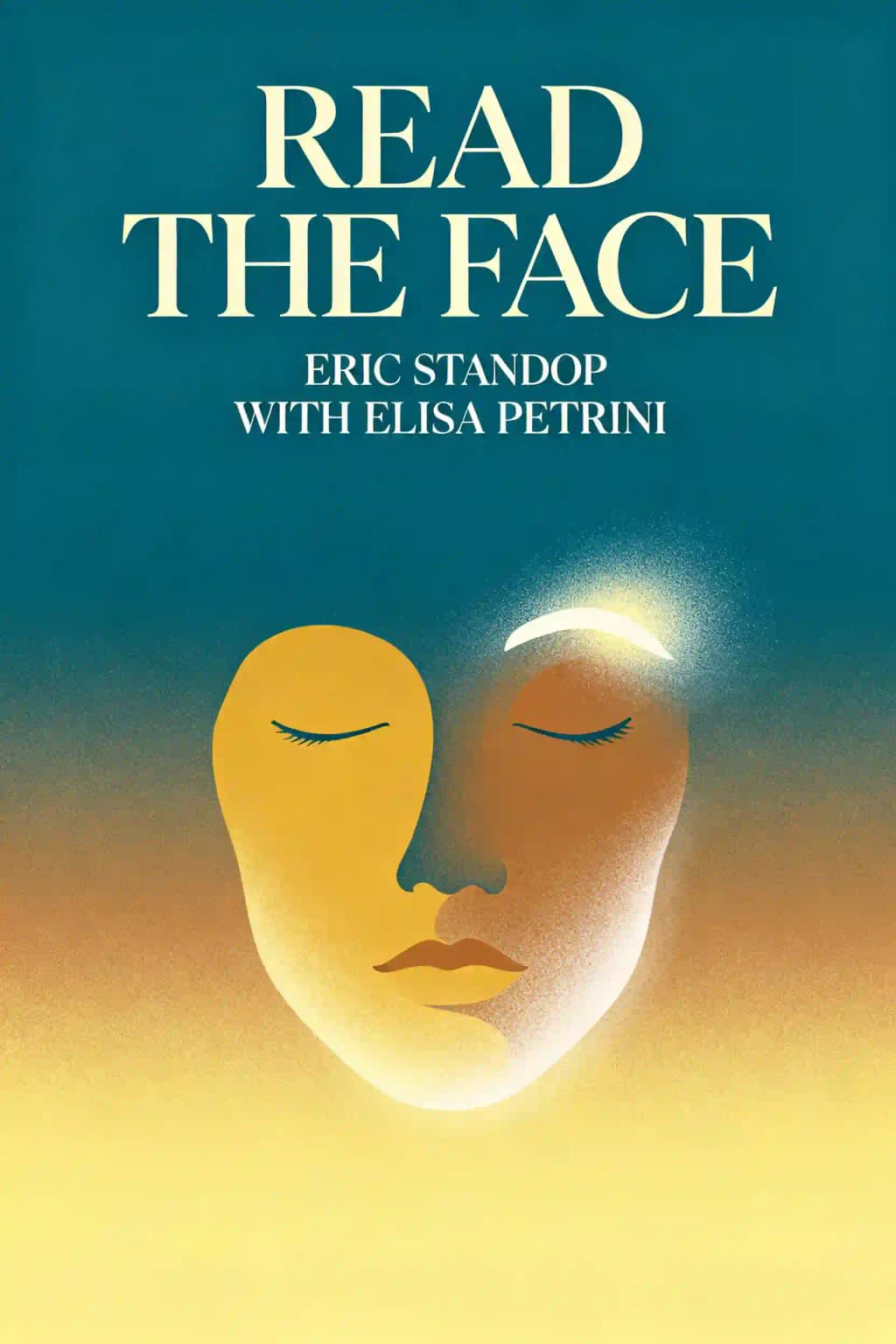
Have you ever locked eyes with a stranger and instantly felt you knew something profound about them? That uncanny feeling isn't supernatural-it's your brain's ancient face-reading system at work. Eric Standop, once a high-powered entertainment executive, discovered this hidden language after his own health collapsed. When a toothless old man on a South African beach accurately diagnosed all fifteen of his medical conditions just by studying his face, Standop's life changed forever. He embarked on a journey that would lead him to become one of the world's foremost face readers, breaking barriers as the first non-Chinese person accepted for traditional training in Hong Kong. His book "Read the Face" has become required reading at several business schools, with CEOs and intelligence agencies alike seeking his insights. Celebrities consult him before important negotiations, while medical professionals increasingly incorporate his techniques alongside conventional diagnostics. This forgotten art, practiced across cultures for millennia, is experiencing a renaissance as science confirms what our ancestors always knew-our faces truly are the autobiography of our lives.
Capitolo 2
The Ancient Art of Reading Human Stories
Face reading is our first language-one we're born fluent in. Newborns seek faces immediately, recognizing their mothers within hours through smell, sound, and visual cues. This innate ability stems from dedicated neural circuits in our fusiform gyrus, often called the "face area" of the brain, that develop throughout life and become increasingly sophisticated. While most adults recognize about 20% of faces they've seen, the spectrum ranges from the 2.5% with prosopagnosia (face blindness) to the 2% who are "super-recognizers" capable of identifying 80% of faces-a talent so valuable that Scotland Yard maintains a special unit of these gifted observers who can spot criminals in grainy surveillance footage or identify suspects in large crowds.
Unlike computers that analyze individual features in isolation, humans process faces holistically, taking in the entire gestalt at once. We see the complete picture rather than isolated characteristics, integrating subtle nuances of expression, micro-movements, and contextual cues. This explains why facial recognition technology still struggles with bias, particularly with darker female faces, while even three-year-old children show remarkable consensus in judging which faces appear "nice," "mean," "strong," or "smart." Studies have shown that children across different cultures and backgrounds consistently agree on these basic character assessments, suggesting a universal human capacity for face reading.
Research across cultures reveals consistent traits that make faces attractive: even skin tone suggesting health, "averageness" with perhaps one distinctive feature, moderate symmetry, and facial proportions reflecting optimal hormonal balance. For women, feminine features like larger eyes, fuller lips, and higher cheekbones correlate strongly with attractiveness, suggesting fertility through higher estrogen levels. Men's faces show more complex patterns-masculine features like strong jaws and prominent brow ridges aren't universally preferred, with studies showing women often favor more feminized male faces, possibly because high testosterone signals potentially negative traits like aggression or lower parental investment.
But for face readers, the truly "perfect face" isn't about conventional beauty but authenticity-what Standop calls the "enlightened" visage. This face reveals humanity's best qualities, like Nelson Mandela's, which projected wisdom with childlike openness-determined yet peaceful, righteous yet joyful-without bitterness despite decades of oppression. Other examples include the Dalai Lama's face, which combines serenity with playfulness, and Jane Goodall's, which reflects both scientific precision and deep compassion. These faces demonstrate how life experiences and inner development can sculpt features into expressions of profound human qualities, transcending conventional standards of beauty to reveal deeper truths about character and consciousness.
Capitolo 3
Journey to Mastery: Breaking Cultural Barriers
Standop's path to becoming a face reader began with a profound personal crisis. While watching "The Devil's Advocate," he had an epiphany that mirrored his own life - he saw himself in the protagonist's destructive ambition that had driven him to become regional second-in-command at UFA Cinema by age thirty. Though he initially stepped back from his demanding role, the deeply ingrained workaholic patterns soon resurfaced with devastating consequences. His body began sending increasingly severe warning signals: first came the rashes, then debilitating asthma attacks, followed by severe food allergies that restricted his diet to just five ingredients. A frozen shoulder preceded the most alarming development - partial paralysis that left him struggling with basic movements. After fifteen different medical specialists offered varying diagnoses, it took a straightforward urologist to shock him with the stark truth: "You look like death walking."
The turning point came during a chance encounter with a face reader in South Africa, who revealed insights about Standop's health and character that proved transformative. Energized by this experience, he returned to Germany and immersed himself in European face reading traditions, studying systems that traced their lineage back to Hippocrates and Aristotle's early works on physiognomy. His first attempt to establish a face reading practice failed, but a fortuitous meeting with a South American practitioner reignited his passion and pointed him toward Asia, where the art had been refined over thousands of years.
In Hong Kong, Standop faced significant challenges in finding authentic training. The breakthrough came unexpectedly when he helped a prominent hotel spa owner overcome chronic migraines by identifying a magnesium deficiency through facial analysis. This success caught the attention of the traditional face reading community, leading to a confrontational call from an elderly Chinese master who initially declared that "white men cannot read faces." The master subjected Standop to an intense evaluation, testing not just his knowledge but his character, humility, and dedication. Against all cultural precedent, he accepted Standop as his first non-Chinese student in decades.
The subsequent six years of training proved more demanding than Standop's military service. He was forbidden to question his master's methods or teaching style, required to follow ancient protocols, and expected to demonstrate unwavering dedication. The training involved memorizing thousands of facial features and their meanings, practicing readings for hours daily, and studying ancient texts. Despite facing constant skepticism from other masters who objected to his Western background, modern approach, and particularly his race, Standop's persistence and genuine respect for the tradition eventually earned him acceptance into the elite circle of sifus (master readers). His teacher, proud of his student's transformation, would often remark with affection, "Eric is white on the outside but yellow on the inside. Eric is an egg."
This unique cross-cultural journey enabled Standop to develop a comprehensive approach that bridges multiple traditions. He integrated Chinese Mien Shiang's subtle energy readings, European physiognomy's structural analysis, South American intuitive methods, and contemporary research on microexpressions and facial coding. Unlike traditional practitioners who typically specialize in one system or aspect, Standop's methodology synthesizes these diverse approaches to provide deeper insights into both personality traits and character development, making face reading more accessible and relevant to modern applications.
Capitolo 4
The Historical Tapestry of Face Reading
Face reading traditions exist across all cultures-from Egyptian hieroglyphics to South American carvings, Hindu-influenced Indian systems to diverse African methods. While Chinese face reading remains the most established, European traditions trace back to ancient Greece where philosophers embraced physiognomy-the belief that faces reflect personality.
When physiognomist Zopyrus met Socrates at Plato's academy, he pronounced him dull and lustful. Rather than taking offense, Socrates admitted these were natural tendencies he'd overcome through discipline. Aristotle advanced face reading by connecting physical features to personality traits, while Hippocrates incorporated it into medical diagnosis, identifying the "Hippocratic face"-a combination of symptoms like sharpened nose and sunken eyes that still indicates approaching death today.
European face reading flourished in universities until the Middle Ages when it became associated with fortune-telling. The Renaissance brought revival through figures like Sir Thomas Browne, who wrote that faces bear "the motto of our souls," and Giambattista della Porta, who used animal comparisons to illustrate human traits. Johann Kaspar Lavater's encyclopedic work established physiognomy's popularity in the 18th century.
Later scientists took more anatomical approaches. Charles Bell connected facial structures to emotions, while Guillaume-Benjamin-Amand Duchenne used electrical stimulation to document expressions, discovering the genuine "Duchenne smile" involving both mouth and eye muscles. Charles Darwin's groundbreaking work established that humans universally express six core emotions: anger, fear, surprise, disgust, happiness, and sadness.
By the mid-nineteenth century, Cesare Lombroso problematically applied physiognomy to criminology, claiming criminals had "primitive" features. Though Western interest waned with the rise of new diagnostic technologies, face reading remained embedded in everyday language through idioms like "raised an eyebrow" and "down in the mouth."
Meanwhile in China, face reading (Mien Shiang) maintained its respected status for thousands of years. China's first emperor, Qin Shi Huang, restricted face reading to his palace and employed readers to help construct his magnificent tomb with its terra-cotta army. Throughout Chinese history, master face readers like Zhuge Liang and Li Shen Feng held positions of great influence. Though Mao Tse-tung banned face reading during the Cultural Revolution as one of the "Four Olds," the practice has been reviving in China since his death, though some ancient wisdom was lost.
Capitolo 5
Decoding the Face: Methods and Systems
Face reading isn't fortune-telling but observation at a specific moment. Standop's practice follows four essential principles: First, face reading describes the present rather than predicting the future. Second, he rejects "good" and "bad" labels, focusing instead on how traits can be used in "winning" (satisfying) or "losing" (sabotaging) ways. Third, he analyzes both sides of the face separately-the right side (left-brain) reflects logic and material concerns, while the left side (right-brain) reveals subconscious, creativity, and dreams. Fourth, he prioritizes the eyes and mouth as the most dynamic features with direct neural connections to the brain.
Traditional Chinese face reading employs several methodologies. The Three Zones Method divides the face horizontally: the Celestial Zone (hairline to eyebrows, associated with ages 15-30), the Zone of Will/Human Zone (eyebrows to bottom of nose, ages 30-50), and the Earthly Zone (nose bottom to chin, beyond age 50).
The Eight Regions Method focuses on areas above the nose, including the Region of Life (between eyelid creases and eyebrows), Drive (temples), Career (center forehead), and others. The more comprehensive Twelve Palaces of Luck Method corresponds to the Chinese zodiac houses, revealing fortune in different life aspects.
A more philosophical approach relies on metaphor and storytelling skill. The reader views facial features as elements in a landscape-the chin as South Mountain, the forehead as North Mountain, and softer features as rivers. By examining this "landscape," the reader constructs a narrative that explains the client's personality.
Face reading systems often incorporate the Five Elements theory (Wu Xing), categorizing universal energies as Wood, Fire, Earth, Metal, and Water. The elements interact in either "generating" (supportive) or "overcoming" (destructive) sequences. Each element corresponds to specific personality traits: Wood embodies idealism and curiosity; Fire represents passion and intensity; Earth signifies amiability and honesty; Metal reflects intuition and rationality; and Water encompasses resourcefulness and erudition.
While Asian face reading traditions recognize about thirty different face shapes, Western practice typically focuses on eight to ten basic types. Most Western faces combine multiple shapes-about 25-33% have one dominant shape, 45% combine two shapes, 15-20% blend three shapes, and only 5-10% combine four or more shapes (called "Master of Masks").
Capitolo 6
The Blueprint of Personality and Character
Our facial autobiography begins at birth-not as predestination but as a blueprint of attributes, talents, and Life Purpose that constitute our personality. As we develop from infancy, our face shape emerges (sometimes followed by second or third shapes), while our fixed features-especially eyes and mouth, but also nose, ears, eyebrows, and hair-form a unique configuration defining our core identity.
Living authentically means expressing this inborn personality. When we leverage our innate strengths toward our Life Purpose, we live in a "winning" way; when we default to weaknesses or ignore our purpose, we live in a "losing" way. Most of us alternate between these states.
Over time, our personality acquires an overlay of "character"-developed through external influences like culture, environment, family, education, relationships, and life experiences. Face readers discern character through non-fixed features, particularly facial expressions that, while brain-generated, can be controlled. Even more revealing are microexpressions-automatic, split-second reactions that provide deeper insight into character.
Ideally, character aligns with personality, though perfect alignment is rare. The greater the synchronicity between them, the more integrity and fulfillment we experience. When they disconnect, depression, frustration, or aggression often results.
This principle was dramatically illustrated when a couple consulted Standop about their year-old daughter's future. The father, a successful lawyer, wanted her to pursue languages and law; the mother, a former ballerina, planned ballet and violin lessons. Examining the baby's forehead lines-which often disappear by age two but can reveal innate traits-Standop found signs of an idealist with humanitarian concerns, perhaps a healer or creative person dedicated to helping others. He reminded the parents that this child wasn't their battleground but a bridge to bind them together-neither owned her or had the right to control her life. Two days later, the father returned to thank him, confessing he'd been forced into law by his own father and missed his true calling. He promised his daughter would have the choices he never had.
Capitolo 7
Finding Your Life Purpose Through Facial Features
People often ask "What do you do?" instead of "What do you care about?" Similarly, many wonder why they're unhappy but miss the core question: "What am I here for?" We all have a Life Purpose-what our personality qualifies us to do or what makes the most of who we are.
Face shape and features offer clues about whether someone thrives in structured environments, needs concrete challenges, loves improvisation, excels in management, or requires absolute freedom. Detectable gifts like creativity, leadership, resilience, or communication ability help complete the personality picture.
To help people align with their Life Purpose, Standop provides two tools: "life sentences" (guiding principles tailored to their traits) and an archetype representing their essence. When living close to but not quite aligned with your Life Purpose (as he was as a Herald rather than a Messenger), it can be difficult to recognize you're on the wrong track.
Some people make life choices contradicting their personalities. A Greek woman in her thirties, offered promotion to hotel director in Austria, exemplified this conflict. Despite success, she felt like a square peg in a round hole. With square shoulders held tensely and an overdeveloped jaw (a King-like trait in an otherwise Jade face), she showed signs of inner conflict. Originally aspiring to work in mental health, she'd been disillusioned by a psychiatric hospital experience, then diverted into event planning and hospitality after marriage. Though respected in her hotel career, she confessed feeling frustrated by administrative work that lacked purpose. When offered the director position, she realized accepting meant sacrificing her chance for family and meaningful work. Standop identified her current archetype as "the Follower"-not her true nature. She ultimately declined the promotion to pursue psychology, her first love.
While Life Purpose involves pursuits that maximize our innate personality, we also have talents we're destined to use for fulfillment and pleasure. Those who dedicate significant time to their talents tend to be happiest. In face reading, these inborn talents are called our "destiny"-observable potential detected from fixed features, expressions, gestures, and acquired facial lines. Many people don't express their talents through work but can still achieve fulfillment by using them elsewhere.
Capitolo 8
The Health Secrets Written on Our Faces
Face reading has been used to diagnose health for millennia, from Hippocrates in the West to the 5,000-year-old Ayurvedic tradition in India and Traditional Chinese Medicine. TCM includes face mapping that connects facial areas to internal organs, with changes in skin color or texture potentially indicating organ imbalances. Modern Chinese scientists are now using computer analysis to verify these traditional diagnostic methods.
The eyes signal shifts in body chemistry-sparkle when drunk, dullness during hangovers, grayish or red when equilibrium is off. Standop's German master taught him that his "beautiful green eyes" were actually a sign of too much acid in his body-naturally blue eyes that had changed due to body chemistry.
Our faces reflect our nutritional status and metabolic health, revealing our overindulgences. Alcohol creates bloating, enlarged pores, broken capillaries and bloodshot eyes. Red wine specifically causes pronounced lines between eyes, enlarged pores, droopy eyelids, and crosshatched cheeks. Refined carbohydrates create dark patches around the chin and forehead. Sugar dependence shows in deep forehead lines, gaunt cheeks, thin sagging skin, and scattered pimples. Fried foods make the face sallow with a greasy film. Dairy overindulgence causes chin pimples, pale cheeks, and swollen eyelids.
Some facial signs are impossible to ignore. The Hippocratic face-characterized by a sharp nose, sunken eyes, fallen temples, cold ears with distorted lobes, hard stretched skin, and pale coloring-has been recognized since 400 BC as portending death. Chinese medicine views these as signs of energy loss. When combined with bloodless lips and grayish tinge around the nose and chin, they strongly indicate life's end.
When detecting serious health issues, face readers face ethical dilemmas. Standop encountered this with a German man suffering from stomach pain whose blue veins snaking up his nose suggested possible lung cancer. Though trained not to answer unasked questions, he urged him to see a pulmonologist. Two weeks later, the man's wife confirmed he had lung cancer.
Capitolo 9
The Silent Language of Expression and Connection
Facial expressions provide the essential coloring between the lines of our fixed facial features. With forty-three muscles in the face (eighteen to twenty involved in expressions), humans can produce up to ten thousand different expressions, about three thousand related to emotion. We unconsciously mirror others' expressions, and even fake expressions can trigger corresponding emotions.
Microexpressions-tiny, involuntary expressions lasting fractions of seconds-reveal true emotions and are universal across cultures. The six primary microexpressions are: surprise (raised eyebrows, horizontal forehead wrinkles, wide eyes, dropped jaw); fear (eyebrows raised and drawn together, forehead wrinkles between eyebrows, tense lower eyelids, visible sclera above iris); disgust (raised upper eyelids and cheeks, wrinkled nose); anger (lowered and drawn eyebrows, vertical lines between eyebrows, staring eyes, pressed lips, dilated nostrils); happiness (lip corners drawn up, raised cheeks creating wrinkles from nose to lips, crow's feet); and sadness (inner eyebrow corners drawn up, raised jaw, downturned mouth corners, pouting lower lip).
These expressions reveal more than words ever could. When evaluating job candidates for corporations, Standop observes their gestures and expressions for insights. For one Swiss corporation, he observed a candidate whose impressive credentials impressed the HR director. However, as questioning became more specific, the applicant began pinching his nostrils-a "cry for help" gesture indicating he felt cornered. When instructed to maintain direct eye contact, the director saw the candidate's composure crumble as he squirmed and gave fragmented answers. The company ultimately hired someone else, demonstrating that most people are less effective liars than they imagine.
For couples wanting to stay together despite relationship problems, three physical strategies can help refresh their bond: looking into each other's eyes (sitting face-to-face for 3-5 minutes to release bonding oxytocin), touching in passing (creating sensual links through brief contact), and smelling your partner's forehead twice daily (where their unique scent emanates). While these can't overcome serious differences requiring therapy, they reaffirm visceral connections. Kisses also convey meaning: forehead kisses represent the highest expression of love (embracing both body and soul), mouth kisses can signify either lust or love, and eyelid kisses suggest a desire for deeper soul connection.
Capitolo 10
The Practical Power of Face Reading
How others perceive us creates a constant, wordless exchange of information that we can learn to influence. Beyond facial expressions and gestures, unintended clues like walking style reveal personality traits-knock-kneed walking indicates lack of confidence, while a wide-legged stride suggests leadership qualities and desire for space.
This knowledge has practical applications in business settings. In corporate contexts, face reading focuses less on deep personal fulfillment and more on problem-solving interactions. Standop doesn't need lengthy sessions to determine someone's essence-instead, he reads people as they work, paying special attention to gestures and microexpressions.
An Austrian textile CEO struggling with productivity issues asked Standop to analyze his interdepartmental liaison. The man had a Moon face-indicating communication skills, loyalty, and diplomatic abilities perfect for his role. His triangular ears suggested exceptional tact, while his lined forehead showed broad interests but broken follow-through. Despite being well-liked, the liaison confided that departments didn't implement his coordination suggestions because he lacked authority. Standop realized the King-faced CEO was wasting his liaison's insights-hiring a smart person but not listening to him, exactly what Steve Jobs warned against. The CEO needed to leverage the liaison's unique position of trust among employees rather than just using him to issue directives.
As a confidential coach to a new CEO in Kuala Lumpur, Standop observed his meeting with twelve executives. Though the CEO seemed genuine and enthusiastic, his staff appeared drained-frantically consuming refreshments and avoiding eye contact. Standop explained he was an "energy vampire"-not maliciously, but because his impressive presence magnetically drew their energy without replenishing it. He suggested simple solutions: opening his hands when speaking to appear welcoming, using wider arm gestures occasionally, and explicitly inviting input. These small changes would help him share energy rather than consume it, transforming his timid managers from "ghosts" into contributors.
The wisdom of face reading isn't just academic-it's a practical tool for understanding ourselves and others, improving relationships, optimizing health, and finding our authentic path in life. By learning to read the autobiography written on our faces, we gain access to a universal language that transcends cultural barriers and speaks directly to our shared humanity.