Capitolo 1
The Mythic Path to Personal Transformation
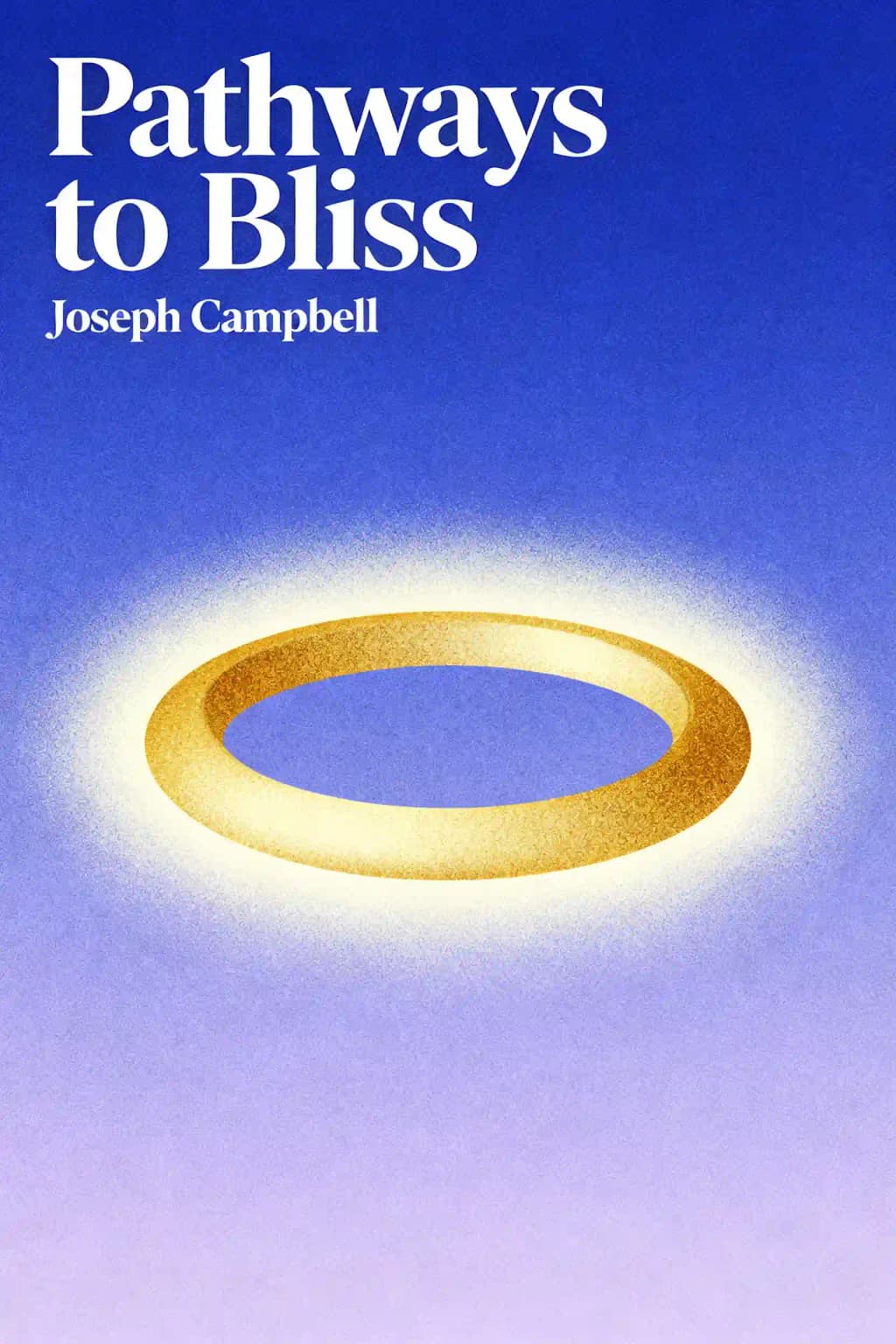
What if the key to unlocking your authentic self lies hidden in ancient stories? Joseph Campbell, one of the 20th century's most influential mythologists, discovered that myths aren't just entertaining tales-they're psychological maps guiding us through life's most challenging transitions. His work "Pathways to Bliss" has become a cornerstone text for those seeking meaning in our fragmented modern world. The book's famous directive to "follow your bliss" has inspired countless seekers, including filmmaker George Lucas, whose Star Wars saga directly implements Campbell's hero's journey framework. Beyond Hollywood, Campbell's ideas have permeated psychology, literature, and spiritual practices worldwide. His PBS series with Bill Moyers, "The Power of Myth," became one of the network's most-watched programs ever, introducing millions to the revolutionary idea that mythology isn't about believing impossible things-it's about discovering the extraordinary within ourselves.
Capitolo 2
Mythology: The Universal Language of Human Experience
Mythology serves four essential functions in human life, each addressing fundamental aspects of human existence and consciousness. First, it reconciles consciousness with existence's harsh realities-particularly the uncomfortable truth that "life lives on life." Early primitive mythologies were remarkably life-affirming despite acknowledging life's brutalities, embracing existence "to the root, to the rotten, horrendous base." These early myths didn't shy away from life's violence but transformed it through ritual and meaning, helping societies process everything from hunting to death. Around the eighth century BCE came what Campbell calls the "Great Reversal," when world-negating mythologies emerged seeking escape from life's suffering. This shift marked the rise of ascetic traditions in both East and West, from Buddhist renunciation to Christian monasticism.
The second function is cosmological-presenting an image of the universe that sustains our sense of awe before existence's mystery. Ancient mythologies explained everything from the movement of stars to the changing of seasons, creating comprehensive worldviews that helped humans locate themselves within the cosmic order. These stories ranged from the Norse tale of Ymir's dismembered body forming the world to the Aztec cycles of creation and destruction. Third is the sociological function, validating social systems by grounding societal laws in cosmic order. Whether through divine kingship in ancient Egypt or the Mandate of Heaven in China, myths have legitimized social structures and moral codes. Finally, mythology serves a psychological function, guiding individuals through life stages from birth to death, providing frameworks for understanding personal transformation through initiatory rites, marriage ceremonies, and funeral practices.
While science has largely replaced mythology's cosmological explanations - we no longer need Zeus to explain lightning - and secular institutions have taken over its sociological role, Campbell argues that the first function (evoking awe) and fourth function (psychological guidance) remain vitally relevant today. In our rapidly changing world, we need mythology more than ever to navigate transitions that previous generations never faced, from technological upheaval to environmental crisis.
Modern rational thinking has "ripped to shreds" what Campbell calls mythology's protective "marsupial pouch"-a "womb with a view" where emotions can safely develop. With science refuting religious cosmologies and exposure to diverse belief systems through globalization, we live in what Nietzsche called "the period of comparisons" without shared cultural horizons. This creates a unique modern challenge: how to find meaning in a demythologized world? Campbell suggests looking to artists and poets who forge "new working images" allowing "elementary ideas to come shining through," citing Thomas Mann's "Magic Mountain" and James Joyce's "Finnegans Wake" as exemplars who interpreted contemporary experience through mythological frameworks. These modern mythmakers help bridge ancient wisdom with contemporary consciousness, creating new vessels for timeless human truths.
Capitolo 3
The Universal Language Behind Cultural Differences
Campbell defines mythology as "other people's religion" and religion as "misunderstood mythology"-misinterpreted by taking symbolic elements as historical facts. He introduces Adolf Bastian's crucial distinction between Elementargedanke (elementary ideas) and Volkergedanke (ethnic ideas): universal mythic themes always appear clothed in culturally-specific expressions. These elementary ideas emerge from shared human experiences-relationships with mother, father, the parental dynamic itself, and our own psychological transformations.
Mythic symbols primarily refer to spiritual principles rather than historical events. Campbell distinguishes between Jesus (historical figure) and Christ (eternal principle), noting that modern cosmology creates problems for literal interpretations of religious imagery. Yet these symbols remain vital vehicles of communication between our conscious and unconscious selves-when they're removed, we become spiritually disconnected, potentially leading to psychological crisis.
Campbell identifies three major periods in human history: the primitive pre-literate period, the middle period beginning around 3500 BCE with writing and cities, and the modern period starting with Renaissance Europe's scientific revolution. In primitive hunting societies of the northern plains, male-oriented psychology dominated, emphasizing masculine prowess. These cultures developed a mythology where "there is no such thing as death"-animals killed were believed to return if proper rituals were performed, fostering respect for nature.
In contrast, tropical agricultural societies developed plant-based mythologies where female power predominated. These cultures embraced a darker principle: "out of death comes life," leading to ritual sacrifice systems based on the belief that killing would generate new life. While hunting cultures maintained a simple worldview of cyclical repetition, agricultural societies embraced the more tragic view that life feeds on death-a concept that became sublimated into spiritual symbolism in higher civilizations and religions.
Capitolo 4
East and West: Divergent Mythological Traditions
Campbell divides the world's high cultures into Eastern and Western domains, split by a line through Persia. The East contains two isolated creative centers-India and the Far East-which preserved ancient Bronze Age worldviews of impersonal cosmic cycles. These centers developed largely independently, protected by natural barriers like mountains and deserts. The West comprises two interacting zones: the Near East (emphasizing collective society) and Europe (stressing individualism from its Paleolithic hunting heritage). These regions experienced frequent cultural exchange through Mediterranean trade routes and land migrations.
Unlike the isolated Eastern zones, Western regions experienced continuous invasions by warrior peoples who imposed their masculine thunder-god mythologies over agricultural societies that revered Earth Goddess traditions. Notable examples include the Indo-European invasions bringing Zeus and Odin, and the later Semitic migrations introducing El and Yahweh. This conflict between goddess-worshipping farmers and masculine warrior deities became a central motif in Western mythology, visible in tales like Marduk slaying Tiamat or Zeus overthrowing the Titans. The agricultural societies' emphasis on cycles of birth, death, and rebirth was gradually subordinated to linear, hero-centered narratives.
The Semitic tradition uniquely worshipped tribal deities rather than universal nature gods, creating an exclusivist worldview where "your deity cannot be my deity." This contrasts with syncretistic traditions like those of Greeks and Romans who readily identified foreign gods with their own, seeing Zeus in Jupiter and Hermes in Mercury. The Hebrew tradition represents the extreme of patriarchal mythology-the only mythology without a goddess-where even Earth itself is diminished to "dust." This radical monotheism influenced both Christianity and Islam, shaping Western religious thought for millennia.
Eastern traditions preserved the ancient concept of an impersonal cosmic order transcending gender and categories of thought, where the ultimate mystery is both transcendent and immanent-"tat tvam asi" (you are it). This is exemplified in Hindu concepts like Brahman, Buddhist emptiness (sunyata), and Chinese Tao. While Eastern traditions emphasize identity with the divine through practices like meditation and yoga, Western religions emphasize relationship to the divine through institutions like churches and priesthoods, creating potential alienation when institutional authority is questioned. This fundamental difference affects everything from spiritual practices to social structures, with Eastern traditions generally being more accommodating of multiple paths to truth while Western traditions tend toward exclusivity and doctrinal orthodoxy.
These divergent approaches continue to influence modern cultural attitudes toward nature, society, and individual identity, shaping how different civilizations approach contemporary challenges and cross-cultural dialogue.
Capitolo 5
The Psychology Behind Mythic Symbols
Myths operate through symbols that function as psychological triggers, automatically releasing and channeling human energy in predictable ways. Campbell delves deeply into the origins of these symbols by examining two competing theories from animal psychology: the innate releasing mechanism (IRM) and imprinting. The IRM is dramatically demonstrated in how newly hatched chicks, having never seen a hawk, will instantly flee from hawk-shaped shadows passing overhead, while remaining calm when exposed to other bird silhouettes. Similarly, young herring gulls instinctively peck at red spots on their parents' beaks, showing how certain visual patterns trigger specific behaviors without learning.
Imprinting, by contrast, represents a different kind of psychological programming, first identified by Konrad Lorenz. In his famous experiments, young ducklings would bond permanently with whatever moving object they encountered within the critical first hours after hatching - whether it was their mother, a wooden decoy, or Lorenz himself. This bonding proved remarkably durable and shaped the ducklings' future social and sexual preferences.
For humans, Campbell determines that imprinting plays a more dominant role than innate mechanisms, though both are present. This conclusion raises an intriguing paradox: if universal symbols aren't hardwired into our psyches from birth, and they're not purely transmitted through culture (given the vast diversity of human societies), how do we explain their consistent emergence across different civilizations? Campbell's innovative solution suggests these universal symbols arise from fundamental experiences shared by all humans in infancy: the nurturing relationship with the mother, the protective/authoritative presence of the father, witnessing the dynamic between parents, and the universal stages of psychological development every child undergoes.
Campbell extensively analyzes Freud's model of psychological development and its relationship to societal structures. He describes how the infant psyche begins as a pure "I want" mechanism, focused entirely on immediate gratification. This natural state collides with social prohibitions and parental limits, creating a fundamental ambivalence when both desires and their prohibitions are pushed into the unconscious mind. This process forms the foundation of neurosis, where repressed prohibited desires generate persistent anxieties and psychological conflicts.
The transformation from dependency to responsibility represents a universal challenge that all societies must address. Traditional initiation rites serve this purpose by providing structured ways to channel infantile energies and desires into socially acceptable forms. These rites guide individuals through the psychological death of childhood and rebirth into adult responsibility. Campbell emphasizes that this journey doesn't end with achieving independence - individuals must eventually confront the circle closing as they face the return to dependence through aging and death, requiring another profound psychological transformation.
This cycle of psychological development mirrors the hero's journey found in myths worldwide, suggesting that mythic symbols serve as tools for managing these universal human transitions and transformations. The effectiveness of these symbols stems not from their arbitrary cultural meanings but from their connection to shared human experiences of growth, relationship, and mortality.
Capitolo 6
Jung's Map of the Psyche: The Compass for Personal Mythology
Campbell clarifies that Jung was never Freud's disciple but a colleague with a different focus on the subconscious. While Freud centered on sexual drives, Jung proposed that the psyche has fundamental energy manifesting in multiple directions. He identified basic attitudes: the introvert (power-oriented) wants to put through their internal image of how things should be, while the extrovert (sex-oriented) turns outward. Everyone possesses both orientations with an accent on one.
When facing situations where your normal orientation fails, the inferior personality emerges compulsively. In middle life, a chronic "enantiodromia" (reversal) often occurs-the power-focused man suddenly pursues romance, while the nurturing woman becomes controlling. Jung's approach centers on integrating these opposing sides.
Jung identified several key archetypes beyond the self and ego. The persona is the social mask we wear-the roles society demands we play. The danger lies in identifying with these masks rather than recognizing them as costumes we put on and take off. The shadow represents your repressed qualities-both negative and positive potentials buried in the unconscious. It manifests as qualities you dislike in others, as these reflect disowned aspects of yourself.
The anima (in men) and animus (in women) represent the contrasexual aspects within each person-the feminine qualities in men and masculine qualities in women. These archetypes are often projected onto romantic partners, creating the experience of "falling in love." When reality breaks through these projections, compassion becomes essential. As Thomas Mann illustrates in "Tonio Kroger," we must learn to love imperfection rather than ideals, embracing the flawed humanity in ourselves and others.
Jung identifies four types of crises that can trigger enantiodromia: transitioning between life stages without awareness, sudden relaxation of life requirements (like retirement), loss of confidence in moral ideals, and facing intolerable decisions that violate one's moral code. The solution lies in integration-acknowledging all aspects of oneself without identifying completely with any single role or projection.
Capitolo 7
Discovering Your Personal Myth in a Secular Age
Jung's personal crisis while writing "The Symbols of Transformation" led him to a profound question: "What myth am I living by?" Working with psychotic patients, Jung discovered that their spontaneous imagery paralleled ancient mythological themes - from Greek myths to Eastern religious symbols. This revelation wasn't merely academic; patients would produce imagery and narratives strikingly similar to mythological motifs they had never been exposed to. Through extensive clinical observation, Jung discovered that unconscious imagery followed similar patterns across all mental states-from severe psychosis to everyday neurosis to relative psychological balance.
Upon completing his manuscript, Jung realized the profound difference between living with a myth versus without one. He observed that individuals disconnected from their personal myths often experienced a deep sense of meaninglessness and psychological fragmentation. This led him to determine his "task of tasks" was to discover his own personal myth, a journey that would eventually lead to his famous Red Book. Campbell extends this insight, observing that modern secular society no longer provides a single, unified mythology for all. Unlike traditional societies where myths were inherited through culture and religion, our multicultural, technological world presents a vast array of potential mythological frameworks. With our diverse backgrounds, education, and opportunities, each individual must discover the personal myth that drives them-often unconsciously-through life.
Campbell examines mythology's four essential functions in our modern context with renewed depth. First, awakening awe and gratitude for the mystery of being - not through ancient creation stories, but through modern scientific discoveries about the universe's vastness and complexity. Second, presenting a universe where mystery is visible everywhere-Campbell cites the moon landing as our era's most profound mythological event, revealing the mathematical harmony between inner and outer worlds. This scientific achievement, he argues, carries the same mythological weight as ancient hero quests. Third, providing social laws, though modern society can no longer offer stable guidelines as "everything changes." Traditional moral absolutes have given way to ethical relativism and situational decision-making. Fourth, connecting inner psychology to external phenomena-requiring personal mythmaking rather than inherited traditions. This involves integrating modern psychological insights with ancient wisdom traditions.
Campbell concludes by emphasizing the importance of recognizing your life stage and finding your own path: "There's nothing you can do that's more important than being fulfilled. You become a sign, transparent to transcendence; in this way, you will find, live, and become a realization of your own personal myth." He suggests practical ways to discover one's personal myth: paying attention to recurring dreams, examining life patterns, identifying core values, and recognizing the stories that deeply resonate with us. This process of personal mythmaking becomes particularly crucial in times of crisis or transition, when traditional frameworks may no longer provide adequate guidance.
Capitolo 8
The Hero's Journey: Map of Personal Transformation
In Western society, you must discover your own destiny-it's both liberty and obligation. Financial privilege isn't necessarily an advantage; often those without money develop more courage to commit to a singular path while the wealthy become dilettantes, splashing their lives across multiple pursuits without depth.
Looking back from an advanced age, as Schopenhauer noted, your life reveals an apparent plot, as if composed by a novelist-events seemingly accidental prove central to your story. Who composed this plot? The unconscious will, like Visnu dreaming on his serpent. You can discover your personal myth through retrospection (Campbell found consistent themes across decades of his writings) or through Jung's method: observing dreams, conscious choices, and resonant symbols.
The hero's journey represents this process archetypally-leaving familiar territory, crossing a threshold into adventure, achieving realization, and returning transformed. The journey begins with a call (sometimes manifesting as shamanic crisis) which must be heeded or risk becoming one of Eliot's "hollow men." Crossing the threshold means moving beyond dualistic thinking, past the "clashing rocks" of opposites into mystery.
Along this path, magical helpers appear, and increasingly difficult trials must be faced-representing integration of the shadow, anima/animus, and other aspects of the unintegrated self. The final obstacle is maya, the barrier separating self from the divine. Maya (from the root ma, "to build or measure forth") has three powers: the obscuring power that veils pure light, the projecting power that converts light into worldly forms, and the revealing power that allows us to experience transcendence through those same forms.
Campbell suggests that "a good life is one hero journey after another," with repeated calls to adventure and new horizons. Each journey presents the same fundamental challenge-"do I dare?"-followed by dangers, help, and either fulfillment or fiasco. "But there's also the possibility of bliss."
Capitolo 9
Transforming the Ordinary: Finding Bliss in Daily Life
Campbell addresses the spiritual transformation of mundane tasks. When discussing household duties, he reframes "drudgery" as potentially meditative, explaining that the Buddha's touching the earth symbolizes being in the right place after fulfilling worldly duties.
Campbell connects this to the kundalini chakra system, explaining that the first three chakras (pelvis, procreation, and power) are shared with animals, while the heart chakra represents spiritual awakening. Once this heart-centered perspective is achieved, lower activities become spiritualized-the very performance of mundane tasks transforms into realizations of the higher spiritual centers.
Liberation comes not from changing actions but from changing perspective: "there is no difference in visual action between bondage and release." Two people performing identical acts may experience them entirely differently-one bound by obligation, the other free through love. When tasks become "a function or factor in the life that you love and have chosen," they cease weighing you down.
When discussing the heroine's journey, Campbell contrasts it with the hero's journey, noting that while the hero's journey involves movement through space, the heroine's often involves endurance through time-"working it through, not sitting it out." He illustrates this with The Odyssey, which contains three journeys: Telemachus seeking his father (male quest), Odysseus reconciling with the feminine principle, and Penelope's journey of endurance-"two journeys through space and one through time."
Campbell also addresses women who don't follow traditional paths, citing his dancer-choreographer wife Jean and Martha Graham as examples of women pursuing artistic hero journeys. While Graham faced crisis when her body could no longer perform, Jean maintained balance by seeing dance as part of her life rather than her entire identity.
Capitolo 10
Following Your Bliss: The Ultimate Pathway
Campbell's most famous advice-"follow your bliss"-emerges from the Sanskrit concept of ananda (bliss), representing the highest state of being. He draws from Vedantic tradition, explaining five sheaths enclosing the atman (spiritual ground): annamaya-kosa (food/physical body), pranamaya-kosa (breath/life energy), manomaya-kosa (mental consciousness), vijnanamaya-kosa (transcendent wisdom), and anandamaya-kosa (bliss). These sheaths represent layers of human experience, from the most material to the most sublime. Myth connects the mental sheath to the wisdom sheath, which speaks of the transcendent, creating bridges between ordinary consciousness and higher awareness.
Following your bliss means recognizing and pursuing that which generates a sense of rapture and connection to something greater than yourself. It's not mere pleasure-seeking but aligning with your deepest nature. Campbell distinguishes between temporary pleasures and genuine bliss - while pleasure is fleeting and often leaves us wanting more, bliss brings a profound sense of rightness and completion. He suggests that when you follow your bliss, "doors will open where you didn't know they were going to be." This mysterious process often manifests in synchronicities and unexpected opportunities that seem to arise naturally when one is aligned with their true path.
In our rapidly changing world without established mythic traditions, Campbell advises finding guidance through two methods: modeling yourself after a noble personality from your youth, or "living for bliss"-that deep sense of being present and doing what you absolutely must do to be yourself. These role models might be historical figures, mentors, or even fictional characters whose values and actions resonate with your inner truth. The key is not to imitate superficially but to understand and embody the essential qualities that make these figures inspiring.
While you can draw clues from earlier traditions, you must translate their wisdom into your own life rather than merely adopting their external forms. This translation process requires personal engagement with mythic themes and symbols, adapting them to contemporary circumstances while preserving their essential meaning. Campbell emphasizes that each person's path to bliss is unique, shaped by individual talents, circumstances, and inner calling.
The ultimate pathway to bliss involves becoming "transparent to transcendence"-allowing the universal to shine through your particular life circumstances, transforming ordinary existence into a living myth that connects you to the timeless patterns of human experience. This transparency develops through consistent attention to what truly moves and inspires you, coupled with the courage to act on these insights despite external pressures or conventional expectations. When you achieve this state, your personal journey becomes a channel for universal truth, and your individual life story participates in the greater mythic narrative of human existence.
Through this process, Campbell suggests, we don't just find personal fulfillment - we become living embodiments of the mythic journey, helping to renew and revitalize the spiritual dimension of human culture for our time. The path of bliss thus serves both individual and collective purposes, creating meaning in our lives while contributing to the larger story of human spiritual evolution.