Capitolo 1
When Death Becomes a Doorway, Not a Dead End
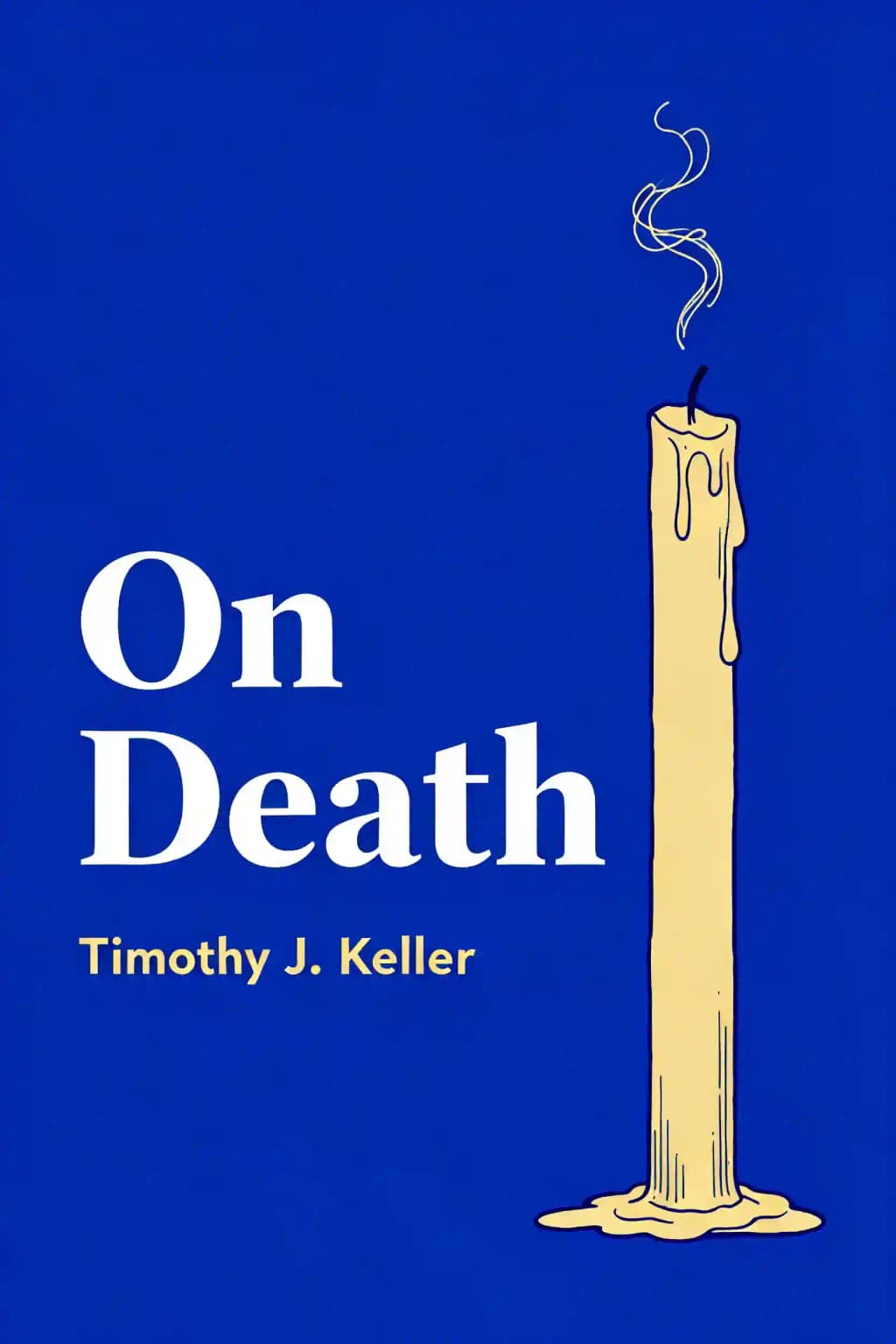
In a culture obsessed with youth and vitality, Timothy Keller's "On Death" arrives as a timely meditation on mortality's profound significance. The book has found an unexpected audience among millennials and Gen Z, who cite its unflinching honesty as refreshing in an age of digital immortality and filtered perfection. Oprah Winfrey once named it among her "Books That Help Me Through" collection, praising its ability to transform fear into understanding. What makes this slim volume so powerful is Keller's rare gift for addressing life's most terrifying reality with both intellectual rigor and pastoral warmth. As death anxiety has surged during global crises, this book has become a quiet companion for many seeking to face mortality with courage rather than denial. What if confronting death could actually teach us how to live more fully?
Capitolo 2
The Great Interruption: Death in Modern Life
Death confronts us in three devastating ways: as the Great Interruption that tears loved ones away without warning; as the Great Schism that separates body and soul; and as the Great Insult that reduces our complex selves to "worm food." Yet paradoxically, modern society has become uniquely unprepared to face this universal reality.
The advances of modern medicine, while blessing us with longer lives, have hidden death from our daily experience. Unlike our ancestors who regularly witnessed death at home, most modern people die in hospitals, shielded from public view. Annie Dillard's vivid writing captures how death once snatched people without warning - from sudden fever, accidents, drowning, and countless other causes. The theologian John Owen outlived all eleven of his children and his first wife, witnessing their deaths personally. Colonial Americans lost one-third of their children before adulthood. This proximity to mortality gave previous generations a sobriety about life's fragility that we've largely lost.
The hiddenness of death enables our cultural denial of mortality, contrary to the wisdom of Psalm 90:12 that calls us to "number our days." We've created elaborate systems to avoid contemplating our end, making us more unrealistic and unprepared than any people in history. Think about it - when was the last time you had a genuine conversation about death that wasn't prompted by tragedy?
Our secular age compounds this problem by demanding meaning and fulfillment within this world alone. Modern culture insists this material world is all there is, forcing us to find ultimate meaning through temporal happiness, achievements, or relationships. But death destroys all these things. While other cultures throughout history viewed suffering and death as chapters in a coherent life story extending beyond physical existence, secular views see suffering as mere "noise" and death as the absolute end - making modern culture perhaps the worst in history at preparing people for mortality.
Mark Ashton, diagnosed with terminal cancer, found that his calm acceptance of death made others profoundly uncomfortable. He wrote: "Our age is so devoid of hope in the face of death that the topic has become unmentionable." Rather than accept and prepare for the inevitable, we avert our eyes and deny what we all know is coming. This collective avoidance doesn't eliminate death anxiety - it merely pushes it underground where it manifests in other ways.
Capitolo 3
The Unbearable Weight of Insignificance
Modern secular culture struggles with death because redefining it as nonexistence creates a profound sense of insignificance. Ernest Becker, in his Pulitzer Prize-winning work "The Denial of Death," argues that humans simply cannot accept that our conscious self, our loves, and our aspirations will simply cease to exist. If death is truly the end - if we come from nothing and go to nothing - how can we avoid a crushing sense of nothingness?
"The idea of death, the fear of it, haunts the human animal like nothing else," Becker writes. "It is the mainspring of human activity - activity designed largely to avoid the fatality of death." Ancient peoples were often less afraid of death because they believed in eternity where death was "the ultimate promotion." But modern Westerners struggle to believe this, making death anxiety more prominent in our psychology than ever before.
This existential dread manifests in surprising ways. Becker argues that modern culture's outsized emphasis on sex, money, career achievement, and social causes illustrates how we desperately seek significance without religion. We build monuments, pursue fame, accumulate wealth, and seek to leave a legacy - all attempts to transcend our mortality. Yet these efforts ultimately fall short because they can't answer the fundamental question: If the universe itself will eventually experience heat death, what lasting significance can any human achievement have?
Consider how we've replaced religious rituals around death with secular substitutes that often feel hollow. Memorial services celebrate a person's life without addressing where they've gone. We speak of people "living on in our memories," but memories fade within a generation or two. We've lost the language and framework for discussing what happens after death, leaving us with platitudes that provide little genuine comfort.
This loss of transcendent meaning creates what philosopher Charles Taylor calls "the malaise of immanence" - the sense that there must be something more than just this material existence, yet having no conceptual framework to articulate what that "more" might be. We're caught between the impossibility of believing in nothing beyond death and the difficulty of believing in something beyond it.
Capitolo 4
The Persistent Shadow of Judgment
Modern culture has largely lost the categories for sin, guilt, and forgiveness, yet these realities persist in transformed ways. Friedrich Nietzsche predicted that as religion receded from public life, our sense of guilt would naturally decline. But historian Wilfred McClay argues this hasn't happened - guilt persists and simply takes other forms. "Guilt is crafty," he writes, "a trickster and chameleon, capable of disguising itself, hiding out, changing its size and appearance." This shape-shifting nature of guilt manifests in everything from environmental anxiety to social media virtue signaling to ancestral shame for historical wrongs.
Our society has removed "sin" and "guilt" from public discourse, yet paradoxically remains highly moralistic and judgmental with its "call-out culture" and public shaming rituals. Social media has amplified this dynamic, creating permanent digital records of transgressions and enabling mob justice on an unprecedented scale. We've maintained strong moral reflexes but abandoned the underlying beliefs in God that provided resources for repentance and forgiveness. The result is a culture that condemns without offering redemption - a merciless system that leaves many feeling perpetually guilty without a path to restoration. Cancel culture exemplifies this pattern, where accusations often lead to social death with no clear path to rehabilitation.
As death approaches, people naturally look back on their lives with tremendous regret. Beyond regret lies the fear of judgment - what Shakespeare's Hamlet called "the undiscovered country" that makes "conscience cowards of us all." This existential dread manifests in both religious and secular individuals, suggesting it's a fundamental human experience rather than merely a religious construct. Despite modern efforts to eliminate the concept of divine judgment, guilt persists most acutely when facing death, and secular culture offers little to address this existential anxiety. Hospice workers and medical professionals regularly report that end-of-life conversations frequently turn to matters of guilt, regret, and the desire for reconciliation.
Think about how we speak of the deceased - "She was a good person" or "He lived a good life." These statements reveal our intuitive sense that life should be evaluated, that some standard exists by which we measure a life well-lived. The persistence of moral eulogy across cultures and belief systems points to humanity's deep-seated need for moral meaning and evaluation. But if there's no ultimate judge, who determines what "good" means? Modern society struggles with this question, often defaulting to subjective or utilitarian measures that prove unsatisfying in moments of deep reflection. And if we've fallen short by whatever standard we acknowledge, what hope remains? This question becomes particularly acute in a secular framework that lacks formal mechanisms for absolution or redemption.
The displacement of traditional religious frameworks hasn't eliminated our need for moral reckoning - it has merely relocated it to more unstable ground, where judgment remains but mercy grows scarce. Contemporary movements for social justice often function as secular substitutes for religious concepts of sin and redemption, but without the accompanying theological resources for grace and forgiveness.
Capitolo 5
The Champion Who Faced Death For Us
Rather than fearing death or denying it, we should see it as spiritual smelling salts awakening us from the illusion of permanence. Christianity offers a radically different approach to death through Jesus Christ, presented as our champion who took on our greatest enemies - sin and death.
Unlike David fighting Goliath, Jesus gave his life, taking the penalty we deserve for our sins. Because he was perfectly sinless, death couldn't hold him and he rose from the dead. By destroying death's power through his sacrifice, he guarantees resurrection for all united with him by faith.
This distinguishes Christianity from other religions that leave individuals to face death alone with their inadequate life record. Instead, Christianity provides a champion who has defeated death, pardons us, and covers us with his love. When we face death "in him," we do so with his perfect record rather than our flawed one.
As Paul wrote, "Where, O death, is your victory? Where, O death, is your sting?" Paul taunts death because "the sting of death is sin" but Christ has taken that sting upon himself. Pastor Donald Grey Barnhouse beautifully illustrated this after his wife's death when explaining it to his children: "Only the shadow of death has passed over her, because death itself ran over Jesus." For believers, death is always defeated - whether we die or not - because Jesus has ensured it can only make us happier and more loved than we've ever been.
This perspective transforms how we approach mortality. Death becomes not an end but a transition, not annihilation but transformation. The grave becomes not a final resting place but a temporary one. This doesn't eliminate grief, but it fundamentally changes its character.
Capitolo 6
Grieving with Hope: The Christian's Balanced Response
In addressing the Thessalonian believers, Paul instructs them on facing the death of loved ones with a unique approach - what might be called "grieving hopefully." This balanced combination of profound grief with sustaining hope differs from both stoic suppression of grief and hopeless despair.
Christians should grieve rather than take the stoic approach that dismisses emotion as weakness. Jesus himself demonstrated this at Lazarus's tomb, where he wept and was even described as "snorting with rage" despite knowing he would soon raise his friend. His reaction reveals that death is an intruder, not part of God's original design. When humans turned from God, everything broke - our bodies, the natural order, our relationships - with death as part of that distortion.
The stoic "keep a stiff upper lip" reaction misunderstands the nature of death, as does the secular view that death is merely natural. A philosopher tells of a seven-year-old boy who, when told his cousin's death was "natural" and his body would "enrich the earth," screamed, "I don't want him to be fertilizer!" This child's reaction aligned with Jesus's view that death is not right - we were created to last. Death is abnormal, not a friend, and not truly part of the circle of life but its disruption. Therefore, grieving is appropriate and healthy.
While grief is appropriate, Paul insists we must grieve with hope. Jesus grieved at Lazarus's tomb despite knowing he would raise him, understanding that raising Lazarus would accelerate his enemies' plans to kill him. Jesus knew that getting Lazarus out of the tomb meant putting himself into it. Through Christ's death and resurrection, believers are released from sin and death, sharing in his resurrection as Romans 6:5-9 explains.
This hope should be "rubbed into" our sorrow like salt preserving meat - without it, grief goes bad. Neither stifling grief nor giving way to despair is right. Instead, pressing hope into grief makes one wise, compassionate, humble, and tenderhearted. This combination of full grief with profound hope offers more strength than stoicism and more freedom to lament than hopelessness.
When we grieve with hope, we acknowledge the real pain of loss while holding fast to the promise that death doesn't have the final word. We can weep without despairing, mourn without becoming bitter, and face reality without being crushed by it. This balanced approach honors both our human emotions and divine promises.
Capitolo 7
The Distinctive Power of Christian Hope
The Christian hope in the face of death is uniquely powerful compared to other religious or philosophical perspectives. Paul calls believers to delight in the greatness of this hope as preparation for death. This hope has four distinctive qualities that set it apart.
First, Christian hope is distinctly personal. Unlike religions teaching that one loses individual identity after death through absorption into cosmic consciousness, Christianity promises continued personal relationships. Paul emphasizes that "we who are still alive... will be caught up together with them... And so we will be with the Lord forever." Jonathan Edwards began his sermon "Heaven Is a World of Love" by noting that our greatest happiness comes from being loved, though on earth even the greatest love relationships are merely like clogged pipes with little love flowing through. In heaven, these clogs are removed.
Currently, we hide behind facades fearing rejection, never experiencing being fully known yet truly loved. We love selfishly and enviously, and our relationships are darkened by fear of loss. Edwards declares that in heaven, all these limitations are removed, and love becomes "an endless deluge and fountain of delight and bliss flowing in and out of us infinitely and eternally."
Second, Christian hope is distinctly material. Paul doesn't just say we go to heaven; he says "the dead in Christ will rise." While our souls go to heaven when we die, that isn't our final salvation. At the end, we receive new physical bodies like Jesus's resurrected body - with "flesh and bones," not merely spirit. Unlike other major religions, Christianity promises not just spiritual existence but a renewed material world purged of suffering, disease, evil, and death.
We won't float like ghosts but will walk, eat, hug, and sing with vocal cords. We'll experience joy, excellence, satisfaction, beauty, and power beyond imagination. This represents death's final defeat - not merely consolation but restoration of the life we've longed for, revealing our true selves freed from flaws and weaknesses.
Capitolo 8
The Beatific Vision: Ultimate Hope Beyond Death
Beyond personal and material hope lies what theologians call the beatific hope - being "with the Lord forever." This means perfect communion, seeing God face-to-face, what's historically called the "beatific vision." Paul writes that then "we shall see face to face... I shall know fully, even as I am fully known." John adds, "We shall be like him, for we shall see him as he is."
When Moses asked to see God's glory, he sought what we were created for - direct communion with God. Our human restlessness and drives for approval, comfort, love, and accomplishment are attempts to fill what Augustine called the "God-shaped hole" in us. Though we can't yet see God directly, through faith we can experience powerful foretastes of his presence. As Paul writes, "God's love has been poured out into our hearts through the Holy Spirit."
Sometimes while reading Scripture or praying, we sense God's greatness and love - partial glimpses, yet transforming. As poet William Cowper wrote: "Sometimes a light surprises the Christian while he sings; It is the Lord Who rises with healing in His wings." If these momentary glimpses are so powerful, what will it be like to drink from the fountainhead of all goodness and love?
Christians also possess a unique assurance about the afterlife that other religions cannot offer. While other faiths may believe in an afterlife, they provide no firm assurance about who will enjoy it. As ancient poet Theocritus wrote: "Hopes are for the living; the dead are without hope." No other religion can assure followers they are virtuous enough to merit a good existence after death.
But Paul writes: "We believe that Jesus died and rose again, and so we believe that God will bring with Jesus those who have fallen asleep in him." When Jesus paid our debt of sin with his death and was resurrected, death lost its claim on him - and on those who believe in him. "There is now no condemnation for those who are in Christ Jesus." We have assurance of the future world of love, not anxiously wondering if we've been good enough.
As Jesus demonstrated when he raised the dead girl with a gentle "Talitha koum" ("Honey, get up"), for believers, death becomes merely like waking from sleep - a transition from one state of consciousness to another, more glorious one.
Capitolo 9
From Mourning to Dancing: The Journey Through Grief
Funerals force us to confront mortality - both the deceased's and our own. Yet after the service, unless the person was close to us, our minds typically revert to keeping thoughts of death at bay. In the presence of death, we risk two mistakes: despairing too much or shrugging it off without learning from it. Scripture guides us to a middle path: grieve with hope, wake from denial to discover lasting peace, and ultimately, laugh and sing.
The Bible promises that when Christ returns, "the mountains and the woods will sing for joy" because in his hands we become everything God intended. If nature will sing at Christ's return, how much more should we rejoice? George Herbert's poem "A Dialogue-Anthem" powerfully expresses this Christian hope through an imagined conversation between Death and a Christian based on 1 Corinthians 15. In this dialogue, the Christian boldly confronts Death: "Do thy worst... The harder you hit me, the more brilliant and glorious I'll be."
As Herbert writes elsewhere, "Death used to be an executioner, but the Gospel makes him just a gardener," planting us in God's soil to become something extraordinary. Like evangelist Dwight Moody said while dying: "I will be more alive than I am right now." We can grieve with hope, find peace, laugh in the face of death, and sing for joy about what's coming when Jesus holds our hand.
For those facing death - whether their own or a loved one's - practical wisdom emerges from this theological foundation. When facing your own mortality, the foundation is believing Jesus came as your Savior, living the life you should have lived and dying in your place to atone for sins. Those with this faith will not face God's condemnation. If you struggle with experiencing God's comfort, examine whether you're still subtly clinging to earning salvation through works rather than faith.
When facing a loved one's death, don't rush major life decisions, especially after a sudden loss when reality feels dreamlike. Be honest about your feelings - it's not "unspiritual" to question and cry out, as even Jesus wept at Lazarus's death. Meditate on the joy your believing loved one now experiences; C.S. Lewis imagined his deceased wife as a sword in God's hand, being wielded with new power and purpose.
Capitolo 10
Transforming Death's Wounds into Glory
The greatest challenge in grief is realizing that the love and joy that seem gone are still available from their original source - the Lord himself. Though prayer may initially feel empty, infinite stores of grace await, enough to carry you through life as a deeper, wiser person. The wound never completely disappears, but like Christ's nail prints, can become "rich wounds in beauty glorified."
Keller concludes with a profound insight: death, properly understood through the lens of Christian hope, becomes not an ending but a transformation. Just as a caterpillar must "die" to its old form to become a butterfly, believers experience death as the doorway to becoming what they were always meant to be. The gospel doesn't merely offer comfort about death; it fundamentally redefines it.
This perspective doesn't eliminate grief - Jesus himself wept at Lazarus's tomb - but it transforms grief's character from despair to hope-filled sorrow. We mourn, but not as those without hope. We face death honestly, but with the assurance that it has already been defeated through Christ's resurrection. We acknowledge death's sting, but know that sting has been removed for those in Christ.
In a culture that either denies death or faces it with despair, the Christian approach offers a third way: clear-eyed realism about mortality coupled with unshakable hope in resurrection. This balanced perspective allows us to number our days without being paralyzed by fear, to grieve without being consumed by sorrow, and ultimately to face our end with the confidence that it is merely a beginning.
As we learn to face death with this hope-filled perspective, we paradoxically learn to live more fully in the present. Awareness of our mortality, when coupled with resurrection hope, doesn't diminish life but enriches it. Every moment becomes more precious, every relationship more significant, every choice more meaningful when viewed in light of eternity. In this way, death becomes not just an enemy to be defeated but a teacher that, when properly understood, can guide us toward a life of greater purpose, deeper love, and more authentic joy.