Capitolo 1
Time's Paradox: The Art of Feeling Free in a Busy World
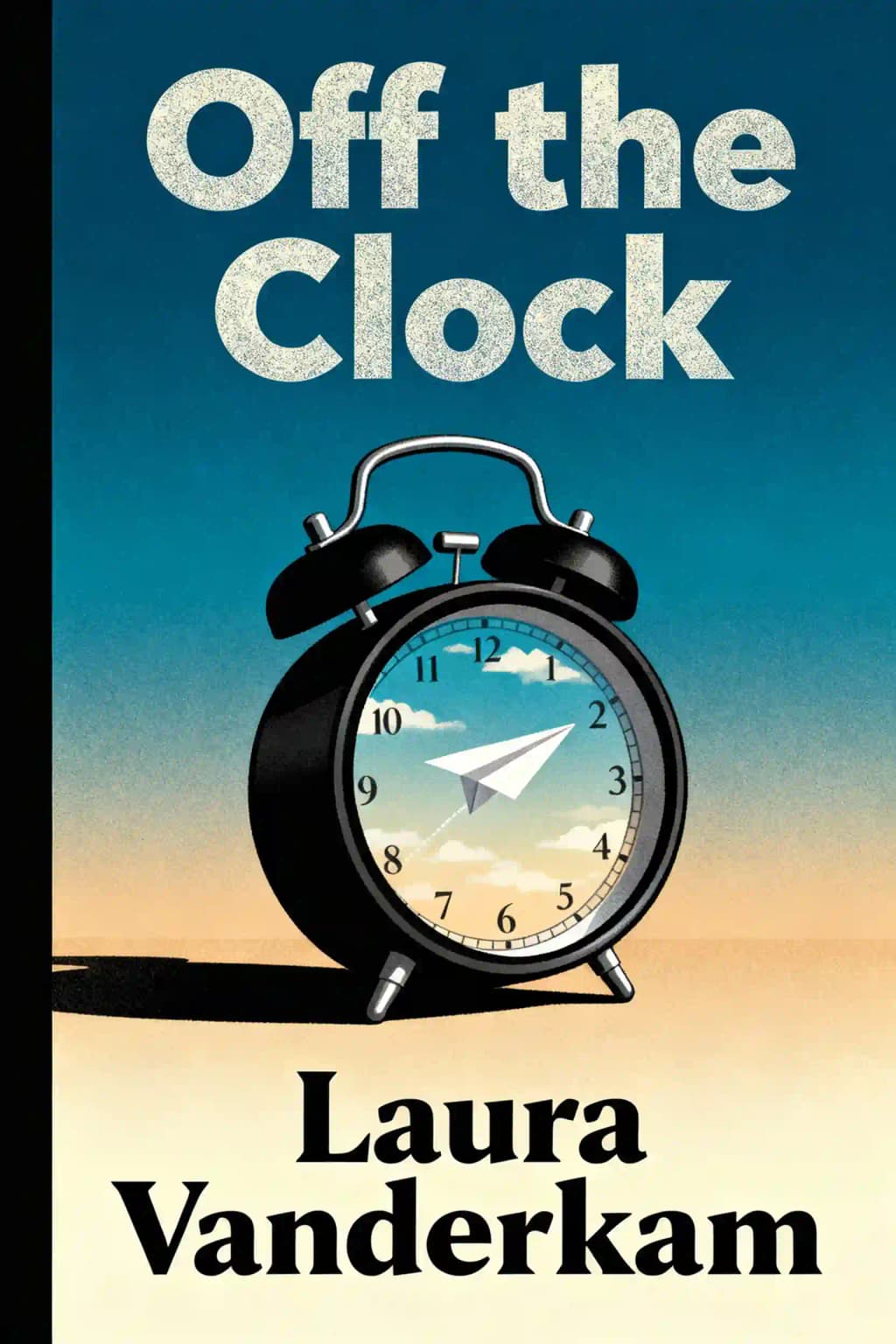
Have you ever experienced that magical sensation of being completely "off the clock" - that rare moment when time constraints dissolve and you feel genuinely free? In our hyper-scheduled world, this feeling becomes increasingly elusive, especially for those balancing careers and family responsibilities. Yet Laura Vanderkam's bestselling book reveals a fascinating paradox: true time freedom requires time discipline. The book has resonated deeply with readers worldwide, becoming a Wall Street Journal bestseller and spawning a TED talk with over 5 million views. Celebrities like Arianna Huffington and Gretchen Rubin have praised its wisdom, and it's frequently cited in productivity circles as the antidote to our culture's toxic relationship with time. What's most intriguing is Vanderkam's discovery that many busy people maintain an enviable calm about time - they've structured their lives to focus on what matters without constant rushing. Her time-diary study of over 900 working parents revealed their secrets, which we're about to explore.
Capitolo 2
Tending Your Garden: The Mindfulness of Time Tracking
Time is like a garden that requires constant attention. Without vigilance, weeds of distraction and unnecessary commitments crowd out what truly matters. Robert Kauffman, a data-loving school principal, discovered this when a mysterious observer tracked his activities in five-minute increments for a week. The results showed he spent only 39.2% of his time on instructional leadership-better than average but less than he wanted. Like a gardener tending his plot, Kauffman redesigned his schedule, creating "Teaching Tuesdays" and designated times for teacher feedback. This constant attention to time isn't easy but creates mental lightness. As another principal using the same system noted: "It's rare that I'm there past 4:30 P.M. anymore. I can leave knowing what I've accomplished."
This garden metaphor extends to our personal lives. Vanderkam tracked her time in half-hour chunks continuously for over a year after her fourth child's birth. The spreadsheets documented everything-5:30 AM nursing sessions, field trips, work meetings, and even intimate moments (euphemistically noted). As Buddhist monk Bhante Gunaratana writes, "Mindfulness gives you time. Time gives you choices. Choices, skillfully made, lead to freedom."
The tracking revealed uncomfortable truths. Though Vanderkam claimed to work 50 hours weekly, her logs showed just 40-she'd been selectively remembering busier weeks because she wanted to see herself as that kind of professional. The missing hours went to various activities: 9 hours weekly on housework, 7+ hours driving despite working from home, 4.4 hours exercising, and about an hour daily reading (mostly magazines rather than substantive books).
Isn't it fascinating how we misremember where our time goes? We're not alone in this self-deception. Studies show people claiming 75+ hour workweeks typically overestimate by about 25 hours. Our perception rarely matches reality.
After analyzing her data, Vanderkam made strategic changes. Accepting her actual 40-hour work week, she became more selective about assignments and increased her speaking rates. She stopped running errands during prime work hours and deliberately reduced work to 35 hours weekly, allocating those extra 5 hours to daytime adventures like noon organ recitals or wine tastings after speaking engagements.
Other time-trackers report similar revelations. Drew Paul, a finance major, discovered Netflix consumed twelve hours weekly (which he reduced). Claudia Andre, a lawyer who unexpectedly conceived triplets, tracked her time at three developmental points to test dire warnings that she would "never sleep or have time for herself again." Despite conventional wisdom about raising multiples, she still managed 6-7.5 hours of sleep nightly and gradually increased personal time to three hours daily by the triplets' eighteen-month mark.
While tracking offers valuable insights, not everyone will commit to logging all 168 hours weekly. The key is envisioning how you'd like to spend your time, then evaluating and tweaking daily. Design a "realistic ideal day" within your current life framework-including reading time, focused work, self-care, and quality family moments.
Ultimately, tending your garden comes down to ownership-deciding you're responsible for how you spend your time. Like Central Park's transformation through zone gardeners who took full responsibility for their plots, becoming your life's master gardener means believing time is largely a choice.
Capitolo 3
Making Life Memorable: The Secret to Stretching Time
Our perception of time depends largely on memory. While we often wish for "more time," what we truly desire are more memories. Time travel exists in our minds - artifacts can transport us instantly to vivid past experiences that have remained dormant for years. A receipt from 2002 can suddenly bring back the feeling of an overnight train in Thailand with startling clarity.
While most mental time travel happens randomly, we can intentionally cultivate meaningful memories. Psychologist Liz Currin describes imagining a "treasure chest" filled with gems representing memories of her daughters' childhoods. She regularly revisits ordinary moments - like taking her young daughters swimming - that have become precious through intentional remembering.
Our brains don't record every moment equally. Routine experiences get compressed in memory - a thousand identical commutes collapse into a single memory unit. This explains why years can disappear into "memory sinkholes" and why time seems to accelerate as we age. William James observed that "emptiness, monotony, familiarity, make it shrivel up." An 800,000-hour life can shrink to the equivalent of five weeks in memory.
Contrast this with childhood, when everything was new and emotionally intense, creating deeper time impressions. The memories that stand out in adulthood share this quality of novelty or intensity. First dates, childbirth, and vacations create distinct "memory units." As neuroscientist Lila Davachi explains, "in an environment with a lot of variety and change, you're forming far more memory units than in an environment with very little change."
People who report doing something memorable or out of the ordinary are 14% more likely to feel they have enough time. Analysis of time logs from those with the highest time-perception scores revealed surprisingly interesting lives, even on ordinary Mondays - from spontaneous movie outings and massages to salsa dancing and big-band concerts.
Even without dramatic adventures, these time-rich people spent evenings doing something beyond watching TV: family park visits or evening strolls. Small actions can create memorable moments: trying new lunch spots, exploring different neighborhoods, having meaningful conversations with unfamiliar colleagues, speaking up in meetings, writing letters to editors, swimming on summer evenings, eating breakfast outdoors, or exploring nearby nature spots you've neglected.
We struggle to create memorable experiences because we're actually three different selves: the anticipating self (planning for the future), the experiencing self (living in the present), and the remembering self (looking back at the past). Creating more time-expanding memories requires privileging the anticipating and remembering selves over the experiencing self - a difficult feat requiring self-discipline.
The anticipating and remembering selves share brain systems - both construct narratives about events not happening in the present moment. The anticipating self sets "anchors" in the future that can pull us forward, providing pleasure weeks in advance. The remembering self maintains our identity through memories that mark time's passage.
The challenge is that the experiencing self exerts disproportionate influence despite its fleeting nature. While the anticipating self makes exciting plans and the remembering self cherishes memories, the experiencing self must deal with present discomforts and fatigue. It often wins with justifications like "I'm tired" or "I'll do it next time," choosing immediate effortless pleasure over more meaningful experiences that require effort. As philosopher Robert Grudin writes, "We pamper the present like a spoiled child."
To overcome this, remind yourself that all time passes regardless - you'll always be on the other side of the next twenty-four hours whether you fill them with "nothing" (meaningless somethings) or with something intriguing. Even if an activity seems daunting, you'll eventually be past it with a good story to tell if you just push through the experiencing self's resistance.
Capitolo 4
Don't Fill Time: The Power of Empty Space
Heath, a successful executive, maintains an unusual approach to time management built on valuing white space in his calendar. While most people fill their schedules with meetings as evidence of productivity, Heath purposefully maintains openness. "If my calendar is wide open, that doesn't mean I don't have a lot to get done," he explains.
He rejects the meeting-centric culture that creates vicious cycles: people can't make decisions without meetings, which leads to more meetings, which prevents email reading, which requires more meetings. Heath empowers employees to make decisions independently and remains available for quick hallway conversations rather than scheduled 30-minute blocks.
This approach creates mental space to handle what truly matters. Heath recognizes meetings consume more time than justified-a 60-minute meeting easily consumes 90 minutes of mental space with preparation and transitions. By pushing back against schedule clutter ("It's like water. It will find the openings if you let it"), Heath paradoxically appears to have capacity, which has led his parent company to entrust him with additional business lines around the globe.
While adventures make life memorable, we often believe we lack time for them because our lives seem full. In reality, the future is blank-a spreadsheet with 336 empty thirty-minute cells each week. We fill time based on probabilities, expectations, and obligations, but many of these are self-imposed rather than inevitable. We become "puppets performing one act after the next" without questioning whether our schedule truly reflects our priorities.
In my time-diary study, people with the most abundant time perception worked about one hour less per day than those who felt time-starved (7.6 vs. 8.6 hours). But this difference isn't just about working fewer hours-it's about how they approach time. Those with higher time-perception scores plan strategically, boosting efficiency by matching tasks to energy levels and taking conscious breaks. They choose not to fill all available space.
We often think more about starting commitments than ending them, causing obligations to accumulate endlessly. Few things are meant to continue forever, yet we rarely plan their conclusions. The solution is declaring a "time jubilee"-a complete amnesty from all obligations beyond essential life maintenance. After this reset, you can evaluate all claims on your time with fresh eyes, choosing what to keep rather than what to eliminate.
We tell ourselves countless stories about what's required in life: "I'll never replace this income," "I'll lose my job if I don't look busy," "No one takes lunch breaks here," or "Everyone knows you need to work 70 hours to succeed." These stories typically collapse under examination. The truth is that people notice far less than we imagine. Your boss is too busy pleasing her own boss to track your exact lunch duration. Clients rarely count response times.
Certain investments of time in the present can create "time dividends" that pay off repeatedly in the future. These dividends take many forms: hiring and training a good assistant; becoming recognized as an expert so clients seek you out; establishing a home office to eliminate commuting days; creating FAQ documents for common inquiries; developing consistent scheduling patterns; or teaching family members skills like cooking.
Our modern technology habits are the worst time-filling culprits. The average social media user spends 116 minutes daily on these platforms-time that didn't exist 25 years ago. These minutes don't occur in mindful chunks but dribble through the day, turning potential downtime into schedule clutter that feels like work but isn't. My time-diary study revealed people with the highest time-perception scores checked their phones roughly 5 times hourly, while those with the lowest checked nearly 13 times.
Capitolo 5
Lingering: The Art of Stretching Time
KJ Dell'Antonia, author of "How to Be a Happier Parent," transformed her family's hectic hockey schedule from a rushed ordeal into an opportunity for meaningful experience. After conquering her lateness habit by being realistic about timing, she sought a word to represent her new approach to life-settling on "linger" after rejecting terms like "dawdle" and "dillydally" with their negative connotations.
Dell'Antonia implemented lingering in practical ways: staying through the "second shift" of family dinners as children arrived at different times; exploring the towns where hockey games took them by visiting local chocolate shops and bookstores; and making a conscious mental switch away from unnecessary stress by reminding herself "there is nothing wrong" when conditions were actually pleasant.
Unlike "enjoying every moment" (an impossible standard), lingering means giving important things the time they deserve. It's about consciously staying with enjoyable experiences rather than rushing to the next task. Having this concept as her guideword helped answer the perpetual question "What am I supposed to do now?" with a satisfying response: linger.
Punctuality is the first practical step toward lingering properly. Many late people aren't rude but rather people-pleasers who can't end conversations, or optimists who remember that one time the drive took 30 minutes at 5am rather than the usual 45 at rush hour. They fail to account for all parts of activities - not just grocery shopping but unloading and putting away groceries.
The solution is simple: track time to learn how long things actually take, then build in buffers. Punctual people like Nixon Peabody CEO Andrew Glincher automatically add 15-minute cushions to appointments and longer buffers for bigger time blocks. When you're generally punctual, people understand the rare times you're not.
Lingering isn't just about avoiding lateness - it's about actively savoring the present to stretch your experience of time. To savor means adding a layer of appreciation to pleasure, acknowledging the goodness you're experiencing. People who feel present rather than distracted are 35% more likely to say they have time for things they want to do.
The richest savoring involves awareness of past and future alongside the present. Fred Bryant describes summiting Colorado's Snowmass Mountain after two failed attempts. Beyond enjoying the magnificent view, he embraced his companions, recalled his past back injury that almost ended his climbing career, projected how he'd remember this moment in the future, and deliberately recorded sensory details. Though they spent just ten minutes at the summit, his conscious savoring made the experience feel vastly more expansive.
Savoring is an acquired skill that transforms our perception of time. Bryant teaches psychology at Loyola University Chicago and uses "mental time travel" to appreciate ordinary moments. He imagines himself in a nursing home someday, wishing he could teach just one more class - then realizes "That's today!" This constructed contrast awakens him to everyday joys.
We can engineer lingering moments by clearing our calendars of unwanted obligations. Bryant recommends a "Daily Vacation Exercise" - spending 10-20 minutes each day on something enjoyable like watching a sunset or visiting a bookstore, while consciously acknowledging each pleasurable sensation and building memories of the experience.
Capitolo 6
Investing in Happiness: The Strategic Use of Resources
Chris Carneal, founder and CEO of Boosterthon, has developed a morning routine that transforms how he experiences time. Despite leading a company with hundreds of employees and having four young children, he avoids feeling frazzled by investing in his own happiness first. His day begins at 4:55 AM with a CrossFit workout at 5:15, followed by time at a local Waffle House where he reads, works, or meets companions. By carving out this personal time while his family sleeps, he manages to feel less busy while accomplishing more.
When people say they want more time, they often mean they want more time doing things that make them happy. Our perception of time varies based on what we're doing and our mental state. People who feel time-rich make strategic choices, investing resources to optimize their happiness. Those with positive time perception spend more hours on mood-boosting activities like exercise and socializing, while those with negative perception spend more time online and watching TV.
Money is a tool that, used strategically, can enable happiness. We often misjudge happiness, failing to recognize that both joy and sorrow are temporary states. Purchases make people happy when they enable enjoyable experiences that become lasting memories, not subject to hedonic adaptation. While life satisfaction matters, our moment-to-moment happiness drives our moods. Studies show certain activities consistently produce better moods than others, with commuting ranking lowest and socializing ranking high.
Small treats can significantly improve mood and perception of time. Despite their benefits, disciplined, frugal people often deny themselves these simple pleasures. During a gratitude exercise, Vanderkam discovered that deliberately engineering enjoyable moments into difficult days transformed her experience. Rather than just enduring a gloomy day, she went for a beautiful trail run, got takeout from a favorite restaurant, and read a good book with wine - creating a good day for the price of gas and a meal.
Time, like money, can be invested to bring happiness and a sense of freedom. Not all hours are equally suited to all activities due to energy levels and external demands. If you wait until the end of the day for important activities, you'll likely have no energy left. Morning hours offer special opportunities for those with grand ambitions but busy schedules, allowing you to prioritize what matters before the day's demands take over.
Investing money and time can make life more enjoyable, but the most profound investment in happiness is mental. While parts of life won't be blissful, flipping the switch from enduring to enjoying can transform your experience of time. This requires becoming "good at suffering" - a skill life sometimes forces people to learn.
The sense of contrast-that what might be missed in normal times can stand out in harsher ones-is key to transforming endurance into enjoyment. Amelia Boone, a champion obstacle course racer, survives torments through compartmentalization-focusing on getting from obstacle to obstacle rather than the entire race-and by finding moments to enjoy, like engaging with fellow competitors and experiencing the euphoria of sunrise after a night of suffering.
Joy is a discipline, requiring conscious effort especially during difficult times. The most important discovery is that joy requires holding two truths simultaneously: this too shall pass AND this too is good. Happiness isn't just bestowed; it's the earned interest on what you choose to pay in.
Capitolo 7
Letting Go: The Freedom of Lowered Expectations
Laureen Marchand, a Canadian artist, found liberation by changing her expectations about art-making. Rather than berating herself for not creating enough during challenging weeks filled with household problems and other obligations, she adopted a gentler approach: "Make art when you can. Relax when you can't." This perspective allowed her to preserve Monday mornings for art while scheduling self-care when studio time wasn't possible.
The real issue is expectations exceeding reality, which creates suffering and wastes time through mental anguish. As the Buddha noted in the Dhammapada, subduing desire allows sorrows to "fall from you like drops of water from a lotus flower." The paradox: low expectations consistently met lead to great achievements over time, not through force but through gentle persistence.
Decision-making creates significant time-wasting anxiety for many people. Barry Schwartz categorizes people as either "maximizers" who seek the absolute best option or "satisficers" who choose the first option meeting their criteria. While maximizing seems admirable, research shows satisficers tend to be happier because they don't waste time ruminating over choices or comparing themselves to others. Maximizers inevitably face disappointment since "the idea of the best is preposterous" in a world with physical and financial limitations.
While goals provide direction, setting them wisely prevents unnecessary anguish. Process goals-essentially habits-prove more effective than outcome goals because they remain within one's control. The key is making these goals so small there's no resistance to meeting them-"better than nothing" (BTN) goals. Vanderkam's running streak began with just one mile daily, which often led to longer runs once she'd started. Small actions repeated consistently add up to seemingly impossible achievements.
Letting go of expectations is particularly crucial in relationships. People change only when they want to, not because someone worries about them. Parenting teaches this lesson repeatedly-from Pinterest nurseries rearranged for practicality to discovering your child is the one biting everyone at daycare. While you can enforce teeth brushing, children are ultimately their own people. The same gentleness should extend to ourselves. When frustrated with writing, Vanderkam recalls Hemingway's advice: "Write the truest sentence that you know." What writer minds writing just one sentence? With gentle persistence, the words emerge.
Capitolo 8
People Are a Good Use of Time: The Relationship Priority
When best friends Elisabeth McKetta and Cathy Doggett speak, they effortlessly finish each other's sentences, their conversation flowing from decades of connection. Their friendship began in Boston when Doggett, the more organized one, suggested weekly Monday cooking dinners. Even after moving to separate cities-McKetta to Boise and Doggett to Austin-they maintained their connection through deliberate phone conversations about goals, progress, and books they read together.
Their relationship weathered bumps, including when McKetta tried to reschedule a dinner and Doggett firmly held her accountable. This wasn't inflexibility but establishing ground rules for a relationship meant to last decades. As McKetta explains, "I felt chosen and excited to rise to the challenge. She's very good at asking questions that show a long, deep concern for my well-being."
The more time we spend with friends and family, the more time we feel we have. In Vanderkam's survey, people with the highest time-perception scores spent nearly twice as much time (96 minutes) with loved ones compared to those with the lowest scores (52 minutes). Those with high scores used more inclusive language in their logs: "walk/run with kids and dog," "ate dinner with my whole family," while those with lower scores rarely mentioned such engagements.
Most people allocate relationship nurturing to leftover time after completing have-to-dos. This approach fails because free hours typically come during our lowest energy periods. Instead, treat relationships with the same intentionality as work. Incorporate relationship priorities into all planning: when making bucket lists, create three equal categories (career, relationships, self); when imagining your eulogy, consider what evidence of close relationships people would mention; set quarterly goals across all three categories; and include relationship priorities in weekly planning.
Relationships fall into two categories requiring different approaches: people you naturally see multiple times weekly and those you don't. With immediate family members, the challenge isn't quantity of time but creating meaning within existing time blocks. Even with work and sleep, you likely have 50+ waking hours at home weekly. The issue is that these hours often focus on logistics-getting everyone out the door, through homework, and managing household tasks. The key is intentionality - few people would show up at work with no plan for five hours, yet many come home with no thought about how they'll spend their evening hours.
For relationships with people you don't naturally see frequently, maintaining connections requires deliberate effort. Molly Beck recommends the "RO" (reach out) habit: contact one person daily from your list of people you've met before, recent acquaintances, suggested connections, or interesting strangers. These brief, thoughtful emails (8-10 minutes each) should include a compliment and something helpful. If you send 250 emails yearly with a 40% response rate, that's 100 responses and potentially 20 meaningful connections.
To prioritize friendships in your busy life, "go big" with annual events planned a year in advance. These grand occasions are easier to prioritize than casual meetups. For local friends, create standing dates like monthly book clubs that become automatic fixtures in everyone's schedules. One-on-one friendships benefit from regular calendar spots too, like weekly phone calls or Friday breakfasts.
When time is limited, you must be selective about relationships. Not all friendships will survive through career-building years, family-raising periods, or relocations. Some relationships deepen your spirit while others existed merely from convenience. The goal isn't quantity but quality - identifying which relationships merit investment despite inconvenience, then going all in on making them work.
When we remember that "people are a good use of time," we naturally seek memory-making opportunities with those we care about. Though traveling with children has limitations, the experience can be magical. Seeing familiar places through a loved one's eyes can rekindle our own wonder and transform ordinary moments into treasured memories.