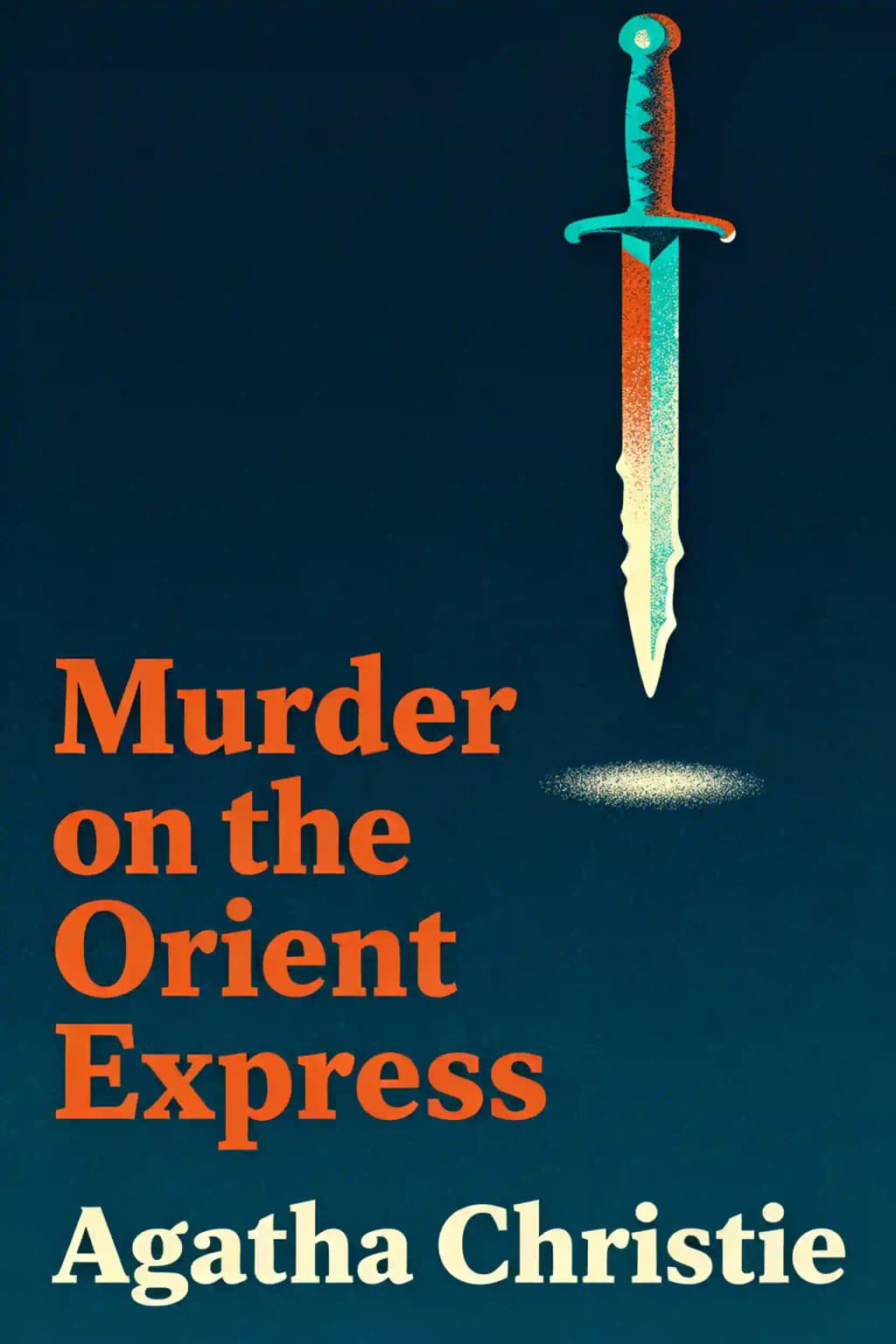
Murder on the Orient Express
a Hercule Poirot mystery
Panoramica di Murder on the Orient Express
A luxury train. Twelve suspects. One ingenious murder. Christie's masterpiece captivated millions, inspired Oscar-winning films, and established the "impossible crime" blueprint. Stephen King cites it as influential. Can you solve Poirot's most legendary case before the final, shocking revelation?
Temi chiave in Murder on the Orient Express
- vigilante justice
- closed-room mystery
- moral ambiguity
- collective retribution
- hidden identities
Citazioni da Murder on the Orient Express
I do not like your face, M. Ratchett.
The murderer must still be among them.
The testimonies create a complex puzzle.
Each new discovery seems to deepen rather than solve the mystery.
Personaggi di Murder on the Orient Express
- Hercule PoirotA fastidious Belgian detective with keen skills
- RatchettAn American businessman with a malevolent aura
- M. BoucAn old friend of Poirot and director of Wagon Lit
- Mary DebenhamA composed English governess
- Colonel ArbuthnotAn English traveler and military man
Sull'autore
Sull'autore di Murder on the Orient Express
Dame Agatha Mary Clarissa Christie (1890–1976), known as the "Queen of Crime," masterfully blends mystery and moral complexity in Murder on the Orient Express, her iconic 1934 detective novel.
A former World War I nurse and pharmacy dispenser, Christie’s expertise in poisons and psychological intrigue shaped her pioneering "whodunit" style, exemplified by Hercule Poirot’s ingenious unraveling of a snowbound train murder.
Her works, including And Then There Were None (the world’s bestselling mystery) and The ABC Murders, redefine the genre with labyrinthine plots and timeless themes of justice. Christie’s 66 detective novels and 14 story collections have sold over 2 billion copies, translated into 100+ languages, cementing her status as history’s best-selling fiction author.
Murder on the Orient Express has inspired multiple film adaptations, including the 1974 Oscar-winning version and a 2017 remake directed by Kenneth Branagh. Christie’s enduring legacy extends to The Mousetrap, the longest-running West End play, still performed since 1952.
Scarica il riassunto di Murder on the Orient Express
Ottieni il riassunto di Murder on the Orient Express in formato PDF o EPUB gratuito. Stampalo o leggilo offline quando vuoi.
FAQ su questo libro
Murder on the Orient Express follows detective Hercule Poirot as he investigates the murder of a wealthy American passenger, Ratchett, aboard a snowbound train. Poirot uncovers Ratchett’s true identity as Cassetti, a kidnapper responsible for the Armstrong family tragedy, and discovers all 12 passengers conspired to kill him as vigilante justice.
Fans of classic mystery novels and Agatha Christie’s intricate plots will enjoy this book. It’s ideal for readers who appreciate morally complex narratives, locked-room mysteries, and iconic detective characters like Poirot.
Yes—it’s a cornerstone of detective fiction, renowned for its shocking twist ending and exploration of justice vs. law. Christie’s clever pacing and layered clues make it a timeless page-turner.
Key themes include moral ambiguity, collective justice, and the consequences of trauma. The novel questions whether ethical lines can blur when avenging systemic failures, symbolized by the passengers’ united act of retribution.
Poirot reveals two solutions: a fabricated “outsider” culprit or the truth—all passengers, connected to the Armstrong case, stabbed Ratchett. The authorities accept the first theory, allowing the group to escape punishment.
Critical clues include:
- A handkerchief with the initial “H”
- A charred note referencing “Daisy Armstrong”
- Twelve stab wounds matching the number of conspirators
- A pipe cleaner and mismatched match
It stands out for its bold moral dilemma and collaborative crime. Unlike The Murder of Roger Ackroyd or And Then There Were None, it prioritizes ethical complexity over pure puzzle-solving, making it a thematic outlier in Christie’s works.
Some critique its reliance on coincidental character connections and underdeveloped suspects. The 2017 film adaptation faced scrutiny for outdated tropes, though the novel remains largely praised for its ambition.
The snow trapping the train represents isolation, forcing characters to confront their secrets. It also mirrors the “locked room” mystery structure, heightening tension.
Christie distracts readers with red herrings like the conductor’s uniform and fabricated timelines. She also leverages Poirot’s internal conflict to mask the collective guilt until the finale.
Daisy Armstrong’s kidnapping and death (which killed her parents and their unborn child) motivate the passengers’ revenge. This backstory transforms the murder from a crime of greed to one of retribution.
The novel contrasts legal justice (Cassetti escaping punishment) with vigilante justice, asking whether morality can supersede law. Poirot’s dual solutions highlight society’s preference for order over moral nuance.