Capitolo 1
A Revolution Begins with You: The Power of Making Change
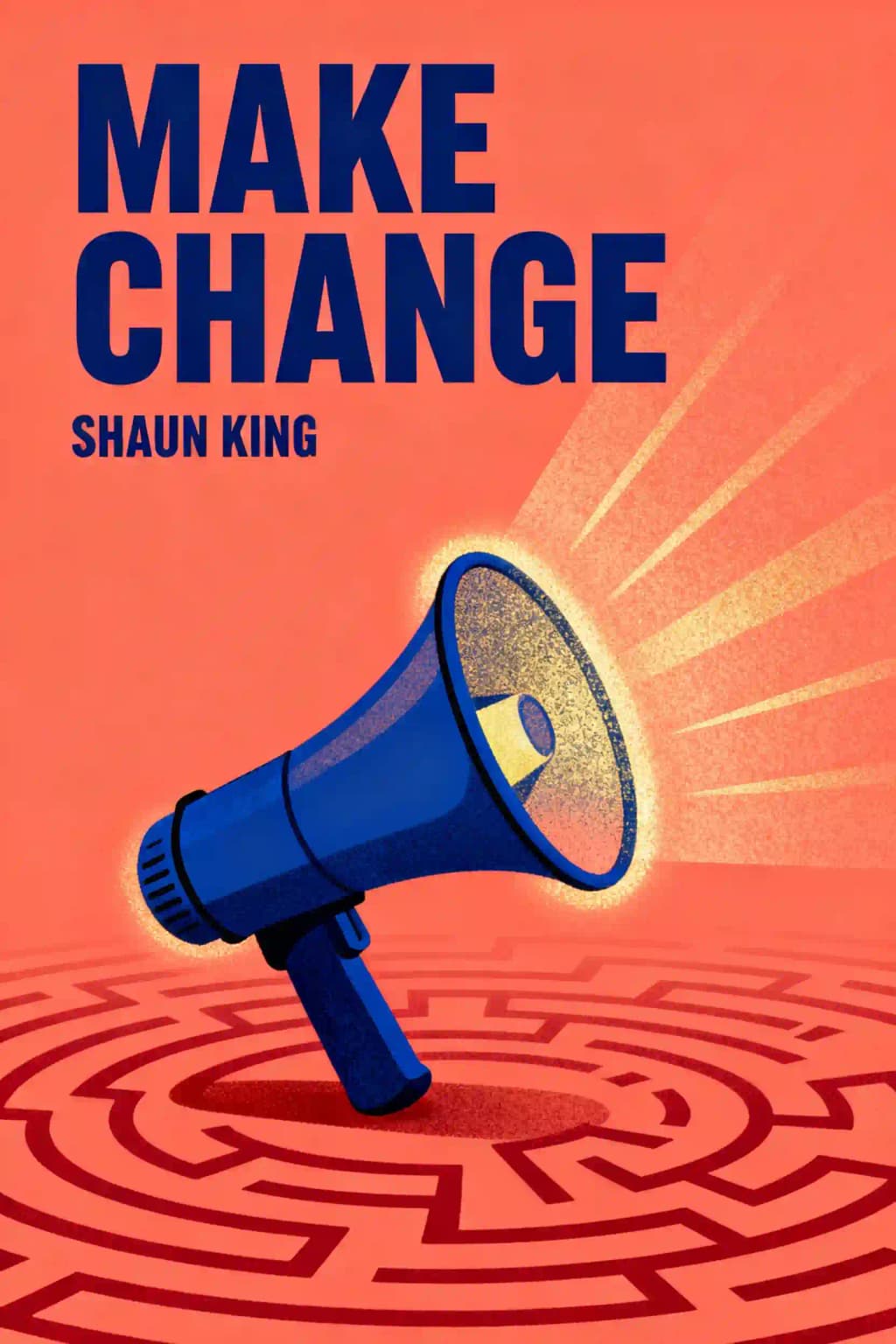
When Shaun King arrived at his Global Green office in Santa Monica on a beautiful July morning in 2014, he had no idea his life was about to change forever. A video message from a Morehouse classmate showed police officers choking a Black man who repeatedly gasped "I can't breathe" before dying. That man was Eric Garner, and his death would become a catalyst for what we now know as the Black Lives Matter movement. Within weeks, King left his stable job with no backup plan, devoting himself entirely to fighting police brutality and systemic racism. His journey from communications director to full-time activist wasn't planned-it was a response to an urgent moral calling that could no longer be ignored.
This book has become required reading for activists across America, with celebrities like John Legend and political figures like Bernie Sanders citing its practical approach to creating meaningful change. What sets King's work apart is his rare combination of passionate advocacy and strategic thinking-offering not just inspiration but a roadmap for effective action. As America continues to grapple with racial injustice, climate crisis, and economic inequality, "Make Change" arrives at precisely the moment when many are asking: "What can I actually do that matters?"
Capitolo 2
Understanding History's Rhythm: The Peaks and Valleys of Progress
When we study history in school, we're typically presented with a sanitized, progressive narrative-a steady upward climb from barbarism to civilization, from injustice to justice. This "Instagramification" of history, jumping from highlight to highlight, creates a dangerous misunderstanding of how human society actually evolves. From the Renaissance to the Industrial Revolution to the Digital Age, we're taught to see history as a series of triumphant leaps forward. This oversimplified view, however, obscures the complex reality that 19th-century historian Leopold von Ranke discovered through his groundbreaking research.
Von Ranke set out to create the first exhaustive timeline of world history, traveling throughout Europe to gather firsthand sources from dusty archives and forgotten monasteries. What he found shocked him-instead of steady improvement, human history resembled the jagged Himalayas, with sharp peaks of progress followed by devastating plunges into darkness. The fall of Rome led to centuries of cultural regression. The flourishing of Islamic Golden Age gave way to periods of fundamentalism. The European Enlightenment was followed by bloody revolutions and counter-revolutions. This pattern repeats endlessly across civilizations and centuries, suggesting a fundamental rhythm to human progress.
This insight fundamentally changed how I understood contemporary events like police killings, hate crimes, and political violence. We often mistake technological advancement for moral progress, assuming our smartphones and space exploration mean we've outgrown our capacity for cruelty and oppression. But human nature doesn't evolve at the same pace as our gadgets. The internet, for instance, has enabled both unprecedented connection and dangerous tribalism. Social media has amplified both social movements and conspiracy theories. Our technical sophistication often masks our persistent moral challenges.
When horrific events occur-like the Charleston church shooting, the violence in Charlottesville, or the January 6th insurrection-many Americans respond with shock: "How could this be happening today?" This reaction stems from our misunderstanding of history's rhythm. We're currently experiencing what I call "the dip"-a period of regression following significant progress. The election of America's first Black president was a peak moment that threatened established power structures, and the backlash was predictable to anyone familiar with historical patterns. Similar reactions followed Reconstruction, the Civil Rights Movement, and other periods of dramatic social change.
Understanding this cycle doesn't mean accepting it. Rather, it helps us recognize that our current struggles aren't anomalies but part of an ongoing battle between progress and regression. The dip isn't permanent-it's a valley we must climb out of together, with clear-eyed determination and strategic action. History shows us that periods of backlash often precede transformative change, but only when people understand the pattern and organize effectively to counter it. The Civil Rights Movement emerged from the depths of Jim Crow. The women's suffrage movement gained strength from opposition to it. History doesn't move forward automatically; it advances when ordinary people recognize these patterns and work collectively to push through the resistance that inevitably follows progress.
Capitolo 3
Finding Your Purpose: The Decision That Changes Everything
Deep inside each of us lies a longing to do good-to leave the world better than we found it. Yet most of us never translate this desire into meaningful action. The difference between those who create change and those who merely wish for it begins with a decision-a profound personal commitment to solving a specific problem.
This decision isn't casual or convenient. It's a life-altering choice to make someone else's problem your problem, approaching it with the same urgency you'd address a burst pipe flooding your bedroom at 3 a.m. Complex systemic problems are only solved by people who make hardcore decisions to solve them.
My own journey toward this decision wasn't straightforward. At Morehouse College, I found my sanctuary after the hell of high school in Kentucky. There, surrounded by Black excellence, I rebuilt my confidence and developed my voice. When Amadou Diallo was killed by NYPD officers who fired 41 shots at an unarmed man reaching for his wallet, our campus erupted in protest. This became our generation's Ferguson moment, connecting our student activism to larger struggles for justice.
After graduation, despite corporate job offers, I chose helping professions-teaching, counseling in youth detention centers, pastoring, and motivational speaking. For thirteen years, I worked in various roles, occasionally advocating for justice in high-profile cases like Sean Bell and Trayvon Martin. But it was the 2014 murders of Eric Garner, Michael Brown, and others that truly awakened me. At 34, I decided to focus my entire life on fighting mass incarceration and police brutality.
The question I'm asking you is: What problem breaks your heart? What injustice keeps you awake at night? Whatever it is-climate change, homelessness, educational inequality, healthcare access-make that your problem. Commit to it with the same urgency as that burst pipe. While you can care about many causes, you can only fight effectively for one at a time.
This focus isn't limiting-it's liberating. By concentrating your energy on one issue, you'll discover its intersections with other problems. My work on police brutality naturally connected to immigrant rights through private prisons, global policing practices, and literacy's impact on incarceration rates. This approach allows depth without sacrificing breadth.
Until you make this serious decision, your impact remains in a holding pattern. Most activism doesn't die in the streets but in our minds as we talk ourselves out of making a difference. Remaining neutral in the face of oppression only deepens our collective slide into the dip. Climbing out requires conscious choice.
Capitolo 4
Confronting Your Excuses: The Barriers We Create
When we witness injustice, our minds often generate compelling reasons why we can't help. These excuses feel rational but serve primarily to protect our comfort. Let's confront the most common barriers people create:
"I'm too young." This excuse is never valid. Young people have been essential to every successful social movement. Fifteen-year-old Claudette Colvin refused to give up her bus seat nine months before Rosa Parks. In 1963, over a thousand Black students in Birmingham protested segregation, with 973 children arrested in the largest mass arrest of children in American history. Despite facing fire hoses and police dogs, they continued protesting, putting crucial pressure on Birmingham's power structure.
"I'm too old." Age brings wisdom, perspective, connections, and resources invaluable to movements. Harry Belafonte continued offering profound guidance to activists worldwide well into his nineties. The multigenerational perspective that older individuals bring isn't just helpful-it's urgently needed.
"I'm too busy." Everyone feels overwhelmed by their schedule, but making change requires intentionally allocating time. Dedicating just 10 percent of your waking hours-about 90 minutes daily-can create significant impact while maintaining your current responsibilities. The key is optimizing your schedule and being thoughtful about how you spend your time.
"I'm too white." White allies are needed in Black, Latinx, indigenous, and immigrant spaces, but must approach without expecting privilege. The solution: listen more than talk, allow people to trust you at their own pace, be consistently present even through awkward moments, and show deference to how other cultures operate. Your willingness to learn will eventually create your organic path within communities not your own.
"I don't know where to begin." When facing complex problems, remember the entire burden isn't yours alone. Find organizations already addressing your concern. Follow advocates on social media, volunteer at their events, read extensively about the issue, and reach out to experts. The struggle to begin is usually more about knowledge gaps than direction-increase your understanding and you'll find your way forward.
"I'm afraid of failure." You will fail-not because you're insufficient, but because failure is part of the process. Every revolutionary has failed countless times. Barack Obama lost his first Congressional race by a landslide. Bernie Sanders lost five straight elections, often coming in last, before finally winning as mayor of Burlington by just ten votes. You will lose battles, but they make the wins sweeter. Making change isn't theoretical-you have to get in the game.
Capitolo 5
Learning Through Action: The First Steps Forward
Like parenting, activism is something you can read about extensively but must ultimately learn through experience. When my girlfriend Rai became pregnant during college, no books could fully prepare us for the reality of raising a child - from midnight feedings to navigating healthcare systems to making daily decisions that shape a young life. Similarly, you must move beyond just reading about making change to actually doing the work, accepting that mistakes and uncertainty are natural parts of the learning process.
The transition from caring to serving is often clumsy and confusing, much like those first weeks of any new endeavor. Begin by researching leading organizations in your cause area and following relevant leaders on social media. Study their platforms thoroughly - read their mission statements, annual reports, and strategic plans. Look for local chapters where volunteering is easier than at the national level, as these often provide more hands-on opportunities and direct mentorship. Attend public events, introduce yourself, and follow formal volunteer sign-up processes. Many organizations host orientation sessions or volunteer fairs that provide excellent entry points.
When volunteering, approach organizations with patience and respect their processes, understanding that established groups have developed their systems through years of experience. Don't make special accommodation requests or immediately ask about employment opportunities-this signals self-interest rather than commitment to the cause. Instead, demonstrate reliability and consistency in small ways first. As a new volunteer, listen more than you speak, build knowledge through observation, and embrace unglamorous tasks like data entry, distributing flyers, or staffing registration tables. These humble beginnings build the foundation for greater impact later and help you understand the full scope of organizational operations.
The path to meaningful change reveals itself through action, not contemplation. By engaging directly with movements and causes, you'll discover your unique role through practical experience. Howard Thurman wisely advised: "Don't ask yourself what the world needs. Ask yourself what makes you come alive, and go do that." Your unique talents-whether in writing, design, organizing, healing, teaching, technical skills, or countless other areas-are essential to the movement. Some find their calling in front-line protest, others in policy research, still others in community education or digital organizing. The battle for change needs everyone, at every stage, using their authentic gifts and contributing their distinct perspectives and abilities.
Remember that every established activist started as a beginner. Many successful movement leaders began by stuffing envelopes, making phone calls, or attending their first protest with uncertainty. What distinguished them was their willingness to start somewhere and keep showing up, learning and growing through direct engagement rather than waiting for perfect understanding before taking action.
Capitolo 6
The Three Essential Elements of Successful Movements
After witnessing minimal progress despite intense activism against police brutality in 2014-2015, I embarked on a journey to understand how change actually happens. I studied successful social movements, traveled to 45 states to meet with brilliant leaders, and critically examined my own failures. What I discovered is that being good and being right are not enough to create systemic change. The status quo isn't accidental-it was designed and built over centuries to maintain power structures, and it's fiercely defended.
Every successful movement requires three essential elements: energized people, organized people, and sophisticated plans. When any of these components is missing, movements falter despite their moral righteousness.
Energized people create the initial momentum for change. When scores of energized individuals come together, they blast temporary portals through the invisible force field that blocks progress. This energy often emerges reactively, particularly after horrible acts of violence or oppression. The summer of 2014, following multiple police killings of Black men, demonstrated this phenomenon as #BlackLivesMatter transformed from a hashtag into a global movement. Yet despite this energy, justice remained elusive-not a single officer was convicted. Energy starts movements and creates awareness, but without proper organization, it fades quickly.
Organization transforms fleeting moments into lasting movements. The greatest untapped resources in organizing are human resources-people's skills, passions, and expertise that often aren't utilized meaningfully. Effective organizing means making the process human rather than reducing people to mere data points. When you truly get to know your community members, you discover writers who can spread your message, cooks who can provide meals, and data experts who can help with research.
At a gala for Help KC, an organization helping women transition from prison back to society, I demonstrated how one deeply organized table of ten people with varied skills could accomplish more than fifty-nine disconnected tables combined. By asking each person to name five potential supporters, their impact multiplied instantly. Even natural loners must find offline communities to create meaningful change-when communities are both highly energized and deeply organized, their capacity for impact grows exponentially.
Finally, sophisticated plans are essential for tackling complex problems. Many well-intentioned activists work without well-conceived strategies, responding with expert knowledge of problems rather than outlining solutions. The forces we're fighting are complicated and deeply entrenched-without plans that honestly acknowledge this complexity, we will fail regardless of our energy or organization.
I learned this lesson painfully during my first year organizing relief for Haiti after the devastating 2009 earthquake. Without pausing to create a comprehensive plan, I dove headfirst into sending tents when locals requested shelter. Within a month, we'd sent over 25,000 tents through every possible channel. But years later, those temporary shelters were still housing people, faded and tattered. Had I understood our tents would be used for years, I would've sent industrial-strength military tents or focused on permanent housing construction.
In contrast, the 2016 Raise the Age coalition in New York demonstrated the power of sophisticated planning. This alliance of over 100 organizations fought to change New York's status as one of only two states automatically prosecuting children as adults. The coalition's brilliance lay in its strategic division of roles-some organizations were positioned as allies to Governor Cuomo, while others (including myself) were deliberately antagonistic. This approach allowed traditional organizations to collaborate with radical grassroots groups toward a common goal. After months of nonstop campaigning, the bill finally passed in April 2017, positively impacting tens of thousands of children annually.
Capitolo 7
Staying Human: Self-Care as Revolutionary Practice
Making change is hard, often thankless work. For those who take the world's pain personally, daily life can become overwhelming. Our brains and hearts weren't built to absorb so much ugliness. While organizing provides catharsis-knowing I've given my best each day brings peace amid chaos-it can also lead to burnout without proper self-care.
Audre Lorde's wisdom resonates here: "Caring for myself is not self-indulgence, it is self-preservation, and that is an act of political warfare." Though I intellectually understand this, I've programmed myself to believe only serving others has value-that I'm only as useful as my ability to help someone else. I'm still learning that I'm worthy of care, and so are you.
Activism work can be deeply traumatic. We're called to witness communities in moments of great pain and despair. At the height of our efforts in 2014, I would study police shooting videos hundreds of times, frame by frame, to better communicate their injustice. When I began publicly fighting against police brutality, I was bombarded with racial slurs and death threats. Someone even Photoshopped my children being shot and posted it online.
To protect myself, I unconsciously flipped an emotional switch that allowed me to stop caring what people said about me. Unfortunately, this defense mechanism didn't discriminate between trolls and loved ones-I became emotionally distant from everyone, including my family. My wife and children described me as "physically present but an emotional ghost." I'd lost years of quality time with them while telling myself I was fighting for justice to make their world better.
I'm far from an expert in self-care, but I've developed practices that help me survive. Therapy has been transformative-everyone in my household has seen a therapist. I maintain a small circle of trusted friends with whom I can share everything. I set boundaries with my phone, which is both a source of joy and anxiety. Music therapy and comedy help reset my spirit. I schedule my most important work during my peak energy hours (9am-noon), take regular days off, and establish clear boundaries around my time.
Your self-care path may look different, but you need one. It's not admitting defeat; it's acknowledging your humanity. Make self-care part of your life when you're well, so those disciplines and boundaries are there when you need them most. Making change requires you to be as healthy and whole as possible-nobody will care about your wellness more than you.
Capitolo 8
Learning from Failure: The Path to Greater Impact
Since the Black Lives Matter movement began, I've advocated for hundreds of families affected by police violence and bigotry. I've made countless mistakes along the way-some from inexperience, others from being overwhelmed or from arrogance and ego.
Our work with Real Justice to elect reform-minded district attorneys taught me painful but valuable lessons. In San Diego and Sacramento, despite Hillary Clinton winning those counties by 20-25% in 2016, our reform candidates lost by huge margins to Republican incumbents. I'd ignored warning signs and expert advice, failing to understand that white Democrats who voted for Clinton still voted for "tough on crime" Republican DAs when they perceived it as protecting their interests.
Our message about ending mass incarceration didn't resonate because most voters didn't see it as serving their interests. I learned that when crafting a campaign, you must appeal to voters' self-interests to win. Though I'm an abolitionist at heart wanting to tear down systems of mass incarceration, I had to ask whether ideological purity was helping or harming the cause.
After our crushing defeats in California, instead of sinking into depression, we conducted brutal self-reflection to understand what went wrong. We improved our strategy by shifting to public safety messaging, encouraging candidates to discuss police brutality and mass incarceration through that lens. This approach helped Wesley Bell defeat Bob McCulloch by 14% to become St. Louis County's first African American DA. Similarly, Rachael Rollins made history in Boston, winning 80% of the vote despite the city never having a woman or African American serve as DA before.
When fighting for change, you won't always win. The key is learning from losses, being honest about mistakes, and having trusted people who will give you earnest feedback. With radical honesty and self-reflection, you'll become stronger and more effective in the fight for change.
Capitolo 9
It's On Us: The Power of Taking Responsibility
The American government was created primarily to protect privileged white men. Corporations exist primarily for profits, not people. Even most charities treat symptoms while allowing root causes to remain entrenched. What the world lacks is highly energized, deeply organized people and movements that interrupt the status quo.
In November 2019, my wife showed me a news story about Rodney Reed's impending execution, just nineteen days away. After studying the case thoroughly, I became convinced of his innocence. With his brother Rodrick's permission, I dropped everything to focus on saving Rodney's life. Working with the Action PAC team, we launched a petition at FreeRodneyReed.com that went viral beyond our wildest expectations-reaching over one million signatures within 48 hours and over two million in five days, with support from celebrities and presidential candidates alike.
Our petition became the largest in American history for someone on death row. We organized strategic phone campaigns, connecting callers directly to key decision-makers with clear instructions. We rallied bipartisan support, with even conservative Republicans joining our cause. At an emergency rally in Austin, nearly a thousand supporters gathered-a stark contrast to the usual twenty or thirty people at previous Reed family events.
Our volunteers made hundreds of thousands of calls and organized nearly two hundred vigils nationwide. Then on November 15, the Texas Board of Pardons and Paroles unanimously recommended halting the execution. Before the governor could even decide, the Texas Court of Criminal Appeals intervened to grant Reed an appeal.
What I felt wasn't joy but profound relief. With potentially 50,000 to 250,000 innocent people imprisoned in America, stopping even one wrongful execution matters deeply. Our campaign proved that when energized people organize with sophisticated plans, change is possible.
It's on us. I believe in you-your heart, mind, will and determination. I'm asking you to make a lifelong commitment to systemic change, to align your beliefs with your actions so completely that we can't see where one ends and the other begins. Bring everyone you love with you on this journey. Together, we can make change.