Capitolo 1
When Love Becomes the Ultimate Redesign Project
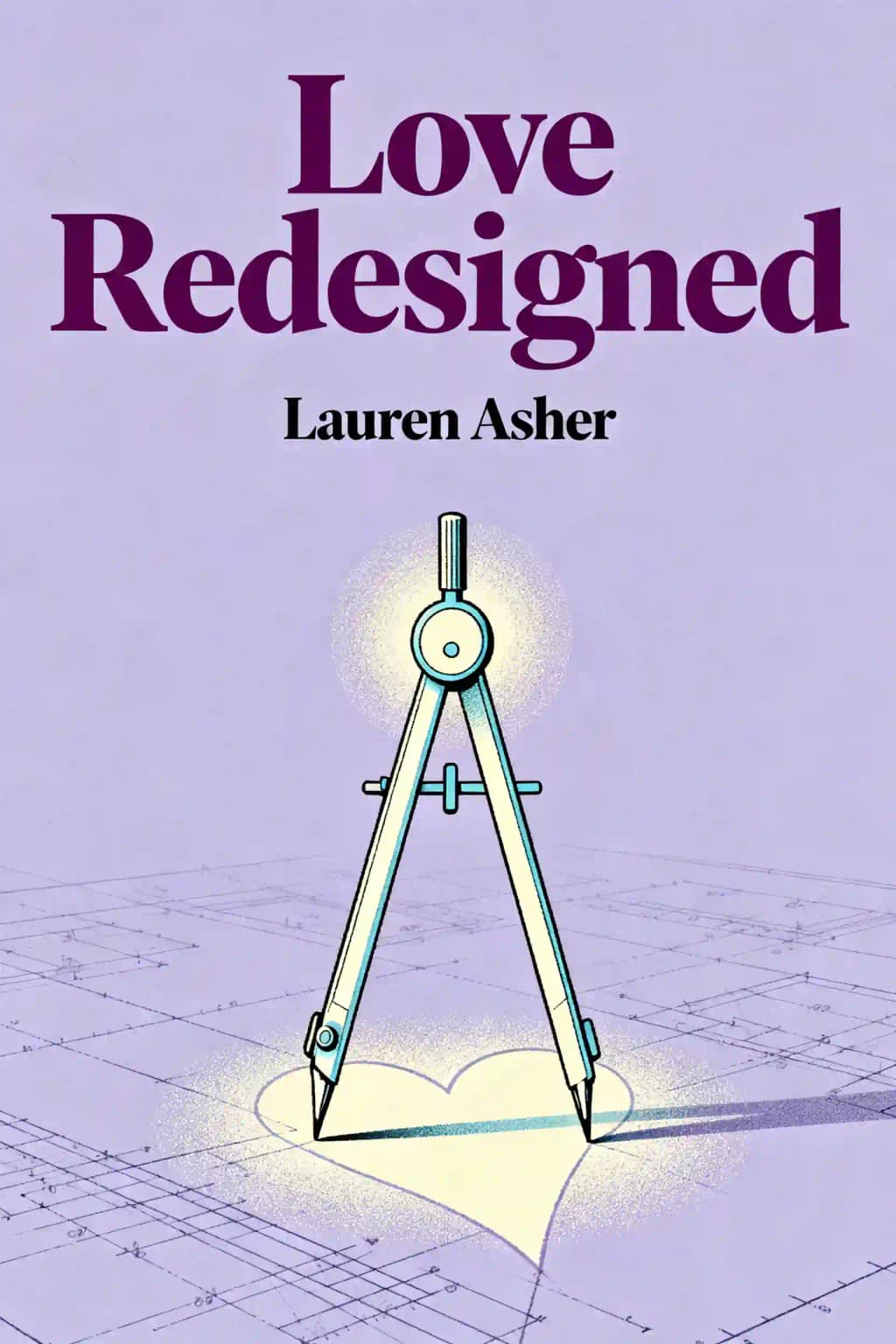
Love Redesigned by Lauren Asher has captured readers' hearts with its enemies-to-lovers romance set in the charming town of Lake Wisteria. This New York Times bestseller has been featured on numerous "Best Romance Novels" lists and has developed a devoted following on BookTok and Instagram. The novel's exploration of childhood rivals reconnecting has resonated with celebrities like Jennifer Lawrence, who mentioned it as her "perfect beach read" in a Vogue interview. What makes this book particularly special is how Asher weaves together themes of mental health, family expectations, and personal growth within a steamy romance framework. The book's popularity sparked a trend of renovation-themed romance novels, with readers particularly drawn to the authentic portrayal of anxiety and depression alongside the sizzling chemistry between the main characters.
Capitolo 2
The Collision That Reignites a Rivalry
Julian Lopez is racing to his godson Nico's talent show when he collides with a slow-moving car on the only road into Lake Wisteria - a winding mountain pass notorious for its blind turns and steep drops. To his shock, the driver is Dahlia Munoz - his childhood rival, fellow godparent to Nico, and the woman he hasn't properly spoken to in fifteen years. Their reunion is far from friendly, with Dahlia erupting from her car in a fury, accusing Julian of attempted murder while he notices her mascara-streaked face, puffy eyes, and the slight tremor in her usually steady hands. Despite their antagonism, Julian speaks privately with Sheriff Martinez, offering to pay for repairs and claiming Dahlia was having car trouble rather than revealing she'd been crying - a protective instinct that surprises even him.
The accident serves as a perfect metaphor for their relationship - a collision of two strong personalities with a complicated history that stretches back to their days at Lake Wisteria High School. Julian, now a successful businessman who transformed his family's modest construction company into a real estate empire worth millions, carries himself with the easy confidence of someone who conquered his hometown. Yet beneath his tailored suits and commanding presence, he harbors deep-seated insecurities about his humble beginnings and the whispers that still follow him about how he achieved his success. Dahlia, returning to her hometown after a humiliating public breakup with her tech executive fiance in San Francisco, is battling depression and anxiety while trying to maintain her carefully crafted facade of strength - the same determination that once made her class valedictorian and the town's golden girl.
Their interaction reveals the layers of tension between them - not just their infamous academic rivalry that once divided their small town, but something deeper and more complex. Julian can't help noticing how Dahlia's presence stirs up memories he'd rather forget: stolen glances in AP Chemistry, a rain-soaked kiss behind the gymnasium, and a devastating falling out at graduation that changed everything. Meanwhile, Dahlia remembers Julian as "the first man who broke her heart with just six words" spoken on a warm June evening fifteen years ago - words that sent her fleeing from Lake Wisteria and everything she'd planned for her future. This initial encounter sets the stage for their inevitable reconnection, highlighting how neither has fully moved on from their shared past, despite their attempts to build separate lives away from their hometown's watchful eyes.
The collision forces them to confront not only each other but also the unresolved feelings and misunderstandings that have festered for years. As they exchange insurance information with trembling hands and barely concealed emotions, it becomes clear that their paths crossing again isn't just coincidence - it's an opportunity for redemption, healing, and perhaps something neither of them dares to hope for yet.
Capitolo 3
Hidden Wounds and Reluctant Homecomings
Returning to Lake Wisteria proves chaotic for Dahlia. Beyond the car accident and unexpected town welcome, she's struggling with the aftermath of her broken engagement to Oliver Creswell. During a telehealth session with her therapist, we learn the devastating truth-genetic testing revealed Dahlia couldn't have children, which became a deal-breaker for Oliver and his family's inheritance requirements.
Dahlia has barely left her childhood bedroom in days, overwhelmed by depression alongside her existing anxiety. When her godson Nico invites her to play Monopoly, she panics and flees to the bathroom, where Rafa (Julian's cousin and Nico's father) follows her. In a vulnerable moment, she confesses her infertility-a secret she's kept from everyone except Oliver and his family.
"I can't have children," she admits to Rafa, the words carrying the weight of dreams shattered and futures reimagined. This revelation adds profound depth to Dahlia's character. Her heartbreak isn't just about losing Oliver but about confronting a future different from what she'd imagined. Yet in this moment of vulnerability, we see her strength as she resolves to fight her way back to the person she once was.
Meanwhile, Julian has his own wounds. After his father's sudden heart attack, he dropped out of Stanford to take over the family business. Though now wealthy and successful, he feels empty and uninspired, wanting "a real home, wife, and purpose beyond work." His lakeside mansion feels hollow, and he wonders if he made a mistake with Dahlia years ago when he was grieving his father's death.
These parallel struggles create a foundation for understanding both characters' hesitations about reconnecting. They're not just former rivals but people carrying significant emotional baggage that complicates any potential relationship.
Capitolo 4
The Ring, The House, and A Partnership Formed
When Julian questions why Dahlia still wears her engagement ring - a constant reminder of her painful past - she reveals she recently received permission from Oliver's family lawyer to finally dispose of it. The ring, an ostentatious piece that never suited Dahlia's taste, had become a symbol of her captivity in a loveless marriage. Julian, seeing an opportunity, takes the ring from her and suggests they get rid of it together - a calculated move to get her out of the house and potentially agree to working with him. During their outing through the historic district, Dahlia's attention is captured by one of the town's magnificent Founder's houses, its distinctive cornflower blue paint and intricate Victorian architecture speaking to her designer's soul. The wraparound porch, ornate gingerbread trim, and towering turret embody everything she'd dreamed of but was denied during her marriage.
Despite Julian's initial interest in the land for development purposes - his usual modus operandi involves demolishing old structures for modern complexes - Dahlia's passionate advocacy for the property's historical significance and architectural value convinces him to consider an unconventional partnership. Julian proposes they go "fifty-fifty" - she gets the house while he develops the surrounding land into luxury condominiums. Though deeply hesitant about working with Julian given their complicated history and his reputation as a ruthless developer, Dahlia agrees to the partnership, primarily motivated by her fear that he might otherwise demolish the historic house she's already fallen in love with.
Later, at one of Julian's active construction sites, he makes an unexpected offer to buy Dahlia's "hideous engagement ring" for $100,000. Before she can fully process this proposition, he shocks her - and several onlooking construction workers - by dramatically tossing it into an active concrete mixer. This bold gesture reveals that Julian had seen through Oliver and his family's carefully maintained facade all along, recognizing the emotional abuse Dahlia had endured. It becomes a pivotal moment that begins to shift their dynamic from antagonistic to something more nuanced and complex.
The house partnership evolves into the central framework for their reconnection. It's particularly significant that Julian - whose business model typically involves demolishing old structures to build modern developments - agrees to preserve something historical for Dahlia. This unexpected compromise mirrors his internal journey of reconsidering his own rigid boundaries and defensive walls, suggesting that perhaps some things are worth saving and restoring rather than destroying.
For Dahlia, the house represents more than just a property investment - it's a fresh start and a chance to reclaim her creative identity after years of having her design choices and personal aesthetic constantly undermined by Oliver's controlling nature. The symbolism is powerful and multilayered - she's not just rebuilding a house, but reconstructing herself, with Julian unexpectedly becoming her partner in both endeavors. The project becomes a physical manifestation of her journey from trapped wife to independent woman, with each restoration choice reflecting her emerging confidence and rediscovered sense of self.
Capitolo 5
Halloween Tensions and Unresolved Chemistry
At Last Call's Halloween party, Dahlia finally begins to relax as the evening unfolds without mention of her broken engagement. Dressed as a sultry vampire, she finds comfort in the familiar atmosphere of the bar - until she feels the weight of Julian's gaze across the room. Her moment of peace shatters when she catches him watching her with undisguised hunger, his pirate costume doing little to disguise the intensity of his attention.
Their inevitable interaction at the bar quickly escalates into charged banter about Dahlia's "type." Julian, leaning against the counter with calculated casualness, dismantles her dating history with surgical precision. He points out her pattern of choosing safe, predictable men who never challenge her assumptions or push her boundaries. The observation cuts deeper because they both know he's right.
"You need someone who pushes back," Julian tells her, his words carrying layers of meaning about their past and potential future. "Someone who challenges you to be better." His voice drops lower, intimate despite the pulsing Halloween music around them. "Someone who sees through your bullshit and calls you on it."
The tension between them reaches a breaking point when Dahlia, defensive and trying to regain control, teases Julian about being perpetually single. She questions his sexual prowess with deliberate cruelty, but her attempt at deflection backfires spectacularly. His response is immediate and electric - he grips her neck with just enough pressure to make her breath catch, and whispers that he knows "exactly how to fuck." The moment crackles with unresolved desire as he reminds her of a specific night years ago when she begged him to kiss her outside this very bar.
Their verbal sparring serves as elaborate foreplay, each carefully chosen barb revealing more about their shared history and lingering feelings. When an drunk patron in a superhero costume approaches Dahlia, Julian's possessive shift closer to her speaks volumes about feelings he won't verbally acknowledge. Meanwhile, Dahlia's physical reaction to his touch - the quickening of her pulse, the slight parting of her lips - betrays her continued attraction despite her vehement protests.
This Halloween encounter crystallizes the complex dynamic between them, establishing that their rivalry has always masked deeper emotions. The way Julian's fingers linger on her skin, how Dahlia unconsciously leans into his touch, and the heated glances they exchange throughout the night all point to years of repressed desire. The reference to that long-ago night when Dahlia asked Julian to kiss her - a request he apparently denied - creates a compelling foundation for their inevitable reconnection while raising intriguing questions about what really happened between them in the past.
The scene ends with both of them physically separated but emotionally entangled, the Halloween festivities continuing around them as they remain hyperaware of each other's presence - a perfect metaphor for their relationship's status: simultaneously together and apart, wanting and resisting, trapped in an endless dance of attraction and denial.
Capitolo 6
Ghosts of the Past and Present
The Founder's house becomes a metaphor for Julian and Dahlia's relationship-beautiful but requiring significant renovation, with hidden history in its walls. While exploring the attic, Dahlia discovers old blueprints and a yellowed drawing of a gazebo with a love letter on the back from Gerald, the founder who built Lake Wisteria for his beloved Francesca.
This discovery parallels Julian and Dahlia's own story-revealing how Gerald died from a bacterial infection before completing his house or marrying Francesca. Their research sparks an argument that quickly becomes personal, with Dahlia suggesting Gerald may have been the one afraid to take risks in his relationship-clearly drawing parallels to her history with Julian.
"Maybe he was the one afraid to take risks," Dahlia says pointedly. "Maybe he was the one who pushed her away."
When Julian confronts her about really talking about them, Dahlia dismisses him, saying he's "ten years too late" for that conversation. This exchange reveals the core wound in their relationship-Julian pushed Dahlia away after his father's death, a decision he now regrets but can't easily undo.
The house's supposed haunting becomes another layer in their story. When Dahlia hears strange noises in the house, Julian and Rafa play a prank on her, creating a fake ghost with glowing red eyes. Her terror turns to fury when she discovers their trick, but the anger quickly transforms into desire, leading to an intense sexual encounter in the attic.
This scene beautifully illustrates how their relationship has always operated on multiple levels-competition, attraction, and deep emotional connection. The "haunting" serves as a metaphor for how they're both haunted by their past together and the decisions that separated them. Just as Dahlia learns the house isn't really haunted, she begins to see that her perceptions of Julian and their past might also need reevaluation.
Capitolo 7
Confessions and Vulnerabilities
As Julian and Dahlia spend more time together working on the house, their carefully constructed defenses begin to crumble. Their initial awkward encounters evolve into deeper conversations, often sparked by mundane moments - sorting through old boxes, sharing takeout dinners on the unfinished floor, or working side by side in comfortable silence. When Dahlia finally confronts Julian about deliberately failing their physics final to let her win valedictorian, the truth emerges in a moment of raw honesty. He admits he did it because he liked her, adding quietly that seeing her happy meant more to him than any academic achievement. This revelation stuns her, particularly when she discovers he's kept the "Second Best" trophy she gave him displayed among his most cherished possessions, alongside his father's watch and family photos.
Their conversations gradually delve into painful territory. Julian opens up about the crushing weight of responsibility he shouldered after his father's death - running the family business at nineteen, becoming the de facto parent to his younger siblings, and pushing away anyone who tried to help, including Dahlia. His voice breaks as he describes how losing his baby sister to SIDS shaped his deep-seated fear of having children, a confession that helps Dahlia understand his past reluctance to discuss their future. In turn, Dahlia shares her own struggles with depression and anxiety, describing the panic attacks that plagued her during college and her journey through therapy. These conversations, often lasting late into the night, mark a profound shift in their relationship as they begin to see past their competitive history to the wounded people beneath.
Julian's protective nature surfaces in unexpected ways. During a particularly vulnerable moment, he confesses his role in introducing Dahlia to Oliver, his voice heavy with regret. "I thought I was helping you move on," he admits, running his hands through his hair - a nervous habit from their school days. "I never imagined he'd hurt you like that." This revelation illuminates Julian's complex motivations - his desire to see Dahlia happy, even if it meant watching her build a life with someone else.
The physical evidence of their connection becomes impossible to ignore when Dahlia discovers Julian's bedroom. His shelves display pieces from every collection she's ever designed, carefully arranged and maintained. From her first small pottery series to her latest furniture line, he's collected them all, supporting her work anonymously through the years. This discovery moves her to tears, understanding now that while they maintained their rivalry publicly, Julian had never stopped caring about her success.
Their physical relationship develops with an intensity that surprises them both. Their first intimate encounter happens naturally, years of tension dissolving into tender touches and whispered confessions. Afterward, Julian admits with disarming honesty that Dahlia might have "ruined sex with any other woman" for him - a declaration that speaks to deeper feelings than either is ready to fully acknowledge. Their intimate moments reveal a gentleness that contradicts their sharp-tongued exchanges, suggesting their true connection has always existed beneath the competitive facade they've maintained since high school.
Capitolo 8
Learning to Ask for Help
One of the most significant themes in Julian and Dahlia's journey is learning to ask for help-something both struggle with for different reasons. Julian reveals how he learned to avoid asking for help as a child, not wanting to burden his father who was already dealing with his mother's depression. This pattern continued into adulthood, where he built his success on self-reliance and stoicism.
"I didn't want to be a burden," Julian explains, the admission clearly difficult for him. "I thought asking for help made me weak."
Dahlia, meanwhile, has been battling depression and anxiety alone, afraid to appear vulnerable after her public humiliation. When Julian finds her after she's injured in the attic, her reluctance to accept help mirrors his own struggles.
Their healing begins when they start helping each other without keeping score. Julian carries Dahlia when she's injured, while she encourages him to reconnect with his father's woodshop-a place he hasn't entered since his death. These moments of mutual support create a foundation for genuine intimacy beyond physical attraction.
The breakthrough comes when Julian finally admits to Ryder that he needs help restructuring his company to operate without his physical presence-a decision motivated by his desire to follow Dahlia to San Francisco. This willingness to acknowledge his limitations represents significant growth for Julian, who has always prided himself on handling everything alone.
Similarly, Dahlia learns to depend on Julian without fearing abandonment. When she tells him about her mental health journey, confessing she's terrified of slipping back into depression, Julian wisely points out that her issue isn't depending on people but finding the right people to depend on. This insight helps Dahlia recognize that vulnerability can be a strength when shared with someone trustworthy.
Capitolo 9
Choosing Love Over Fear
As their relationship deepens, both Julian and Dahlia must confront their fears about commitment. Julian surprises Dahlia by taking her to Lake Aurora and showing her a stunning Queen Anne-style mansion he's purchased for her to restore. When she questions why he's starting the project so soon, he confesses he wants to give her "a hundred different reasons to stay."
This leads to a passionate moment where Julian admits he's falling in love with her-a declaration that wasn't part of his plan but becomes inevitable after hearing Dahlia tell her sister they weren't officially together. "I'm done pretending I want casual," he realizes. "I refuse to waste my second chance with her because of pride or fear."
Dahlia's journey is equally profound. When she receives an exciting job offer in San Francisco-double her previous contract-she's torn between professional opportunity and her growing feelings for Julian. Her biggest fear isn't that Julian will hurt her again but that he'll resent changing his life for her.
The turning point comes when Julian shows Dahlia a pro-con list about her that he's kept for twelve years, with only one con: "She may never love me back." He tells her that life without her is meaningless, and he's willing to move to San Francisco to be with her. This grand gesture forces Dahlia to confront her own fears about trusting herself to make the right choice.
After much soul-searching, Dahlia realizes she wants to risk her heart again. She asks Julian to attend the Creswells' annual party with her, publicly declaring their relationship and showing her ex-fiance she hasn't been broken by rejection. This moment represents Dahlia choosing love over fear-a significant evolution from her earlier reluctance to commit.
Capitolo 10
A Home Built on Trust and Second Chances
The story culminates in a series of revelations that transform Julian and Dahlia's relationship. On Christmas Eve, Julian surprises Dahlia with a custom-built gazebo at the Founder's house, modeled after Gerald's design for Francesca but with dahlias carved into it instead of roses. As snow begins to fall, creating a rare white Christmas in Lake Wisteria, Julian reveals his final surprise-they're keeping the Founder's house as their home.
In a moment of profound vulnerability, Julian confesses he's owned the house for years, ever since Dahlia mentioned during the Strawberry Sweetheart pageant that owning the blue Founder's house was one of her three wishes. Though he initially bought it seeking revenge, he never tore it down, knowing how much it meant to her.
This revelation perfectly encapsulates Julian's character arc-from a man who tore down historic buildings to one who preserves something beautiful because of its meaning to someone he loves. It also represents his growth from seeking revenge to offering reconciliation and building a future together.
Six months later, Julian proposes with a vintage flower-shaped diamond ring nestled in a music box he crafted himself in his father's woodshop. The proposal symbolizes how Julian has integrated his past with his future, honoring his father's legacy while creating something new with Dahlia. They marry that very day in an impromptu ceremony at the Founder's house, now their home, with their families gathered around them.
As Julian whispers "Jaque mate, carino"-checkmate, sweetheart-during their wedding, it's clear their competitive relationship has evolved into something far more meaningful. What began as rivalry has transformed into partnership, with both Julian and Dahlia winning by choosing love over fear and trust over doubt.
Their journey reminds us that sometimes the most beautiful renovations aren't of houses but of hearts-and that with the right partner, even the most damaged foundations can be rebuilt into something stronger and more beautiful than before.