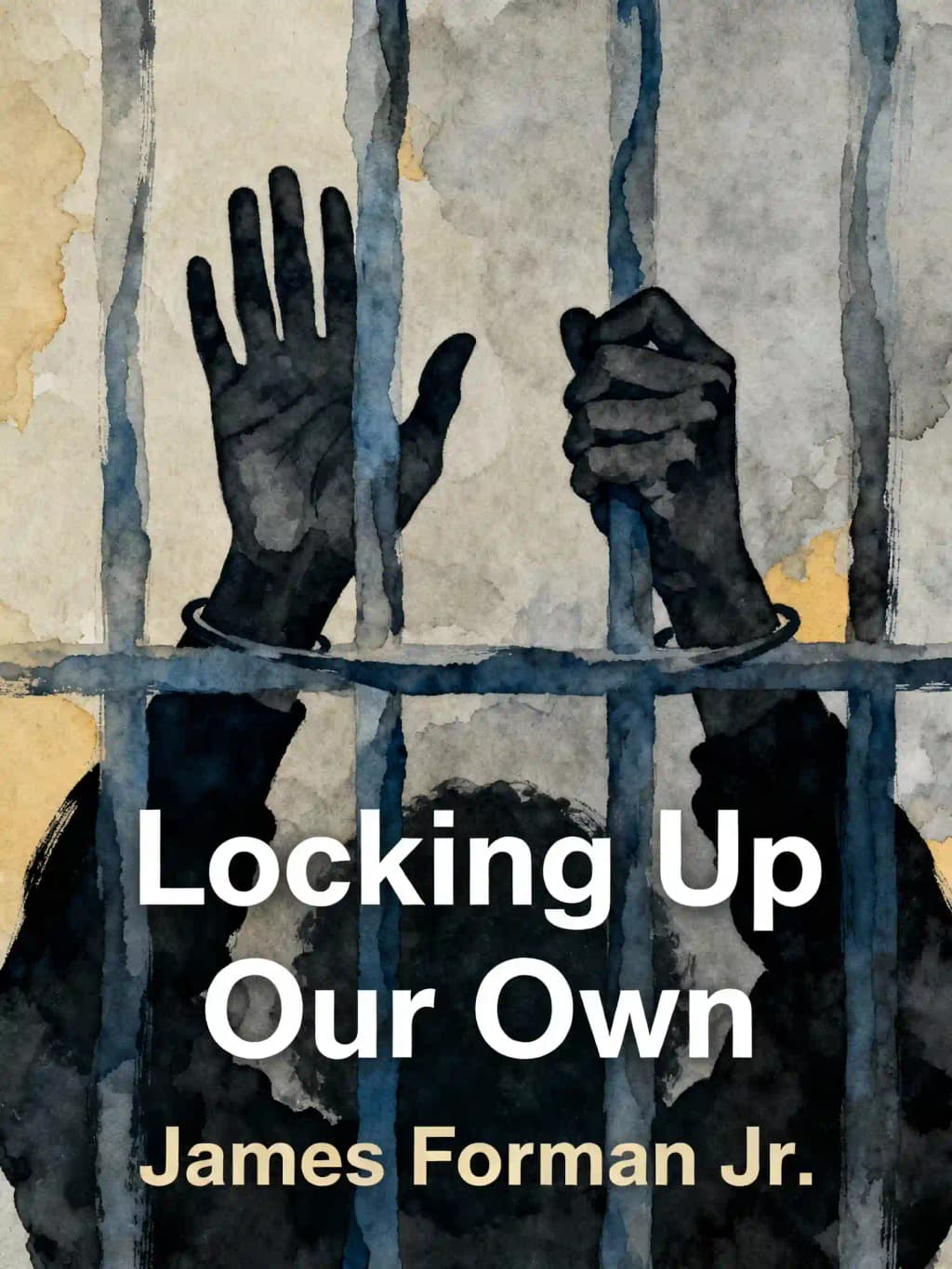
Locking up Our Own
Crime and Punishment in Black America
Panoramica di Locking up Our Own
Pulitzer Prize-winning "Locking Up Our Own" explores how Black leaders inadvertently fueled mass incarceration through tough-on-crime policies. Cited in Supreme Court cases and praised by Dr. Ibram X. Kendi, this timely work asks: How did well-intentioned justice become systemic injustice?

Temi chiave in Locking up Our Own
- black punitive turn
- politics of responsibility
- intraracial class dynamics
- mass incarceration origins
- community crime responses
Citazioni da Locking up Our Own
Mass incarceration is, at bottom, a story about choices—choices made by people in positions of power.
The drug war was not simply imposed on black communities; it was in part a response to demands from them.
Black people are not merely victims of the drug war; they are also its agents.
We must acknowledge that the tough-on-crime movement was a multiracial phenomenon.
We must be willing to see black people as actors, as people with agency, as people who make choices.
Personaggi di Locking up Our Own
- James Forman Jr.Author and former public defender
- Walter E. WashingtonFirst elected Black mayor of Washington D.C.
- John WilsonCivil rights activist and D.C. Council member
- Walter FauntroyCongressman and pastor who supported gun control
- Sterling TuckerD.C. Council Chair who tabled drug reform
Sull'autore
Sull'autore di Locking up Our Own
James Forman Jr., author of the Pulitzer Prize-winning Locking Up Our Own: Crime and Punishment in Black America, is a leading legal scholar and criminal justice reform advocate. A Yale Law School professor and former Washington, D.C. public defender, Forman combines academic rigor with firsthand experience representing marginalized communities.
His groundbreaking work explores mass incarceration’s complex roots, particularly how Black leaders in the 1970s-90s contributed to punitive policies aimed at protecting vulnerable neighborhoods—a paradox he analyzes through historical documents and courtroom narratives.
Forman’s expertise stems from his roles as a Supreme Court clerk for Justice Sandra Day O’Connor and co-founder of Washington’s Maya Angelou School for incarcerated youth. His writing has appeared in The New York Times, The Atlantic, and Washington Post, establishing him as a vital voice on race, law, and inequality.
Locking Up Our Own — a New York Times Top 10 Book of 2017 and National Book Award finalist — has become essential reading in law schools and policy circles, translated into six languages. The Washington Post bestseller continues to shape national debates about policing and prison reform.
Scarica il riassunto di Locking up Our Own
Ottieni il riassunto di Locking up Our Own in formato PDF o EPUB gratuito. Stampalo o leggilo offline quando vuoi.
FAQ su questo libro
Locking Up Our Own examines how Black policymakers and community leaders in 1970s-1990s America supported harsh criminal justice policies that unintentionally fueled mass incarceration. Pulitzer Prize-winning author James Forman Jr. analyzes debates over drug laws, gun control, and policing, revealing how systemic racism and crisis-driven decision-making led to devastating consequences for Black communities.
This book is essential for criminal justice reformers, historians, and policymakers seeking to understand systemic racism’s role in mass incarceration. It also resonates with educators, social workers, and readers interested in African American history, offering critical insights into race, class, and the unintended consequences of well-intentioned reforms.
Yes—it won the 2018 Pulitzer Prize for its groundbreaking analysis of racial inequities in the legal system. Forman combines legal expertise, historical research, and firsthand experience as a public defender to challenge conventional narratives about crime and punishment in Black America.
- Black leaders supported punitive policies to address immediate crises like drug epidemics and gun violence, often underestimating long-term harms.
- Systemic racism distorted policy outcomes, with “tough-on-crime” measures disproportionately targeting Black communities.
- Mass incarceration resulted from cumulative choices by lawmakers, police, and courts—not just racial bias or federal mandates.
Forman argues Black leaders initially backed drug criminalization to protect communities from addiction and violence. However, aggressive policing and mandatory minimums—coupled with racial profiling—expanded incarceration rates while failing to address root causes like poverty and underfunded schools.
The book describes how some Black churches endorsed punitive measures, viewing strict laws as moral solutions to crime. This alliance between religious institutions and lawmakers often sidelined restorative justice approaches, exacerbating racial disparities in arrests.
Some scholars argue Forman underemphasizes the federal government’s role in mass incarceration. Others praise the book for humanizing Black policymakers while urging readers to confront systemic failures beyond individual choices.
While Michelle Alexander’s The New Jim Crow focuses on structural racism in the legal system, Forman’s work highlights Black leaders’ complex agency in shaping punitive policies. Both books are critical for understanding intersectional approaches to criminal justice reform.
- “Black communities were fighting two wars: one against crime, another against police brutality.”
- “We ask the criminal justice system to solve problems it was never designed to address.”
These lines underscore the book’s exploration of policy trade-offs and institutional limitations.
As a DC public defender and co-founder of the Maya Angelou School for at-risk youth, Forman witnessed how education gaps and poverty funneled clients into the legal system—a perspective that grounds the book’s critique of carceral solutions.
The book provides historical context for modern movements like defunding police and ending cash bail. Its analysis of unintended policy consequences remains critical amid ongoing discussions about prison abolition and restorative justice.
Forman advocates for reinvesting in schools, mental health services, and economic opportunities instead of incarceration. He emphasizes community-led reforms and policies that address systemic inequities rather than punitive measures.