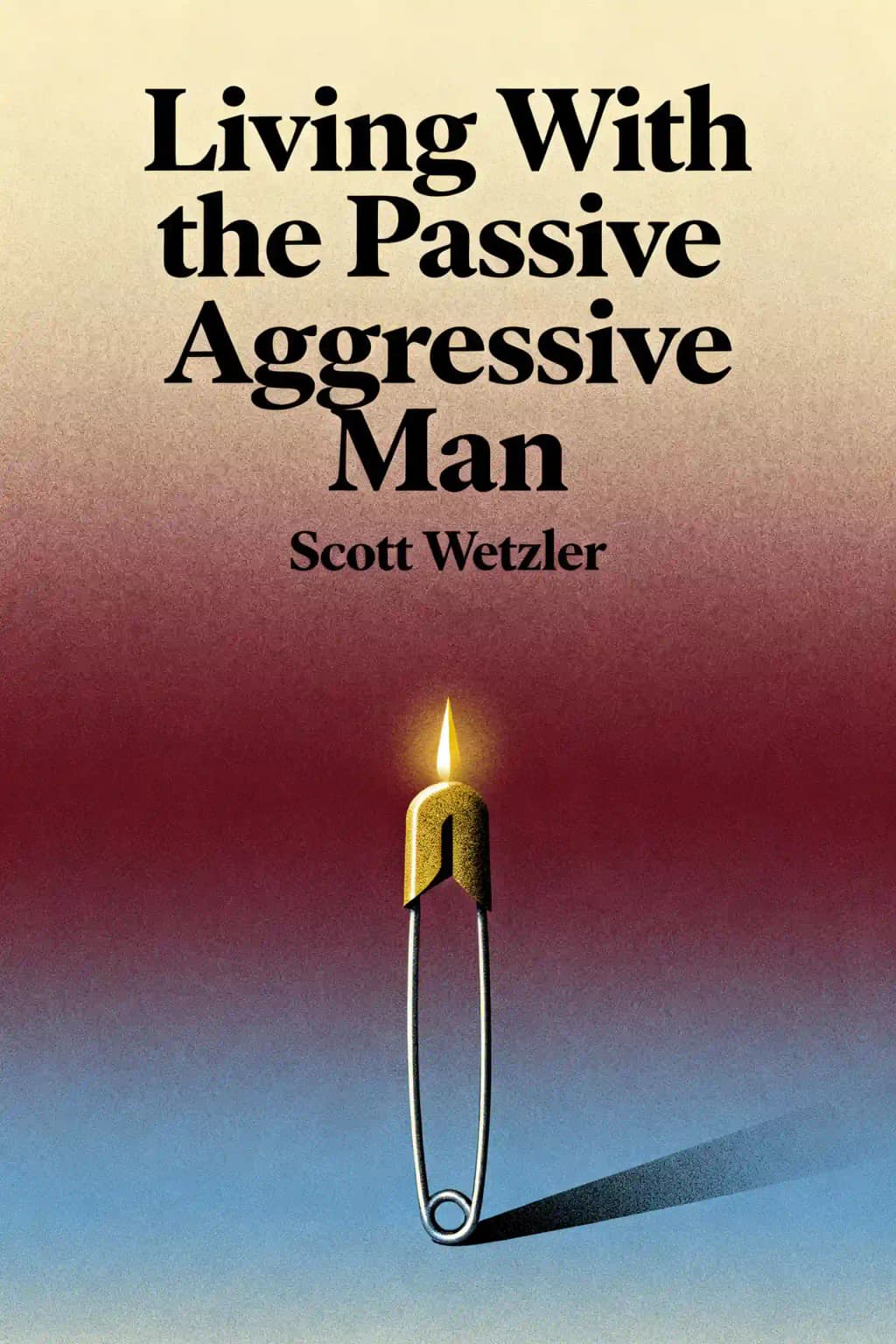
Living with the passive-aggressive man
Panoramica di Living with the passive-aggressive man
Unmask the silent saboteur in your life. Since 1993, Wetzler's psychological classic has helped thousands recognize passive-aggressive patterns that poison relationships. With a 4.04/5 Goodreads rating, it reveals: Are you unknowingly playing victim, manager, or rescuer in your own relationship drama?

Temi chiave in Living with the passive-aggressive man
- covert hostility
- emotional manipulation
- conflict avoidance
- power struggles
- boundary setting
Citazioni da Living with the passive-aggressive man
Passive-aggression isn't simply alternating between passive and aggressive behaviors.
Passivity used as a power play can provoke as much anger as active hostility.
Have you ever questioned your own sanity in a relationship?
Once you doubt yourself, he seizes the upper hand.
Without you, he's just a man with personality problems; with you, he exercises emotional power.
Personaggi di Living with the passive-aggressive man
- Scott WetzlerAuthor and psychologist who identifies the pattern
- NealCase study of a man using intimacy-blocking tactics
Sull'autore
Sull'autore di Living with the passive-aggressive man
Scott Wetzler, Ph.D., clinical psychologist and bestselling author of Living with the Passive-Aggressive Man, is a leading authority on relationship dynamics and passive-aggressive behavior. A professor of psychiatry at Albert Einstein College of Medicine and Vice Chairman of Psychiatry at Montefiore Medical Center, Wetzler combines decades of clinical experience with research to address communication challenges in personal and professional relationships.
His work extends beyond academia as CEO of University Behavioral Associates, where he oversees innovative behavioral health programs funded by institutions like the US Department of Health and Human Services.
Wetzler’s expertise has been featured in The Atlantic, where he advocated for government-funded relationship education, and his book has been translated into six languages, including German, Japanese, and Chinese. Recognized for blending actionable advice with psychological insights, he bridges clinical rigor with accessible self-help strategies. Living with the Passive-Aggressive Man remains a seminal resource, cited by therapists and recommended in media for its nuanced approach to understanding covert emotional patterns.
Scarica il riassunto di Living with the passive-aggressive man
Ottieni il riassunto di Living with the passive-aggressive man in formato PDF o EPUB gratuito. Stampalo o leggilo offline quando vuoi.
FAQ su questo libro
Living with the Passive-Aggressive Man by Scott Wetzler explores how to identify and address passive-aggressive behaviors in men through clinical case studies. It analyzes root causes like repressed anger and fear, offering strategies to improve relationships and workplace dynamics. The book emphasizes recognizing patterns like procrastination, indirect hostility, and emotional withdrawal.
This book is essential for partners, family members, or colleagues of men who exhibit avoidance, sarcasm, or covert defiance. It’s also valuable for therapists and HR professionals seeking frameworks to address passive-aggressive behavior in personal or professional settings.
Yes—with over 100,000 copies sold, the book provides actionable tools to break cycles of frustration. Readers praise its clear analysis of behaviors like the “catch-me-if-you-can” lover or manipulative coworker, coupled with tactics to set boundaries without escalating conflict.
Key concepts include:
- Emotional seesaw dynamics: How passive-aggressive men alternate between warmth and detachment.
- Fear-driven behavior: Hidden anxieties that manifest as procrastination or sabotage.
- Role avoidance: Strategies to stop enabling “victim,” “manager,” or “rescuer” roles in relationships.
Wetzler describes it as hostility masked by passivity, often expressed through procrastination, backhanded compliments, or silent treatment. He links it to unresolved anger and fear of confrontation, using examples like spouses delaying chores or coworkers undermining projects.
- For relationships: Address anger directly, avoid power struggles, and encourage open communication.
- For workplaces: Neutralize manipulative tactics like blame-shifting or intentional inefficiency.
- Self-care tips: Avoid internalizing guilt and set clear boundaries with consequences.
Some readers note the book focuses more on accommodating passive-aggressive men than holding them accountable. Others critique its heteronormative examples, though its principles apply broadly.
It teaches assertiveness techniques to counter indirect hostility, such as using “I” statements and refusing to engage in mind games. Wetzler emphasizes clarity over emotional reactivity to reduce misunderstandings.
- “Hostility wears a mask of passivity”: Captures the core dynamic of covert aggression.
- “You’re not responsible for getting him to change”: Reinforces boundary-setting as a key theme.
Unlike broader conflict-resolution guides, Wetzler’s work specifically decodes male passive-aggression using clinical insights. It complements books on emotional intelligence but stands out for its focus on gendered behavioral patterns.
Yes—the book’s framework helps address issues like passive resistance to authority or guilt-tripping. However, adaptations may be needed for age-appropriate boundary-setting.
Passive-aggression remains prevalent in modern relationships and workplaces, especially in hybrid environments where indirect communication thrives. The book’s case studies mirror contemporary issues like ghosting or digital conflict avoidance.