Capitolo 1
A Legacy of Healing: Women's Medicine in Ming Dynasty China
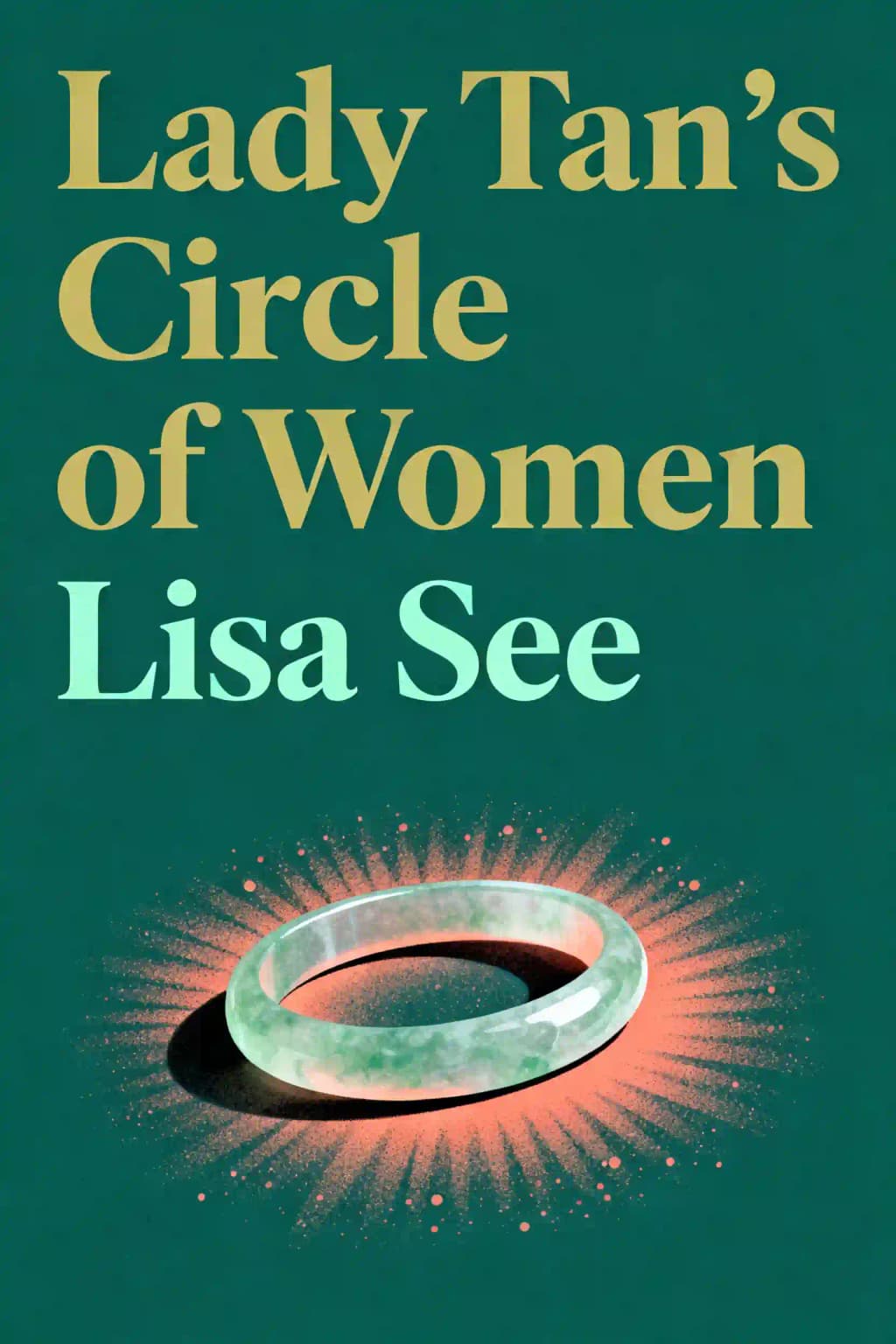
In 1511, a remarkable medical text emerged from Ming Dynasty China-a collection of case studies written by a female doctor named Tan Yunxian. While male physicians dominated Chinese medicine, Lady Tan's work stands as a rare testament to women's medical knowledge in pre-modern China. Her "Miscellaneous Records of a Female Doctor" captured thirty-one cases focused specifically on women's health issues, offering treatments for conditions male doctors often misunderstood or ignored. Lisa See's historical novel brings this extraordinary woman to life, tracing her journey from an eight-year-old girl who loses her mother to a renowned physician who creates one of the earliest medical texts authored by a woman. The book has captivated modern readers seeking historical perspectives on women's healthcare, with celebrities like Reese Witherspoon featuring it in her book club and medical historians citing it as evidence of women's contributions to medicine centuries before they were formally allowed to practice in the West.
Capitolo 2
The Seeds of a Healer: Yunxian's Childhood Loss and Apprenticeship
Eight-year-old Yunxian's world shatters when her mother dies from an infected bound foot - a tragic consequence of the cultural practice that crippled millions of Chinese women. Her mother's final words, "To live is to suffer," become deeply etched in the young girl's psyche, shaping her future path. After her father departs to prepare for the prestigious imperial examinations in the capital, Yunxian is sent to live with her grandparents in Wuxi, where the elegant Mansion of Golden Light becomes both her sanctuary and school.
At her grandparents' home, Yunxian discovers her true calling through her grandmother, Lady Ru, a highly respected practitioner of women's medicine whose reputation extends throughout the Jiangnan region. Lady Ru's medical practice flourishes despite the cultural barriers facing female healers, and she sees in her granddaughter a worthy successor to her medical legacy.
"Women are ten times more difficult to treat than men," Grandmother Ru repeatedly emphasizes, drawing from decades of experience treating female patients. She explains the intricate complexities of women's bodies - their cycles of pregnancy and childbirth, the monthly rhythms of bleeding, and the delicate balance of emotions that influence their health. While Yunxian's scholarly grandfather advocates for traditional book learning and classical medical texts, Grandmother Ru introduces her to the practical wisdom of fuke (women's medicine) - specialized knowledge traditionally withheld from daughters who would "marry out" of the family and take their expertise to other households. Breaking with convention, she entrusts Yunxian with a precious 200-year-old volume titled "Excellent Prescriptions for Women," marking the beginning of her formal medical education.
Under her grandmother's patient guidance, Yunxian immerses herself in the sophisticated frameworks of Chinese medicine. She studies the Five Concepts that explain the body's relationship with the natural world, the Five Depot Organs that form the foundation of health, the Seven Emotions that influence wellbeing, the Five Fatigues that can deplete the body's resources, and the Four Examinations essential for accurate diagnosis. The art of pulse-taking becomes a daily practice, with Yunxian learning to distinguish between twenty-eight distinct pulse types - each revealing different aspects of a patient's condition.
Grandmother Ru places special emphasis on preventive medicine, particularly in the realm of smallpox prevention through variolation - a revolutionary practice for the time. "Prevention is the most important form of medicine," she insists, teaching Yunxian to recognize early signs of illness and the importance of maintaining health through proper diet, exercise, and emotional balance. Together they attend numerous births, where Yunxian witnesses firsthand both the perils and miracles of childbirth, learning to manage complications and support mothers through their most vulnerable moments.
Recognizing the importance of emotional support in a healer's life, Grandmother arranges a formal friendship between Yunxian and Meiling, the talented daughter of a local midwife. Despite the social barriers between their classes, this friendship blossoms into Yunxian's emotional cornerstone - a "circle of good" that provides strength and solace through life's challenges. "Friendship is a contract between two hearts," Grandmother Ru explains, drawing from ancient wisdom. "With hearts united, women can laugh and cry, live and die together." This partnership proves invaluable as both girls pursue their healing vocations, sharing knowledge and supporting each other through their medical training.
Capitolo 3
Bound by Tradition: Marriage and the Inner Chambers
At fifteen, Yunxian's hair is pinned up to signal her readiness for marriage. Her grandparents arrange her betrothal to Maoren of the Yang family, following the formal "Three Letters and Six Etiquettes" process. On her wedding day, dressed in cinnabar silk embroidered with fertility symbols and wearing an elaborate phoenix crown, Yunxian leaves her childhood home to join her husband's family in the Garden of Fragrant Delights.
The wedding ceremony involves three symbolic bows-to heaven and ancestors, to her husband's parents, and to each other. After traditional fertility rituals involving dates and lotus seeds, the couple is left alone for their wedding night, where Yunxian discovers what "bedchamber affairs" truly entail. Though her husband seems kind, Yunxian quickly realizes her position in the household hierarchy is precarious, especially under the watchful eye of her stern mother-in-law, Lady Kuo.
Life in the inner chambers proves stifling. Lady Kuo forbids Yunxian's friendship with Meiling, deeming a midwife's daughter an unsuitable companion. When Lady Kuo discovers Yunxian secretly treating eight-year-old Yining with moxibustion and herbal remedies, she's furious, revealing she has intercepted all of Yunxian's letters to Meiling. The household's social dynamics are further complicated by the presence of concubines who compete viciously for Master Yang's attention.
Despite these restrictions, Yunxian finds ways to continue practicing medicine. She creates a hidden notebook of medical cases, concealed with her mother's shoes behind a loose panel. When she becomes pregnant, she hopes the birth of a son will improve her standing in the household. However, her labor proves difficult-the baby is breech, and the household midwife lacks the skills to help. Only when Poppy secretly summons Midwife Shi and Meiling is Yunxian saved, though she delivers a daughter rather than the son she desperately needed.
During her mandatory postpartum seclusion, Yunxian develops concerning symptoms of fever and bleeding, but everyone's attention is diverted when Miss Chen, a concubine, delivers a son. Yunxian's joy at motherhood is tempered by her continued isolation and the knowledge that she must produce a male heir to secure her position in the household.
Capitolo 4
The Circle of Women: Friendship, Medicine, and Survival
Throughout her life, Yunxian finds strength in the "circle of women" who support her, forming a vital network of knowledge, protection, and emotional sustenance within the confines of their patriarchal society. Despite Lady Kuo's strict prohibition and constant surveillance, Yunxian maintains her clandestine connection with Meiling, who continues to practice midwifery in the village. Their friendship deepens through secret meetings in the garden and coded messages passed through trusted servants. When Yunxian becomes pregnant again, she demonstrates remarkable strategic thinking by announcing her condition simultaneously with Miss Chen's pregnancy - a calculated move designed to both deflect her mother-in-law's anger and potentially forge an alliance with another woman in a similar situation.
After giving birth to her daughter Yuelan, Yunxian experiences a life-threatening postpartum hemorrhage. Doctor Wong's traditional treatments - primarily focused on external symptoms - prove not only ineffective but potentially harmful. In a dramatic turn of events, Meiling risks severe punishment by secretly leaving the compound to fetch Grandmother Ru, whose expertise in women's medicine proves invaluable. Grandmother Ru immediately recognizes Yunxian's condition as Cold depletion, a serious imbalance often overlooked by male physicians, and treats her with the carefully formulated Decoction of Four Substances. A dedicated circle of women - Grandmother, Miss Zhao, Poppy, and Inky - take turns maintaining vigil, applying warming compresses, and ensuring Yunxian takes her medicine at precise intervals, demonstrating the power of female collective care.
The discovery of Spinster Aunt's body in the garden pond marks a turning point, drawing Yunxian into a complex web of household politics and long-buried secrets. The subsequent smallpox epidemic that devastates the Garden of Fragrant Delights claims multiple victims, including Maoren's favored concubine Snowpink and their newborn son. During this period of crisis, Yunxian begins noticing discrepancies in the official account of Spinster Aunt's death - missing personal items, contradictory servant testimonies, and strange markings on the body that didn't align with drowning.
Working methodically with Meiling, Yunxian pieces together a shocking revelation: Manzi, Miss Chen's son and presumed heir, was actually fathered by Doctor Wong during an illicit affair. Spinster Aunt, who had assisted at the birth, had recognized telling physical characteristics that proved the child's true parentage. Before she could expose this truth - which would have destroyed both the family's reputation and Manzi's inheritance rights - she was silenced permanently. Yunxian carefully documents her findings and sends them to her father, a respected Prefectural Judge known for his adherence to the forensic principles outlined in "The Washing Away of Wrongs." The ensuing investigation reveals Doctor Wong's elaborate scheme - not only had he murdered Spinster Aunt to protect his secret, but he had also attempted to poison Yunxian's unborn child to eliminate potential rivalry for Manzi's position as heir.
Throughout these harrowing events, the women in Yunxian's life demonstrate extraordinary courage and solidarity. Meiling risks her position to gather evidence, Grandmother Ru shares crucial medical knowledge, Miss Zhao provides strategic counsel, and even Lady Kuo - initially an antagonist - eventually recognizes the threat to her household and joins the protective circle around Yunxian. Their combined wisdom, spanning traditional medicine, household management, and social navigation, creates a resilient network that not only ensures survival but challenges the rigid hierarchies of their society. This female alliance, forged through shared experiences of constraint and resistance, becomes a powerful force for both protection and transformation.
Capitolo 5
Imperial Summons: Medicine in the Forbidden City
Yunxian's reputation as a skilled physician spreads through the elite circles of Beijing, eventually reaching the imperial court. Her successful treatments of two influential women - Lady Liu's chronic headaches and Widow Bao's persistent digestive ailments - earn her powerful advocates. When Empress Zhang develops a severe eye infection that court physicians fail to cure, these women recommend Yunxian without hesitation. The imperial summons arrives on a crisp autumn morning, delivered by palace guards in their distinctive crimson uniforms.
Upon entering the Forbidden City, Yunxian encounters an unexpected familiar face - Meiling, her childhood friend and fellow physician, who has secured a position as the empress's trusted midwife. The reunion brings both joy and complex emotions, as their paths have diverged yet somehow led them both to the heart of imperial power. Meiling's presence offers comfort in the overwhelming grandeur of the palace, where every movement is watched and every word measured.
Though Yunxian hopes for a swift return to her practice and family in Wuxi, the empress - impressed by her medical expertise - commands her to remain until the impending royal birth. Despite her own advancing pregnancy and deep longing for her husband and daughter, Yunxian must comply. The Forbidden City reveals itself as a world of stark contrasts: breathtaking beauty in its vermillion walls, jade-inlaid terraces, and golden roof tiles, yet suffused with tension and fear. Palace servants whisper stories of officials who disappeared for minor infractions, and Yunxian witnesses firsthand how the smallest deviation from protocol can result in severe punishment.
The imperial birth brings unexpected tragedy. Meiling, herself eight months pregnant, refuses to leave the empress's side despite experiencing labor pains. Through sheer determination, she successfully delivers the heir to the throne but collapses afterward, losing her own child in a pool of blood. The situation deteriorates further when the newborn prince develops an angry rash across his chest. Palace officials, seeking a scapegoat, accuse Meiling of contaminating the royal child through negligence. She faces immediate execution - a fate only averted through the desperate intervention of Yunxian, who provides medical evidence of the rash's natural causes, combined with passionate pleas from the empress, Lady Liu, and Widow Bao. Though spared death, Meiling receives thirty brutal lashes and banishment from Beijing.
Yunxian dedicates herself to saving her friend's life, working through exhaustion to treat wounds that would kill most people. She meticulously removes silk robe fragments embedded in Meiling's flayed back, cleanses deep lacerations that expose white bone, and treats the complications from her miscarriage. In a desperate measure to save her friend, Yunxian performs an ancient blood-mixing ritual, piercing her own vein to combine her blood with medicinal tea. Through weeks of careful treatment and unwavering dedication, both women survive this ordeal. They return to Wuxi forever changed, their friendship transformed into an unshakeable bond forged in the crucible of imperial politics and shared sacrifice.
Capitolo 6
Facing Mortality: Epidemics, Loss, and Resilience
Upon returning home with her newborn son Lian, Yunxian confronts a devastating crisis - a virulent smallpox epidemic has engulfed the Garden of Fragrant Delights. The dreaded "heavenly flowers" pustules spread mercilessly across victims' bodies, transforming the peaceful compound into a place of suffering. Death claims many victims, including Maoren's beloved concubine Snowpink and their newborn son, marking the beginning of a period that would test Yunxian's medical skills and emotional fortitude to their limits.
The epidemic's horror becomes deeply personal when Yunxian discovers her youngest daughter Ailan in the quarantine area, her delicate face covered with countless pustules. Fighting through her maternal terror, Yunxian channels her medical training and throws herself into treating the ill with unwavering determination. She works tirelessly, preparing complex remedies like the Live Pulse Infusion to boost patients' qi and creating soothing salves from soap bean. With meticulous care, she treats eruptions by burning carefully positioned mugwort cones, a technique passed down through generations. Her precious notebook becomes her constant companion as she administers traditional treatments including the Decoction of Four Ingredients and Decoction of Two Aged Ingredients, each carefully calibrated to the patient's condition.
The arrival of Grandmother Ru brings both practical assistance and emotional wisdom to the crisis. With her characteristic blend of compassion and pragmatism, she guides Yunxian through impossible choices, insisting they focus their limited resources on those they can realistically save. During rare quiet moments between treatments, Grandmother Ru helps Yunxian understand the complex layers of her family history - particularly her mother's failure to arrange variolation for Yunxian's brothers. She reveals how Respectful Lady's melancholy deepened progressively after each childbirth, becoming nearly insurmountable after her sons' deaths from smallpox.
As patients begin to recover, including precious Ailan, Yunxian experiences a brief moment of hard-won joy. However, this respite shatters with the death of Manzi, Miss Chen's beloved son. Miss Chen's anguished confession - "I always assured him our son would become master of the Garden of Fragrant Delights" - triggers a sudden revelation in Yunxian's mind, connecting previously hidden threads about Spinster Aunt's murder and Doctor Wong's sinister involvement in the household's dark history.
The final test of Yunxian's resilience comes with Grandmother Ru's diagnosis of breast cancer. As she watches her mentor decline, Yunxian must confront the impending loss of her most steadfast supporter. In her final days, Grandmother Ru ensures her legacy will continue, carefully transferring her precious medical knowledge to Yunxian through her books and supplies, particularly her annotated copy of "Profound Formulas" and her detailed treatment notebooks. The depth of this loss overwhelms Yunxian, manifesting in a severe illness that threatens her own life. In her fevered state, Grandmother Ru appears in a powerful vision, guiding her to a specific healing formula and prophesying that Yunxian will live to seventy-three, continuing their shared mission as a doctor of women.
Capitolo 7
Creating a Legacy: Lady Tan's Medical Text
Nineteen years after the smallpox epidemic, Yunxian has entered the "sitting quietly" phase of a woman's life-traditionally a time to await death, though she remains remarkably active. After her father-in-law's death, Maoren becomes head of the Garden of Fragrant Delights, and their son Lian is being groomed as the future leader. Yunxian now serves as physician not only to all women and children in their compound but also to working women who seek her help at the back gate.
Meiling continues to urge Yunxian to write a medical book, suggesting she could help women find paths to wellness without risking their modesty. After much hesitation, Yunxian finally considers the possibility: "If I could write descriptions of symptoms followed by recipes for formulas with exact measurements and times required for brewing, then wives and mothers wouldn't have to risk their modesty or that of their daughters."
She envisions a practical guide with simple, inexpensive ingredients that addresses women's unique conditions-especially those connected to emotions women must hide from husbands and mothers-in-law, and ailments related to excessive labor that no male physician has documented. Each case she treats reinforces her understanding that while all women share certain physical experiences-feet, breasts, and "child palace"-each is "trapped in a different way," whether by confinement to inner chambers, servitude, or societal disdain.
With Meiling's invaluable help, they review Yunxian's notebooks and select thirty-one cases focusing on women's health issues-monthly cycles, pregnancy, childbirth effects, nursing, and menopause. Yunxian writes a humble yet confident introduction acknowledging her medical lineage through both Grandfather Tan and Grandmother Ru.
The following spring, Meiling and Yunxian sit together with the newly published "Miscellaneous Records of a Female Doctor." As they watch children play in the garden, Yunxian thinks of the couplet: "White-haired, growing old together." At fifty, they show no loss of qi. Surrounded by Miss Zhao, Lady Kuo, and Poppy, Yunxian reflects on how her once-lonely life has been transformed by this circle of women who love her.
Capitolo 8
The Enduring Impact of Women's Medicine
Lady Tan's medical text represents a revolutionary achievement in a time when women's voices were seldom heard in academic or professional realms. By documenting her cases and treatments specifically for women's conditions, she created a resource that could be passed from woman to woman, providing healthcare knowledge that might otherwise remain inaccessible.
The historical Tan Yunxian lived to ninety-six, outliving predictions and surviving five emperors' reigns. Despite her accomplishments, her lineage met tragedy-her son died young, and her grandson was beheaded for political crimes along with all his descendants, leaving her without male heirs to make offerings or preserve her work. Her book disappeared until a relative found a copy and had new woodblocks made.
Lady Tan's story illuminates the complex reality of women's lives in Ming Dynasty China. Despite the severe constraints of foot binding, arranged marriages, and confinement to inner chambers, women created networks of support and knowledge that allowed them to survive and sometimes thrive. The "circle of women" that sustained Yunxian-from her grandmother's medical teachings to Meiling's unwavering friendship to the quiet solidarity of servants like Poppy-demonstrates how women found agency even within rigid patriarchal structures.
Through her medical practice and her written work, Lady Tan created a legacy that transcended the limitations placed on women of her time. Her case studies reveal not just physical ailments but the emotional and social dimensions of women's health-how grief, anger, and resentment manifest in the body when women have "nowhere to place their emotions except inside their bodies, where they burrow and fester."
In our modern world, where women's health concerns are still sometimes dismissed or misunderstood, Lady Tan's approach feels remarkably relevant. Her understanding of the connection between emotions and physical health, her emphasis on preventive care, and her recognition of women's unique medical needs offer wisdom that resonates across centuries. As we continue to navigate gender disparities in healthcare today, Lady Tan's story reminds us of the power of documenting women's experiences and the importance of creating spaces where women can heal each other.
Capitolo 9
The Legacy Lives On: From Ancient Wisdom to Modern Medicine
Lady Tan's life and work embody the resilience of women's knowledge across time. From her childhood training with Grandmother Ru to her final years as a respected physician overseeing a four-generation household, she maintained her commitment to healing despite numerous obstacles. Her medical text represents not just her individual achievement but the culmination of generations of women's wisdom, passed from grandmother to granddaughter, from midwife to apprentice, from friend to friend.
The thirty-one cases documented in "Miscellaneous Records of a Female Doctor" offered practical solutions for common women's health issues using accessible ingredients and clear instructions. This democratization of medical knowledge was revolutionary-allowing women to treat themselves and each other without always requiring male physicians who might misunderstand their conditions or compromise their modesty.
Through her friendship with Meiling, her mentorship from Grandmother Ru, and her eventual reconciliation with Lady Kuo, Yunxian discovered that women's strength often lies in their connections to each other. The "circle of good" that formed around her provided both emotional sustenance and practical support throughout her life's challenges-from difficult births to epidemic disease to political intrigue.
As Yunxian reflects in her later years, watching her friend Meiling across the garden pond, their shared journey has been one of both struggle and triumph. From young girls learning the basics of pulse diagnosis to mature women publishing a groundbreaking medical text, they have navigated the constraints of their society while finding ways to exercise their gifts and help others.
In Lady Tan's final vision of herself "surrounded by so much beauty and love," we see the culmination of a life dedicated to healing-not just physical ailments but the wounds inflicted by a society that often devalued women's experiences. Her legacy reminds us that even in the most restrictive circumstances, knowledge can be preserved, compassion can flourish, and women can create meaningful change that echoes through generations.