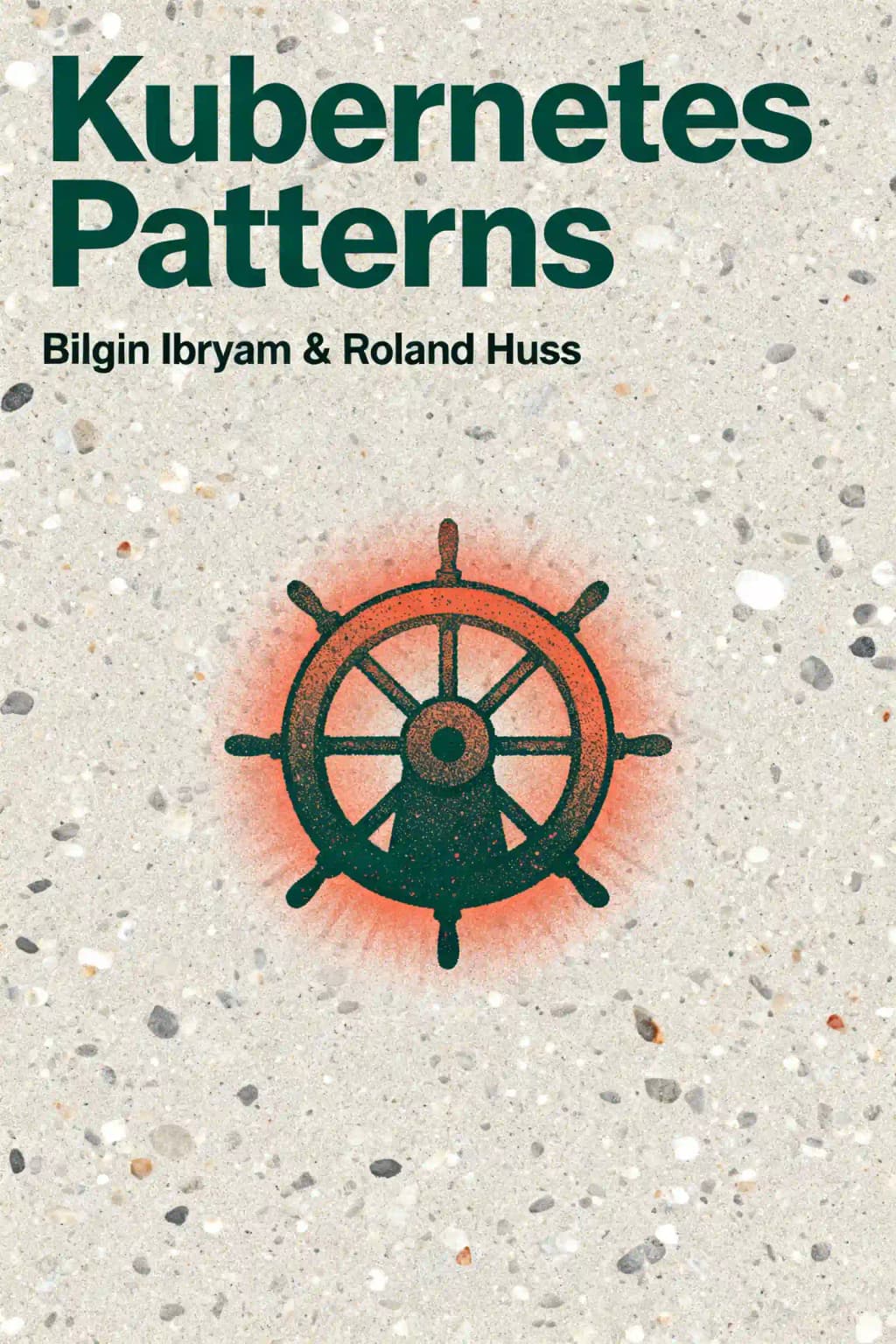
Kubernetes Patterns: the definitive playbook for cloud-native architects. While most developers struggle with container orchestration, tech leaders at Red Hat and beyond rely on these battle-tested patterns. Curious why this 390-page guide is called "the Gang of Four for Kubernetes"?
Bilgin Ibryam and Roland Huss, authors of Kubernetes Patterns: Reusable Elements for Designing Cloud-Native Applications, are leading authorities in cloud-native architecture and Kubernetes development. Ibryam is a prolific contributor to open-source projects and distributed systems design, having shaped modern practices for scalable containerized applications.
Huss, a senior principal software engineer at Red Hat and architect for OpenShift Serverless, brings over 25 years of experience in DevOps and Kubernetes optimization, including foundational work on the Knative serverless platform and the Jolokia monitoring toolkit.
Their book is a definitive guide for developers and architects, distilling Kubernetes design patterns into actionable solutions for microservices, configuration management, and security. Huss’s development of widely used Kubernetes tooling and Ibryam’s thought leadership in cloud-native ecosystems underscore the book’s technical rigor.
Published by O’Reilly Media, this second edition (2023) reflects a decade of Kubernetes evolution, with 390 pages of code-driven examples. The work has become a critical resource for teams building resilient, scalable cloud infrastructure, endorsed by practitioners adopting its operator and autoscaling strategies.
Kubernetes Patterns: Reusable Elements for Designing Cloud-Native Applications provides actionable design patterns for solving common challenges when building applications on Kubernetes. The book covers foundational principles, behavioral strategies, structural container organization, configuration management, security best practices, and advanced topics like operators and autoscaling. Each pattern includes problem descriptions, Kubernetes-specific solutions, and concrete code examples to illustrate implementation.
This book is ideal for developers and architects with basic Kubernetes knowledge who want to deepen their understanding of cloud-native design. It’s particularly valuable for professionals tackling scalability, security, or configuration challenges in containerized environments. The 2nd edition (2023) updates content to reflect evolving Kubernetes practices.
Yes, the book is praised for its practical, example-driven approach to solving real-world Kubernetes problems. Reviews highlight its clarity in explaining controllers, operators, and sidecar patterns. However, some note that certain sections, like CronJobs, closely mirror Kubernetes documentation rather than offering novel insights.
Key concepts include:
The book emphasizes hardening Kubernetes applications through RBAC, pod security policies, and network segmentation. It provides actionable guidance for securing containerized workloads, such as minimizing attack surfaces and implementing secrets management.
Examples include multi-tenant cluster management, automated rollouts, and resilience strategies like circuit breakers. The authors demonstrate how to structure pods for logging, monitoring, and service proxying using sidecar containers.
While Mastering Service Mesh focuses on interservice communication tools like Istio, Kubernetes Patterns offers broader design strategies for application architecture on Kubernetes. Both books complement each other for full-stack cloud-native development.
Some readers note that sections like CronJobs or ConfigMaps closely follow Kubernetes documentation rather than expanding on higher-level design principles. However, most praise its code examples and problem-solving focus.
The book details patterns like ConfigMap-driven configuration, environment variable injection, and sidecar containers for dynamic updates. It contrasts imperative vs. declarative approaches, emphasizing GitOps practices for version control.
As Kubernetes remains central to cloud-native ecosystems, the book’s focus on scalable, secure patterns aligns with trends in multi-cluster management, serverless architectures, and AI/ML workloads. Updated content reflects Kubernetes 1.27+ features.
Advanced sections cover autoscaling (horizontal, vertical, and cluster scaling), operator frameworks for custom resource automation, and extending Kubernetes APIs. These concepts are critical for large-scale, production-grade systems.
Yes, every pattern is demonstrated with concrete Kubernetes manifests and Helm charts. Examples range from basic pod configurations to complex operator implementations, available in GitHub repositories cited in the text.
Senti il libro attraverso la voce dell'autore
Trasforma la conoscenza in spunti coinvolgenti e ricchi di esempi
Cattura le idee chiave in un lampo per un apprendimento veloce
Goditi il libro in modo divertente e coinvolgente
Bug-free code is impossible.
Containers serve as the fundamental building blocks.
Applications need more fine-grained interactions.
Labels allow you to indicate which independent services belong together.
Namespaces divide a Kubernetes cluster into logical resource pools.
Scomponi le idee chiave di Kubernetes Patterns in punti facili da capire per comprendere come i team innovativi creano, collaborano e crescono.
Distilla Kubernetes Patterns in rapidi promemoria che evidenziano i principi chiave di franchezza, lavoro di squadra e resilienza creativa.

Vivi Kubernetes Patterns attraverso narrazioni vivide che trasformano le lezioni di innovazione in momenti che ricorderai e applicherai.
Chiedi qualsiasi cosa, scegli la voce e co-crea spunti che risuonino davvero con te.

Creato da alumni della Columbia University a San Francisco
"Instead of endless scrolling, I just hit play on BeFreed. It saves me so much time."
"I never knew where to start with nonfiction—BeFreed’s book lists turned into podcasts gave me a clear path."
"Perfect balance between learning and entertainment. Finished ‘Thinking, Fast and Slow’ on my commute this week."
"Crazy how much I learned while walking the dog. BeFreed = small habits → big gains."
"Reading used to feel like a chore. Now it’s just part of my lifestyle."
"Feels effortless compared to reading. I’ve finished 6 books this month already."
"BeFreed turned my guilty doomscrolling into something that feels productive and inspiring."
"BeFreed turned my commute into learning time. 20-min podcasts are perfect for finishing books I never had time for."
"BeFreed replaced my podcast queue. Imagine Spotify for books — that’s it. 🙌"
"It is great for me to learn something from the book without reading it."
"The themed book list podcasts help me connect ideas across authors—like a guided audio journey."
"Makes me feel smarter every time before going to work"
Creato da alumni della Columbia University a San Francisco

Ottieni il riassunto di Kubernetes Patterns in formato PDF o EPUB gratuito. Stampalo o leggilo offline quando vuoi.
Imagine managing hundreds of containers across dozens of servers, ensuring they're properly deployed, scaled, and connected. Before 2014, this would have been a nightmare. Then Kubernetes arrived, transforming container orchestration from arcane wizardry into a standardized platform. Today, over 90% of Fortune 500 companies use Kubernetes, with Google alone running billions of containers weekly on it. What makes this technology so revolutionary? Kubernetes isn't just a container orchestration tool - it's a new distributed system paradigm that complements traditional programming concepts. While object-oriented programming provides local building blocks like classes and objects, Kubernetes offers distributed primitives that span across multiple nodes and processes. Think of it as a distributed operating system for the cloud, with containers as its fundamental building blocks, similar to how processes function in traditional operating systems.