Capitolo 1
When Science Outpaces Wisdom: The Jurassic Park Experiment
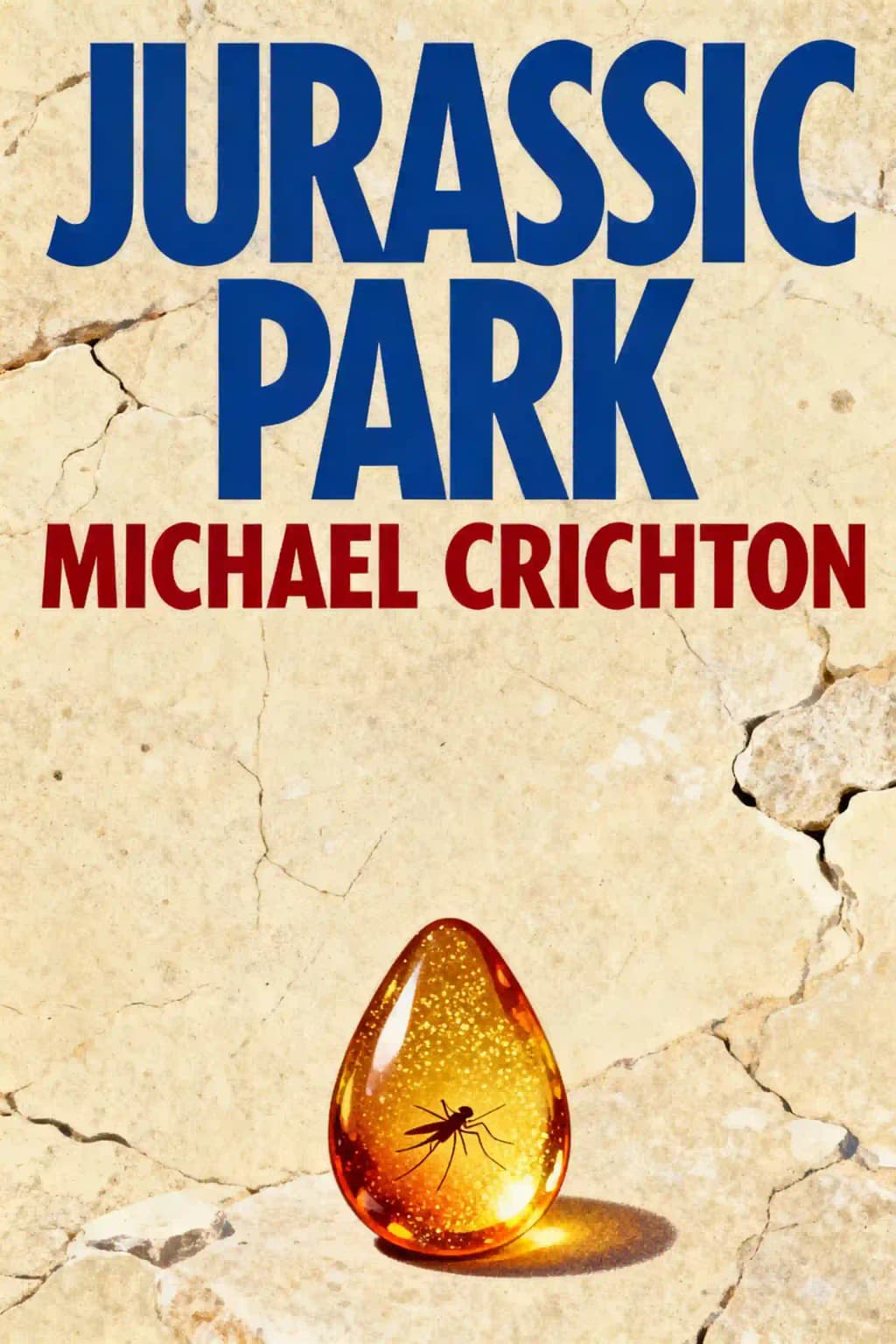
Have you ever wondered what would happen if dinosaurs walked the earth again? In 1990, Michael Crichton's groundbreaking thriller "Jurassic Park" captivated readers with this tantalizing premise, selling over 20 million copies worldwide and inspiring Steven Spielberg's 1993 blockbuster that grossed over $1 billion. Beyond entertainment, the novel sparked serious discussions about genetic engineering ethics and the responsibilities of scientific advancement. Crichton, a Harvard Medical School graduate, masterfully blended cutting-edge science with pulse-pounding suspense, creating what Stephen King called "the greatest science fiction novel ever written." The book's influence extended beyond entertainment-it introduced complex concepts like chaos theory to mainstream audiences and predicted the ethical dilemmas of genetic engineering that we still grapple with today. As we explore this scientific cautionary tale, remember Crichton's warning: "Scientific power is like inherited wealth; attained without discipline... you read what others have done and take the next step."
Capitolo 2
The Gold Rush of Genetic Engineering
The late twentieth century witnessed an unprecedented scientific gold rush in genetic engineering, marking one of the most dramatic transformations in the history of scientific research. What began with Watson and Crick's groundbreaking DNA double helix discovery in 1953 evolved within three decades into a multibillion-dollar commercial juggernaut. The pivotal moment came in April 1976 when venture capitalist Robert Swanson partnered with biochemist Herbert Boyer to found Genentech - a watershed moment that would revolutionize how scientific research was funded, conducted, and commercialized.
The success of Genentech catalyzed a seismic shift in the scientific community. By 1986, hundreds of distinguished scientists had abandoned academia's traditional ivory tower mentality and its historical disdain for industry partnerships. They were drawn by the siren song of stock options, substantial research budgets, and the promise of wealth in nascent biotech firms. This mass exodus from universities to private industry fundamentally altered the landscape of genetic research. Work that had once been conducted openly, with results shared through peer-reviewed journals, now happened behind closed doors. Patents replaced publications as the primary currency of success, and the race for profitable discoveries overshadowed the pursuit of pure scientific knowledge.
In this fertile but precarious climate, International Genetic Technologies (InGen) emerged as an particularly ambitious player. The company distinguished itself through its aggressive recruitment of top talent and its secretive research facilities in the American Southwest and Central America. While other biotech firms focused on medical applications and agricultural improvements, InGen's ambitions reached far beyond conventional genetic engineering - though few outside the company knew the true scope of their endeavors.
When InGen filed for Chapter 11 bankruptcy protection in October 1989, it initially appeared unremarkable - merely the third small American bioengineering company to fail that year amid a broader industry consolidation. The settlement documents included unusually strict nondisclosure agreements and generous severance packages for key personnel. However, many of the figures involved in what later became known as the "InGen incident" on a remote Costa Rican island eventually broke their silence, revealing a story that would challenge our understanding of genetic engineering's possibilities and perils.
This transformation of scientific research from public inquiry to private enterprise created the perfect conditions for John Hammond's ambitious Jurassic Park experiment. The era's characteristics - minimal oversight, fierce competition, abundant venture capital, and emphasis on rapid commercialization - fostered an environment where commercial ambition could easily outpace scientific caution. The pressure to deliver returns to investors often overrode careful consideration of long-term consequences, creating what mathematician Ian Malcolm would later describe as "an accident waiting to happen." The stage was set for an unprecedented experiment that would demonstrate both the awesome potential and terrifying risks of genetic engineering unleashed from traditional academic constraints.
Capitolo 3
Strange Occurrences in Costa Rica
The first hints of trouble emerged in the rain-drenched fishing village of Bahia Anasco, nestled along Costa Rica's western coastline. Dr. Roberta Carter, serving her final month at the local clinic, found her routine medical assignment shattered when an InGen Construction helicopter descended through the morning mist. The aircraft carried a grievously wounded young worker whose injuries defied explanation - massive parallel slashing wounds that carved deep into muscle and bone, completely inconsistent with any typical construction accident. The wounds displayed a distinctive pattern suggesting a large predator's attack, with spacing and depth that matched no known local wildlife. Before succumbing to his injuries, the worker's final whispered word - "raptor" - sent the experienced local paramedic Manuel into a state of visible distress, as it echoed ancient local legends of night ghosts that hunted in packs.
In the pristine wilderness of Cabo Blanco Biological Reserve, the Bowman family's carefully planned vacation transformed into a nightmare scenario. Eight-year-old Tina's encounter with what she initially thought was a small green lizard left her with peculiar wounds and an even more unsettling story. At the Clinica Santa Maria in Puntarenas, medical staff initially diagnosed a basilisk lizard attack, but several details troubled them deeply. The three-toed tracks Tina described matched no known species, and her wounds showed an unusual pattern of serrated cuts. Dr. Marty Guitierrez, an expert in local wildlife, discovered a disturbing pattern of similar attacks in surrounding villages - all involving children bitten while sleeping by creatures consistently described as green lizards with distinctive brown striping patterns.
The situation took an even darker turn with the tragic attack on a newborn infant. Midwife Elena Morales witnessed a horrifying scene that would haunt her forever - three dark green lizards, moving with bird-like precision, systematically attacking a newborn baby. The creatures left distinctive three-toed prints and displayed hunting behavior unlike any known reptile species. Terrified of being dismissed as insane and potentially losing her medical license, Elena officially recorded the death as Sudden Infant Death Syndrome (SIDS), though the truth of what she witnessed tormented her conscience.
Laboratory analysis revealed increasingly troubling details. Tissue samples from attack sites contained unknown protein structures with neurotoxic properties remarkably similar to cobra venom, but with unique modifications. Most significantly, researchers identified gamma-amino methionine hydrolase - a telltale marker of genetic engineering that was hastily dismissed as contamination by nervous supervisors. At Columbia University, technician Alice Levin made a crucial connection when examining Tina's detailed drawings. The creature's proportions, stance, and features aligned not with modern reptiles but with theoretical reconstructions of certain dinosaur species - an observation that her superior promptly buried in bureaucratic paperwork.
These incidents, when viewed collectively, painted a disturbing picture of an ecological threat unlike anything in modern history. The creatures displayed clear signs of being engineered organisms that had escaped from InGen's secretive island facility. More alarming still, evidence suggested they were not only surviving in the wild but actively adapting to new environments and successfully breeding. What began as isolated incidents in remote areas was rapidly emerging as the harbinger of an unprecedented crisis - prehistoric predators establishing themselves in modern ecosystems, with potentially catastrophic consequences for the natural order.
Capitolo 4
The Vision and the Visionary
John Hammond, the elderly founder of InGen, embodied the archetypal dreamer-entrepreneur - charismatic, ambitious, and dangerously optimistic. His silver-tongued persuasion and grandiose visions had long been his trademark in the business world. His journey to creating Jurassic Park began years earlier when he used a miniature elephant (created through conventional breeding and clever presentation rather than genetic engineering) to solicit investments for his genetics company. This early deception revealed Hammond's willingness to blur ethical lines in pursuit of his dreams. Despite the highly speculative nature of his vision, Hammond raised an astounding $870 million, primarily from Japanese investors who were captivated by the potential of genetic engineering, to fund his ambitious dinosaur project.
When renowned paleontologist Alan Grant and paleobotanist Ellie Sattler arrived at Hammond's remote Costa Rican island, their scientific skepticism dissolved into pure wonder as they encountered living, breathing dinosaurs - magnificent apatosaurs rising fifty feet above the tropical palm trees. Hammond, dressed in white and leaning on his amber-topped cane, proudly revealed his masterpiece: Jurassic Park, a sophisticated biological preserve featuring fifteen different species totaling 238 animals, from peaceful herbivores to deadly predators like velociraptors and the imposing Tyrannosaurus Rex. His pride was palpable as he watched his visitors' expressions of awe, casually dismissing mounting safety concerns as merely "normal start-up delays" despite the troubling fact that three workers had already died during construction.
Hammond's blind optimism contrasted sharply with the calculated skepticism of mathematician Ian Malcolm, who had predicted the park's failure from the moment he reviewed the project plans. Malcolm, dressed entirely in black and exuding an air of intellectual confidence, explained chaos theory to the group - how complex systems like weather patterns have underlying order, but even simple systems can produce wildly unpredictable behavior. He confidently asserted that Hammond's seemingly straightforward system of "animals within a zoo environment" would inevitably show catastrophic unpredictable behavior, citing the butterfly effect where small changes can cascade into major consequences.
The fundamental flaw in Hammond's thinking became increasingly apparent as events unfolded. He believed he could control nature through technology, genetic engineering, and containment systems, failing to recognize that life inevitably finds unexpected paths to expression. His computer systems tracked exactly 238 animals - no more, no less - revealing his rigid belief in perfect control. As Malcolm would later tell him in a devastating critique: "You decide you'll control nature, and from that moment on you're in deep trouble, because you can't do it. Yet you have made systems that require you to do it... Your powers are much less than your dreams of reason would have you believe."
Hammond's tragedy was his inability to see beyond his dazzling vision to its inevitable consequences. Even as his park collapsed around him - with dinosaurs breeding unexpectedly, security systems failing, and people dying - he rationalized that the failure wasn't his fault but rather the incompetence of his employees or external sabotage. Lost in thoughts of doing better "next time" and building an improved park, Hammond would ultimately fall victim to his own hubris and creation - attacked and killed by a pack of small, seemingly harmless dinosaurs called compys after injuring himself while wandering alone in the jungle, far from the technological safety nets he trusted so completely.
Capitolo 5
The Science Behind the Spectacle
The technological marvel of Jurassic Park was revealed during the visitors' tour of the laboratory facilities. Henry Wu, the brilliant geneticist who made Hammond's vision possible, explained how they obtained dinosaur DNA-primarily from blood-sucking insects preserved in amber. This DNA was then repaired and analyzed using powerful Cray XMP supercomputers, with gaps filled using DNA from modern reptiles and amphibians.
The process was extraordinarily complex. Wu detailed two methods for identifying unknown DNA: phylogenetic mapping and simply growing the organism to see what developed. The fertilization room contained deadly poisons like helotoxins, while the hatchery maintained precise conditions-99F with 100% humidity and elevated oxygen levels-to simulate the Jurassic atmosphere. Despite producing 238 live animals, the success rate was a mere 0.4%.
Wu explained that none of the dinosaurs could breed for two reasons: they were sterilized with X-rays, and all animals were engineered to be female. Additionally, the dinosaurs were genetically engineered with a lysine dependency that would cause them to die within twelve hours without supplements provided at the park-a failsafe against escape.
The park's infrastructure was equally impressive. John Arnold, the head engineer, demonstrated their sophisticated tracking system on a large glass map. With the press of a button, he could display the movements of any dinosaur over the past three days, pinpointing its location within five feet through motion sensors and video recognition. The system tracked all 238 animals simultaneously, automatically tallying them by category every fifteen minutes.
Yet beneath this technological prowess lay dangerous assumptions. Wu had proposed upgrading the park's dinosaurs to "Version 4.4"-making them slower and more docile to match visitors' expectations. Hammond dismissed the idea, insisting people want "real dinosaurs," not domesticated ones. Wu countered that the dinosaurs weren't truly "real" anyway-they contained genetic modifications to make them patentable and lysine-dependent, with accelerated growth rates. Most importantly, the DNA sequences contained gaps that required educated guesses to fill.
This conversation revealed the fundamental contradiction at the heart of Jurassic Park: the illusion of authenticity masking profound human intervention. The dinosaurs weren't genuine prehistoric creatures but modern interpretations-amalgamations of ancient DNA and contemporary genetic material, shaped by human assumptions and commercial considerations.
Capitolo 6
When Systems Fail: The Collapse Begins
The park's sophisticated technological systems began to unravel during a tropical storm that coincided with the inspection visit. Dennis Nedry, the disgruntled computer specialist who had designed the park's control systems, executed a carefully planned act of sabotage. Bribed by InGen's competitor Biosyn to steal dinosaur embryos, Nedry disabled the security systems and electric fences throughout the park, planning to deliver the stolen specimens to the east dock and return before anyone suspected his involvement.
As the storm intensified, the visitors found themselves stranded in automated tour vehicles near the tyrannosaur paddock. With the electric fences deactivated, the massive predator escaped and attacked the vehicles, injuring Malcolm and sending the lawyer Gennaro fleeing into the jungle. Grant escaped with Hammond's grandchildren, Tim and Lex, while the tyrannosaur pursued them into the park.
In the control room, the remaining staff discovered the extent of Nedry's sabotage-not only had he disabled the phones, but he had also deactivated the security systems throughout the park. "The animals can get out now," Muldoon grimly noted. Meanwhile, Nedry himself, attempting to reach the east dock with his stolen embryos, became lost in the storm and was killed by a venom-spitting dilophosaur.
The situation deteriorated further when they discovered the park had been running on auxiliary power since the system restart, meaning all electric fences, including those containing velociraptors, had been off for five hours. The implications were horrifying-the park's most dangerous predators were loose.
What followed was a desperate attempt to restore power and contain the escaped dinosaurs. Arnold headed to the maintenance shed but was attacked by a raptor. Muldoon found himself trapped in a drainage pipe surrounded by raptors, while Wu was killed trying to distract the predators. The sophisticated technology that was supposed to ensure safety had become useless, and the humans were reduced to their most primitive state-prey being hunted by superior predators.
The collapse of Jurassic Park illustrated Malcolm's chaos theory in action. A seemingly simple failure-Nedry's sabotage-cascaded through interconnected systems, creating unpredictable and catastrophic outcomes. The park's designers had created a system that required perfect control to function safely, yet perfect control was mathematically impossible. As Malcolm had predicted, the system accelerated toward collapse once the first failures occurred.
Capitolo 7
The Hunters and the Hunted
The velociraptors emerged as the most terrifying predators in Jurassic Park-not for their size, but for their intelligence and hunting strategies. Standing about six feet tall, these dinosaurs moved with shocking speed-"faster than alligators or Komodo dragons, more like cheetahs at sixty or seventy miles per hour." Their behavior was more bird-like than reptilian, aligning with early paleontological theories before dinosaurs were reimagined as sluggish giants.
When Grant, Ellie, Malcolm, and Tim observed the raptors in their enclosure, they witnessed the animals methodically testing the electric fence for weaknesses. A worker confirmed this was regular behavior, revealing an unsettling level of problem-solving ability. Later, when the fences failed, the raptors demonstrated coordinated hunting tactics that made them nearly impossible to evade.
Tim experienced the raptors' hunting prowess firsthand in the kitchen. The dinosaur followed his trail methodically, revealing its razor-sharp teeth with a silent yawn. Tim found this predator more frightening than the tyrannosaur-man-sized, quick, and intelligent with searching eyes. Only through quick thinking did Tim and Lex manage to trap the raptor in the freezer.
The raptors' intelligence became even more apparent when Grant discovered their nest. The dinosaurs arranged themselves in peculiar spatial patterns, all facing northeast-southwest. When they migrated to the beach, they displayed remarkable group coordination-adults spaced every ten yards surrounded by infants, with juveniles positioned between and ahead of adults. A distinctive striped female occupied the center position, revealing a matriarchal hierarchy.
Most disturbing was the discovery that the raptors were breeding despite being engineered as females. Grant explained how the amphibian DNA used to complete the dinosaur genome allowed them to change sex when in a single-gender environment-a phenomenon observed in some modern frogs. This adaptation revealed nature's resilience against human attempts at control.
The tyrannosaur, while less intelligent than the raptors, was no less dangerous. Its massive jaws could crush a Land Cruiser, and its hunting strategy relied on movement detection-it could only see prey that moved. This peculiarity saved Grant and the children several times as they froze in place, becoming invisible to the predator's vision.
These encounters forced the humans to adapt, to think like their prehistoric adversaries to survive. Grant, with his deep knowledge of dinosaur behavior, became the group's best hope for survival. The hunters had become the hunted, and only by understanding their predators could they hope to escape the island alive.
Capitolo 8
Life Finds a Way
The most profound revelation of the Jurassic Park disaster was that life cannot be contained or controlled. Despite InGen's sophisticated genetic engineering and security measures, the dinosaurs found ways to adapt and reproduce that no one had anticipated.
The first clue came when Grant discovered a juvenile male velociraptor in the wild-proof that breeding was occurring despite all dinosaurs supposedly being female. He later explained how this was possible: "The amphibian DNA used to fill sequence gaps had allowed the animals to change sex spontaneously, particularly in a single-sex environment." This phenomenon, observed in certain modern frogs, had enabled the park's dinosaurs to breed despite human attempts to prevent it.
The dinosaurs also overcame their engineered lysine dependency-the failsafe designed to prevent them from surviving outside the park. As Marty Guitierrez later explained to Grant, escaped dinosaurs on the mainland were consuming lysine-rich foods like agama beans, soy, and chickens, allowing them to thrive in the Costa Rican jungle.
Even more remarkable was the discovery of the velociraptors' migratory behavior. Grant followed them through concrete tunnels to a beach where they lined up facing the ocean, watching passing ships with evident interest. Their rigid spatial organization-adults spaced every ten yards surrounded by infants, with juveniles positioned between and ahead of adults-revealed complex social structures. These weren't animals desperate to escape; they wanted to migrate, displaying instincts that had survived 65 million years of extinction.
The raptors' intelligence suggested they possessed cognitive abilities comparable to parrots, which have symbolic reasoning similar to chimpanzees. This level of intelligence, combined with their physical capabilities, made them formidable survivors in any environment.
As the survivors were evacuated by military helicopters, Grant caught a final glimpse of hypsilophodonts leaping "gracefully as gazelles" before explosions engulfed the island. The Costa Rican government's attempt to destroy the evidence of Hammond's experiment came too late-dinosaurs had already reached the mainland and entered the jungle, moving "straight as an arrow" from coast to mountains.
Malcolm's chaos theory had proven correct. The complex system of Jurassic Park had found its equilibrium state, but not the one its designers had intended. Life had found a way, just as it always does, adapting to new circumstances and overcoming artificial barriers. The hubris of believing humans could control nature had been thoroughly exposed.
Capitolo 9
The Ethics of Creation: Science Without Wisdom
As the Jurassic Park disaster unfolded, Ian Malcolm delivered a scathing philosophical critique of science's hubris. Lying in bed, growing weaker from his injuries, Malcolm mocked Hammond's "simple idea" that had descended into chaos. He compared scientific power to inherited wealth-gained without discipline or understanding of consequences.
"Scientific discovery is the most powerful force in our civilization," Malcolm observed. "But how is it used? Like a child who's found his father's gun." Unlike martial arts masters who develop restraint alongside their deadly skills, scientific power can be purchased and wielded without responsibility. "You don't even know exactly what you have done, but already you have reported it, patented it, and sold it," he told Hammond.
The core problem, Malcolm argued, was that science had gained tremendous power but lacked the wisdom to use it responsibly. The commercialization of genetic research had accelerated this problem-work now happened in secret, hastily, and for profit rather than public benefit. Hammond's park exemplified this trend, rushing to create dinosaurs without fully understanding the implications.
When Hammond asked if Malcolm was suggesting they shouldn't care about the environment, Malcolm clarified his position: "Let's be clear. The planet is not in jeopardy. We are in jeopardy. We haven't got the power to destroy the planet-or to save it. But we might have the power to save ourselves."
This philosophical critique extended beyond the fictional world of Jurassic Park to our real-world relationship with technology. Crichton was warning readers about the dangers of scientific advancement without ethical consideration, of commercial interests driving research without adequate oversight. The novel anticipated many of the ethical dilemmas we face today with genetic engineering, from CRISPR technology to cloning.
As the survivors were evacuated from the island, the Costa Rican government attempted to destroy all evidence of Hammond's experiment with airstrikes. But this effort came too late-dinosaurs had already reached the mainland and entered the jungle. The final scene of the novel shows Grant learning that "unknown animals" have been spotted in rural regions, consuming lysine-rich foods and moving inland.
This ending suggests that some technological developments, once unleashed, cannot be contained or undone. The responsibility for scientific advancement must come before, not after, the technology is developed. As Malcolm warned, "Your scientists were so preoccupied with whether they could, they didn't stop to think if they should."
The legacy of Jurassic Park is this warning-that our technological capabilities must be matched by ethical wisdom, that commercial interests must be balanced with responsibility to the future, and that nature's complexity should inspire humility rather than hubris. In our modern world of rapid technological advancement, these lessons remain as relevant as ever.