Capitolo 1
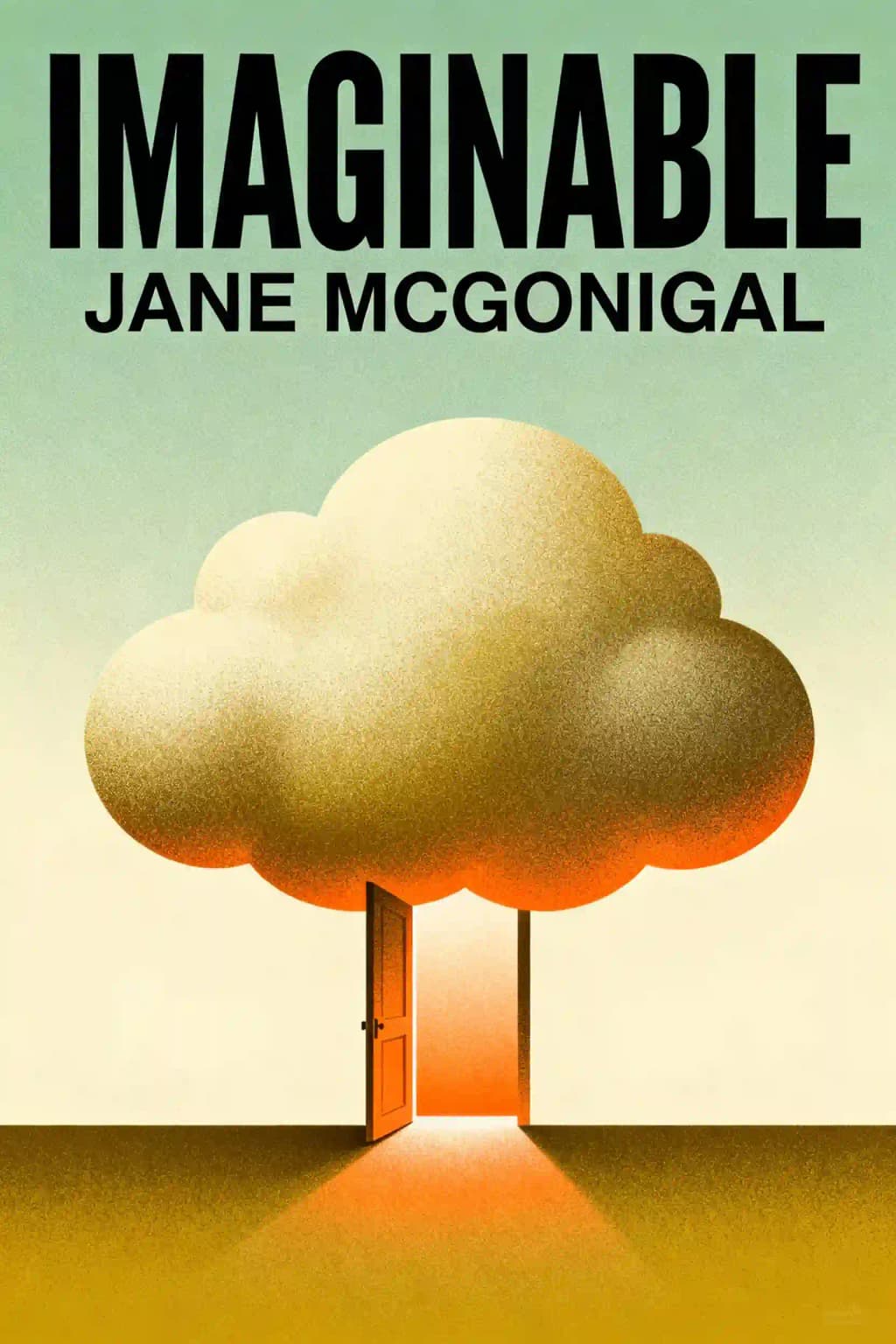
Unlocking Tomorrow's Possibilities: A Journey Through Jane McGonigal's Imaginable
Have you ever found yourself blindsided by a world-changing event that seemed to come out of nowhere? In 2020, as the pandemic upended our lives, many described it as "unimaginable" or "unthinkable." Yet Jane McGonigal, a renowned futurist and game designer, had simulated a global respiratory pandemic with remarkable accuracy twelve years earlier. Her 2008 Superstruct simulation predicted mask resistance, school closures impacting working mothers, and religious gatherings becoming superspreading events. This wasn't mere coincidence-it was the result of deliberate future-thinking techniques that anyone can learn. In "Imaginable," McGonigal reveals these powerful methods, drawing from her unique expertise as both a professional futurist at the Institute for the Future and a game designer who creates immersive simulations. Beloved by Silicon Valley innovators and cited by world leaders, McGonigal's work has transformed how organizations prepare for the future. Now, she invites us all to develop what she considers a fundamental human right: the ability to imagine and shape our collective tomorrow.
Capitolo 2
The Pandemic That Was Entirely Imaginable
When COVID-19 emerged in early 2020, McGonigal's inbox flooded with messages from tech executives, government officials, and former simulation participants. They all wanted to discuss how accurately her 2008 Superstruct pandemic simulation had predicted current events. The simulation had correctly anticipated not just the biological aspects of a pandemic but the social dynamics: religious services becoming superspreader events as people resisted distancing for emotionally significant gatherings, schools closing and disproportionately affecting working mothers, and economic support determining compliance with public health measures.
What made this foresight possible wasn't supernatural prediction but structured imagination-the deliberate practice of envisioning potential futures and mentally rehearsing responses. Participants who had engaged with McGonigal's simulations reported feeling calmer during the actual pandemic because "I already worked through the anxiety when we imagined it ten years ago." This mirrors what happened in places like Hong Kong, Taiwan, and Singapore, where previous experience with SARS in 2003 led to faster, more effective COVID-19 responses.
The most valuable aspect of future simulations isn't perfect prediction but preparing our minds for flexibility and resilience. These mental exercises create lasting habits, particularly watching for early signals that imagined scenarios might be becoming reality. McGonigal's 2010 EVOKE simulation for the World Bank had accurately forecast a respiratory pandemic from China, social media misinformation campaigns, historic West Coast wildfires, and power grid failures-all occurring in 2020, exactly when the simulation had placed them.
This isn't fortune-telling; it's deliberate imagination training that builds our capacity to anticipate change and respond adaptively rather than reactively. By practicing these techniques, we develop what McGonigal calls "urgent optimism"-the ability to recognize serious challenges while maintaining realistic hope about our capacity to address them.
Capitolo 3
Ten-Year Thinking: The Magic Number for Meaningful Change
When does the future actually begin? McGonigal poses this question to her students, asking when they believe most things in their lives will be different. The most common answer is ten years-a timeframe that creates what she calls "time spaciousness," the empowering feeling that we have enough time to make significant changes.
This ten-year horizon isn't arbitrary. Looking at recent history confirms this "magic number"-it typically takes about a decade for major social movements to achieve historic victories and for transformative technologies to reach global impact. Ten years provides enough distance to imagine dramatic change without feeling so far away that we disconnect from it emotionally.
With a ten-year timeline, we become less risk-averse and more creative. We set "maximal goals" focused on the best possible outcomes rather than "minimal goals" that merely avoid bad outcomes. Ten years lifts the ceiling on our imagination, creating a cathedral-like mental space rather than a tiny room with no windows.
Interestingly, giving yourself more time often leads to faster action. Studies show that when people feel "time-rich" rather than "time-poor," they actually accomplish more. This contradicts our instinct to create urgency through tight deadlines. McGonigal suggests putting something exciting on your calendar for ten years from today and imagining that day vividly-a simple practice that strengthens your connection to your future self.
Most people rarely think ten years ahead-McGonigal's research found that 52% of Americans either never imagine their lives ten years in the future or do so only once a year. Yet this mental time travel activates a crucial cognitive shift: when thinking ten years out, our brains switch from first-person to third-person perspective, allowing us to see ourselves and situations more objectively, boost empathy, and become more open to challenging information.
This perspective shift helps overcome blind spots and imagine possibilities others refuse to consider. McGonigal shares an example of automotive executives who dismissed the possibility of self-driving cars becoming mainstream, insisting people would never give up control of their vehicles. Twelve years later, that same company is manufacturing self-driving vehicles-they got their minds unstuck.
Capitolo 4
Learning to Time Travel: The Science of Episodic Future Thinking
To understand why imagining the distant future is so challenging, McGonigal invites readers to try a simple exercise: imagine waking up tomorrow morning, then one year from today, and finally ten years from today. The difficulty increases dramatically with the ten-year scenario because you've never been ten years older than you are now, and there's enormous potential for change in that timespan.
This mental effort is precisely what makes future imagination so powerful. Your brain draws on past experiences, hopes, fears, and intuitions to invent something new-forging neurological pathways and creating a "memory of the future" that becomes imaginable, allowing you to plan more effectively.
Scientists call this episodic future thinking (EFT)-mentally transporting yourself forward to pre-experience future events. Unlike casual daydreaming, EFT is grounded in reality, connecting who you are today with what you might really experience tomorrow. It activates eleven distinct brain regions (compared to just six when remembering past events) and involves three major types of sense-making:
1. Scene construction: building the world and establishing its rules
2. Opportunity detection: identifying how to fulfill needs and achieve goals
3. Emotional pre-feeling: experiencing how this future might feel
Research shows EFT significantly reduces symptoms of depression by training the imagination to construct detailed scenes filled with plausible positive possibilities. For those with anxiety, it helps them remember their deepest values and effective actions they can take, significantly reducing anxiety symptoms.
EFT is also a powerful tool for behavior change. People who vividly imagine their personal futures are more likely to make healthier choices, maintain new habits, save money, complete education, vote, buy sustainable products, overcome addiction, and stick with long-term resolutions. What's fascinating is that you don't need to imagine specific consequences of today's behaviors-simply imagining anything in your far future increases motivation for any long-term beneficial action today.
Capitolo 5
Playing with Future Scenarios: The Heart of Imagination Training
Professional futurists use "future scenarios"-detailed descriptions of particular futures where at least one thing is dramatically different from today-to navigate ten years into the future. These scenarios explain what has changed, how things work now, and what's considered normal in this alternate reality.
McGonigal introduces several sample scenarios, including "Thank You Day," where citizens receive $2,000 from the government-half to keep and half to give to essential workers from a national registry. This scenario addresses both economic inequality and social division by creating a ritual of gratitude while providing financial support to those whose work is essential but undervalued.
Another scenario explores a world where the UN Office for Outer Space Affairs increases the probability of a catastrophic asteroid impact from 1% to 5%, with the potential impact three years away. This scenario serves as a proxy for thinking about climate migration-a far more likely future where cities and nations will need to relocate populations due to rising seas, wildfires, and extreme heat.
Scenarios are powerful imagination tools because they provide the essential facts of a future reality, allowing your brain to skip the challenging "semantics" part of scene construction. Rather than getting stuck trying to envision a specific future, scenarios let you jump straight to personalizing the experience and considering your actions and feelings.
McGonigal emphasizes that scenarios aren't fixed-if something seems implausible or undesirable, you're encouraged to rewrite it. This flexibility mirrors reality itself; rewriting scenarios is practice for changing the actual future.
Capitolo 6
Embracing the Ridiculous: Finding Blind Spots in Our Imagination
To develop useful future scenarios, we must embrace ideas that initially seem ridiculous. As futurist Jim Dator's law states: "Any useful statement about the future should at first seem ridiculous." The scenarios that catch us off guard aren't the reasonable ones but the possibilities we dismiss as impossible or outrageous. This principle has proven true repeatedly throughout history, from the initial dismissal of the internet to the widespread adoption of smartphones - developments that seemed far-fetched when first proposed.
McGonigal introduces a brainstorming game called "Stump the Futurist" where participants list things they believe cannot possibly change in the next decade, while futurists look for clues that these "unchangeable truths" might already be changing. Common examples include beliefs about human nature, social institutions, or technological limitations. Participants often cite things like "humans will always need sleep" or "children will always go to physical schools" - assumptions that may already be challenged by emerging research and innovations.
She emphasizes the importance of seriously imagining future threats, particularly high-impact, low-probability (HILP) events. These events, while seemingly unlikely, can reshape society when they occur. She presents scenarios like "The Global Emergency Sperm Drive," set ten years in the future, where declining global fertility has prompted a worldwide effort to collect and freeze sperm as humanity's genetic insurance policy. This scenario builds on current trends in declining fertility rates across developed nations and emerging research on environmental factors affecting reproductive health.
McGonigal connects this speculative scenario to real-world precedents like the Frozen Ark, Nature's SAFE, and the Millennium Seed Bank-existing projects preserving genetic material of endangered species. These initiatives already maintain vast repositories of biological material, protecting biodiversity against extinction events. She suggests human biobanking could eventually follow a similar path, pointing to existing sperm banks and cord blood storage facilities as early indicators of this trend.
The "future memories" created through simulation provide psychological benefits beyond mere preparation. When imagined scenarios actually occur, we experience recognition rather than shock, giving us confidence and agency. This "pre-exposure therapy" for difficult futures acts like a vaccine against future shock, allowing people to respond adaptively rather than reactively when faced with real crises. Research in cognitive psychology supports this approach, showing that mental rehearsal of challenging situations improves performance and reduces anxiety when similar situations arise in reality.
The practice of embracing seemingly ridiculous futures also helps organizations and individuals identify potential opportunities and threats they might otherwise miss. By deliberately exploring outlandish scenarios, we expand our range of possible futures and increase our adaptive capacity. This approach has been successfully used by organizations ranging from military planners to corporate strategists, leading to more robust and flexible planning strategies.
Capitolo 7
Tracking Future Forces: The Winds of Change
Which global trends beyond your control will most influence your life in the next decade? McGonigal identifies six key forces: extreme climate effects, post-pandemic trauma, youth radicalization via social media, facial recognition technology, potential universal basic income, and higher education reinvention.
A future force is a significant trend with transformative impact potential-what starts as a small signal eventually gains momentum. You can't control these forces, but you can adjust your sail to their winds. The most powerful forces are often obvious yet uncomfortable-they demand change or point toward disaster. The more uncomfortable a force makes you feel, the closer you should look at it.
McGonigal's simulations successfully predicted crises not because she knew secret information, but because she listened to experts already sounding alarms and imagined multiple crises unfolding simultaneously. The World Economic Forum's Global Risks Report consistently identifies threats like climate change, infectious diseases, weapons of mass destruction, social unrest, and cyberattacks.
"Normalcy bias" prevents effective future thinking by making us resist acknowledging novel risks. Research shows that vividly imagining future events makes them seem more likely to occur-a phenomenon proven in studies since 1976. When participants imagined a candidate winning an election or experiencing specific disease symptoms, they rated those outcomes as more probable afterward.
This effect occurs because after creating a detailed future memory, your brain recalls those details more easily next time, mistaking this ease for likelihood. Just twenty seconds of active imagination can form a persuasive future memory that helps overcome normalcy bias.
Capitolo 8
Hard Empathy: Connecting with Future Strangers (Including Yourself)
Our future selves are neurologically strangers to us. When imagining your future self, your brain's medial prefrontal cortex (mPFC) powers down, treating future-you as someone else entirely. This neurological quirk makes it harder to make decisions benefiting our future selves-we save less money, procrastinate more, exercise less, and care less about long-term challenges like climate change.
McGonigal distinguishes between two types of empathy. "Easy empathy" occurs when we directly relate to others' experiences because we've lived through similar situations. "Hard empathy" requires creative effort when we lack personal experience with what someone is facing. It demands quieting our own instinctive responses and creating mental space for another's reality.
Hard empathy is essential for broadening perspective, deepening humanity, healing social rifts, and making relationships more resilient. Research across 63 countries shows societies with higher hard empathy scores enjoy greater well-being, self-esteem, and prosocial behavior. Practicing hard empathy with strangers can even help you connect better with your future self, whom your brain treats as a stranger.
The most effective way to develop hard empathy is finding stories about people experiencing radically different circumstances from your own, then imagining your life transformed by their reality. Rather than trying to put yourself in their shoes (which often leads to inaccurate assumptions), blend objective facts about their reality with your own subjective feelings.
Far-future thinking and hard empathy reinforce each other as cross-training for your imagination. Both require disrupting habitual thoughts to immerse yourself in alternate realities. When you practice feeling how someone else's life differs from yours, you become better at envisioning all kinds of change-because if others can live completely different lives today, you can imagine yourself living differently tomorrow.
Capitolo 9
Healing the Deeper Disease: Addressing Root Causes
As we emerge from the pandemic's darkness with unstuck minds ready to believe in future change, we must ask not just what can change in the next decade, but what should change. The pandemic has created a psychic rupture in society, allowing radical ideas to take root in our collective consciousness.
McGonigal identifies several "preexisting conditions" that the pandemic exposed and exacerbated: economic inequality, political polarization, racial injustice, brittle supply chains, worker burnout, and the climate crisis. These underlying issues made the pandemic worse and will continue to complicate future crises if left unaddressed.
For nearly three decades, psychologists have studied post-traumatic growth-positive personal transformation that follows trauma when we're radically changed by encounters with previously unthinkable challenges and pain. This growth manifests as better understanding of our strengths, openness to new possibilities, increased connection with fellow sufferers, courage to make life changes, and desire to serve larger causes.
Post-traumatic growth isn't the opposite of suffering but results from suffering deeply and seeking meaning in that suffering. It happens when we're forced to rethink core beliefs, acknowledge our vulnerability, and reassess what truly matters. COVID-19 represents perhaps the largest collective simultaneous trauma in human history, with studies showing about 22.6% of people experience PTSD symptoms after pandemics. A Yale study found 40% of people surveyed in late 2020 had already experienced at least one symptom of post-traumatic growth from the pandemic.
This collective trauma has created an urgent global longing for something better and the most significant opportunity in our lifetimes to create lasting positive change.
Capitolo 10
Simulating Any Future You Want: Creating Waking Dreams
Why do we dream such strange things? Scientists have documented dream-like brain activity across many species-from humans to cats, dogs, birds, lizards, and even cuttlefish-suggesting dreaming delivers a strong evolutionary advantage. Computer scientists may have discovered this advantage: the most effective method for teaching AI is through "noise injections"-dreamlike, purposefully weird versions of real-world data that make programs more flexible and adaptive.
Neuroscientist Erik Hoel proposes that human dreams function similarly, counterbalancing our brain's pattern-recognition tendencies and normalcy bias by preparing us for unexpected future events. Future scenarios and mental simulations work like waking dreams, allowing us to superimpose imagined futures onto our real lives, unsticking our minds from past patterns and practicing how to encounter the unexpected.
A mental simulation is a waking dream of a possible future where we superimpose an imagined scenario onto our daily lives. These hypothetical scenes exist only in your mind but bring the scenario to life in vivid detail-like controlled hallucinations of the future that you direct with your imagination.
The magic of simulation happens when we document and share our dreamlike future ideas with others. Whether through exchanged journals, group emails, online forums, or social media posts, social documentation allows us to revisit our imaginings and access others' perspectives on the same scenario. This creates an exponential "noise injection" for our imagination, with input from many different lived experiences.
McGonigal provides a six-step process for creating your own social simulation: (1) Choose WHAT scenario to simulate; (2) Decide WHO to invite; (3) Determine WHEN to start and end; (4) Establish WHERE sharing will happen; (5) Plan HOW to explore different dimensions; and (6) Clarify WHY you're simulating this future.
Capitolo 11
From Imagination to Action: Answering the Call to Adventure
The 1967 University of Pennsylvania psychology experiment established that when we learn our actions don't matter in one situation, we carry that belief to other situations, becoming passive even when solutions are available. This "learned helplessness" theory held for decades across various species and became a key explanation for clinical depression.
However, neuroscientist Steven F. Maier later discovered the theory backward: we don't learn helplessness-our brains assume it. The passive "freeze" response is actually our most hardwired reaction to adverse conditions, even before "fight or flight" or "tend and befriend." To overcome this, we must activate pathways in the ventromedial prefrontal cortex that turn off this instinctive response by experiencing that our actions can make a difference.
This explains why gamers show greater agency in real life-games train us to overcome challenges and build confidence in our ability to determine outcomes. We can apply this principle to future scenarios, practicing "learned helpfulness" instead of helplessness, strengthening our belief that we can take meaningful action rather than freezing when faced with future shocks.
The future represents our "zone unknown"-a strange place we're all called to visit through mental time trips. Unlike Joseph Campbell's hero's journey where only one special person receives the call to adventure, we are all equidistant from the future and will arrive there simultaneously. The future's call is an urgent invitation to pre-think how we might help ourselves and others thrive in unfamiliar scenarios.
To answer the future's call, we must recognize our unique "you-shaped hole"-the particular skills, knowledge, communities, passions and values we bring to future challenges, regardless of whether they seem "essential" on the surface. Every strength, from fashion savvy to Bible study participation to neighborhood connections, could potentially serve others in future crises.
Imagining yourself as helpful in future scenarios increases empathy for your future self. Envisioning yourself as helpful or heroic makes your future self more likable, building a positive emotional connection that teaches your brain to treat your future self less like a stranger and more like someone you know and love.
Capitolo 12
The Future Is Yours to Imagine
Simulating future scenarios isn't about predicting specific crises, but about building mental resilience, psychological flexibility, and "learned helpfulness" for any unthinkable event. Like dreams that help our brains prepare for reality, these impossible futures help us stay calm and optimistic when facing real shocks.
When 2033 arrives, you might experience deja vu-not because these exact scenarios happened, but because you recognize the feelings: society lurching into extreme action, hope mixed with uncertainty, the weight of collective sacrifice, and the clarity that comes from doing difficult but necessary things.
The future will inevitably differ from anything you've experienced before. But by seriously imagining strange new worlds, you've adapted your brain to their wildest configurations. You've given yourself the gift of future simulation, ensuring you won't get stuck in old ways when something different arrives.
The mental time travel, scenario exploration, ridiculous ideas, signal collection, and social simulation skills you've practiced are the building blocks of urgent optimism. Despite the challenges ahead, you have something important to contribute and the agency to create a world you want to live in.
The future isn't just bright with hope-it's also dark with unknowability, which means it can be anything we imagine. The gift of the future isn't prediction but creativity. To tackle our biggest challenges, we need mental time trips and social simulations that help us imagine how things can be different.
Remember that "to make a difference" literally means "to make something different"-which our imagination proves is always possible.