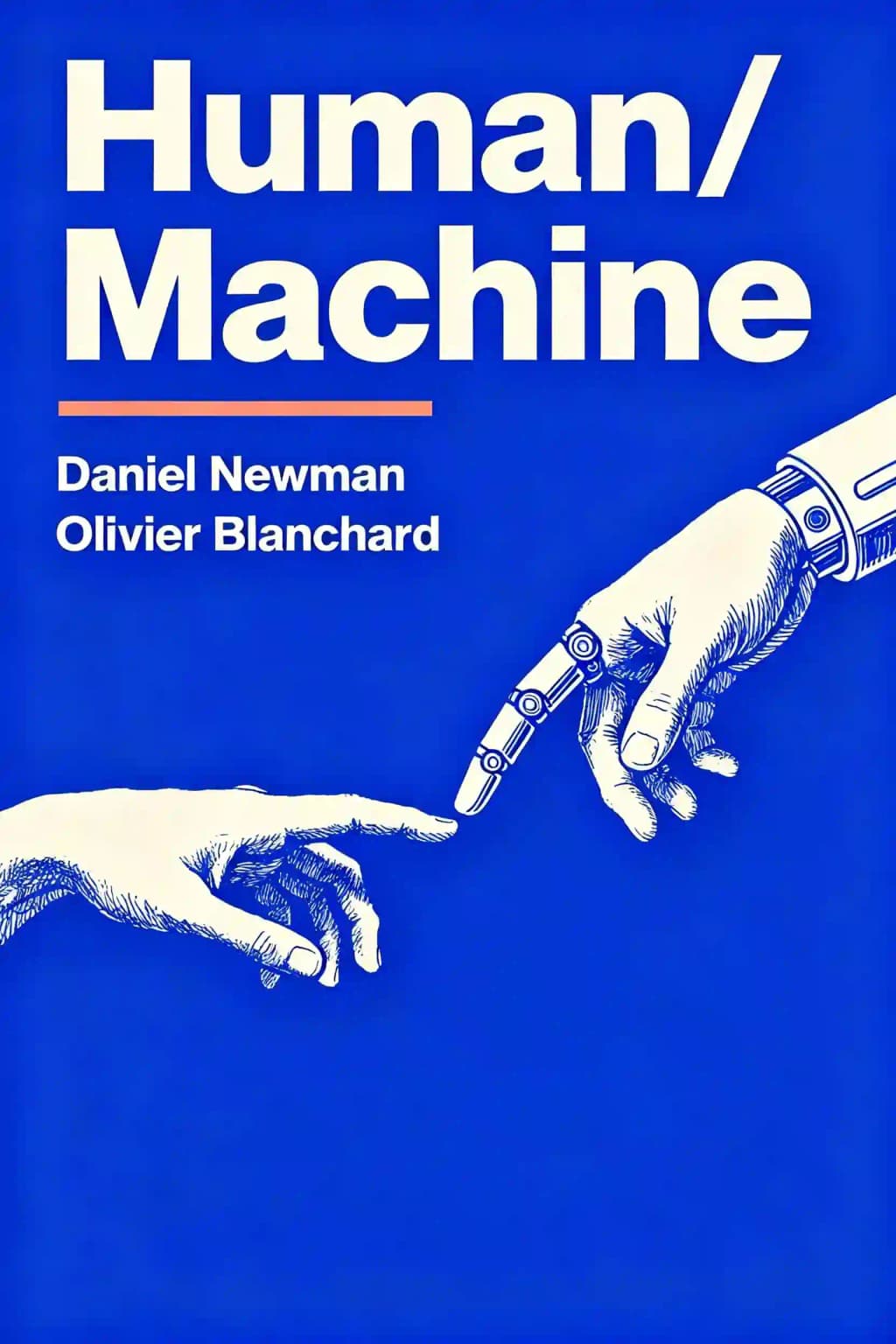
Human/Machine
The Future of Our Partnership with Machines
Panoramica di Human/Machine
In "Human/Machine," Newman and Blanchard reveal how AI won't replace us but transform us. While robots handle repetitive tasks, humans gain freedom for creative fulfillment. Top companies already leverage this symbiotic partnership - are you prepared for this inevitable future?
Temi chiave in Human/Machine
- human-machine collaboration
- augmented intelligence
- future of work
- technological displacement
- workforce reskilling
Citazioni da Human/Machine
The future is brighter than you might think.
Technology has always been about augmenting human capabilities, not replacing them.
The reality is that AI and automation are more likely to reshape jobs rather than eliminate them entirely.
The jobs of the future will require a unique blend of technical knowledge and distinctly human skills.
The future belongs not to those who fear machines, but to those who learn to work alongside them.
Personaggi di Human/Machine
- Daniel NewmanCo-author and expert on human-machine partnership
- Olivier BlanchardCo-author and analyst of technological futures
Scarica il riassunto di Human/Machine
Ottieni il riassunto di Human/Machine in formato PDF o EPUB gratuito. Stampalo o leggilo offline quando vuoi.
FAQ su questo libro
Human/Machine explores the symbiotic relationship between humans and technology, arguing that AI and automation will augment—not replace—human potential. The book details how businesses, education systems, and individuals can adapt to thrive in a skills-based economy, with case studies on gamified training, predictive supply chains, and AI-integrated teams.
Professionals in tech, business leaders, educators, and anyone interested in AI’s impact on work will benefit. The book offers actionable strategies for leveraging automation, making it ideal for those preparing for Industry 4.0 or seeking career resilience in a machine-augmented world.
Yes, for its balanced perspective on AI’s role in the workplace. While some critics note repetitive arguments about machines not replacing humans, the book provides tangible examples of human-machine collaboration and a roadmap for future-proofing careers.
- Augmentation over replacement: Machines handle repetitive tasks, freeing humans for creative roles.
- Skills-based economy: Success hinges on adaptability and continuous learning.
- Institutional evolution: Companies must integrate AI ethically and strategically.
The authors emphasize historical precedents where technology created more jobs than it eliminated. They advocate for reskilling and highlight emerging roles in AI oversight, data ethics, and human-machine interface design.
Examples include firms using predictive analytics to preempt supply chain issues, gamification for employee training, and project management teams collaborating with AI bots. These illustrate practical applications of human-machine synergy.
Unlike alarmist takes, Human/Machine focuses on collaboration. It parallels works like The Fourth Industrial Revolution but stands out with its emphasis on actionable strategies for individuals and organizations.
Some reviewers find the "machines won’t replace humans" argument overly reiterated. However, the book’s pragmatic examples and focus on adaptability counterbalance this critique.
As AI adoption accelerates, the book’s framework for ethical integration and workforce reskilling remains critical. Its insights into hybrid teams and AI governance align with current trends in remote work and automation.
- “The future belongs to those who harness machines, not fear them.”
- “Automation isn’t the enemy—stagnation is.”
These encapsulate the book’s call for proactive adaptation.
The book stresses mastering "uniquely human" skills like empathy, critical thinking, and ethical judgment—areas where machines lag. It also advises specializing in AI collaboration tools and data literacy.
Yes, it highlights the need for transparency in algorithms, bias mitigation, and regulatory frameworks. The authors urge businesses to prioritize human welfare over unchecked automation.





![[cointelligence-by-ethan-mollick:c0001] Co-Intelligence p1-1](/_next/image?url=https%3A%2F%2Fd1y2du6z1jfm9e.cloudfront.net%2Fassets%2Fpodcast%2Fblue.png&w=1024&q=50)