Capitolo 1
When Fortune Foretells Your Demise
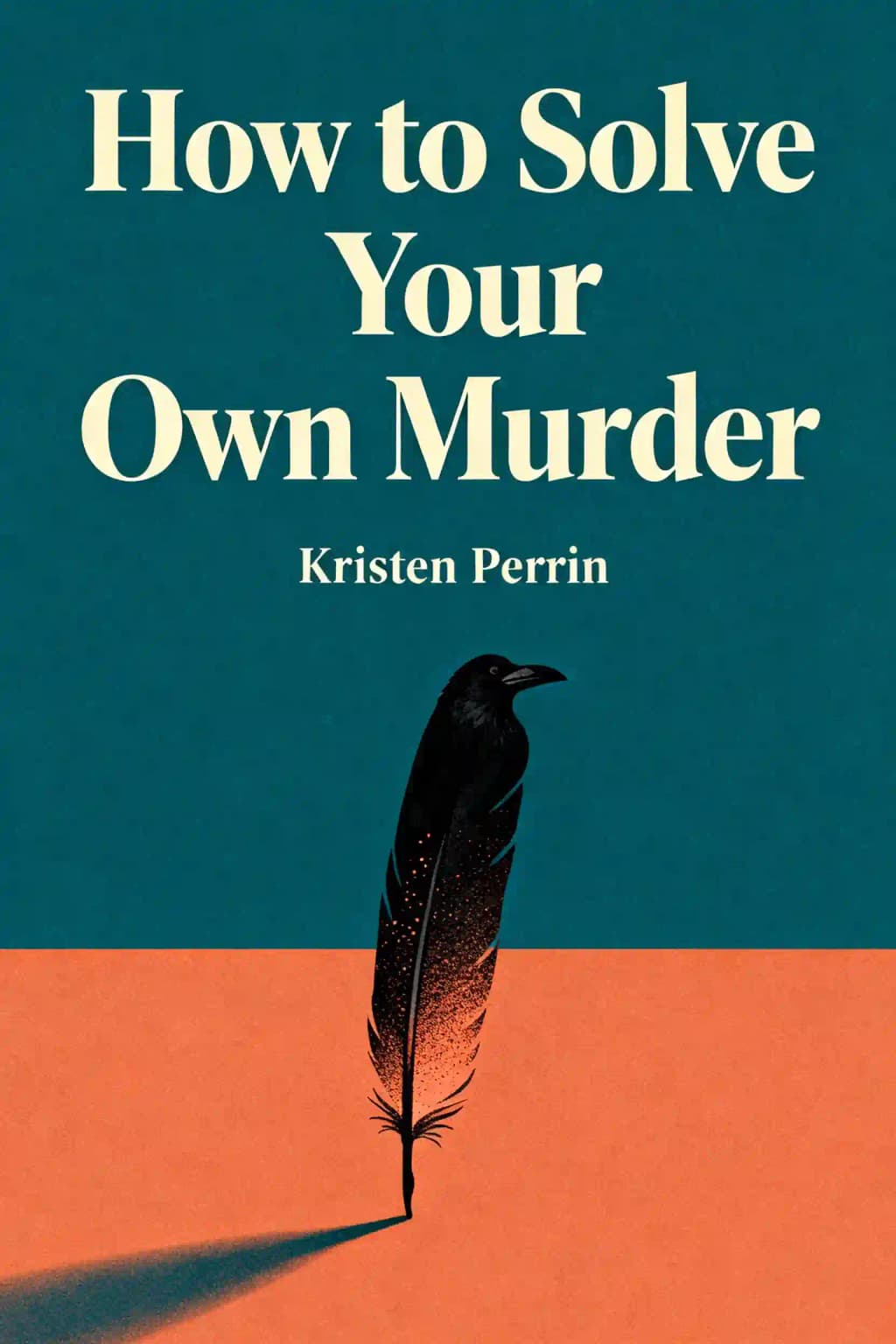
Imagine receiving a fortune that predicts your murder. Not just any vague prophecy, but one with chilling specifics about betrayal and dry bones. This is precisely what sixteen-year-old Frances Adams faces at the Castle Knoll Country Fair in 1965, when Madame Peony Lane delivers her disturbing prediction. While most would dismiss such claims as carnival theatrics, Frances meticulously records every word in her notebook, setting in motion a decades-long obsession with solving her own future murder. "How to Solve Your Own Murder" by Kristen Perrin has captivated readers with its unique premise-a woman who spends sixty years preparing for her inevitable demise, only to leave her multi-million-pound estate to whoever can solve her murder after she's gone. The novel has become a sensation among mystery lovers and true crime enthusiasts alike, with celebrities like Reese Witherspoon featuring it in her book club and praising its "masterful blend of past and present mysteries." Its cultural impact extends beyond entertainment, sparking conversations about fate, agency, and whether knowing your future is a blessing or a curse.
Capitolo 2
A Fortune That Changes Everything
In the summer of 1965, sixteen-year-old Frances Adams visits the Castle Knoll Country Fair with her friends Emily and Rose, seeking the simple pleasures of cotton candy, carnival rides, and teenage freedom. The fairground bustles with life - the whirl of carousel music, the excited shrieks from the Ferris wheel, and the enticing aroma of caramel apples filling the air. What begins as an ordinary day of adolescent adventure takes a sinister turn when Frances, on a whim, steps into Madame Peony Lane's dimly lit fortune-telling tent.
The fortune teller - an elderly woman with silver hair and penetrating green eyes - sits behind a table draped in purple velvet. As she reads Frances's palm, her expression darkens ominously. The prediction she delivers chills Frances to her core: "Your future contains dry bones scattered like autumn leaves. All signs point toward your murder." She warns Frances about betrayal by "the bird" and speaks of a "slow demise" that will begin when Frances holds a queen. The specificity of the prediction - the mention of bones, the bird, the queen - sets it apart from typical carnival fortune-telling fare.
While Emily and Rose dismiss the reading with nervous laughter and jokes about carnival charlatans, Frances can't shake the visceral dread that settles in her stomach. The fortune plants deep roots in her mind, taking on new significance when Emily presents her friends with matching silver bird necklaces she discovered at an antique shop near the fairground. The necklaces - delicate pieces featuring sparrows in flight - seem like an eerie manifestation of the fortune's warning about "the bird."
What transforms this prediction from unsettling to terrifying is its connection to events already unfolding in Frances's life. For weeks before the fair, she had been receiving anonymous threatening notes slipped under her bedroom window or tucked into her school locker. One note, written in jagged red ink, stated, "I'll put your bones in a box" - a phrase that aligns disturbingly well with the fortune's mention of "dry bones." Another warned, "Your time is measured in heartbeats now." These connections elevate the fortune from mere superstition to something far more sinister and immediate.
The significance of this fortune becomes painfully clear when, within a year of that fateful summer day, one of the three friends vanishes without a trace. All that's found is a silver bird necklace, discovered in the woods behind Castle Knoll High School, its chain broken as if torn from someone's neck. This disappearance sets in motion a chain of events that will haunt Frances for decades, transforming her from a carefree teenager into a woman obsessed with preventing - or at least solving - her own predicted murder. Each passing year brings new connections to that summer prophecy, suggesting that Madame Peony Lane's words were not just carnival entertainment but a dark roadmap to Frances's future.
Capitolo 3
The Inheritance Game Begins
Decades later, we meet Annabelle (Annie), a struggling writer who receives a surprising letter from Great Aunt Frances's solicitor. Despite having little connection to her great aunt, Annie learns she's been named the "sole benefactor" of Frances's substantial estate. This unexpected development pulls Annie from her London life to the picturesque village of Castle Knoll, where she discovers the eccentric world Frances inhabited.
Upon arriving at Gravesdown Hall, Annie makes a horrifying discovery-Frances's body, her hands punctured with small blood-filled holes as if she'd clutched thorny rose stems during a terrible spasm. The scene is made more disturbing by Elva Gravesdown's callous comment that Frances "was right about someone murdering her for her fortune."
The true nature of Frances's plan is revealed during the reading of her will. Rather than simply naming heirs, Frances has created an elaborate game: her entire estate-including the Chelsea house, Gravesdown Hall, surrounding lands, farm, and forty million pounds-will remain intact rather than divided. The beneficiaries-Saxon, Oliver, and Annie-must successfully solve Frances's murder within one week. If they fail, the properties will be sold off and the money will go to the Crown.
This unconventional will transforms what might have been a standard inheritance into a high-stakes murder investigation. Detective Rowan Crane confirms what Frances had always believed-someone did kill her. The cause was a heart attack, but it wasn't natural. With this revelation, the inheritance game officially begins, with Annie finding herself competing against people who have far more knowledge of Castle Knoll and its secrets than she does.
The stakes couldn't be higher-not only must Annie solve a murder to claim her inheritance, but she must do so while navigating a web of long-buried secrets and avoiding becoming the next victim of a killer who's already proven their willingness to strike.
Capitolo 4
The Castle Knoll Files: Uncovering the Past
Central to understanding Frances's murder are "The Castle Knoll Files"-Frances's meticulous diary entries from 1966 that document the events leading up to Emily Sparrow's disappearance. These entries provide crucial context for the present-day investigation, revealing a complex web of relationships and secrets that have festered for decades.
The diary entries paint a vivid picture of teenage life in the 1960s, centered around Frances, Emily, Rose, John Oxley, and Walter Gordon. Their story takes a dramatic turn when Emily suggests they sneak onto the Gravesdown estate at night. There, they encounter Ford (Rutherford) Gravesdown and his young nephew Saxon. Instead of sending them away, Ford gives them permission to use certain areas of the grounds but warns them to avoid the formal gardens and an abandoned farmhouse with its dangerous waterwheel.
The dynamics between the teenagers grow increasingly complicated when Frances discovers that her friends have been visiting Gravesdown Hall for weeks without her. Emily, it seems, had designs on Ford, hoping he was "looking for a new wife." This revelation hurts Frances, but she decides to stay rather than confront her friends about their deception.
As the diary continues, we learn that Emily becomes pregnant, initially claiming the baby is Ford's. The situation grows more complex when John reveals to Frances that Emily had been imitating her the night they slept together, suggesting the baby might actually be his. Emily's plan emerges: find someone who wants a baby, hide until giving birth, then give the baby away. Frances immediately thinks of her brother Peter and his wife Tansy, who have been trying to adopt.
The diary entries reveal Frances's growing closeness with Ford, who admits to a brief affair with Emily but claims he used protection. Their relationship evolves into "something far more compelling. Not a romance, but a friendship that was confusing and faulty and strange." Meanwhile, Emily disappears under mysterious circumstances, with Frances's diary ending abruptly after she visits her brother Peter's home and finds him joyfully holding baby Laura (Annie's mother), saying he "took care of" Emily's attempt to reclaim the child.
These historical revelations provide crucial context for Annie's investigation, suggesting that Emily's disappearance and Frances's murder might be connected through decades of secrets and lies.
Capitolo 5
Suspects and Motives: The Web of Deception
As Annie delves deeper into Frances's murder, she compiles a growing list of suspects, each with potential motives for wanting Frances dead. The investigation reveals a community bound by decades of secrets, where almost everyone has something to hide.
Saxon Gravesdown, Frances's great-nephew, initially appears suspicious when Detective Crane reveals he lied about his alibi-CCTV footage shows his car in Castle Knoll when Frances was killed. Further investigation uncovers that Saxon has been running a prescription drug operation with Magda, a paramedic. Frances had been gathering evidence against them, giving Saxon a clear motive to silence her.
Walter Gordon, Frances's solicitor, comes under suspicion when Saxon accuses him of defrauding Frances through suspicious legal fees. Bank records show repeated charges of 500 through his law firm, which Saxon claims is proof of embezzlement. However, Annie later discovers these payments were actually maintenance for her mother, Laura, after Frances changed her will-suggesting Walter was helping Frances rather than stealing from her.
Elva Gravesdown, Saxon's wife, initially seems a likely suspect due to her hostile attitude toward Frances and her apparent eagerness to inherit the estate. Annie discovers Elva has been stealing household items from Gravesdown Hall, though this petty theft seems disconnected from murder. Later, it's revealed that Elva unwittingly delivered the poisoned flowers to Frances, having been manipulated by the real killer.
Rose Leroy, Frances's oldest friend, appears grief-stricken at Frances's death, but her behavior raises questions. She takes Frances's purple cardigan without permission and seems unusually fixated on Frances's belief that she would be murdered. As Annie investigates further, a shocking truth emerges-Rose killed Emily decades ago out of a twisted sense of loyalty to Frances, eliminating her rival for Ford's affections.
Joe Leroy, Rose's son, initially seems peripheral to the investigation until Annie realizes his connection to both murders. It was Joe's father Bill (not Ford) in the Rolls-Royce the day Emily disappeared, and Joe himself murdered Frances when she finally discovered the truth about Emily's death. His motive was to give his mother "peace" from Frances's relentless pursuit of the truth.
The investigation reveals how deeply interconnected everyone in Castle Knoll is, with secrets spanning generations. Each suspect represents a different facet of human weakness-greed, jealousy, misplaced loyalty, and the desperate need to protect loved ones-showing how murder rarely exists in isolation but emerges from a complex web of relationships and motivations.
Capitolo 6
The Science of Murder: Hemlock and Iron
The method of Frances's murder proves to be as intricate as the motive behind it. What initially appears to be a natural death is revealed to be an ingeniously executed poisoning that combines botanical knowledge with medical expertise.
Annie's first clue comes when she discovers a suspicious bouquet of flowers near Frances's body. The arrangement contains roses with needles inserted through the thorns, causing painful blisters to form on Annie's palms when she handles them. Detective Crane identifies the cause as an irritating weed common in Castle Knoll, but Annie senses he's withholding information. Later, Dr. Owusu and Crane exchange words about "hemlock" before Annie faints from the revelation.
However, the hemlock bouquet turns out to be a red herring. Dr. Owusu's autopsy reveals that Frances was actually killed with a lethal iron injection that would have been "almost impossible to trace" under normal circumstances. The only reason it was discovered was because Dr. Owusu had been treating Frances with vitamin B12 injections for severe deficiency and knew what to look for.
This method of murder required specific knowledge and access to materials not commonly available. The amount of iron needed would not be found in a doctor's office but would be available to a large animal veterinarian-like Miyuki, Beth's wife, who has a clinic on Archie Foyle's farm. This connection initially points to the Foyles as potential suspects.
The sophistication of the murder method reveals a killer who planned carefully, using their knowledge of Frances's health conditions and medical treatments to disguise the cause of death. It also suggests someone with access to medical supplies or connections to those who have such access.
The murder weapon itself-an iron injection-represents a cruel irony. Iron, essential for life and health when administered properly, becomes deadly when misused. This duality mirrors the relationship between Frances and her killer-what should have been nurturing and supportive (a friendship spanning decades) transformed into something lethal.
Capitolo 7
The Missing Piece: Emily's Fate
As Annie investigates Frances's murder, she stumbles upon a shocking discovery that connects the present crime to events from decades earlier. While exploring a damaged trunk she'd shipped from Chelsea, Annie finds Emily Sparrow's skeletal remains inside, with a gunshot wound to the head. This grisly discovery confirms what Frances had suspected all along-Emily didn't simply disappear; she was murdered.
The discovery of Emily's remains transforms Annie's understanding of Frances's lifelong obsession. The fortune's prediction of "dry bones" wasn't just about Frances's future; it was literally about Emily's remains that would eventually come into Frances's possession. Frances must have found Emily's body in the trunk Annie sent her, connecting it to her changed will and renewed urgency about solving her own murder.
Through Frances's diary entries and conversations with Castle Knoll residents, Annie pieces together what likely happened to Emily. After becoming pregnant, Emily initially arranged to give the baby (Laura, Annie's mother) to Frances's brother Peter and his wife Tansy. However, Emily later changed her mind and attempted to reclaim her child. Peter's ominous statement that he "took care of it" suggests his involvement in Emily's disappearance, though the actual killer turns out to be Rose.
Rose killed Emily out of a twisted sense of loyalty to Frances, eliminating her rival for Ford's affections. The murder weapon was likely the revolver mentioned in Frances's diary, which Emily had brandished during one of their gatherings. Emily's body was then hidden in the trunk with Frances's black wool coat with gold stag buttons-the same coat Ford later "replaced" for Frances with a green wool coat, suggesting he knew about Emily's fate.
The revelation about Emily's murder explains why Frances spent decades investigating her own predicted murder. She wasn't just paranoid about a fortune teller's prediction; she was haunted by her friend's unsolved murder and her own possible connection to it. Frances believed that whoever killed Emily might eventually come for her too-a fear that proved tragically accurate when Joe Leroy murdered her to protect his mother Rose's secret.
Capitolo 8
Family Secrets and Hidden Connections
As Annie delves deeper into Frances's past, she uncovers family secrets that reshape her understanding of her own identity. The most shocking revelation comes when she discovers that her mother Laura wasn't born to Peter and Tansy as she'd always believed-she was Emily Sparrow's biological daughter, given up for adoption after Emily's brief pregnancy.
This discovery explains Frances's complex relationship with Laura and Annie. Frances had been keeping tabs on Emily's daughter throughout her life, maintaining a connection to her friend's child even as she investigated Emily's disappearance. It also explains why Frances changed her will to make Annie her heir instead of Laura-Annie represented a new generation, unburdened by the direct trauma of the past.
The family connections grow even more complicated when Annie meets John Oxley, the local vicar. In a poignant conversation, John reveals he's actually Annie's grandfather-Laura's biological father. He explains how he learned about being Laura's father through a paternity test Ford arranged, and how he maintained a weekly coffee tradition with Frances for years, keeping updated about Laura and Annie's lives. Though he never told Laura the truth due to his promise to Peter and Tansy, he's visibly moved meeting Annie, who feels an unexpected sense of family connection with him.
These revelations transform Annie's understanding of her place in Castle Knoll's history. She isn't just a random beneficiary of Frances's eccentricity; she's the granddaughter of Emily Sparrow and John Oxley, with deep roots in the community and its secrets. The inheritance game isn't just about solving a murder-it's about Annie reclaiming her family history and finding her place in a story that began decades before her birth.
The theme of family secrets extends beyond Annie's immediate connections. Saxon's relationship with his uncle Ford, Rose's protection of her son Joe, and even Detective Crane's father Reggie's hidden sexuality all illustrate how families protect their secrets-sometimes at terrible cost. These revelations show how the past is never truly buried, especially in small communities where relationships intertwine across generations.
Capitolo 9
Justice Served: Confronting the Truth
The investigation reaches its climax when Annie agrees to meet Saxon to catch the supposed killer-Walter Gordon-only to find herself trapped in an ambulance with the real murderer, Joe Leroy. In this tense confrontation, all the pieces finally come together as Joe reveals his murderous intentions and the full truth about both Emily's and Frances's deaths.
Joe explains that he "freed" his mother Rose from her obsession with Frances, who was finally discovering the truth about Emily's murder. He describes how Rose had eliminated Emily out of twisted loyalty to Frances, but Frances never appreciated the sacrifice and remained fixated on finding Emily. When Frances eventually confronted Rose with her discoveries, Joe decided Frances had to die to give his mother "peace."
The confrontation reveals Joe's methodical planning-he disconnected Annie's car battery to trap Frances at the estate and had Elva unwittingly deliver the hemlock bouquet that triggered Frances's panic. As Joe attempts to inject Annie with the same lethal substance he used on Frances, she manages a desperate kick that topples him before Detective Crane and Walter Gordon arrive to save her.
The aftermath brings a measure of justice, though it can't undo the decades of harm. Joe is arrested for Frances's murder, while Rose is declared unfit to stand trial for Emily's death. Saxon faces charges for his drug crimes but remains free on bail, still visiting Annie and suggesting he hasn't finished playing games with her yet.
Annie's visit to Rose after the resolution is particularly poignant. Rather than finding remorse, Annie discovers that Rose remains unrepentant about killing Emily. This encounter forces Annie to confront the uncomfortable truth that solving a murder doesn't erase the outrage of the crime itself. Justice, while necessary, cannot fully heal the wounds inflicted by violence and betrayal.
The resolution of the case brings Annie unexpected inheritance and connections. She gifts the Rolls-Royce to the Foyle family and promises to let them keep their farm. She develops a tentative relationship with her newly discovered grandfather, John Oxley, and even finds a strange kinship with Detective Crane, who supported her throughout the investigation despite his initial skepticism.
Capitolo 10
Legacy of Secrets: A New Chapter Begins
Two months after solving Frances's murder, Annie hosts her funeral at Gravesdown Hall. The estate looks glorious in autumn light as the entire village gathers on the front lawns. Jenny creates a tableau centerpiece recreating Frances's study, complete with her leather armchair, Tiffany lamp, and stacks of murder mysteries. Emily's typewriter and photograph are also displayed, as Annie wants to honor both women whose fates were so tragically intertwined.
The funeral brings together all the key players in the mystery. Saxon and Elva attend, drinking more than their share of champagne. Oliver confesses to Annie that he was the one who left the threatening notes in her room, having found them in Frances's office. He explains he couldn't decide whether to intimidate or help her, ultimately hoping she would solve the murder so he wouldn't have to make difficult professional choices.
Detective Crane approaches Annie to warn her that she'll need to testify at Joe's trial, and the defense might challenge her for trying to bait Joe into confessing. Annie feels ready to face this, seeing Joe as a straightforward villain who tried to control a situation with violence. Their brief interaction suggests a growing connection between them that might develop beyond the investigation.
The most significant moment comes when Annie discovers several blank leather-bound journals in Frances's cedar chest-seemingly left for Annie to continue the tradition of chronicling mysteries. This symbolic passing of the torch suggests that while Frances's story has ended, Annie's is just beginning. By taking up the journal and beginning to write, Annie accepts her connection to Castle Knoll and her role as the keeper of its stories.
Annie's mother has begun to process her own connection to this history through her art, suggesting healing might be possible even after decades of secrets. Annie has given her the file about her father, warning that he might reappear now that they're both making headlines.
The novel ends with Annie embracing her new identity and responsibilities. She has solved not one but two murders, claimed her inheritance, discovered her true family history, and found a community where she belongs. Though the path forward will include challenges-including testifying against Joe and navigating her new relationships-Annie has proven herself capable of facing difficult truths and finding her way through them.
In the final scene, Annie begins writing in one of Frances's blank journals before heading outside for the funeral. This simple act symbolizes both continuity and new beginnings-honoring Frances's legacy while starting her own chapter in the ongoing story of Castle Knoll.