Capitolo 1
From Idea to Impact: The Journey of a Happy Hustle
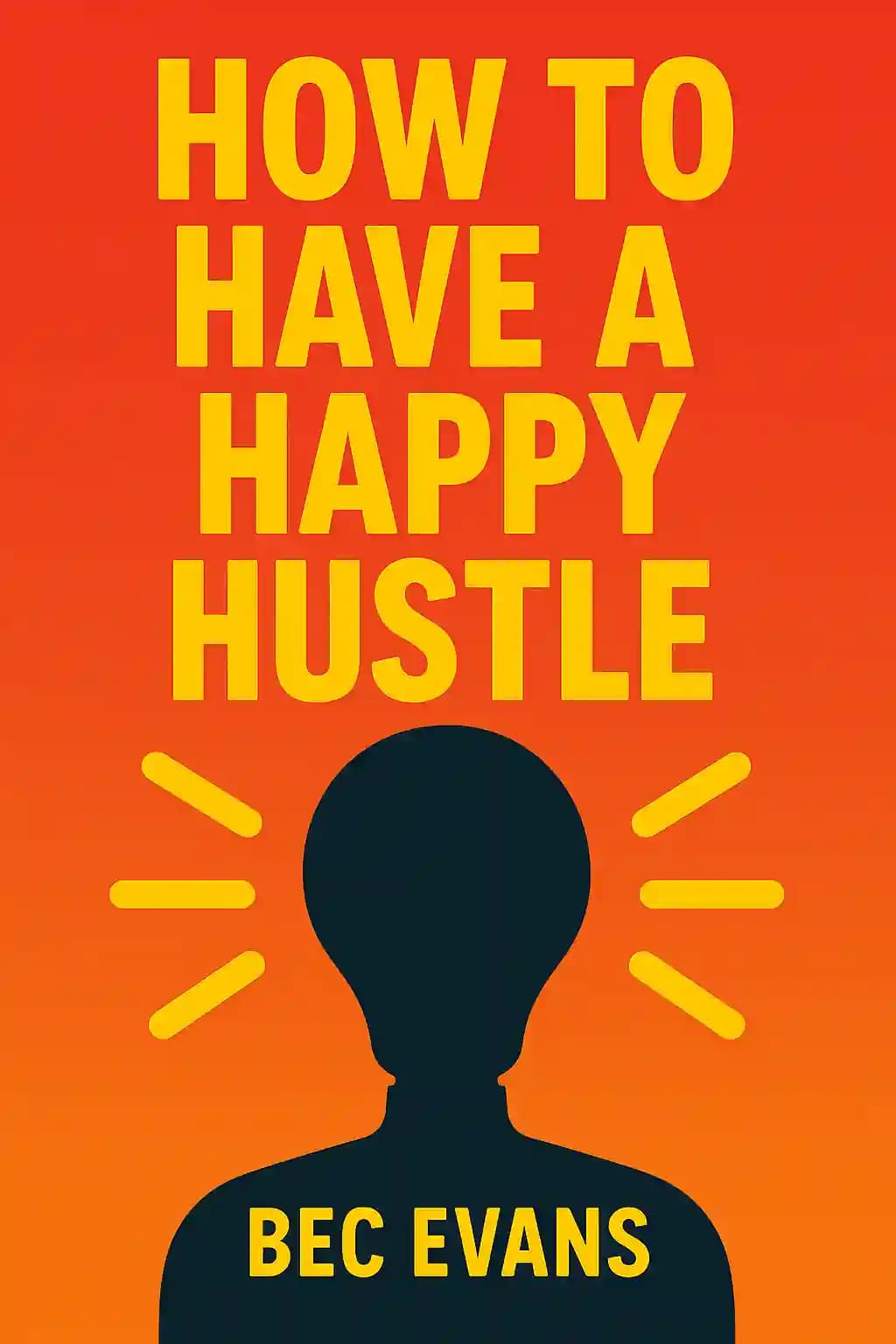
What if your side project could become the most fulfilling part of your life? When philosopher John Stuart Mill suggested that true happiness comes not from directly pursuing it but as a byproduct of pursuing meaningful goals, he captured the essence of what author Bec Evans calls a "happy hustle." This approach to turning ideas into reality has transformed countless lives, including that of Anne-Marie Imafidon, who at just 23 created Stemettes to address women's declining representation in STEM fields. Within ten months of setting up social media accounts and a simple logo, she was meeting with the British Prime Minister. The book "How to Have a Happy Hustle" has become a favorite among creative entrepreneurs and innovators like Richard Branson, who credits its practical framework for helping Virgin launch several successful ventures. Its popularity stems from offering a refreshing alternative to hustle culture's burnout mentality, showing how purpose-driven side projects can lead to both personal fulfillment and meaningful impact.
Capitolo 2
Finding Problems Worth Solving
The best ideas don't come from sudden inspiration-they emerge from problems we personally experience. When Jo Caley ripped her favorite jeans and faced the frustrating process of finding replacements, her hatred of shopping led her to discover "vanity sizing"-the inconsistent measurement systems across retailers that leave nearly 60% of British women struggling to find properly fitting clothes. This personal frustration sparked her curiosity about a widespread problem affecting millions.
Y Combinator co-founder Paul Graham advises that the path to great ideas isn't trying to think of ideas, but looking for problems you personally experience. This problem-seeking approach activates our brain's "seeking system"-what neuroscientist Dr. Jaak Panksepp called the "granddaddy" of brain systems. This dopamine-fueled motivational engine drives curiosity and exploration, making the hunt for problems genuinely pleasurable.
To become an effective problem-seeker, start collecting frustrations from your daily life, home environment, media consumption, and past experiences. Ask friends and family what bothers them. Record these problems in whatever format works for you-notebooks, phone apps, voice memos, or photos. Challenge yourself to document ten problems daily for a week, building a collection of potential opportunities without jumping to solutions yet.
When choosing among multiple problems, select what matters most to you personally-what makes you angry, excited, or curious. If struggling to decide, evaluate options systematically by scoring them against criteria like access, ease, motivation, market size, your knowledge, and the "tingle factor" of fulfillment potential.
Once you've selected a problem, craft a clear problem statement following inventor Charles Kettering's wisdom that "a problem well-stated is half-solved." Start with a rough version, then refine by examining each word for specificity. For example, biology student Nicole Raby refined her initial broad statement about university students finding where to go into: "As a fresher I want to find out what events are going on in my university campus so I can go along and meet people, make friends and have new experiences."
This problem-seeking approach transforms initial frustration into meaningful investigation-the first step toward creating solutions people actually want, need, and will pay for.
Capitolo 3
Understanding People Through Empathy
Dr. Mohammad Al-Ubaydli struggled to get doctors to use Palm Pilots until he used empathy to connect with their interests-first creating golf score tracking software for a surgeon, which eventually led to developing medical applications. This experience taught him that innovation requires understanding your audience through empathy, not just technical brilliance.
While we often begin with problems, design thinking advocates starting with people. Dr. Al-Ubaydli applied this principle throughout his career, developing "Patients Know Best"-patient-controlled medical records-by first understanding users' needs. This approach requires creating personas, talking to people about their problems, observing people in action, and mapping empathy to understand pain points.
Speaking with others reveals whether your problem is unique or widely shared. The author describes how conversations with writers about their struggles with procrastination led to developing Prolifiko, a productivity coach for writers. Despite initial discomfort with approaching strangers, the author learned that people generally enjoy discussing what matters to them.
To understand target users, create personas-fictional, generalized representations of your audience. Divide a page into four sections: name, facts (demographics), behaviors, and needs/goals. Include details about occupation, hobbies, values, and challenges, finishing with a name and visual representation.
When interviewing potential users, Amazon's approach begins with listening rather than selling. Prepare 3-5 loose questions while maintaining flexibility to follow interesting leads. Ask people to walk through their day with specific questions about their schedule. The "Five Whys" technique involves repeatedly asking why to dig deeper into motivations.
Professional researchers go beyond interviews to observe people's behavior in natural environments. Paul-Jervis Heath's design agency Modern Human practices "design research" by observing people to understand their needs and motivations. Capture everything-behavior, body language, tone of voice, workarounds people create for problems-and look for patterns across multiple observations to develop insights.
Empathy is an innovation superpower that helps you understand what people truly need rather than what they say they want. Design researchers at IDEO take this literally by experiencing users' lives firsthand-washing clothes in sinks, staying in housing projects, standing beside surgeons-to build genuine understanding.
Dave Gray's empathy mapping tool helps organize research findings into what people say, do, think, feel, see, and hear. Create a large visual map and use sticky notes to populate sections with observations and quotes, then prioritize the top five insights in each area. The "pains and gains" section is particularly valuable for identifying problems and desired outcomes.
After gathering insights, revisit your problem statement to incorporate others' perspective. Review your empathy map, particularly the "pains" section, to identify the most pressing problems. Write the refined problem in the center of a page and edit until you've focused on what people truly need.
Capitolo 4
Generating Creative Solutions
After identifying a problem and understanding who experiences it, the next step is generating creative solutions. Pascal Finette, known as the Heretic, advises entrepreneurs to stop having "crazy-ass ideas" and instead get curious about problems. The most successful entrepreneurs become deeply knowledgeable about their problem space, understanding all relevant statistics and developing genuine empathy for users-they fall in love with the problem long before thinking about solutions.
Nobel Prize winner Linus Pauling said, "The only way to have a good idea is to have lots of ideas." Professor Paul Nutt's research on business decisions shows that two-thirds of decisions fail, often because decision-makers jump on the first idea rather than exploring alternatives. Having multiple ideas creates options for comparison and reduces unhealthy attachment to any single solution. With several competing options, success rates improve significantly-having just two alternatives to an original idea led to success in two-thirds of studied decisions.
Divergent thinking involves analyzing problems and generating many possible solutions rather than honing in on one correct answer (convergent thinking). Like David Lynch's fishing metaphor, getting one good idea attracts more ideas. Creative thinking is like a muscle that can be trained through exercises like finding multiple uses for everyday objects.
IDEO's senior design director Jenn Maer explains that divergence isn't the straightest path to solutions but is necessary for innovation. Though clients may feel uncomfortable with the seemingly inefficient exploration process, Maer notes you can't get to the valuable 20% without exploring the other 80%.
Fear often blocks creativity as our amygdala ("chimp brain") prefers routine and safety. Taking tiny steps helps bypass this fear response: set a timer for just five minutes, work in the morning when your brain is rested, associate tasks with rewards, lower the stakes to make failure impossible, make the process enjoyable, and use creative prompts.
The phrase "How might we...?" is described as the secret weapon of top innovators. "How" creates an open question prompting higher-order thinking, "might" suggests possibility, and "we" implies collaboration. This framework helps frame problems in a way that's neither too broad nor too narrow, finding the sweet spot that triggers excitement and creativity.
Mind mapping helps bypass the conscious mind to boost divergent thinking. This spider diagram technique uses free association to organize information graphically, creating connections between concepts. Write your problem in the center of a large landscape-oriented sheet, add related words around it, free-associate from these secondary circles, and connect with lines.
Collaboration strengthens ideas through shared responsibility. At IDEO, teams build on each other's ideas rather than competing as lone wolves. Successful brainstorming requires structure, diversity of participants, and good facilitation. The ideal session includes 6-12 people with different backgrounds and experiences, meeting for up to an hour with a specific problem statement to trigger creative thinking.
Charlotte Cramer and Scarlett Montanaro's success with CRACK + CIDER-an online shop where people can buy essential items for homeless individuals-came from their passion for solving homelessness rather than attachment to a particular solution. By falling in love with the problem itself, they maintained enthusiasm through inevitable hurdles, bureaucracy, and complexities.
Capitolo 5
Selecting the Best Ideas
The Onion's editorial process demonstrates how to select winning ideas from hundreds of options. Their writers pitch 600 headlines to find just 16 winners through a rigorous selection process where ideas must get support from multiple team members to survive. This illustrates Linus Pauling's principle that generating many ideas is essential, but knowing which ones to discard is equally important.
While brainstorming requires deferring judgment to create a safe space for idea generation, there comes a time to switch to evaluation mode. Research shows that structured debate and even criticism can be valuable when properly timed. The key is separating the generative phase (where all ideas are welcomed) from the evaluative phase (where critical thinking helps refine and select ideas).
The Onion's editorial meetings demonstrate how collaborative critique improves ideas. Their writers focus criticism on the material, not the creator, developing a shared language to evaluate whether jokes are "silly," "too silly," or potential "laffers." By Tuesday meetings, shortlisted headlines become shared property, overcoming founder bias where creators become overly attached to their ideas.
While having multiple ideas is beneficial, too many options can overwhelm us. Research shows that when pressure mounts to decide, more choices actually decrease our likelihood of making decisions-the paradox of choice. Studies at farmers' markets revealed that while larger displays (24 jam varieties) attracted more interest, people were ten times more likely to purchase from smaller displays (6 varieties).
To make good decisions, first define clear criteria-similar to how The Onion categorizes jokes. Whether evaluating based on cost, feasibility, excitement factor, or potential returns, commit to your criteria-based approach rather than reverting to gut feelings. Nobel Prize-winning economist Daniel Kahneman recommends interviewing your ideas by listing no more than six criteria, scoring each idea against them, and committing to the highest-scoring option-even when it contradicts your intuition.
When you're too attached to your ideas, enlist friends or colleagues to help choose. Present all ideas in the same format (like one-sentence summaries on Post-its) to avoid bias toward better-presented concepts. Give everyone equal voting power-typically three votes each that they can distribute as they wish-to prevent senior people or idea creators from having undue influence.
If choice paralysis persists, innovation expert Sam Reid recommends a final evaluation: Is your idea technically, practically, and financially feasible? Most critically, ask yourself: "Would I really care about this idea if I were the target audience?" You're looking for a resounding "hell yes" that will fuel your motivation as you develop your idea.
Capitolo 6
Prototyping: Making Ideas Tangible
Anne-Marie Imafidon's journey with Stemettes Project demonstrates how quickly ideas can materialize when you take action. At just 23, she identified the declining representation of women in STEM fields and immediately created an online presence-setting up social media accounts, a Gmail, and a logo. Within ten months, she was meeting with the British Prime Minister.
Design expert Paul-Jervis Heath emphasizes "reducing the distance between idea and actual product launch." Until your product reaches the market, everything remains hypothetical. Prototyping-creating a simplified version of your product, service, or experience-helps prove your idea's viability. Start prototyping immediately and focus on developing the simplest possible version you can release and test.
The transition from ideation to creation often triggers fear and excuses: lack of skills, time, experience, or money. But as Imafidon advises, "You never really know where it will go. Let's just do it and see what happens." Channel your playful childhood self who built sandcastles without worrying about permanence. Start small by asking: what's the quickest, cheapest version I can share?
Naming transforms vague concepts into tangible entities. A good name should be short, punchy, easy to pronounce and spell, while resonating emotionally with your audience. It should avoid jargon while remaining unique (verify this with a quick online search). Don't worry about domains or trademarks yet-focus on finding a name that effectively communicates your concept.
When documented, an idea becomes a concept. Structure yours using four elements: name, problem, solution, and benefits. For the solution, explain in simple terms how it works. For benefits, focus not on features (what it has) but on benefits (what it does for users). Keep your concept statement simple, and consider the constraint of writing it in tweet-length format.
A prototype is the first physical manifestation of your theoretical idea-a prop that helps tell your concept's story. It doesn't need to be perfect or fully functional; it should be messy and fun to create. The goal is creating something tangible you can hold and interact with. Don't fall in love with your prototype though-it's just a fling on the way to your final product.
You don't need glitter and sparkles to create an effective prototype. There are multiple approaches: Write it (blogs, stories, press releases); Draw it (paper prototyping to map user experiences); Make it (physical building); Present it (using PowerPoint to mock up designs); Code it (interactive mock-ups rather than fully functional software); Fake it (creating ads or surveys without actual coding); or Concierge it (manually fulfilling orders like Zappos initially did by purchasing shoes from retail stores).
Google Ventures' "Crazy 8s" exercise generates prototype ideas quickly. Fold a paper into eight panels, then draw a different version of your idea in each section, combining words and sketches. With only eight minutes on the timer, the frantic pace reduces overthinking and judgment. The first sketches often take longest, with later ideas building on and improving earlier ones.
Limited time and money aren't barriers to prototyping-they're assets that foster creativity. You can go from having no ideas to creating a rapid prototype in under an hour. Start by brainstorming what your concept might look and feel like. Choose your top ideas, sketch a simple blueprint focusing on important features, then build a rough prototype with whatever supplies you have available.
Paul-Jervis Heath warns that words can be dangerous because they mean different things to different people. Drawing forces specificity and precision in communicating concepts. Starting on paper rather than computer keeps you from getting too attached to ideas. Graphic facilitator Cara Holland calls visual working a "superpower" that connects with people in ways other communication forms miss.
Capitolo 7
Communicating Your Idea Effectively
When George Bettany and James Routledge wrote a simple 500-word blog post about mental health struggles, they inadvertently created a prototype that changed everything. Within a week, the post received 20,000 hits and nearly 600 emails from people saying "I feel the same way." This unintentional prototype led them to create Sanctus, a startup that facilitates workplace mental health conversations through trained professionals.
Anjali Ramachandran, co-founder of Ada's List, believes even small creative solutions can make significant impact. She advises being clear about your business idea and articulating your unique selling proposition compared to competitors. She recommends thinking long-term: "What do you want to be known for ten or twenty years from now? Then work backwards to find what you have to do now to get there."
Despite fears of idea theft, your idea is uniquely yours-it comes from your life and research, and only you can explain why you care about making it happen. The benefits of sharing far outweigh the risks of keeping quiet. Communicating your idea is essential to its growth, as you need to convince people to help build, use, and potentially fund it.
The perfect elevator pitch is clear, simple, and memorable-short enough to deliver in 30 seconds. Take the elements of your written concept (problem, solution, benefits) and sell them persuasively. Start by engaging your audience with a question or story about how you developed the idea or why you're passionate about solving this problem. Use your prototype as a prop during your pitch-it serves as a visual aid, keeps you focused, and brings your idea to life.
Author-entrepreneur Tim Ferriss practiced his first presentation for The 4-Hour Work Week in front of three chihuahuas. They were a tough audience-if he didn't keep them engaged, they'd wander off or fall asleep. Like dogs, human audiences give clear signals about engagement: pricked ears, nodding, smiling indicate your idea has landed; people checking phones or talking to friends means you've lost them.
A successful pitch projects trust and authenticity through both words and body language. Mariana Marquez, co-founder of Metaspeech, teaches that "confidence comes across through our bodies when we are grounded and clear in what we say." Research in embodied cognition shows how physical posture affects mental state-participants forced to smile with a pencil between their teeth responded more positively than those made to frown.
After creating a prototype and drafting your pitch, follow these steps to effectively share your idea and gather feedback: Consider your audience and their needs; craft an engaging story using your prototype as a prop; practice your delivery in a safe space; get your prototype in front of target users; ask open questions and welcome all responses; listen carefully to feedback and observe body language; systematically gather and record observations; thank everyone for their input, especially critics; experiment with different approaches to refine your presentation.
To make sense of collected feedback, set aside time to organize your notes systematically. Write each piece of feedback on separate Post-it notes, using direct quotes rather than interpretations. Cluster similar comments together, look for patterns and themes, then prioritize based on frequency and strength of feeling. Identify surprising insights and questions requiring further exploration.
Capitolo 8
Testing and Validating Your Concept
When Bloomsbury Publishing's CEO Nigel Newton gave his eight-year-old daughter Alice a chapter from an unpublished manuscript, her enthusiastic response-"Dad, this is so much better than anything else"-helped identify J.K. Rowling's Harry Potter as a potential hit when other publishers had rejected it. This simple test with the actual target audience proved crucial to discovering what would become a global phenomenon.
Design consultant Dave Gray emphasizes that testing with actual users is essential: "Products and services are used by users, and if you don't get their opinion, you're going to make a crap product." While early feedback from friends is helpful initially, serious development requires input from your target market. Gray advises getting ideas in front of potential users "as quickly as possible and as early as possible" to learn from their feedback.
While prototypes prove concepts quickly and cheaply, a Minimum Viable Product (MVP) has just enough features to satisfy users while generating feedback for future development. Eric Ries, creator of Lean Startup methodology, defines an MVP as "that version of a new product a team uses to collect the maximum amount of validated learning about customers with the least effort." The key difference: prototypes show what your concept is, while MVPs test whether people actually want it.
Brandon Schauer's "cake model" explains "viable" through baking analogies: a plain, dry cake (minimum but not viable) versus a cupcake with all the essential elements of a wedding cake (both minimum and viable). The cupcake approach allows testing of all flavor elements and decorative concepts in a small format that can generate meaningful feedback for future iterations.
Charlotte Cramer and Scarlett Montanaro of CRACK + CIDER initially envisioned an IKEA-sized warehouse for homeless essentials but needed to prove their concept first. They found their Goldilocks solution-a pop-up shop with just five products, using existing infrastructure without paying upfront for stock. The six-week test proved successful, allowing them to expand to multiple cities.
While MVPs originated in software development, they work for any business. Mariana Marquez of Metaspeech developed her concept by offering free workshops at Google Campus, testing her hunch that her dance background could help tech founders present better. Starting with 30 attendees and growing to over 100 in three months validated her concept, leading to one-to-one training, corporate workshops and online courses.
Testing follows three principles: test early to save time and money, test often to iterate and improve, and test with end users because you are not your user. Anne-Marie Imafidon of Stemettes approached testing scientifically, treating her launch events as experiments. When feedback indicated her event was too informal, she changed it-only to discover the original format worked better. This experimental approach helped Stemettes develop their core proposition around fun and informality.
Jennifer Aldrich of InVision emphasizes that "you are not your user"-proper testing requires involving your actual audience. User testing involves setting tasks for target users while observing their behavior. Aldrich's first user test revealed that what designers thought was obvious was completely invisible to users.
The Design Sprint, created by Jake Knapp at Google Ventures, is a powerful five-day process for testing ideas through prototyping. Following a strict daily pattern-Monday for goal-setting and mapping challenges, Tuesday for sketching solutions, Wednesday for selecting the best ideas, Thursday for building a realistic prototype, and Friday for testing with real customers-this method condenses the principles of building and testing into a structured timeframe.
Capitolo 9
Embracing Failure as a Learning Opportunity
Failure is an inevitable part of innovation, but it's also a powerful teacher. Carolina Martins discovered this at Singularity University when she was challenged to accumulate as many failures as possible in a few hours. She learned two crucial lessons: people often succeed even when trying to fail, and when failure does happen, it's not catastrophic-you simply try again.
Companies like Google's X actually reward failure with cash bonuses because, as Astro Teller explains, without rewarding failure, "people won't take risks and make breakthroughs." The Lean Startup methodology embraces this approach through a "build-measure-learn" feedback loop that turns ideas into products through rapid experimentation. This process involves creating prototypes, validating them with customers, and using feedback to make decisions-sometimes leading to pivots.
Rob Fitzpatrick's journey exemplifies learning from failure. Despite being accepted into Y Combinator in 2007, his first startup ultimately failed after three years-as happens with over 90% of startups. What distinguished Fitzpatrick was his attitude toward failure. After spending six months building an analytics dashboard for a major media studio that proved 90% irrelevant, he realized he'd made the classic mistake of building what clients said they wanted without understanding why they wanted it.
Learning opportunities surround us-we just need to spot them through regular reflection. This practice, championed by modern productivity experts, has roots in Stoic philosophy. The Stoics believed self-knowledge led to a worthwhile life. Epictetus recommended a daily reckoning with three questions: "Where did I go wrong? What did I do? And what duty's left undone?"
Reflection requires just minutes using three simple questions: What went well? What didn't go well? What can I do better? Apply these questions throughout your idea journey-from brainstorming to prototyping to sales. Make reflection habitual through daily journaling or post-activity reviews. Research shows that writing or recording reflections about significant events improves life satisfaction and mental health in just three days.
The Stoics urged not just reflection on mistakes but celebration of successes. Taking time to celebrate boosts resilience, reinforces well-being, and creates a happiness-seeking mindset. Professor Martin Seligman's research shows that noticing good things daily and expressing gratitude has lasting positive impacts on well-being-benefits that continued six months after participants stopped the practice.
To maximize the benefits of reflection and celebration, you must learn how to learn by cultivating a growth mindset. Stanford psychologist Dr. Carol Dweck found that people with growth mindsets don't see failure as failing-they see it as learning. This mindset completely overturns the idea that innate talent determines achievement.
Sara Blakely, founder of Spanx, exemplifies the growth mindset. Her father cultivated this attitude by asking daily, "What have you failed at today?" This approach built resilience that helped her launch a multimillion-dollar company despite knowing nothing about underwear design or manufacturing. When she received her first order but hadn't made gussets (not knowing what they were), she raced to find a supplier rather than giving up.
Capitolo 10
Building Community and Finding Fulfillment
The journey of turning ideas into reality ultimately leads to questions about happiness and fulfillment. George Bettany discovered that what he missed most after his first startup failed wasn't entrepreneurship itself but working with his best friend and co-founder James Routledge. This aligns with psychological research showing relationships explain about 70% of personal happiness.
Research shows that traits spread through social networks-one study found obesity increases by 171% among mutual friends. This "network phenomena" can be leveraged positively by surrounding yourself with people who support your identity and aspirations. As IDEO design director Jenn Maer says: "It's hard to be the only panda in the zoo. You need your people."
Finding a mentor can transform your hustle journey. When Bec Evans first developed Prolifiko, she joined Ada's List, an online community for women in tech, where she found her first mentor, Sally Lait. Their relationship evolved from consultant/client to mentor/mentee, providing Evans with a safe space to ask questions without judgment. The best mentoring relationships benefit both parties-Lait gained insights about the startup world while Evans received technical guidance.
Anne-Marie Imafidon builds her support network by regularly asking respected contacts for advice, creating what she calls a "brain trust" or "personal board of directors." These are people slightly ahead of where she is whom she can bounce ideas off. This advisor model is replicated in her organization Stemettes, which has "Godmothers" who provide guidance.
Martin Seligman's research on positive psychology identifies five core elements of psychological well-being: relationships (building social connections), engagement (doing fulfilling work and having interesting hobbies), accomplishments (setting realistic goals and celebrating achievements), meaning (leading a purposeful life), and positive emotion (maintaining optimism and finding enjoyment).
Developing grit-what Angela Duckworth describes as "the daily discipline of trying to do things better than we did yesterday"-is essential for perseverance. While building expertise may take 10,000 hours, true happiness comes from enjoying the journey. To maintain momentum: follow your interests rather than searching for a single passion; take small, manageable steps; use even limited time productively; adopt an experimental mindset; build in reflection time; find supportive people; maintain empathy for users; and cultivate optimism.
The central dilemma of a happy hustle is balancing fulfillment through difficult tasks with avoiding burnout-recognizing that creating something new takes time, often following the 10,000-hour rule rather than overnight success. While various metrics can measure your idea's success, solution fit, or market growth, the metrics for a happy hustle remain personal-only you can define what success means to you.
The journey begins simply by starting: "So, what are you waiting for? It's time to find your happy hustle."