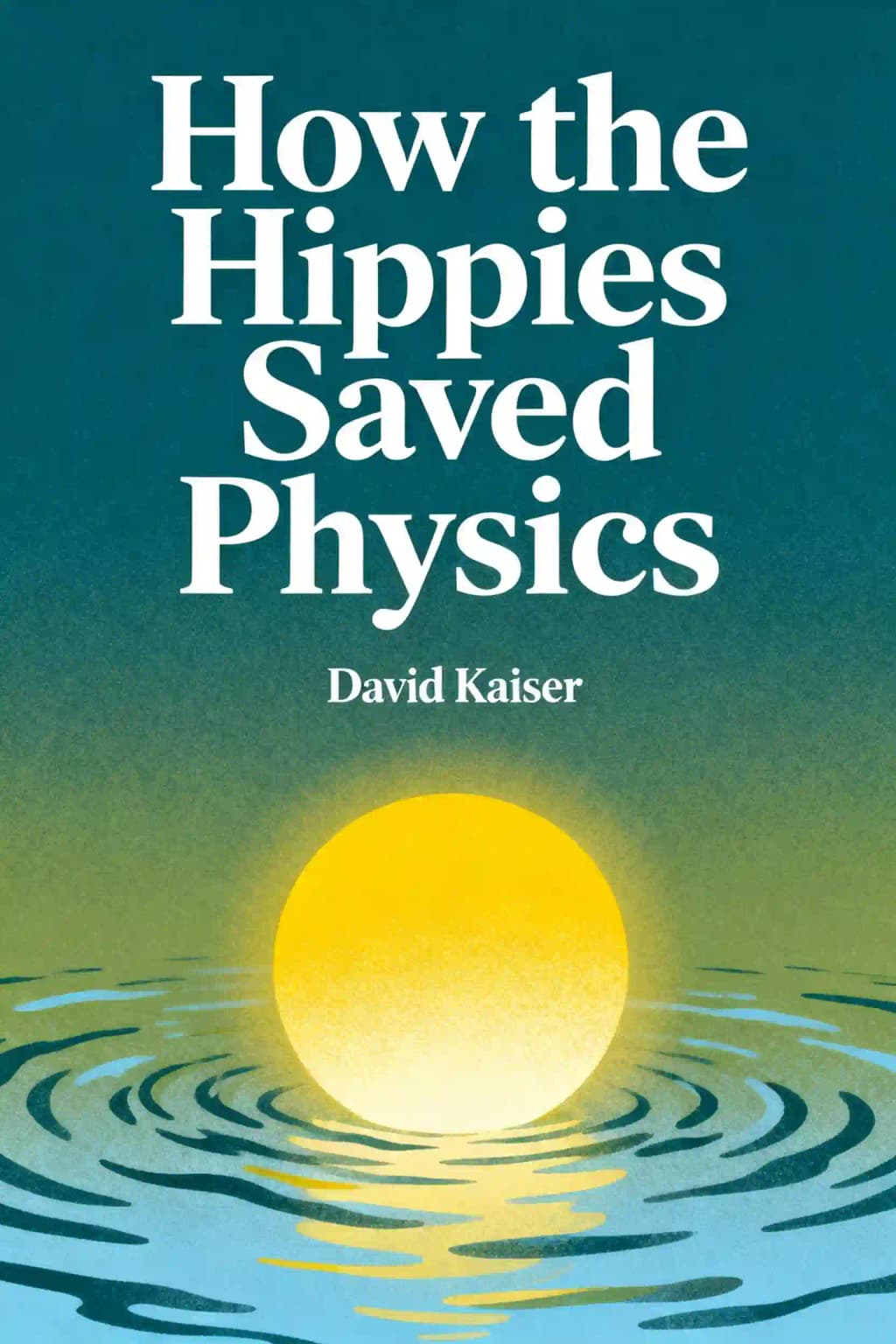
How a band of hippie physicists revived quantum foundations and launched quantum computing. Named "Book of the Year" by Physics World, Kaiser's narrative shows how counterculture rebels blended Eastern mysticism with physics, transforming fringe theories into tomorrow's technologies.
David Kaiser is the Germeshausen Professor of the History of Science and Physics at MIT. His work merges interdisciplinary expertise, as seen in How the Hippies Saved Physics: Science, Counterculture, and the Quantum Revival.
Kaiser, who trained as both a physicist and historian at Harvard, explores the unconventional intersections between 20th-century quantum theory and countercultural movements. He reveals how fringe thinkers revitalized research on Bell’s theorem and entanglement.
His award-winning works include Drawing Theories Apart, which won the Pfizer Award, and Quantum Legacies, named Physics Today's Book of the Year. These works trace the human stories behind scientific breakthroughs.
Kaiser’s insights have appeared in The New York Times, The New Yorker, and PBS NOVA documentaries. His MIT course on the history of physics reaches global audiences through OpenCourseWare.
A trusted voice on science and society, Kaiser advises the U.S. National Academy of Sciences on AI ethics. How the Hippies Saved Physics earned the Davis Prize and was hailed as Physics World's Book of the Year for bridging Cold War science with cultural rebellion.
How the Hippies Saved Physics explores how 1970s counterculture revived interest in quantum mechanics’ philosophical questions. David Kaiser details how the Berkeley-based Fundamental Fysiks Group blended Eastern mysticism, psychedelics, and physics to challenge the "shut up and calculate" dogma, reigniting exploration of entanglement, Bell’s theorem, and nonlocality—ideas now foundational for quantum computing and cryptography.
This book appeals to science enthusiasts, history buffs, and counterculture scholars. Readers interested in quantum physics’ oddities, 1970s countercultural movements, or the interplay between science and society will find it engaging. Kaiser’s narrative style also suits general audiences curious about how fringe ideas can reshape mainstream science.
Yes—Kaiser’s blend of rigorous scholarship and storytelling makes complex physics accessible. While critics argue he overstates hippies’ direct impact, the book illuminates how marginalized thinkers revived foundational debates, bridging academia and pop culture. It’s particularly valuable for understanding quantum mechanics’ cultural and scientific evolution.
Bell’s theorem, which disproved local hidden variables in quantum mechanics, became a focal point for the hippie physicists. Kaiser shows how John Clauser’s experiments—validating Bell’s work—emerged from this countercultural milieu. These efforts laid groundwork for modern quantum technologies like encryption, proving entanglement’s reality.
The 1970s counterculture encouraged physicists to explore quantum theory’s metaphysical implications, such as nonlocality and consciousness. Drawing from Zen Buddhism, LSD experiences, and New Age philosophy, groups like the Fundamental Fysiks Group reintegrated “big questions” into physics, defying Cold War-era institutional rigidity.
Some scholars argue Kaiser overemphasizes hippies’ role, noting foundational quantum debates persisted in academia independently. Critics also highlight the group’s ties to paranormal claims (e.g., ESP research). Yet most praise Kaiser for capturing an understudied, pivotal era in physics’ history.
These quotes underscore the tension between mainstream physics and countercultural curiosity.
David Kaiser is an MIT physicist and historian of science with dual PhDs from Harvard. A leading voice in quantum foundations and science studies, he’s won awards like the History of Science Society’s Pfizer Prize. His work bridges technical rigor and cultural analysis, exemplified in Hippies.
Kaiser traces today’s quantum advancements—like quantum computing—to 1970s explorations of entanglement and Bell’s theorem. The hippie physicists’ insistence on studying these “fringe” concepts helped transition quantum mechanics from abstract theory to applied science.
This Berkeley-based collective of underemployed physicists, including Jack Sarfatti and Fred Alan Wolf, met in the 1970s to discuss quantum mysteries. Their work on entanglement, funded by eccentric patrons, bridged academic physics and New Age thought, fostering a renaissance in foundational research.
As quantum tech accelerates, Kaiser’s book highlights the importance of interdisciplinary curiosity. It serves as a reminder that transformative ideas often emerge from unconventional spaces—a lesson for tackling modern challenges like AI ethics or climate change.
Unlike purely technical accounts, Kaiser intertwines social history with physics, resembling works like The Age of Entanglement but with a countercultural lens. It complements broader histories (e.g., Quantum by Manjit Kumar) by focusing on marginalized contributors.
Senti il libro attraverso la voce dell'autore
Trasforma la conoscenza in spunti coinvolgenti e ricchi di esempi
Cattura le idee chiave in un lampo per un apprendimento veloce
Goditi il libro in modo divertente e coinvolgente
God does not play dice with the universe.
Shut up and calculate.
Quantum weirdness, consciousness, and even parapsychology.
Paradoxes and queer logical points.
Scomponi le idee chiave di How the Hippies Saved Physics in punti facili da capire per comprendere come i team innovativi creano, collaborano e crescono.
Vivi How the Hippies Saved Physics attraverso narrazioni vivide che trasformano le lezioni di innovazione in momenti che ricorderai e applicherai.
Chiedi qualsiasi cosa, scegli il tuo stile di apprendimento e co-crea intuizioni che risuonano davvero con te.

Creato da alumni della Columbia University a San Francisco
"Instead of endless scrolling, I just hit play on BeFreed. It saves me so much time."
"I never knew where to start with nonfiction—BeFreed’s book lists turned into podcasts gave me a clear path."
"Perfect balance between learning and entertainment. Finished ‘Thinking, Fast and Slow’ on my commute this week."
"Crazy how much I learned while walking the dog. BeFreed = small habits → big gains."
"Reading used to feel like a chore. Now it’s just part of my lifestyle."
"Feels effortless compared to reading. I’ve finished 6 books this month already."
"BeFreed turned my guilty doomscrolling into something that feels productive and inspiring."
"BeFreed turned my commute into learning time. 20-min podcasts are perfect for finishing books I never had time for."
"BeFreed replaced my podcast queue. Imagine Spotify for books — that’s it. 🙌"
"It is great for me to learn something from the book without reading it."
"The themed book list podcasts help me connect ideas across authors—like a guided audio journey."
"Makes me feel smarter every time before going to work"
Creato da alumni della Columbia University a San Francisco

Ottieni il riassunto di How the Hippies Saved Physics in formato PDF o EPUB gratuito. Stampalo o leggilo offline quando vuoi.
In 1974, an unlikely scene unfolded: physicists Fred Alan Wolf and Jack Sarfatti met with Werner Erhard, founder of the controversial est movement. Despite Sarfatti bluntly calling Erhard "an asshole," Erhard embraced him and promised funding. Soon, thousands of dollars flowed to support quantum physics research that mainstream institutions wouldn't touch. This unusual alliance would help spark a scientific renaissance that transformed our understanding of reality itself. While conventional physics departments had become dominated by a "shut up and calculate" mentality, a ragtag group of physicists - many unemployed due to the post-Apollo job crash - formed the Fundamental Fysiks Group in Berkeley. They dared to ask the philosophical questions their mentors had abandoned: What does quantum mechanics actually mean about reality? Could consciousness play a role in quantum effects? Their explorations of quantum weirdness would eventually lead to technologies we now consider essential to our digital future, including quantum encryption and computing.
Quantum mechanics began as a philosophical pursuit by thinkers exploring fundamental questions about reality. Niels Bohr adopted the yin-yang symbol to represent complementarity-the notion that quantum objects require contradictory descriptions. Erwin Schrodinger, influenced by Eastern mysticism, created his famous cat paradox to highlight quantum absurdity. Einstein, though skeptical, engaged deeply with the philosophical implications, objecting to "spooky action at a distance." These pioneers formed a close intellectual community, exchanging visits and letters debating the meaning behind the mathematics. Their extensive correspondence documents their struggle to interpret the strange quantum formalism. Early quantum textbooks included philosophical chapters, with graduate exams requiring interpretive essays. World War II transformed everything. Fascism scattered European physicists, while wartime projects changed their working methods. Recruited for military technologies like radar and atomic weapons, physicists learned to prioritize numerical results over interpretation. The Cold War reinforced this approach as defense agencies became physics' primary funders, viewing physicists as a technical workforce to be "stockpiled" for America's needs.
John Bell, a CERN physicist with private doubts about quantum mechanics, was troubled by the Copenhagen interpretation's emphasis on measurement. In 1964, he published a theorem proving no local hidden variable theory could reproduce quantum mechanical predictions. His analysis revealed either quantum mechanics was wrong or the world was fundamentally nonlocal, with particles influencing each other instantaneously across any distance. Despite its profound implications, Bell's paper remained unnoticed for four years. Eventually, nearly three-quarters of early papers on Bell's theorem came from the United States, primarily from Berkeley's Fundamental Fysiks Group, who recognized Bell's theorem forced a choice between quantum mechanics and locality. John Clauser discovered Bell's paper while browsing journals as a Columbia graduate student. When his thesis advisor rebuffed his interest in testing it, Clauser lost his office space. Despite employment challenges, he secured a position at Lawrence Berkeley Laboratory and built his apparatus from scavenged parts. In 1972, he published the first experimental results testing Bell's theorem, which confirmed quantum mechanics rather than toppling it as he'd hoped.
By May 1975, the Fundamental Fysiks Group formed when Elizabeth Rauscher secured a weekly reservation in Ernest O. Lawrence's former Berkeley Lab office. As one of the few women in physics - women earned only 2% of physics PhDs nationally - Rauscher faced threats and sabotaged lab work yet recognized the importance of Clauser's experiments and founded discussion groups exploring science-society connections. Key members included Saul-Paul Sirag, a physics dropout who left for theater; Nick Herbert, an engineering physics PhD from Stanford; and Henry Stapp, a senior Berkeley physicist who had studied with quantum pioneers. Their interests expanded beyond Bell's theorem to parapsychological phenomena like ESP, which they believed quantum nonlocality might explain. Operating outside academia required both intellectual freedom and financial backing. Arthur Young, inventor of the first commercially licensed helicopter, became an early patron by establishing Berkeley's Institute for the Study of Consciousness. Toy manufacturer Henry Dakin offered his San Francisco house for expanded meetings that included computer programmers, EEG specialists, and electronic music pioneers. Their most significant patron was Werner Erhard, whose est seminars had already earned millions. After meeting Wolf and Sarfatti in Paris, Erhard funded their Physics/Consciousness Research Group, driven by his lifelong fascination with physics.
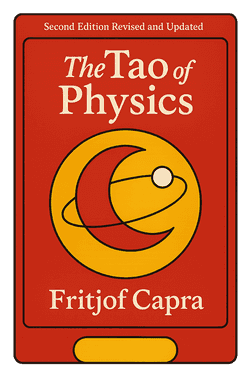
Princeton Nobel laureate Eugene Wigner proposed consciousness plays a central role in quantum mechanics through his "Wigner's friend" thought experiment. John Wheeler developed similar ideas about a "participatory universe," while Jack Sarfatti suggested quantum entanglement might explain telepathic phenomena. The Fundamental Fysiks Group pioneered 1970s physics books connecting quantum concepts with Eastern mysticism. Fritjof Capra's "The Tao of Physics" (1975) became the most successful example, embraced by many physicists to improve physics' public image during anti-scientific sentiment. Physics educators incorporated these ideas into curricula, with David Harrison developing a "Zen of Physics" course where students distinguished between quotes from physicists and mystics. Though exploring quantum entanglement in relation to parapsychology placed them outside mainstream physics, established scientists engaged with their ideas. John Bell refused to dismiss connections between parapsychology and quantum entanglement. Nobel laureate Eugene Wigner supported Elizabeth Rauscher's quantum explanations for remote viewing, while fellow Nobel winner Brian Josephson embraced Eastern mysticism and parapsychology after receiving his prize.
Nick Herbert explored Bell's theorem's practical applications, designing devices for "superluminal telegraphy" in 1978 that used entangled particles to transmit messages faster than light - a concept with paradoxical implications like receiving messages before sending them. Herbert's "FLASH" (First Laser-Amplified Superluminal Hookup) scheme puzzled leading physicists until Wojciech Zurek identified the "no-cloning theorem," which established the impossibility of perfectly copying unknown quantum states. Though superluminal communication proved impossible, this limitation led to quantum encryption. Bennett and Brassard's 1984 "BB84" protocol for quantum key distribution uses photon polarization states to create shared secret keys that reveal eavesdropping. This technology has progressed to practical applications in banking and voting, with demonstrations through fiber-optic cables up to 115 miles and through open air for nearly 100 miles - sufficient for satellite communication.
The Fundamental Fysiks Group disbanded in early 1979 after nearly four years. Members followed different paths: Jack Sarfatti found conservative patrons; Saul-Paul Sirag became a night watchman studying physics during shifts; Nick Herbert's "Quantum Reality" (1985) sold over 100,000 copies; and Elizabeth Rauscher founded a laboratory securing Naval contracts. Their influence revitalized physics education, bringing conceptual understanding back to doctoral exams and interpretive discussions to quantum mechanics textbooks. After physics funding collapsed again in the 1990s, institutions like the Perimeter Institute emerged to support foundational research outside mainstream channels. What began as fringe exploration entered scientific orthodoxy. Leading physicists now study consciousness and quantum brain processes, building on Henry Stapp's work. Quantum computing and encryption-technologies rooted in the quantum weirdness these physicists championed-have become billion-dollar industries. When you use quantum-secured messages or hear about quantum computing breakthroughs, remember these unlikely rebels who preserved quantum philosophy when the establishment had abandoned it. Those at the margins often see beyond current limitations and transform our understanding of reality.