Capitolo 1
When the Music Stops: A Journey Through Love and Loss
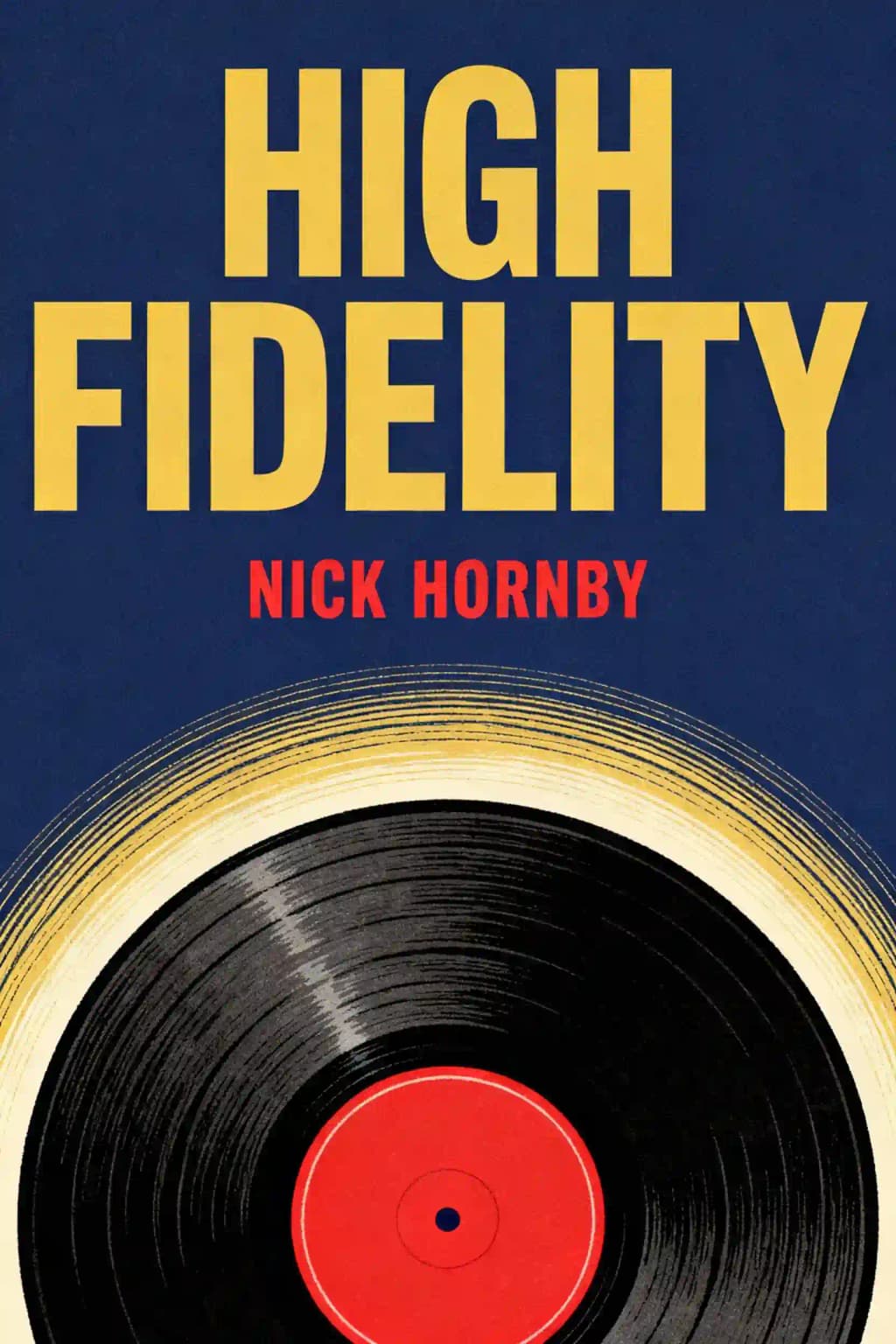
Have you ever wondered what happens when the needle lifts from the record of your life? Nick Hornby's "High Fidelity" has become a cultural touchstone since its 1995 publication, inspiring a beloved John Cusack film and a Hulu series starring Zoe Kravitz. This novel about a record shop owner's romantic misadventures struck such a chord that Time magazine named it one of the 100 best English-language novels since 1923. Bruce Springsteen himself praised the book's authentic portrayal of music obsession, while critics celebrated its exploration of how pop culture shapes our emotional lives. What makes this story so enduring? Perhaps it's the universal experience of measuring our lives against the soundtrack we've chosen-and wondering if we've been listening to the wrong songs all along.
Capitolo 2
The Top Five Heartbreaks: Cataloging Romantic Disasters
Rob Fleming, owner of Championship Vinyl record shop, introduces himself through his meticulously curated "desert-island, all-time top five most memorable split-ups." This isn't merely a quirky character trait - it's his fundamental approach to understanding the world. Like the vinyl records he sells, Rob processes life through lists, rankings, and categorizations, creating an emotional filing system that both protects and imprisons him. His romantic history begins with Alison Ashworth, a three-day relationship at age thirteen that ended when he spotted her kissing Kevin Bannister behind the bike sheds. Though seemingly trivial to an outside observer, this heartbreak established a profound pattern of betrayal and abandonment that would echo through his adult relationships.
Penny Hardwick represents his second major heartbreak - a "nice" girl from his teenage years who maintained strict physical boundaries. Rob, driven by teenage frustration and peer pressure, dumped her for refusing to progress beyond second base. Years later, a chance encounter reveals the devastating aftermath: Penny, wounded by his rejection, subsequently rushed into physical intimacy with another boy, leading to years of emotional trauma. This revelation forces Rob to confront his role as an inadvertent architect of someone else's pain - transforming his narrative from wronged party to unwitting villain.
The pattern intensifies with Jackie Allen, whom Rob systematically pursued while she dated his friend Phil. Through calculated moves disguised as friendship - carefully chosen music recommendations, strategic late-night conversations, subtle undermining of Phil - Rob orchestrated a months-long campaign of manipulation. When he finally "won" Jackie, the victory felt hollow, teaching him that desire often evaporates once the chase ends.
Charlie Nicholson emerges as the defining relationship of Rob's young adulthood. A sophisticated design student who seemed to inhabit a different world, Charlie represented everything Rob aspired to be but feared he wasn't. Their two-year relationship ended when she left him for a more successful man, confirming his deepest insecurities. This breakup becomes Rob's emotional benchmark - every subsequent relationship is measured against this perfectly preserved wound.
Sarah Kendrew completes the top five - a relationship Rob entered with calculated cynicism. They formed what he terms a "marriage of convenience," both seeking shelter from loneliness rather than genuine connection. Rob chose Sarah precisely because he deemed her unlikely to attract other men, making her departure for someone else particularly devastating. This final entry in his catalog of heartbreak forces him to confront the fundamental flaw in his approach to relationships: trying to control the uncontrollable.
These five breakups aren't simply memories - they're the emotional architecture of Rob's character. His compulsion to rank and categorize these painful experiences reveals a deeper pattern of emotional avoidance. By turning intimate relationships into items to be cataloged, like the records in his shop, Rob creates a defensive barrier between himself and genuine vulnerability. Each failed relationship becomes another track on his personal compilation tape of disappointment, carefully curated but never fully processed.
Capitolo 3
Championship Vinyl: Where Music and Misery Collide
Championship Vinyl isn't just a setting - it's a physical manifestation of Rob's emotional state. This failing record shop, tucked away in a "scruffy side street" of North London, serves as both refuge and prison for its proprietor. Inside, Rob and his two employees - Dick and Barry - engage in endless debates about music, creating top-five lists for increasingly obscure categories like "best songs about death" or "most memorable B-sides of the 1960s." They're not just music snobs; they're using their encyclopedic knowledge as armor against real-world disappointments, turning their cultural expertise into a substitute for genuine achievement.
The shop's regular customers are described with anthropological precision: the nervous vinyl addicts who panic-buy something just to justify their three-hour browsing sessions; the nostalgic seekers trying to replace worn-out copies of their teenage favorites; and those on desperate quests to find specific songs haunting their minds. One particularly memorable customer spent years searching for a reggae record he'd only heard in a dream, finally discovering it in Championship Vinyl's dusty bins, making Rob feel "like a midwife to something transcendental rather than just a shop owner." These moments of connection - rare but profound - justify the shop's existence in Rob's mind.
Barry, the most abrasive employee, performs his role as musical gatekeeper with theatrical intensity. He bullies customers into purchases by mocking their musical ignorance, once reducing a middle-aged man to tears for confusing Bob Dylan with Bob Marley. Dick, quiet and awkward in his wire-rimmed glasses, serves as the shop's conscience, patiently guiding people to records they didn't know they wanted - from obscure folk recordings to forgotten soul classics. Their peculiar talents create a microcosm where musical knowledge equals power, where the ability to name the B-side of an obscure single confers more status than a university degree.
This dynamic reveals how Rob has constructed his entire identity around cultural consumption rather than creation. When a well-dressed businessman comes into the shop looking for a gift, Rob feels childish by comparison, his band T-shirt and extensive knowledge of The Velvet Underground suddenly seeming insufficient. This triggers an existential crisis: "Has my obsession with records and emotional songs prevented me from growing up?" Despite understanding love songs better than "serious professionals like diplomats and businessmen who probably never listened to Al Green," his love life remains a disaster - a fact that becomes increasingly difficult to ignore.
The shop represents Rob's arrested development - a place where he can hide from adult responsibilities and relationships behind towers of vinyl and endless discussions about the merits of mono versus stereo recordings. Yet it also contains the possibility of growth. When Laura suggests hosting an in-store performance by singer-songwriter Marie LaSalle, the event's unexpected success triggers Rob's realization that he needs more from his career - "working in a quiet, deserted side street doesn't make me feel like I'm at the center of even my own world." The shop becomes both a symbol of his stagnation and, potentially, a launching pad for change.
Capitolo 4
Laura: The One That Got Away (And Came Back)
Laura Lydon represents everything Rob both wants and fears. Their relationship began when she requested Solomon Burke's "Got to Get You off My Mind" while Rob was DJing at the Groucho Club. He spent hours crafting her a compilation tape, following "all the unwritten rules about track sequencing"-his version of a love letter.
Initially a legal aid lawyer with "spiky hair and a motorcycle jacket," Laura later took a high-paying City law firm job that changed her. Rob resented this transformation, seeing her new clothes, hairstyle, and professional attitude as betrayals of their shared values. Yet he relied on her stability, borrowing money when the shop was failing and moving in together when circumstances demanded.
Their breakup catalyzes the novel's action. Laura leaves Rob for Ray, their former upstairs neighbor, after a series of betrayals: Rob slept with someone while Laura was pregnant, contributing to her terminating the pregnancy; he borrowed money he never repaid; and he admitted to being unhappy and looking for someone else.
What makes Laura compelling is her refusal to be a simple character in Rob's narrative. She reads his mind with "uncanny precision," correctly guessing his thoughts and behaviors after she left. When Rob tries to blame their problems on her changing, she counters that she's merely changed jobs while he hasn't changed at all. She challenges his complaints about her new hairstyle, clothes, and friends, arguing that "professional requirements and increased confidence shouldn't threaten our relationship."
Laura's intelligence consistently outmatches Rob's self-deception. When he can't explain why his hypothetical success would differ from her career advancement, she makes a compelling case that "long-term relationships must accommodate personal growth." Rob acknowledges being "cowed by her intelligence and how she's always right enough to shut me up."
Their reconciliation after her father's death reveals the thousands of connections between them that neither had anticipated. When Rob finally proposes marriage, Laura gently rejects him, noting that he always expects everyone "to fall in line with his sudden realizations." Her character demonstrates that real love isn't about grand gestures or perfect compatibility, but about growing together through life's inevitable changes.
Capitolo 5
The Search for Authenticity: Musical Obsession as Identity
Rob's obsession with music transcends mere hobby status - it functions as his fundamental lens for interpreting reality and his primary tool for self-definition. Throughout the narrative, he grapples with a profound existential question: did his immersion in melancholic music shape his personality, or did his inherent melancholy draw him to these songs? This chicken-or-egg dilemma serves as a central thread in the novel's exploration of authentic identity.
For Rob, musical taste isn't just preference - it's a moral compass and character indicator. He operates as an unforgiving cultural gatekeeper, scrutinizing others' record collections with an almost religious fervor. His dismissal of Paul and Miranda's mainstream tastes - their Beatles albums alongside what he considers middle-of-the-road artists like Tina Turner, Billy Joel, and Eagles - reveals his musical elitism. Yet when Laura confronts him about his uncharacteristic tolerance of their "horrific" collection, Rob faces an uncomfortable truth: perhaps "it's not what you like but what you're like that's important." This simple observation threatens to unravel his entire system of values.
The compilation tape episode particularly illuminates this theme. When Rob crafts a carefully curated mixtape for Caroline, a young journalism student interviewing him, Laura immediately recognizes it as an act of emotional infidelity. In Rob's world, compilation tapes are intimate artifacts - each song selection, transition, and sequence carries deep personal meaning. These tapes represent a form of communication more profound than physical intimacy, making them powerful vessels for emotional connection.
Rob's career aspirations reveal a man trapped in musical amber. His dream job list - NME journalist (1976-1979), Atlantic Records producer (1964-1971), musician, film director, and reluctantly, architect - demonstrates how he uses nostalgia as a shield against present-day engagement. When Laura points out that his top four choices are historically impossible, it exposes how Rob has constructed an escapist fantasy around specific musical eras, avoiding the challenges of contemporary life.
The novel presents creation as the antidote to passive consumption. Barry's evolution from caustic record store clerk to genuine performer with his band "Backbeat" (formerly "Sonic Death Monkey") exemplifies this transformation. His performances of familiar covers like "Twist and Shout" and "Route 66" achieve something Rob's meticulously planned DJ sets never manage - authentic connection with an audience. Barry's success suggests that participating in music's creation, even through interpretation, carries more value than merely collecting and critiquing it.
The story's conclusion crystallizes this theme when Rob plays Solomon Burke - the song that initiated his relationship with Laura. Watching the crowd dance, he has an epiphany: "For the first time ever, I can sort of see how it's done." This moment represents Rob's first step toward genuine participation in life rather than remaining its perpetual critic and curator. He begins to understand that authentic identity emerges not from what we consume or collect, but from how we engage with and contribute to the world around us.
Capitolo 6
Arrested Development: The Fear of Growing Up
At thirty-six, Rob exhibits the emotional maturity of a teenager. He still organizes his life around the same conversations he's been having since adolescence, drawing boundaries through musical taste and never truly maturing. His record shop serves as both sanctuary and prison, allowing him to avoid adult responsibilities while maintaining the illusion of expertise in his narrow domain.
When Rob visits his parents, he's horrified to spot "The Most Pathetic Man In The World"-a bucktoothed, anorak-wearing man in his late twenties also attending with his parents-who gives him "a smile of recognition." This becomes one of Rob's "all-time top-five low points," as he realizes the chief attraction of relationships is "having someone to save us from becoming permanently single people living with our parents."
Rob's fear of commitment stems from his deeper fear of death. During Laura's father's funeral, he finally understands that his fear of depending on someone who will inevitably die has prevented him from committing to relationships. It seems "safer to hop from woman to woman than face that kind of loss."
This arrested development extends to Rob's career ambitions. When Laura asks him to list his dream jobs, his pathetic list reveals how limited his horizons are-all his desired careers are either historically impossible or require training he's unwilling to pursue. Dick and Barry's similar lists show they're all "lost in the same impossible dream world of recording studios and dressing rooms."
Laura directly confronts Rob's stagnation, warning that he's "thirty-six with no children, missing life while waiting for it to change." She accuses him of "getting lost in his head, keeping his options perpetually open while actually closing them off." His resistance to change manifests in his sulky response to Laura restarting his old club as a birthday present-an opportunity that should excite him but instead triggers his fear of commitment.
The novel suggests that growing up isn't about abandoning youthful passions but integrating them into a mature life. Rob's eventual proposal to Laura represents his first genuine step toward adulthood-acknowledging that marriage isn't the "ball and chain" he feared but could actually be freeing. Though Laura rejects his proposal, the gesture itself indicates growth.
Capitolo 7
The Female Perspective: Challenging Rob's Narrative
Throughout the novel, women consistently challenge Rob's self-centered narrative, revealing the limitations of his perspective and understanding of past relationships. His journey of revisiting former partners illuminates how significantly he misinterpreted their experiences and motivations. When he reconnects with Penny Hardwick, expecting to reminisce about their teenage relationship, she provides a sobering correction to his memories: she had genuine feelings for him but wasn't prepared for physical intimacy at sixteen. After their breakup, she experienced difficulties in subsequent relationships that affected her throughout her university years. This revelation compels Rob to recognize the lasting impact his actions had on others' lives - consequences he had previously overlooked while viewing himself as the wronged party.
Laura, his recent former partner, offers particularly astute observations that challenge his self-perception. When he suggests they've "grown apart," she accurately notes that he "hasn't changed at all" while she's simply advanced professionally. She questions his discomfort with her career development, suggesting that her increased confidence shouldn't destabilize their relationship. Her insights consistently penetrate his defenses, especially in identifying moments when he retreats into self-pity rather than engaging in genuine introspection. Through their interactions, Laura functions as both reflection and moral compass, highlighting Rob's personal stagnation while demonstrating emotional development.
Even Charlie Nicholson, whom Rob had long held responsible for his emotional difficulties, provides a perspective that contradicts his long-held narrative. When questioned about their relationship's end, she explains that the issue wasn't about another person but rather Rob's persistent self-doubt, which affected their dynamic and her own well-being. Despite acknowledging his positive qualities, she found the relationship emotionally demanding. This conversation helps Rob understand how his emotional needs influenced his relationships and impacted his partners.
These women's perspectives systematically reveal Rob's limitations as a narrator. His romantic history, initially presented as a series of experiences where he was wronged, gradually emerges as a pattern reflecting his emotional development challenges and difficulty seeing women as complete individuals rather than supporting characters in his personal narrative. Each woman's account contributes to this understanding, revealing how Rob's self-focus prevented him from recognizing their authentic experiences and motivations.
The novel also examines Rob's media-influenced assumptions about relationships, particularly regarding romantic expectations. He discovers that real relationships differ significantly from pop culture portrayals - genuine affection often manifests as patient understanding rather than dramatic passion. This realization highlights how cultural narratives can affect relationship expectations and emotional development. Through these encounters, Rob gradually learns that authentic relationships require moving beyond idealized assumptions to engage with people in their full complexity.
Capitolo 8
Finding Connection: The Path to Redemption
Rob's journey toward emotional growth begins when he stops seeing relationships as competitions to be won or lost. His obsession with ranking and categorizing experiences has kept him from genuine connection. When he visits Sarah and realizes she's still devastated by Tom leaving her, he recognizes that at thirty-five, she's concluded "life won't offer her more than pizza with an ex-boyfriend she never much liked." Despite their mutual acknowledgment that "pairing off shouldn't matter so much," the reality of "Sunday mornings and loneliness makes this hard to believe."
Connection comes in unexpected forms throughout the novel. Dick's relationship with Anna, despite their seemingly incompatible musical tastes (she likes Simple Minds, a band they've ranked "#1 on their 'Musicians Who Will Have to Be Shot' list"), demonstrates that genuine human connection transcends cultural preferences. When Rob meets Paul and Miranda, Laura's sophisticated friends he'd previously dismissed without meeting, he's surprised to find the evening "goes wonderfully." They're warm and welcoming, the conversation flows naturally, and he feels "completely accepted." For the first time, he feels like he's "living a mature, meaningful adult life rather than a sitcom about record shop employees."
The novel's climax comes during the reopened Groucho club night, where Barry's band performs crowd-pleasing covers instead of the "terrible experimental racket" Rob expected. The evening ends like a "film finale" with everyone dancing: "Dick with Anna, Marie with T-Bone, Laura with Liz." When Rob plays Solomon Burke-the song that started his relationship with Laura-she "grins and gives me thumbs-up signs." This moment of pure connection, without analysis or ranking, represents Rob's emotional breakthrough. "For the first time ever, I can sort of see how it's done," he admits.
This final scene suggests that redemption comes not through finding the perfect partner or achieving professional success, but through genuine participation in life. Rob has spent years curating experiences rather than living them, creating soundtracks rather than dancing to them. His realization that he can "sort of see how it's done" indicates he's finally ready to step onto the dance floor of life rather than remaining behind the DJ booth.
Capitolo 9
The Soundtrack of Our Lives: Music as Emotional Memory
Music in "High Fidelity" functions as both emotional catalyst and memory storage. Rob's relationship with Laura began when she requested Solomon Burke's "Got to Get You off My Mind" while he was DJing. Years later, that same song brings their reconciliation full circle when Rob plays it at the reopened club night.
The Beatles represent safety for Rob-they "belong just to me, not to me and any girlfriend-they're childhood memories of bubblegum cards, Saturday morning cinema, toy guitars and school trips." They'll make him "feel something, but nothing bad." This distinction between music that belongs to relationships versus personal history reveals how Rob compartmentalizes his emotional life.
Compilation tapes serve as emotional currency throughout the novel. Rob spends hours crafting one for Laura when they first meet, "following all the unwritten rules about track sequencing." Later, when he makes one for Caroline, Laura immediately recognizes this as a betrayal, understanding that compilation tapes represent emotional investment more intimate than physical contact.
Marie LaSalle's cover of Peter Frampton's "Baby, I Love Your Way"-a song Rob "used to mock mercilessly"-brings him to tears five minutes into her set. This unexpected emotional reaction demonstrates how music bypasses our intellectual defenses, connecting directly to our emotional core.
The novel explores how musical taste functions as identity. Rob judges people harshly based on their record collections, dismissing Paul and Miranda's "horrific" selection of Tina Turner, Billy Joel, and Eagles. Yet when Laura points out his tolerance of their taste is completely out of character, Rob privately acknowledges that maybe "it's not what you like but what you're like that's important."
This revelation challenges Rob's entire worldview. If musical taste doesn't define character, what does? The question becomes particularly pointed when Rob makes a compilation tape for Caroline. Laura immediately recognizes this as a betrayal, understanding that compilation tapes represent emotional investment more intimate than physical contact.
The novel ultimately suggests that music's true power lies not in defining our identity but in connecting us to others. When Barry performs crowd-pleasing covers like "Twist and Shout" and "Route 66," he connects with the audience in a way that Rob's carefully curated DJ sets never could. The final scene, where everyone dances to Solomon Burke, represents the triumph of shared experience over individual taste-the moment when music fulfills its highest purpose by bringing people together rather than setting them apart.