Capitolo 1
The Transformative Power of Inner Healing
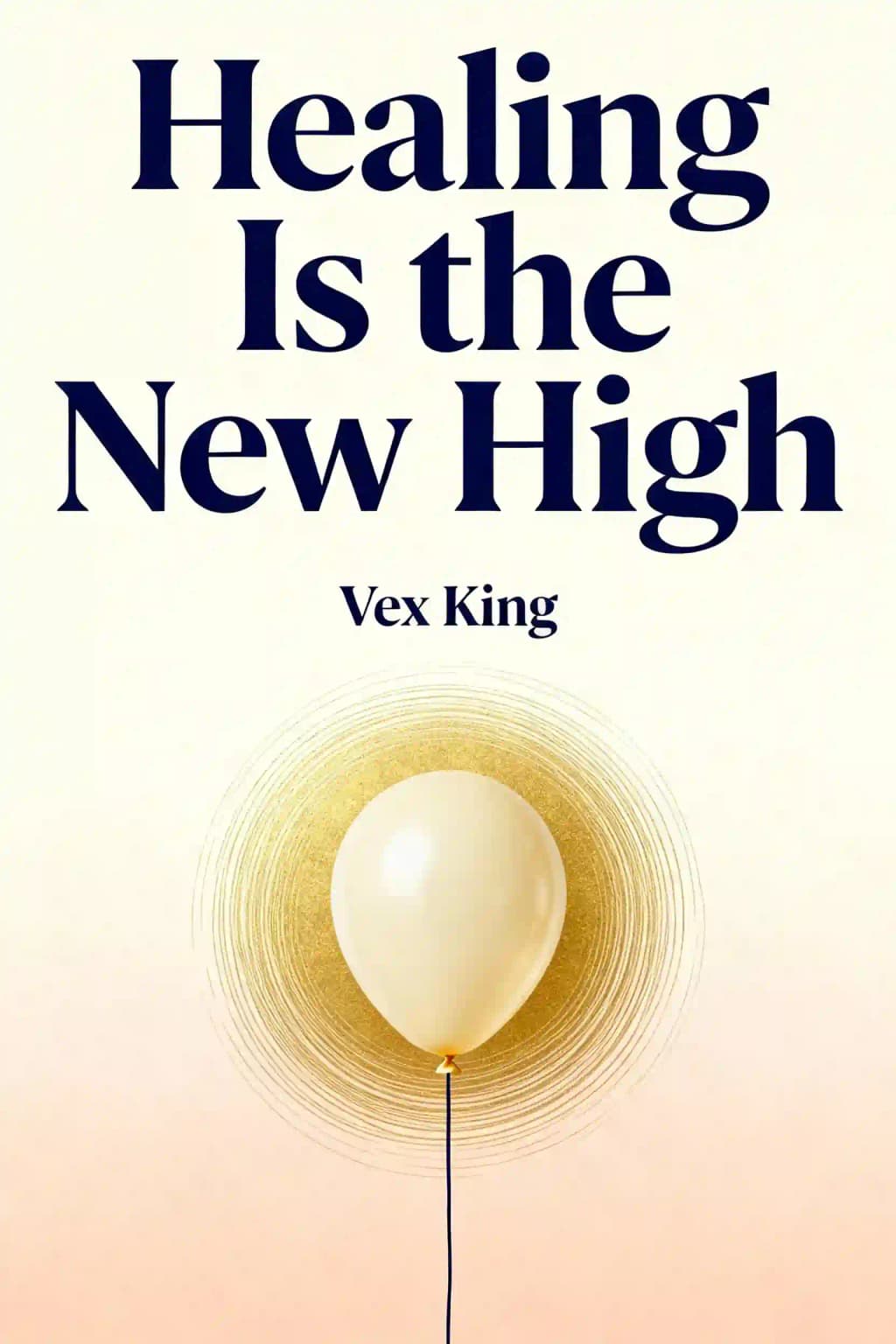
Have you ever wondered why some people seem to bounce back from life's hardest blows while others remain stuck in patterns of pain? In "Healing is the New High," Vex King-whose work has been embraced by millions including celebrities like Ariana Grande and Fearne Cotton-offers a revolutionary approach to healing that has transformed countless lives worldwide. This isn't just another self-help book; it's a practical roadmap to freedom that has become a cultural phenomenon, particularly resonating with younger generations seeking authentic healing beyond quick fixes. King's unique blend of ancient wisdom and modern psychology has earned him a reputation as one of today's most influential voices in personal development. His methods have been featured in major publications and his social media content regularly goes viral for its ability to distill complex healing concepts into accessible practices. What makes this book truly special is that it doesn't just tell you to heal-it shows you exactly how.
Capitolo 2
Breaking Free from Emotional Chains
We all carry wounds from our past. Some are obvious-like the scars from toxic relationships or childhood trauma-while others operate beneath the surface, quietly dictating our choices and reactions. These hidden wounds might manifest as perfectionism, people-pleasing tendencies, fear of abandonment, or an inability to maintain healthy boundaries. Vex King understands this intimately, having experienced a particularly painful betrayal that left deep emotional scars. His girlfriend repeatedly cheated on him while using emotional manipulation to make him doubt his own perceptions. She would gaslight him about suspicious text messages, unexplained absences, and mysterious phone calls, gradually eroding his self-trust. Friends warned him, but he was caught in the web of her deception, seeing a light in her that others couldn't.
When he finally broke free, the aftermath was devastating. He cycled through denial, hatred, disappointment, and self-blame. He questioned every memory, wondering if any part of the relationship had been real. Most damaging was what he calls "anti-love"-avoiding genuine commitment and engaging in meaningless hookups that left him feeling empty and ashamed. These encounters served as temporary bandages over deeper wounds, creating a cycle of superficial connections that only reinforced his trust issues. He developed serious emotional barriers, keeping his guard up and preemptively ending relationships when he felt himself falling for someone or sensed potential hurt.
What King didn't realize was that healing had already begun the moment he ended that toxic relationship. Every painful emotion-though excruciating to experience-became vital to his growth. The sleepless nights, the anger, the tears - all were necessary steps in processing the trauma. The journey wasn't linear, often taking two steps forward and one step back, and he wasn't immediately "done" healing, but the process had started without him even recognizing it. Small victories, like being able to talk about the experience without breaking down or allowing himself to be vulnerable with new friends, marked progress even when it didn't feel like healing.
This pattern is common in all of us. We often resist healing because confronting our pain seems more frightening than living with it. We develop sophisticated coping mechanisms - workaholism, perfectionism, emotional numbness - that help us function but prevent true healing. But healing begins when we acknowledge our wounds and become willing to expose these darker parts to invite light back in. The process won't always feel good-healing requires confronting buried emotions and challenging long-held perspectives-but the freedom waiting on the other side is worth every uncomfortable moment. This might involve seeking therapy, practicing self-compassion, setting healthy boundaries, or simply allowing ourselves to feel emotions we've long suppressed. The key is understanding that healing isn't about erasing the past but about integrating it into our story in a way that empowers rather than diminishes us.
Capitolo 3
Understanding Your Seven Bodies
To truly heal, we must recognize that we are more complex than we've been taught to believe. While modern medicine often treats humans like machines with parts to be fixed, genuine healing requires understanding the whole person-including the subtle energies always at work within us. This multidimensional approach has roots in ancient healing traditions from India, Tibet, and other wisdom cultures that recognized human beings as intricate energy systems.
King introduces the concept of seven bodies or layers that comprise our whole self. Rather than taking these literally, consider them as a framework for thinking about yourself more holistically. Each body represents a different aspect of our experience and consciousness, operating simultaneously and influencing each other continuously:
1. The physical body: Our familiar interpreter between self and world, used for experiencing and expressing. This includes not just organs and systems, but also our posture, movement patterns, and the way we physically navigate space. It holds our tangible history through scars, tension patterns, and cellular memory.
2. The etheric body: Linked with emotions, this body stores emotional experiences that shape our perceptions. It acts as an energetic blueprint for the physical body and contains our emotional patterns, reactions, and deep-seated feelings. This is where we might feel "butterflies" in our stomach or a "heavy heart."
3. The astral body: Associated with reason, intellect, and logical thinking, developed through worldly interactions. This body processes information, forms beliefs, and creates meaning from our experiences. It's where we develop our analytical abilities and rational understanding of the world.
4. The mental body: Beyond logic, focused on intuition and deeper mental power-our capacity to sense, predict, and build subjective understanding. This body accesses higher forms of knowing, including creative insights, pattern recognition, and the ability to perceive beyond surface appearances.
5. The spiritual body: Centers on connection with our true Self-the steadiness and peace always within us. This body maintains our sense of purpose, values, and deeper meaning. It's where we experience our authentic nature beyond social conditioning and external identities.
6. The cosmic body: Where we transcend self and feel connected with everything-like feeling part of something bigger in nature. This body enables experiences of unity consciousness, such as feeling one with the ocean while swimming or experiencing profound connection during meditation.
7. The nirvanic body: Where we experience ultimate freedom and liberation, regardless of external circumstances. This is our connection to pure consciousness and unconditional being, beyond all limitations and constructs.
Trauma affects all seven bodies, not just our physical or emotional selves. Since each plays a role in how we feel, move, breathe, act, and live, healing requires working with all of them. For example, physical trauma might create tension patterns in the body, emotional blockages in the etheric body, limiting beliefs in the astral body, and disconnection from intuition in the mental body. This holistic approach explains why addressing only physical symptoms or only emotional patterns often falls short-true healing must encompass our entire being.
Understanding these seven bodies helps us approach healing more comprehensively. When we experience challenges, we can examine how each body might be involved and need attention. This might mean combining physical therapy with emotional release work, cognitive reframing, and spiritual practice for complete healing.
Capitolo 4
Listening to Your Body's Wisdom
Our physical body holds the memory of our pain and trauma. When we experience hurt, our body doesn't simply release it when the experience ends-it stores it away, manifesting in physical sensations when triggered. King discovered this firsthand after his breakup, when reminders of his ex would cause his heart to pound, chest to tighten, and legs to feel heavy.
This connection between physical and emotional experience works both ways-physical healing can actually initiate emotional healing, as the body and mind are deeply interconnected. Trauma doesn't exist in isolation; it affects all seven of our bodies, requiring us to work with each one to achieve true inner healing.
Consider the story of King's client who struggled with social anxiety. Her trauma stemmed from betrayal-her husband had cheated with her friend, and their entire friend group had known for years. This experience left her feeling worthless and afraid of group situations. Rather than forcing social interaction, they focused on her attending workout classes without the post-class socializing. Surprisingly, her physical pain disappeared when she removed the social pressure. This demonstrated how we store trauma physically, and how working with the body can unlock emotional healing.
To begin your own physical healing work, try the Personal History Body Scan. This technique creates deep relaxation while helping you distinguish between purely physical discomfort and emotionally-connected pain. By methodically noticing each part of your body-from toes to head-without judgment, you develop awareness of where you store past experiences physically. This awareness-building practice helps you develop a loving relationship with your physical self rather than feeling detached from it.
Remember that resistance is a clue-the things we resist or avoid reveal the spaces within us that need healing. When we approach our aversions with curiosity rather than fear, they quickly lose their power over us.
Capitolo 5
Raising Your Vibration Through Authentic Connections
Your vibration-the energy flowing through you and radiating outward-directly influences what you attract into your life. When you're vibrating at a higher level, you feel good, confident, and creative; success seems to flow naturally. When your vibration is low, you feel heavy, tired, and struggle to see possibilities. Taking charge of your healing is itself an act of raising your vibration.
Relationships are crucial to this process-supportive connections accelerate recovery while negative ones hinder progress. Almost all trauma involves other people, either directly or through their response to our pain. Relationships can either inflict further damage, create emptiness, or lift us up with confidence and support. When your vibration conflicts with those closest to you, healing becomes more difficult.
Consider the story of Malika, who experienced violent rape at age 15 and was left traumatized and terrified. Her family's inability to properly address her trauma left her isolated in her pain, demonstrating how the people surrounding us during traumatic experiences profoundly affect our healing journey.
To build more authentic connections, try shifting your perspective during interactions. Instead of wondering what others think of you, consider what you think of them. When we constantly worry about others' opinions, we're engaging in unhealthy perfectionism that diminishes our sense of self. By focusing on your own experience during interactions rather than worrying about others' perceptions, you'll transform your relationships.
This shift allows you to nurture relationships that feel good while releasing the pressure to connect with everyone who likes you. Good relationships are essential for healing; we need spaces where we can be vulnerable, talk freely, and have our broken hearts held. While much healing work happens alone, authentic connections make healing possibilities infinite.
Capitolo 6
Confronting Childhood Conditioning
Childhood experiences can literally change the structure of our brain. When we have negative experiences before our brain has developed enough to process them healthily, the resulting trauma can govern our emotions and decisions well into adulthood. Research shows childhood trauma can even affect adult moral decision-making, particularly for those who experienced neglect.
One of the biggest challenges in healing is distinguishing between intuition and trauma responses. Trauma blocks our natural intuition by telling us to avoid being hurt at all costs, driving decisions from a place of pain. In contrast, intuition guides us from a place of love and steadiness. Learning to differentiate between intuition-based responses (calm knowing, freedom, straightforward voice) and trauma-based responses (anxiety, feeling trapped, dramatic voice) is crucial for releasing limiting beliefs formed in childhood.
Creating a personal history list can help you identify these patterns. This challenging exercise involves recording emotionally significant memories and rating their intensity. Though difficult, this exercise creates space for positive experiences and beliefs while helping you confront memories from a new perspective.
Many people with unresolved early trauma struggle with setting healthy boundaries-limits that help others understand how you want to be treated. Setting boundaries isn't about rejecting people but maintaining relationships without sacrificing your inner peace. When we carry limiting beliefs about who we are and what we deserve, establishing boundaries becomes even more challenging. Yet respecting your own boundaries encourages others to do the same, creating space for healing and growth.
Remember that unhealed trauma doesn't just affect us-it ripples through generations. Intergenerational trauma describes how psychological wounds transfer through families and communities, with parents unconsciously transmitting their unresolved pain to children. The things our parents and grandparents didn't heal from have directly impacted how we understand our place in life, and what we don't heal will affect future generations unless we break the cycle.
Capitolo 7
Rewriting Your Limiting Beliefs
The mind is flexible, eager to learn and willing to change. After confronting past experiences, it's time to move from the past to the present moment and look toward the future. This transition involves identifying and transforming the limiting beliefs that drive seemingly irrational adult behaviors.
Consider King's personal story of binge eating, which stemmed from childhood food scarcity and his mother's insistence on finishing meals to be "strong and healthy." This created a survival-based belief that he must consume all available food, not knowing when the next meal would come. Similarly, he describes a client who repeatedly returned to an abusive relationship because childhood trauma had programmed her to associate intensity and abuse with feeling alive.
Even subtle childhood events can create powerful limiting beliefs, as with King's friend who stopped sharing opinions after being mocked once for giving a wrong answer. These examples demonstrate how seemingly minor childhood incidents can create limiting beliefs that control our adult behaviors in ways that make us unhappy.
Reparenting is a powerful tool to heal this childhood conditioning. While we aren't responsible for our childhood conditioning, we must take responsibility for changing it now. Reparenting allows us to make conscious choices about what beliefs we integrate into our self-concept rather than automatically accepting childhood impressions. At its core, reparenting involves imagining yourself sitting with your childhood self and correcting the harmful beliefs they absorbed.
This process is supported by neuroscience-brain imaging studies show that adults retain neural plasticity, allowing us to create new neural pathways that can override negative childhood conditioning. By consciously creating new responses to situations, we strengthen positive neural pathways until they become automatic, replacing the limiting beliefs formed in childhood.
To rewrite your limiting beliefs, select five memories with limiting beliefs that most impact your daily life-those that dictate decisions, relationships, and hold you back from taking risks. Write these beliefs down, then ask yourself why you've held onto them, if they add value to your life, and what would happen without them. Then rewrite each belief in an empowering way that reminds you of your potential for growth. For example, "I'll never find true love" becomes "I'm capable of love and worthy of being loved."
Capitolo 8
Embracing Curiosity and Self-Care
When we experience trauma, we often shut down our curiosity as a protective mechanism. After an initial burst of energy following a difficult event (like getting a new hairstyle after a breakup), we tend to retreat inward, avoiding the unknown to stay safe. This kills our curiosity and makes life feel dull and less worth engaging with.
But curiosity is essential for healing-it opens new doors, creates acceptance of our emotions, encourages learning, helps us let go of judgment, and connects us with vibrant people. By approaching your healing with childlike curiosity-asking "why" and "how" without judgment-you can become your own observer and healer.
This doesn't mean becoming a different person or avoiding negativity, but rather embracing the full spectrum of emotions while making it safe to be vulnerable. The difficult experiences we've all faced, though painful, provide the contrast that makes us appreciate better times and allows us to help others on their healing journeys.
Self-care practices are vital tools for nurturing this curiosity and supporting your healing journey. True self-care goes beyond surface-level positivity to address the underlying emotions and beliefs that affect our daily experience. While positive affirmations have their place, they must be paired with deeper work to transform emotions rather than ignore them.
Build a personalized self-care routine by identifying daily time slots that could be repurposed for self-care, then conducting hands-on research by trying various practices like EFT (Emotional Freedom Technique), yoga, journaling, essential oil baths, breathwork, and more. Note which practices make you feel "calm and whole and steady," then organize them into daily, weekly, and monthly self-care activities.
One powerful practice is candle gazing, which adapts the ancient meditation technique of trataka and expands it with visualization and journaling. Research shows candle gazing strengthens eye muscles, improves focus, relaxes mind and body, calms the nervous system, reduces anxiety, and enhances mental clarity. When combined with visualization and journaling, the practice helps you connect to your inner fire-your motivation, protection, and energy-allowing you to burn away fear and insecurity while establishing a stronger sense of self.
Capitolo 9
Discovering Your True Self
The concept of "being yourself" or "reconnecting with your true nature" becomes meaningless if you don't know who you really are. A more useful question might be: Who would you be if you'd never been hurt? While our challenges shape us and become part of our strength, there exists a steady hum of complete "youness"-your natural equilibrium that remains despite life's difficulties.
In yoga philosophy, your true Self (Atman) is an eternal center that remains constant within you, connected to the universal consciousness. King illustrates this concept through a story of two waves approaching shore: one anxious and fearful about its impending end, the other peaceful and aware that it will simply return to the ocean it came from. The first wave, distracted by impressions gathered since becoming a wave, cannot enjoy its experience. The second wave, connected to its true nature, understands it is temporarily a wave but eternally part of the ocean.
This metaphor shows how connecting with your true Self allows you to remain peaceful despite life's challenges, knowing that beneath all experiences lies your steady, calm essence-an equilibrium you can always return to.
When emotional pain and fear settle within us, we develop defense mechanisms that trigger automatic reactions. Healing requires making conscious choices instead of reacting instantly when triggered. We must pause, thank whatever triggered us for highlighting what needs healing, and then choose our response based on our rewritten beliefs.
Don Miguel Ruiz's second agreement from "The Four Agreements" advises not taking anything personally-those who attempt to belittle us reveal more about their own inner hurt than our worth. Whether it's a social media post that triggers negative emotions or someone's hurtful comment, we can set boundaries by giving ourselves time to pause before responding.
The long-term solution is reconditioning the mind through repetition of new empowering beliefs until they become integrated into our subconscious. Each triggering situation becomes an opportunity to strengthen neural pathways to these healing beliefs by identifying which limiting belief is being activated and consciously replacing it with its empowering counterpart.
Capitolo 10
Experiencing True Freedom
Freedom is the ultimate expression of healing and wholeness. It isn't a physical place but "a state of the self" akin to nirvana. Freedom means making decisions that feel right, knowing past traumas cannot hurt you indefinitely, feeling excited about the future, and living without constant worry about others' opinions.
This state is described as "the new high"-suggesting that true healing provides a more profound elevation than artificial escapes. Taking charge of healing is "one of the most powerful acts of self-love," sending a message to your inner world that you're "worthy of change" and ready to "live higher."
It's important to understand that inner freedom doesn't mean perpetual happiness or constant confidence. True freedom is about acceptance and "a calm sense of knowing"-not dreading difficult moments but knowing you can work through them. It means welcoming the full range of human emotions while maintaining the ability to return to equilibrium.
Using a water metaphor, King explains that even when the surface is "choppy and hard to handle," the deeper water remains still-and you're capable of seeing beyond the surface turbulence to the underlying stillness.
When you feel stuck, remember that all seven bodies are interconnected, and sometimes the quickest path to deeper freedom is through the physical body. Try running "like a wild child," swimming, jumping, stretching, or doing yoga. The journey isn't linear, but there are many ways to reconnect with freedom: taking off clothes (when appropriate), laughing at nothing, being honest with someone, spending a full day outside, meditating, changing your schedule, asking for help, dancing without self-consciousness, doing activities alone, or learning something new.
Healing manifests differently for each person, but several indicators suggest positive progress: recovering more quickly from triggers rather than spiraling for extended periods; feeling stronger and more confident with diminished insecurity; anticipating potential triggers and preparing for them; expressing pain with less shame; feeling unstuck and able to move forward; and envisioning hopeful futures rather than catastrophic ones.
King shares his personal experience of freedom as liberation from others' expectations. Despite childhood comparison and judgment making him feel inadequate, he learned to balance growth with self-acceptance. When leaving his corporate job to pursue his purpose, he faced harsh criticism-even his manager suggesting he might become suicidal. Friends and family called him "a bum" chasing unrealistic dreams.
Yet after his first book's success, he felt no need to gloat, recognizing that harboring animosity would mean others still controlled him. Now comfortable simply saying "I try to help people," he's unburdened by others' judgments, living on his own terms with abundant peace of mind-the true luxury.
The message is clear: healing isn't just for "spiritual types" but for anyone seeking meaningful change. Although healing is deeply personal, it benefits everyone-those who accept themselves can accept others, radiating more love and kindness into the world, potentially changing it. When that moment of lightness, openness and peace arrives, trust that it's real and deserved-a state where pain and fear no longer dominate, but your authentic self leads.