Capitolo 1
Digital Childhood: Navigating Identity in an Age Without Privacy
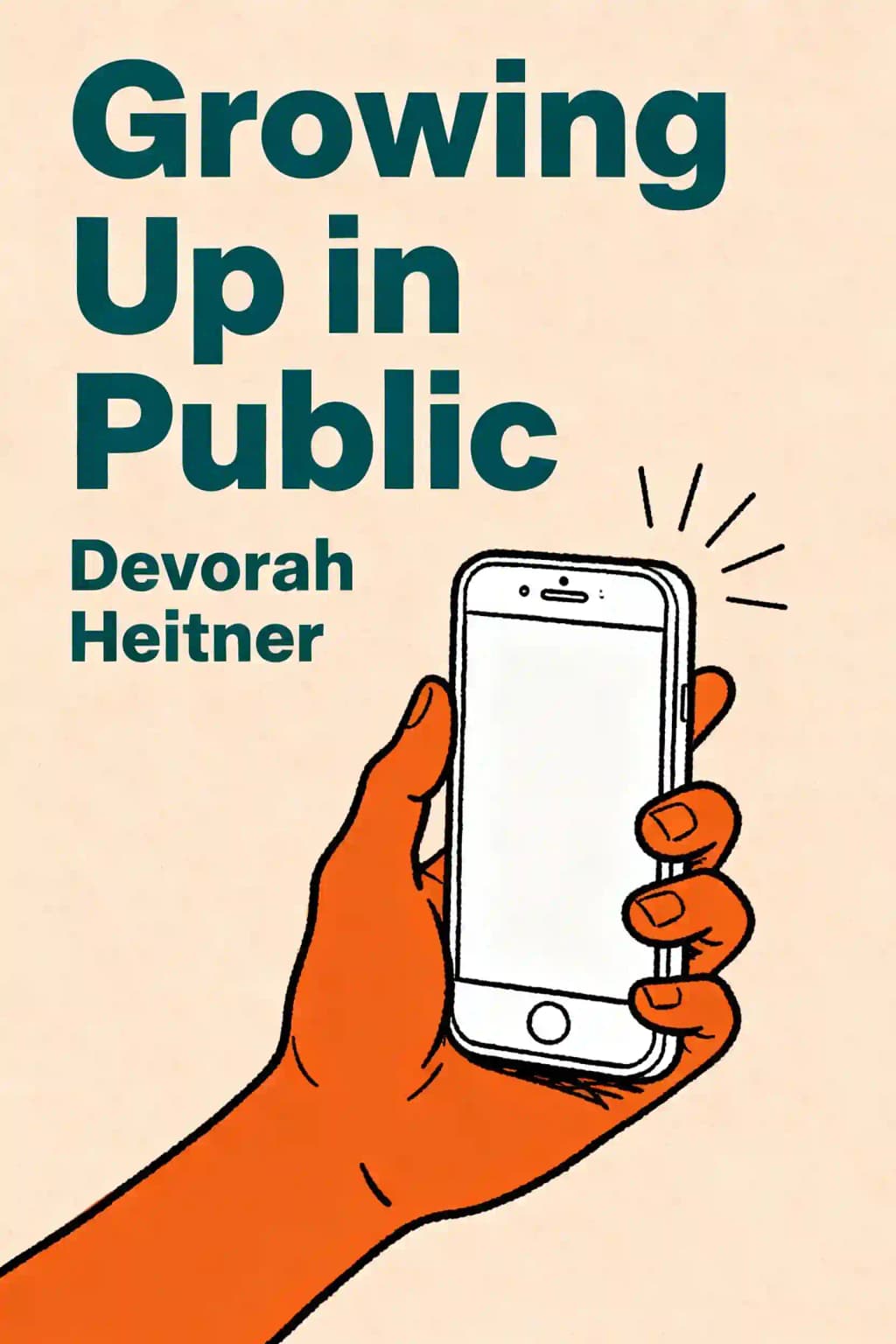
Growing up today means living life in public view. While my teenage camp photos stayed tucked away in albums, today's youth navigate a fundamentally different reality where their every move is tracked, recorded, and potentially judged. In her groundbreaking book "Growing Up in Public," Dr. Devorah Heitner explores this unprecedented challenge facing young people who must develop authentic identities while under constant surveillance from parents, schools, and peers. The book has resonated deeply with both parents and educators, becoming required reading in many school districts across America. Praised by digital ethics experts like Tristan Harris as "the essential guide for raising children in the surveillance age," Heitner's work combines rigorous research with compassionate, practical advice. Drawing from hundreds of interviews with teens, tweens, parents and educators, she illuminates the complex terrain between necessary oversight and harmful surveillance, offering a roadmap for raising children who can thrive despite the digital fishbowl they inhabit.
Capitolo 2
The Surveillance Paradox: When Protection Becomes Problematic
When school scandals erupt from inappropriate student content sharing, parents typically panic and reach for monitoring software. However, this monitoring-first approach fundamentally misunderstands what children need to develop good judgment. While parents have always kept tabs on their children, digital technology has dramatically expanded surveillance capabilities. Studies show alarming statistics: 61% of parents check browsing history, 48% examine text messages, 43% have access to phone passwords, and 39% use parental control apps-numbers that likely increased during pandemic lockdowns.
Parents typically justify this surveillance as protection, citing media-fueled fears about online dangers from cyberbullying to rare but high-profile abductions. Location tracking has become particularly common, with nearly 32% of college students reporting their parents still monitor their whereabouts. Yet this constant visibility raises important questions: Does knowing your child's precise location at all times actually relieve anxiety, or does it maintain it at a constant low level while potentially undermining the development of independent judgment?
Many parents also monitor digital communications to maintain connection as children naturally shift toward peer relationships. When teens begin prioritizing friends over family time, parents may feel disconnected and resort to reading texts or checking social media for glimpses into their child's inner world. One mother discovered her son had come out as pansexual to friends by reading his messages while he was at school-robbing him of the opportunity to share this information when ready.
Most teenagers strongly resent having their online activity monitored, viewing it as an invasion of both their privacy and their friends'. As one teen explained, "If you read my texts, that's personal, not just for me, but for the person that I'm texting with." Interestingly, many teens don't mind location tracking as much, with some even tracking their parents back, checking if they're bringing home treats from favorite shops.
Surveillance creates problems where none existed. When one mother tracked her seventeen-year-old son and discovered frequent visits to a girl's house, her curiosity turned to suspicion despite no previous trust issues. The location data provided limited context-was he dating, being tutored, or doing something concerning? Parents should consider whether normalizing constant surveillance sends healthy messages about trust and boundaries.
Reading children's private communications can expose parents to developmentally normal but hurtful comments. When seventh-graders privately express frustration toward parents during fleeting moments, it's just venting-but digital communications capture these temporary feelings in text form, potentially hurting parents who were never meant to see them.
While monitoring may be necessary in specific situations-particularly with younger children who've been targets of online cruelty-experts recommend using such tools transparently, never covertly. For teens experiencing harassment, mental health issues, or suicidal ideation, monitoring might be appropriate with their knowledge and possibly with therapeutic guidance.
Parents concerned about pornography access should combine technical solutions with open communication. Blocking pornography on devices and the family router provides some protection, but discussing why pornography is concerning and sharing family values around sexuality is equally important.
Even without monitoring your child, families should establish when tracking might become necessary, such as during "Code Red" situations where safety is at risk. However, surveillance only provides one parenting tool: catching mistakes after they happen. This reactive approach fails to provide mentoring and guidance that helps develop good judgment before mistakes occur.
Capitolo 3
Identity Under Observation: The Social Media Pressure Cooker
Today's youth develop their identities while constantly being observed online. Most young people acknowledge knowing someone whose online persona differs from their real personality, with many "crowdsourcing their personality" to create digital versions of themselves that overshadow their authentic selves.
Social comparison, always part of adolescence, intensifies with social media's curated "highlights reels." Despite understanding these posts represent edited reality, young people still feel hurt when seeing others' experiences they're excluded from. Social media has transformed appearance concerns by placing teens' images alongside professionally edited ones. A UK study revealed a third of girls and women won't post unedited photos of themselves. Boys face unique pressures - expected to appear effortless while secretly caring deeply about their image.
The platforms quantify social approval through likes, comments, and follower counts. Pew Research shows 40% of teens feel pressured to post attractive content about themselves. Even preteens strategically manage their social image, with some orchestrating gatherings specifically for posting when excluded from other events.
The situation intensifies as teens discover provocative content attracts more engagement. Dr. Eva Telzer notes that adolescence is a critical brain development period where digital platforms shape neural pathways through constant social feedback. Managing an online presence while competing for attention creates exhausting social labor, yet opting out risks social isolation.
Social media has redefined popularity through follower counts rather than genuine relationships. Some teens chase viral fame, inspired by successful influencers, but content creators like Junna Faylee describe it as "a job that never ends" requiring constant competition for visibility.
Today's digital footprints make identity exploration permanent, trapping young people in narratives they may outgrow. The case of Zephyrus, formerly "Super Awesome Sylvia," highlights this challenge - after transitioning, he struggled with his previous online identity causing severe gender dysphoria.
Parents must help children navigate growing up in public by providing genuine validation and preparing them for inevitable social media challenges. This includes teaching emotional awareness during platform use and developing healthy coping strategies for vulnerable moments.
Capitolo 4
Sharenting: When Parents Become the Privacy Problem
Parents eagerly share their children's lives online, from pregnancy through college drop-off, but this "sharenting" can cause problems. At workshops, when asked if parents have posted embarrassing photos of them, almost all children step into the circle. Many tweens and teens are shocked to discover years of parental posts about them. High school junior Malaya was upset finding unflattering photos on her mother's Facebook and especially embarrassed by orchestra performance posts: "People make fun of me for playing violin."
Every social media post reveals our values, both in content and frequency. Parents vary widely in sharing habits-some document constantly while others share only milestones. Many forget to consider their full audience; one PTA president stopped posting about her daughter after learning her daughter's friends were teasing her about mom's affectionate birthday posts seen on their parents' phones.
Sharenting raises complex questions about consent and ownership of stories. Writer Christie Tate refused her daughter's request to remove articles about her, arguing for her rights as an artist while rejecting the "self-sacrificing mother" trope. Many readers sided with her daughter, feeling Tate violated her rights and damaged their relationship. The fundamental question becomes: when writing about "parenthood," can we do so without exposing our children's personal struggles?
Posting against a child's wishes communicates that we don't value their privacy or consent. We must consider whose needs each post serves-is it purely for our validation, to demonstrate parental devotion, or genuinely to help others? The critique of sharenting often has gendered aspects, with mothers typically facing harsher judgment than fathers, while simultaneously bearing greater responsibility for managing the family's public image.
Even celebrities with PR expertise can misstep with sharenting, as when Gwyneth Paltrow's fourteen-year-old daughter publicly called her out for posting without permission. Boundaries evolve as children grow from babies to tweens and teens, requiring parents to reconsider sharing practices.
Explicit discussions about boundaries with partners, children, and extended family can help establish a clear "family policy" for sharing. Creating a family "editorial policy" gives children agency in decisions about what's appropriate to share. Regular "editorial meetings" can address timing of announcements-whether about promotions, pregnancies, or college acceptances.
Even parents who avoid posting about their children aren't immune to privacy concerns, as grandparents, extended family, friends, or their children's friends may share without understanding boundaries. Having a unified family policy provides strength when facing pushback: "We got together as a family and decided on these ground rules."
Siblings often have dramatically different privacy preferences. One mother described how her younger daughter embraces being featured on social media while her son refuses to be photographed at all-yet he complained about his limited presence in her Instagram feed.
Today's middle schoolers-born after Facebook (2004) and Twitter (2006)-have no reference point for privacy before the internet. Kids do care about privacy, but their landscape looks different than ours. They understand "Small Privacy" within their immediate network (family, friends, local community) more intuitively than "Big Privacy" issues like data mining, algorithmic tracking, and facial recognition that are abstract and less visible in daily life.
When children have input on what's shared about them, privacy becomes a shared pursuit rather than a battle. As attorney Stacey Steinberg notes, children should define their own narratives rather than having parents inadvertently lock them into past identities through oversharing.
College acceptance announcements represent a common parental oversharing pitfall. Parents should consider several strategies when navigating this sensitive time: have empathy for yourself and others; unplug completely during peak posting season; remember that life paths are complicated; and avoid scrolling if it causes emotional distress.
Capitolo 5
Digital School Surveillance: When Monitoring Undermines Learning
Digital apps and online portals that track students' behavior and academic performance have become ubiquitous in schools, giving parents unprecedented real-time access to their children's school lives. While this technology appears beneficial for communication, it creates a culture of surveillance that can undermine children's independence, intrinsic motivation, and mental health.
ClassDojo, now used in 95% of U.S. elementary schools, exemplifies the gamified surveillance of children's behavior. Students earn positive points for "appropriate" behaviors like working hard and following instructions, while losing points for "inappropriate" behaviors like not staying seated. While some teachers praise these apps for improving classroom management and parent communication, they raise serious questions about how it feels for children to grow up under such close monitoring.
Behavior monitoring apps measure outcomes rather than understanding the complex factors affecting children's behavior. Self-regulation varies by age, gender, developmental stage, and physical maturity. These apps rarely change behavior long-term because they don't teach self-regulation skills or address underlying issues. Instead, they simply reinforce what's already known: children who struggle with self-regulation collect more negative points.
These behavior-monitoring apps create numerous problems beyond just being ineffective. They make struggling children feel worse about themselves and negatively shift relationships between students, teachers, and parents. Some kids feel defeated when losing points publicly or being excluded from rewards, creating lasting shame. Even well-behaved children become anxious under constant scrutiny, worrying about fairness and recognition.
The constant updates disrupt family dynamics, as parents receive out-of-context behavioral information that leads to unnecessary stress and confrontations. School should be children's domain where they learn self-regulation, but these apps collapse boundaries between home and school. Most troublingly, the focus on compliance undermines children's ability to think independently and question authority when appropriate.
Middle and high schools now typically use online grading systems like PowerSchool or Infinite Campus that give parents and students constant access to academic performance. Unlike the past when report cards arrived quarterly, these apps push notifications for every assignment and quiz grade to devices in real-time. When parents constantly monitor grades, they participate in undermining their children's autonomy and self-management skills.
Students and parents describe their relationship with grading apps as "addictive." Research from Challenge Success found that 10 percent of middle schoolers check grading apps multiple times daily, with another 20 percent checking daily. High schoolers check even more frequently, believing one bad grade could derail their college chances.
The constant availability of grades on smartphones has transformed education into something resembling a game, where maintaining grades becomes more important than actual learning. Teachers report students obsessively checking GPAs daily and asking how specific assignments will numerically affect their grades. As one teacher laments, "It's like a game they're trying to win."
When parents constantly monitor grades through apps, children miss crucial opportunities to develop executive functions and independence. Middle and high school students should be communicating directly with teachers, but these apps invite parental intervention. Teachers report parents emailing about grades within hours of giving quizzes, preventing students from forming independent relationships with educators or learning from mistakes.
Grading apps can poison family relationships even when students perform well academically. The timing creates particular stress-parents often receive grade notifications simultaneously or even before students do. High schooler Tamara shared, "Sometimes my mom would know the grade I got before I did. I'd worry, 'Am I going to get in trouble?'"
Parents should counteract the negative effects of surveillance apps by helping children develop self-regulation and executive function skills. Rather than obsessively tracking academic performance, parents should focus on nurturing intrinsic motivation and helping children identify genuine interests.
Capitolo 6
Balancing Disclosure and Discretion: Teaching Thoughtful Sharing
In our increasingly public and connected world, young people face challenges similar to celebrities whose personal struggles become subject to public scrutiny. While our culture celebrates vulnerability and authenticity online, the reception to personal disclosures varies dramatically depending on one's popularity and platform. According to a Lurie Children's Hospital survey, 52 percent of parents feel uncomfortable with how their teens portray themselves online, particularly concerned about "lack of privacy" and "tendency to overshare."
Rather than simply censoring kids' online sharing, we need to mentor them on being intentional about what they reveal. Understanding their motivations is crucial. Kids share to define their identities, find community, and connect with like-minded peers. Many appreciate the support found in online affinity spaces like Discord servers where they can discuss difficult topics that school social norms might discourage.
Young people share their gender or sexual identities online in various ways-from subtle hashtags and pride flags to more explicit declarations. Coming-out videos have transformed from emotional revelations to casual TikToks where teens point to themselves with lyrics like "this girl's straight and this girl's not." These expressions are about joining communities as much as revealing identities.
Disclosing neurodiversity, mental health conditions, or trauma experiences online can connect young people with supportive communities. Many Discord servers specifically cater to these intersecting identities, like one for LGBTQ+ neurodivergent people aged 16-24 that offers "safe space" with specialized chats for autism, ADHD, and other conditions.
Some young people share personal information to reduce stigma around disabilities and mental health issues. Parents in surveys supported this approach, with one noting, "I don't think a disability is embarrassing-if they want to share about it, more power to them."
Young people often disclose traumatic experiences to create social change. Through platforms like #BLACK@ social media accounts, students document racist experiences at their schools, calling attention to patterns of hostility toward Black students. Many teenagers bypass "proper channels" when reporting injustice, especially when those channels involve the very people perpetuating the problems.
While parents aren't wrong that kids sometimes share for attention, the dynamics are complex. Among teens, being accused of "posting for attention" is a harsh insult, as they're suspicious of appearing too "thirsty" for validation. Yet everyone who posts on social media fundamentally wants attention.
When kids share vulnerable content online, they risk encountering trolls, bullying, harassment and shaming. Unlike adult public figures, children lack the thick skin and maturity to handle backlash, and face decades of potential consequences from what they share. Children can't anticipate how others will respond to their personal disclosures, and they lack the financial and social support that public figures have when facing backlash.
For adolescents trying to figure themselves out, sharing intimate details can have long-term consequences for their sense of self. Dr. Nesi worries about digital spaces dedicated to specific mental health challenges, noting that seeing "tons of other people who also aren't feeling great" can reinforce the idea that "the world is not a great place."
Parents must understand why their children share sensitive information-their context, audience, and motivations-before responding with compassion. Teaching intentional sharing means helping kids make empowered choices about what to disclose and to whom. Parents should guide children toward thoughtful disclosure by discouraging sharing intense personal stories merely for likes while avoiding criticism about seeking "attention."
Dr. Ken Ginsburg explains that while mental health diagnoses shouldn't be treated as shameful secrets, there's a significant difference between communicating with a friend in person versus posting on social media. While some personal information can be shared to gain support, our "sacred stories" should be reserved for those who've proven themselves worthy.
While parents may struggle to understand why their children share private information publicly, we must recognize the value children find in connecting with others through their stories. What parents experience as uncomfortable vulnerability, children often experience as empowerment. Their openness is actively changing culture, breaking down gender binaries, celebrating neurodiversity, and addressing historically silenced experiences.
Capitolo 7
Sexting: Navigating Digital Intimacy and Its Risks
When explicit images of minors circulate, the consequences can be devastating. Despite promises to keep intimate photos private, they can eventually be shared with others, leading to widespread distribution and subsequent bullying. While parents understandably fear sexting's potential consequences-from public humiliation to school discipline and legal repercussions-research shows it's increasingly common, with nearly 15 percent of kids ages twelve to seventeen having sent explicit messages and 27 percent having received them, with numbers rising significantly during the pandemic.
Even sex-positive parents recognize the dangers when adolescent sexuality meets instant technology. While today's teens can snap and share photos in seconds, previous generations had lengthy film development processes that provided natural pauses for reconsideration. Despite fears, sexting has become somewhat normalized, especially among older teens. Though it begins as early as fifth grade, it becomes more common and less stigmatized in high school and college.
Harvard research identified nine key reasons teens sext despite knowing the risks: for pleasure and excitement; to impress crushes; to signal romantic interest; to deepen intimacy in relationships; because saying no feels difficult; to preserve friendships; due to persistent pressure; fear of consequences for refusing; or through direct coercion. Additional motivations include experimenting with sexual personas they're too nervous to try in person and seeking validation of their attractiveness.
LGBTQ+ teens, particularly boys, may be somewhat more likely to share explicit images with people they don't know well. Unlike some heterosexual girls who find receiving explicit images "gross," many queer boys report positive feelings about receiving such photos, often because they provide validation of attractiveness that might be lacking in their daily lives.
Not all sexting situations carry equal risk. Research distinguishes between "non-pressured" sexting (freely chosen sharing that often has minimal negative consequences) and "pressured" sexting (coerced sharing that frequently leads to stress, shame, and depression). The most harmful scenarios occur when private images are shared without consent.
Despite our supposedly enlightened times, a sexual double standard persists in how sexting incidents are handled. Boys often gain social status from possessing or sharing explicit images of girls, while girls face humiliation and social rejection. Some high school boys share photos as "trophies" to gain status, though many boys find this behavior reprehensible.
Current laws haven't kept pace with technology, often failing to distinguish between consensual teenage sexting and exploitation by sex traffickers. Some states are creating more nuanced approaches, but legal consequences vary dramatically by state, and experts caution against overemphasizing prosecution risks when discussing sexting with teens.
Rather than relying on ineffective scare tactics or shame, parents should help children navigate sexting risks. This approach doesn't encourage sexting but acknowledges its prevalence, similar to how comprehensive sex education doesn't increase sexual activity. The goal is raising children who understand consent, respect boundaries, and consider consequences.
Most sexting risks stem from kids lacking clear understanding of consent. Middle schoolers might think forwarding an image is harmless if they didn't take it. Parents must teach children never to share explicit images without consent, explaining that doing so is unethical, perpetuates violation, and likely illegal.
While adults prefer teens avoid sexting entirely, some will do it anyway, so teaching "safe sexting" is important. Key strategies include: assuming any intimate photo might be distributed beyond the intended recipient; making photos unidentifiable by excluding faces, distinctive backgrounds, tattoos or jewelry; only sending to trusted people known in real life; and using technology wisely with apps that automatically delete content.
When discovering your child has exchanged consensual sexts, staying calm is crucial. Dr. Katie Hurley suggests asking open questions like "How are you feeling about it?" and discussing the emotions involved rather than just the explicit exchanges. Parents should acknowledge the powerful feelings of crushes and avoid making children feel ashamed or perverted.
When a teen's image has been circulated, parents should resist the urge to punish or express anger. This is a deeply traumatic experience requiring support, not discipline. Teens experiencing online humiliation often develop depression and suicidal thoughts because the shame feels inescapable. They need parental support and possibly therapy.
Capitolo 8
Digital Reputation: Managing Mistakes in an Unforgiving World
In our "gotcha" culture, teens' impulsive mistakes can be instantly captured and shared, exposing them to widespread public shaming. Today's teens face consequences drastically different from pre-social media generations, with thoughtless actions potentially broadcast globally. While teenagers naturally experience heightened emotions and diminished risk assessment, their mistakes-from crude gestures to racist comments-can haunt them permanently online.
Teens commonly make mistakes online-from crude gestures and inappropriate videos to racist costumes and mocking disabilities. While we might believe our children would never engage in such behavior, the reality is they might. These actions range from merely thoughtless to genuinely harmful, with racist, ableist, or xenophobic content causing real damage to communities.
The consequences of problematic posts vary widely but can be severe. One high school student described a peer getting "a little canceled" for posting vacation photos during COVID lockdowns. More seriously, four high school freshmen faced suspension after recording and sharing a video mocking a classmate with autism. College athlete Charlotte de Vries lost her UNC spot and national team position after using a racial slur on Instagram, with the video resurfacing years later.
When racist posts emerge, schools must not only discipline offenders but rebuild trust with BIPOC students. Principal Henry Turner learned this at Newton North High School when students posted a Confederate flag video. Rather than just punishing individuals, Turner supported student-led action that allowed over 500 students to share their experiences of daily racism. Schools must move beyond crisis PR to address systemic issues through anti-racist education and restorative practices.
While guilt can motivate positive change, shame often leads to destructive behavior. Brene Brown defines shame as "an intensely painful feeling of believing that we are flawed and therefore unworthy of love and belonging." The crucial distinction is between "You did a bad thing" (guilt) versus "You are a bad person" (shame). This distinction matters greatly when communities respond to harmful social media posts.
While we should never condone offensive actions, adults must be cautious about weaponizing social media against kids. Public shaming often serves as virtue signaling or punishment that permanently marks a child's worst moment. Rather than teaching "don't get caught," we need to teach children not to be hateful or discriminatory.
Truly remorseful kids have better opportunities to make amends through restorative actions like personal apologies, education, and reflecting on what they've learned. Total shunning can have tragic consequences, potentially driving isolated youth toward extremist groups. Christian Picciolini, a former white supremacist leader turned anti-racist educator, emphasizes that "empathy and offering compassion-often for those we feel least deserve it-is the only path toward change."
When a child faces viral backlash, parents instinctively enter protection mode, especially when facing disproportionate calls for long-term consequences. While blocking out the noise may seem right, this approach can prevent genuine learning.
Children need to understand that sharing photos or videos requires genuine consent, including full awareness of how and where content will be shared. True consent involves explaining the complete context-like asking, "Can I take this video of you behaving in this way that others might find weird and post it so people can laugh at you?" When framed honestly, the ethical problems become clear.
When children face public shaming, they need to feel safe confiding in their parents. Building trust through open communication is essential-covert monitoring may encourage secrecy rather than openness. Parents should make clear that no mistake makes a child unworthy of affection or support. School counselor Phyllis Fagell advises tamping down the excitement around incidents to stop gossip. Parents should work with school counselors to prepare children for peer reactions.
Being proactive is ideal-emphasizing character development rather than threatening consequences to prevent harmful incidents. But when problems occur, parents must respond by helping and teaching, focusing on creating safety for those harmed and the broader community.
Capitolo 9
Beyond College Applications: Finding Authentic Identity
Parents frequently worry that their children's digital presence might derail their college prospects. They fear that inappropriate posts, profanity in gaming videos, revealing photos, or complaints about teachers could destroy years of hard work. These anxieties reflect our overidentification with our children's success (notice how often parents say "we" are applying to college).
Parents worry less about their children being "good people" and more about how their public digital lives will affect future prospects and parental reputation. We often scare teens into maintaining sanitized online presences, threatening them with college rejection if they post anything questionable. This approach avoids honest conversations about values and character, and it pressures young people to cultivate perfect "personal brands" rather than allowing them the freedom to experiment with identity.
Despite parents' fears that teenagers are oblivious to how they're perceived online, today's youth are acutely aware they're curating digital personas. The tension arises because teenagers are experimenting with identities that parents may disapprove of. However, college futures rarely depend on social media profiles. When considering applications, admissions committees typically spend only 5-7 minutes reviewing each file, with little time for extensive social media background checks.
Colleges generally assume applicants are reasonably good people still developing. They trust that students are who they claim to be in applications and don't routinely investigate social media. A 2019 Kaplan survey found only 36% of admissions officers sometimes check aspects of applicants' social media, meaning 64% never do, largely due to time constraints that make extensive background checks impractical.
Admissions officers occasionally reject students for social media content showing problematic behavior like questionable language, undisclosed felonies, or violent imagery. However, according to a 2017 Inside Higher Ed survey, only 7 percent of private schools have ever rejected someone over social media posts, while 93 percent never have. Journalist Jeffrey Selingo confirms these rejections are "incredibly rare" and typically happen only when someone reports the content directly to the school.
We should teach kids to think before posting not because of college admissions fears but because it's inherently right to avoid harming others. Rather than focusing on "cleaning up" unwanted behavior, we should help children develop empathy, ethical behavior, and respect for themselves and others-teaching them that being decent is its own reward, not a means to an Ivy League acceptance.
While teenagers should be thoughtful about their online presence, the pressure to craft a perfect "digital footprint" has become overwhelming. Recruiters like Syndhia Javier from Lyft note that for college students, having no digital presence can be more problematic than having imperfect social media. For STEM students, sharing work on platforms like GitHub is far more important than worrying about party photos on Instagram.
College essays present another dimension of digital disclosure, where students must carefully consider revealing personal struggles. While some students successfully write about anxiety, college counselors generally advise caution when sharing mental health diagnoses or trauma. Dr. Stephanie Zerwas warns against detailing eating disorders, as colleges are already overwhelmed with mental health issues.
College counseling software like Naviance aims to bridge the gap between well-resourced schools with abundant counselors and under-resourced schools where students are "under-advised." While processing millions of college applications annually and used by 40% of American high schools, these tools present students as dots on scattergrams showing their chances of admission compared to peers. This approach creates several problems: it narrows students' college searches to where classmates have applied, intensifies social comparison, compromises privacy when individual dots are identifiable, and triggers marketing streams from universities.
Parents can help teens develop authentic identities beyond college admissions by removing empty threats about social media affecting college prospects. Instead, focus on whether online behavior aligns with their values and character. Show children how to be self-reflective about whether their digital presence reflects who they truly are.
Capitolo 10
Preparing for Independence: The Final Digital Transition
For parents accustomed to knowing everything about their children's lives, the transition to post-high school independence presents significant challenges. Many worry their eighteen-year-olds lack the maturity for basic life skills and managing their digital privacy. They're not entirely wrong-neuroscience confirms adolescent brain development continues into the twenties, a period researchers call "emerging adulthood."
College transition challenges both parents and students in unexpected ways. Parents must learn to distinguish between normal adjustment struggles and genuine crises requiring intervention. Many students who thrived in high school falter in college when parental monitoring disappears. This happened with one student who initially did well but lost focus, rescinded his parents' grade access, and ultimately lost his scholarship. Though painful, this failure provided valuable life experience. The independence required to manage his own finances, file paperwork, and face consequences helped him "pull himself together"-potentially preparing him better for workplace success than continued parental management would have.
When students turn eighteen, FERPA (Family Educational Rights and Privacy Act) grants them complete privacy over their academic records. Parents who paid tuition are often shocked to discover they have no right to see grades, attendance records, or communicate with professors unless their child signs a specific waiver.
HIPAA privacy laws present another potential shock for parents. If an eighteen-year-old is hospitalized for any reason-from a bike accident to alcohol poisoning-hospitals cannot legally share information with parents without the student's consent. This makes advance planning crucial, as emergency situations are the worst time to discover these limitations.
Dr. Deborah Gilboa recommends beginning healthcare independence training around age twelve-giving children just six annual visits to practice before adulthood. She advises parents to encourage tweens to spend time alone with their doctor, practicing self-advocacy and confidential communication.
Young adults with mental health needs or chronic conditions require thoughtful transition planning before college. While minors often comply with treatment plans under parental supervision, they must develop self-advocacy skills before independence. Meredith Balogh, diagnosed with type 1 diabetes at twelve, became a "medical ninja" after her mother taught her to manage medical records and negotiate with insurers starting at fourteen.
The transition to college brings particular challenges for families of students with learning differences. Parents who've spent years advocating through IEP meetings and communicating with school staff suddenly lose access when their children turn eighteen. This abrupt shift leaves parents feeling helpless, especially when students choose not to share their academic progress.
Young adults need crucial independence skills before leaving home. They should practice making decisions independently, starting in high school when parents can still offer guidance. They need secure access to important documents like social security numbers rather than texting parents for this information. Financial independence includes managing bank accounts and understanding privacy settings on payment apps like Venmo. Communication skills are essential-from writing professional emails to professors to leaving appropriate voicemails.
As parents, we should strive for our children to be truly seen and understood rather than merely watched and surveilled. We can achieve this through individual family changes and collective action against social media weaponization, excessive school surveillance, and harmful public narratives about children. By respecting our children's privacy and teaching them to set boundaries, we help them develop authentic identities. Focusing on character development rather than external consequences, and holding them accountable rather than covering up mistakes, prepares them to become ethical leaders with the moral compass our society desperately needs.