Capitolo 1
Embracing Tomorrow's Purpose: The Journey Forward
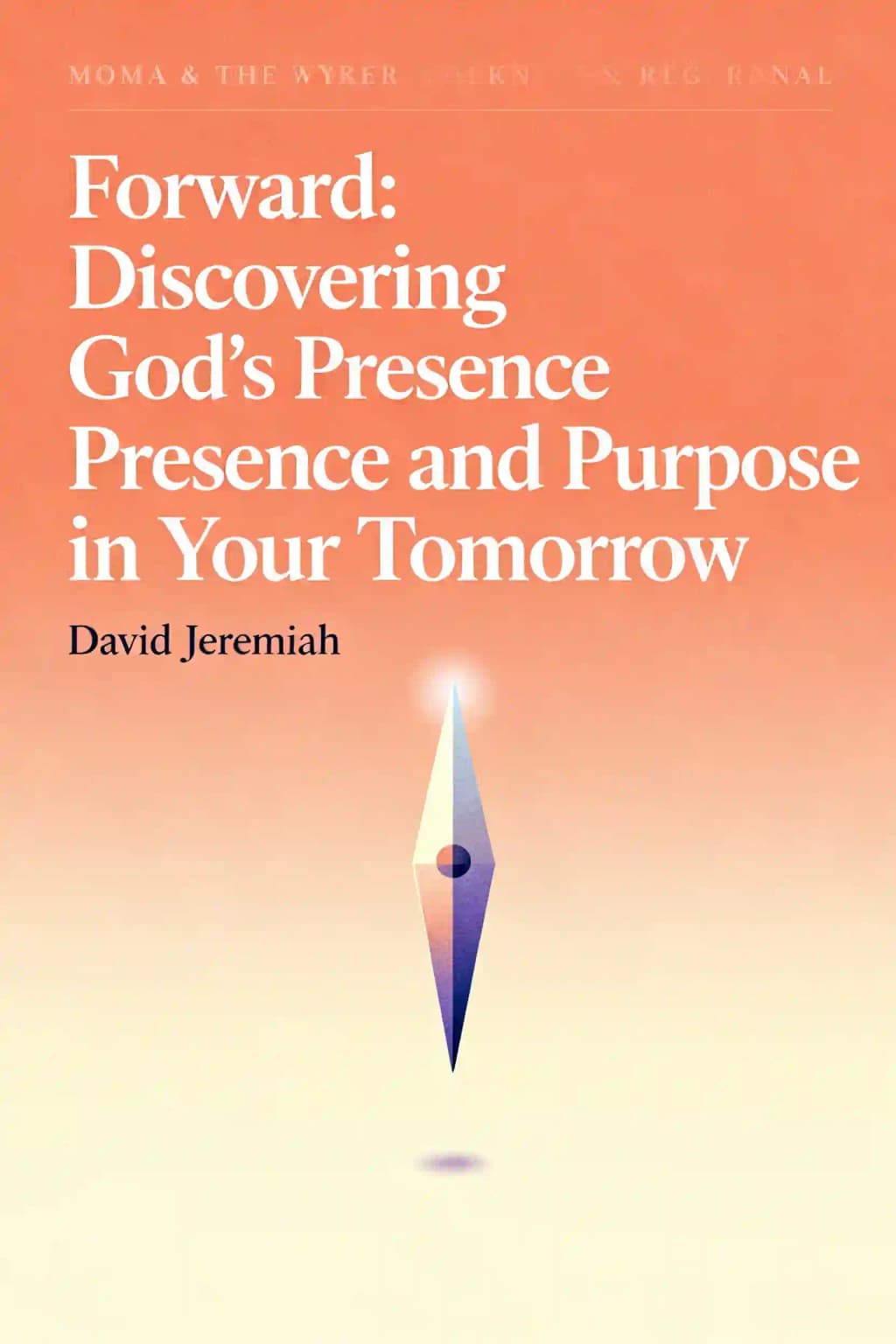
In a world where uncertainty often paralyzes us, Dr. David Jeremiah's "Forward" arrives as a beacon of clarity and hope. This transformative work has resonated deeply with spiritual leaders and celebrities alike, with Max Lucado calling it "a breath of fresh air" and Jon Gordon praising it as "personal, practical, powerful." Since its 2020 release, the book has become a staple for those seeking purpose amid life's challenges, climbing bestseller lists and inspiring readers across denominations. What makes this work particularly compelling is Jeremiah's unique ability to blend biblical wisdom with practical application-a skill honed through his decades as pastor of Shadow Mountain Community Church and his widespread Turning Point radio ministry. The book's central premise is deceptively simple yet profoundly impactful: your tomorrow matters, and what you do today shapes it. Are you ready to move beyond fear and complacency into a life of divine purpose? The journey forward begins now.
Capitolo 2
Dreaming: The Divine Blueprint for Tomorrow
Great accomplishments begin with dreams-not random fantasies, but vivid visions of what God wants you to do next. While we admire visionaries like Walt Disney who transformed entertainment through imagination and persistence, followers of Christ can dream even bigger. These dreams aren't just about personal success but about advancing God's kingdom in ways that outlast this world.
Consider Brett Hagler, who after battling cancer and finding Christ, created New Story-a nonprofit using 3D printing technology to combat global homelessness. His motto became "dream big, but start small." Or Jan Koum, who grew up in poverty in Soviet Ukraine before immigrating to America, teaching himself programming, and envisioning WhatsApp-a secure messaging platform born from his desire to help people communicate without surveillance. Despite financial struggles during the 2009 recession, he persisted until selling WhatsApp to Facebook for $19.3 billion, signing the deal at the same building where he once collected food stamps.
The most powerful dreams aren't random inspirations but are rooted in history and God's plan. King David's vision to build a temple for the Lord on Mount Moriah demonstrates this principle perfectly. His dream connected to Abraham's sacrifice on that same mountain centuries earlier, and later to Christ's sacrifice nearby. Dreams planted by God build upon foundations others have laid.
Effective dreamers can "see" their visions in vivid detail and convey them through compelling images. David pictured his magnificent temple contrasted with the frayed tabernacle tent, asking "Shouldn't God's house be better than any home of yours or mine?" This ability to visualize what could be is essential for bringing dreams to reality. Steve Jobs' wife noted at his funeral that "he saw clearly what was not there, what could be there, what had to be there."
Every meaningful dream faces discouragement, which tests its validity. When God told David he couldn't build the temple himself because of his violent past, he didn't abandon the vision but instead devoted himself to helping his son Solomon succeed. This exemplifies the determination necessary for dream-building. Like Ruth's unwavering commitment to follow Naomi to Bethlehem-despite discouragement-ultimately placed her in the lineage of Christ.
Dreams also demand sacrifice. When David purchased land for the temple, he insisted on paying full price, declaring: "I will not offer burnt offerings to the LORD my God with that which costs me nothing." Consider Dorothea Dix who, after escaping her abusive childhood, encountered mentally ill people imprisoned alongside criminals in horrific conditions. Devoting her life to prison reform, she traveled over sixty thousand miles, visiting hundreds of facilities and testifying before legislatures despite witnessing suffering that sickened her.
Though David couldn't build the temple himself, he refused to let his dream die with him. He received the architectural details from the Holy Spirit and passed them to Solomon with resources and encouragement: "Be strong and of good courage, and do it; do not fear nor be dismayed, for the LORD God-my God-will be with you." This illustrates how we can achieve something after death that couldn't be accomplished during life.
What dreams has God placed in your heart? Trust Him with them, even when the path seems unclear. He often has bigger plans than we can imagine. I've experienced this firsthand-my childhood love of radio seemed lost when God called me to ministry, but decades later, Turning Point reaches over three thousand radio stations worldwide. God didn't take my dream away-He had a much bigger plan!
Capitolo 3
Prayer: The Foundation of Divine Direction
When we're uncertain about our dreams or next steps, prayer is the answer. A prayerful heart becomes fertile ground for divine ideas. Nehemiah demonstrated this when he received news of Jerusalem's broken walls. His grief turned to prayer, and from prayer came a dream to rebuild. He recognized that God "put in my heart" the vision for Jerusalem's restoration.
Consider Leonora Wood, a mission school teacher in impoverished Del Rio, Tennessee, renowned for her faith in prayer. When Raymond Thomas, a foster teen with dreams of college but no money, sought her counsel, she offered a "dreaming prayer" asking God to develop Raymond's fine mind and provide resources for his education. Raymond worked twelve jobs to graduate cum laude, served in World War II, earned a PhD in Physics, and became influential with the US Atomic Energy Commission across Europe.
Serious dreams require serious, ongoing prayer. When Nehemiah sensed God's call to rebuild Jerusalem's walls, he "mourned and fasted and prayed before the God of heaven." He poured himself into earnest prayer, confessing sins, reminding God of His promises, and seeking favor with King Artaxerxes. E.M. Bounds called prayer "spiritual energy" that "lays its hand on Almighty God and moves Him to do what He would not otherwise do."
While extended prayer times are valuable, sometimes circumstances demand instant, urgent prayer. Nehemiah mastered this skill, peppering his narrative with short prayers. When faced with a potentially life-threatening moment before King Artaxerxes, the text reveals: "Then I prayed to the God of heaven, and I answered the king." In that split second, Nehemiah shot an arrow prayer to heaven-perhaps just "Help me, Lord!"-and God answered. These spontaneous prayers work because they build upon a foundation of regular prayer.
Lt. Col. Dan Hooten experienced this during the 9/11 Pentagon attack. Trapped in burning rubble with his leg pinned, he offered a simple prayer: "Show me the way out." God answered, guiding him to safety through smoke and debris.
As God plants inspiration in your mind and you pray over it, you must trust Him to accomplish things His way. Proverbs 16:3 says, "Commit to the LORD whatever you do, and he will establish your plans." This commitment means entrusting your dreams to God-allowing Him to divulge, develop, sometimes delay, and always drench them with His blessings.
For Nehemiah, God worked through King Artaxerxes, who provided letters of safe conduct, building materials, and even military protection. Nehemiah acknowledged, "because the gracious hand of my God was on me, the king granted my requests."
When following God's plan, you'll inevitably face opposition. Nehemiah encountered powerful enemies like Sanballat, a Samaritan warlord who ridiculed the Jews' efforts. But Nehemiah responded with prayer: "Hear us, our God, for we are despised." Throughout his mission, Nehemiah consistently turned to prayer when facing threats: "But we prayed to our God and posted a guard" and "But I prayed, 'Now strengthen my hands.'"
After completing Jerusalem's walls, Nehemiah and the people gathered for celebration. "The sound of rejoicing in Jerusalem could be heard far away." There's nothing like witnessing God fulfill His plan for your life through prayer. George Muller wrote that the joy from answered prayer "cannot be described" and provides tremendous "impetus to the spiritual life."
Catherine Marshall's prayer captures this journey perfectly: "Father in Heaven... I ask You to deposit in my mind and heart the particular dream, the special vision You have for my life... I want to trust You enough to follow even if You lead along new paths."
Capitolo 4
Choosing: The Power of Purposeful Priorities
Have you ever felt stuck or powerless? Like Walter Osipoff, a young marine who dangled upside down beneath an aircraft when his parachute accidentally deployed mid-flight, we sometimes find ourselves in precarious situations.
God never intended us to remain stuck. Even biblical heroes experienced temporary immobilization-Moses, Naomi, Elijah, Peter, and Paul-yet all moved forward into their greatest usefulness.
The first step to getting unstuck is accepting that everything in life isn't equally important. Our cluttered world bombards us with thousands of bits of data daily, making it easy to lose sight of what truly matters. Jesus warned that "the cares of this world and the deceitfulness of riches" can choke God's word in us.
Jesus provided the ultimate priority framework when answering the question about the greatest commandment. From 613 Jewish commandments, He distilled everything to one overarching priority: love-with three applications.
The first priority is loving God with all our heart, soul, mind, and strength. This passionate, practical embracing of God affects everything else we think and do. It's a devoted relationship that should be growing despite life's many distractions.
The second is loving our neighbors. Paul Lee, a cynical police officer whose life transformed after surrendering to Christ, now ministers to fellow officers. During the coronavirus pandemic, congregations demonstrated neighbor-love by distributing food to thousands-proving that loving your neighbor is action, not just feeling.
Jesus also commanded us to "love your neighbor as yourself," indicating we should practice proper self-care while avoiding selfishness. Our bodies are temples of the Holy Spirit, and our personalities are how God touches others.
Once you've clarified God's best for your life, make intentional decisions that elevate what's best while removing what's merely good. Even Jesus had limitations during His earthly ministry, yet these worked for the world's advantage.
Moving forward requires saying "no" to bad things and even some good things to say "yes" to the best things. Warren Buffett suggests listing twenty-five goals, selecting the top five, and avoiding the rest. Greg McKeown's story of choosing work over family illustrates how failing to set priorities lets others set them for you.
When stuck, find traction through loving God, others, and yourself; have courage to say no to lesser things; and maintain consistency in what's best. Like Osipoff's rescue by those who pulled him to safety, we must grab onto God's priorities and move forward in His design for our lives.
Capitolo 5
Focus: Directing Your Energy Toward What Matters
Luciano Pavarotti's father gave him pivotal advice: "If you try to sit on two chairs, you will fall between them. For life, you must choose one chair." Pavarotti chose singing and became one of the world's most famous operatic tenors through single-minded focus. This illustrates the necessity of focus in pursuing God's purpose for our lives.
When we feel distracted, discouraged, or defeated, these emotions signal a loss of focus, requiring time alone with God to regain clarity and purpose. During the pandemic, 112-year-old Bob Weighton wisely advised, "Never mind about the things that you can't [do]," emphasizing the importance of focusing on what we can do-following God's desire for us to grow into Christ's image.
John Bray viewed his Parkinson's diagnosis as something "designed to shape me more like Christ," while basketball player Matt Mooney maintained eternal perspective despite career ups and downs. Their stories remind us that our ultimate focus should be becoming more like Jesus.
The famous "Miracle Mile" race where John Landy lost to Roger Bannister by glancing behind him in the final stretch illustrates the danger of looking backward. This connects to Paul's words about "forgetting those things which are behind" (Philippians 3:13). Despite Paul's extraordinary accomplishments and influence, he maintained he hadn't "arrived" spiritually. He didn't allow himself to become "distracted by all the trophies of the past," but continued striving toward God's calling.
We must also intentionally forget things that haunt us. Clara Barton exemplified this when she said of a past offense, "I distinctly recall forgetting that." Guilt is remembering sins already covered by Christ's blood, bitterness is remembering offenses that should be buried by grace, and discouragement is letting past setbacks become roadblocks. We must override our brain's tendency to relive negative events by giving the past to God.
Harry Kazianis nearly let childhood bullying destroy his future until he learned to make peace with his past and achieve his dreams in foreign policy. His story reminds us that God has a unique blueprint for each person's life, perfectly tailored to their makeup and experiences. Everything in our past prepares us for His next step, though following Him requires faith into unknown territory.
Tony Bombacino's difficult past experiences-growing up poor, being an athlete, losing loved ones-prepared him to be a special-needs father. Psalm 37:23 reminds us that "The steps of a good man are ordered by the LORD, and He delights in his way." If God delights in His plans for us, we should delight in them too.
Paul urges believers to fix their attention on heaven and the eternal reward awaiting them-"the prize of the upward call of God in Christ Jesus." Florence Chadwick's story illustrates this principle perfectly. She failed in her first attempt to swim from Catalina Island to California because fog obscured her view of the shore. Two months later, she succeeded by keeping her mind focused on a vivid mental image of the shore, understanding "the substance of things hoped for; the evidence of things not seen."
To move forward in God's plan, we must find our passion and commit to "one thing." Just as a carrot farm uses every part of the carrot with nothing wasted, we should focus exclusively on what God has called us to do and deliver it through many creative channels. Discover your own "one thing" by focusing on God's purpose, perspective, plan, and prize, following Him step by step and day by day.
Capitolo 6
Risk: Stepping Beyond Comfort Into Growth
Risk is an essential part of faith and moving forward in God's plan. While we often view risk negatively, biblical heroes like Moses, Gideon, David, and Esther all took significant risks in following God's will. Jean Hanson's story of overcoming fear to cross a rope bridge illustrates how we're often stronger than we believe when we take action instead of wallowing in worry.
Caleb from the Bible stands as the ultimate risk-taker and model of courage. Though appearing in only thirty verses of Scripture, he left a powerful legacy of faith. As one of the twelve spies sent to reconnoiter the Promised Land, Caleb's story demonstrates how to embrace risk with confidence in God's promises.
Our brains are wired to give more weight to negative outcomes than positive ones-what researchers call "the power of bad." This explains why football coaches often punt on fourth down rather than risk failure, even when statistics favor going for it. The ten fearful Israelite spies fell into three traps that we must avoid.
First, they maximized the opposition, focusing on the "holes" rather than the "ropes" of God's bridge to their future. They obsessed over the enemies' strength and size while comparing themselves to grasshoppers. In contrast, Jesus "set His face toward Jerusalem" despite knowing the cross awaited Him.
Second, they minimized the opportunities God had prepared. Their unbelief became contagious, causing the entire congregation to weep and complain against Moses. Despite God's consistent provision and miraculous interventions, they forgot His faithfulness and dreaded the future.
Third, their unbelief jeopardized the objective. The ten spies who brought the evil report died immediately by plague, while all Israelites twenty years or older were condemned to die in the wilderness. Only Joshua and Caleb would survive to enter the promised land. How sad that the blessing God wanted to pour out was forfeited by their unwillingness to risk obedience to His command.
Forty-five years after the spies' mission, Caleb approached Joshua to claim his inheritance. Though now eighty-five, he remained as courageous and faithful as before. While others had perished in the wilderness, Caleb's faith had only grown stronger, his enthusiasm like a child's.
At eighty-five, Caleb declared, "I am still as strong today as the day Moses sent me out; I'm just as vigorous to go out to battle now as I was then." His energy transcended age and abilities. Like actress Geena Davis who took up archery at forty-one and nearly made the Olympic team, risk-takers maintain joyful zest for life.
Caleb didn't visit Joshua just to reminisce-he had the future in mind. At eighty-five, he boldly requested the hill country inhabited by the fearsome Anakites, the same giants that had terrified the ten spies decades earlier. "Now give me this hill country," he said. "The LORD helping me, I will drive them out just as he said." Like Paralympic champion Jessica Long, who overcame being born without fibulas to win thirteen gold medals, risk-takers look forward with excitement.
The secret to Caleb's risk-filled life appears six times in Scripture: he "wholly followed the LORD." While his generation gave up hope and died, Caleb's fire still burned brightly at eighty-five. God's will isn't earthly comfort but divine courage-courage in the face of opposition, cultural change, and the unknown. God will never choose safety for us if it costs significance. He created us to count, not to be counted.
Capitolo 7
Purpose: Finding Your Divine Assignment
Finding your true purpose begins with understanding the "why" behind your dreams. Like Paddy Kelly, who found emptiness despite musical fame, or Olympic swimmer Joseph Schooling who felt hollow after achieving gold, millions search for meaning beyond achievement. While vision answers "what" questions about your future, purpose provides the crucial "why" that gives you strength to persevere through challenges.
Life isn't about using God for your purposes but about God using you for His. Boxer Manny Pacquiao found emptiness despite fame and wealth until surrendering to Christ in a forest, after which his life transformed into one of public service, generosity, and caring for the poor. Despite fears of what God might ask, everything worth dreaming of can be found in God's purpose, plus dreams you didn't know you had. God loves you and wants the best for you-you can trust Him!
You are God's masterpiece, uniquely designed for specific good works He planned long ago. Like Rick Allen, the one-armed drummer who refused to give up after losing his limb and instead celebrated his uniqueness, you must recognize there is no one else like you. God created you with your specific combination of gifts, talents, and experiences. Beware of comparing yourself with others or imitating them. As E. E. Cummings said, being yourself in a world trying to make you like everyone else is life's hardest battle.
Your unique gifts come with responsibility to use them for others' blessing. These God-given responsibilities aren't burdens but confirmations of your usefulness. Michael Lee found purpose as a professional yo-yoer sharing the gospel with 1.7 million children, while tattoo artist Chris Baker discovered his calling through INK 180, transforming gang tattoos and helping human trafficking victims escape their pasts through beautiful artwork.
Following God's purpose requires obeying His Word as your instruction manual. Joshua 1:8 emphasizes not just reading but "observing to do" what Scripture teaches. Like David in Psalm 1, those who meditate on God's Word become like fruitful trees planted by water. Author Eddie Jones has a special bench where he gets his "orders" daily, reading Scripture and journaling insights.
Your God-given purpose will always involve serving others. The church prepares Christ-followers to take the gospel to the world, fulfilling both the Great Commission and Great Commandment. Sam Sorenson's story illustrates this-after selling a horse to Jennifer in Montana, he recognized her spiritual emptiness despite her material wealth. Through their conversations, he shared his testimony and ultimately led her to Christ.
The ultimate purpose in life comes through experiencing the eternal life Jesus offers. Unlike mountain climbers who reach Everest's summit only to feel emptiness (as described by Edmund Hillary and Jon Krakauer), those who have Christ possess genuine fulfillment. Eternal life begins not at death but at conversion-"He who has the Son has life."
William Borden exemplifies purposeful living through his famous six words: "No reserve! No retreat! No regrets!" Born into the wealthy Borden Dairy family, this millionaire gave up everything to pursue missionary work. Though he died at just 25 from meningitis before reaching his mission field, his story inspired countless others. His complete consecration to God demonstrates how we should approach our limited time on earth-living every day with total commitment to God's purpose.
Capitolo 8
Belief: The Power of Positive Conviction
Some encounters leave lasting impressions, like meeting Clemson football coach Dabo Swinney. Despite growing up with a mother battling polio, a brother permanently injured in an accident, and parents who separated amid financial troubles, Dabo found Christ at sixteen. This faith transformed his outlook, propelling him from walk-on player to scholarship recipient and eventually national championship winner. When he became Clemson's head coach in 2008, he confronted the team's reputation for underperforming ("Clemsoning") by posting a single word in the training room: BELIEVE!
Positive convictions form the foundation of a forward-moving life. As Travis Bradberry noted, "When leaders have conviction, people's brains can relax... letting them concentrate on what needs to be done." Two key convictions stand out for those seeking to move forward in faith.
The most fundamental conviction centers on God's nature and love. Paul declared in Romans 8:38-39 that nothing-not death, life, angels, demons, present, future, height, depth, or any created thing-can separate us from God's love in Christ. This absolute assurance provides stability in an unstable world. As John Stott observed, Christians aren't immune to suffering, but are promised victory through it.
The second core conviction involves embracing tomorrow with enthusiasm. Paul consistently looked forward, even when facing death. In his final letter to Timothy, written from prison awaiting execution, Paul expressed confidence: "I have fought a good fight, I have finished the race, I have kept the faith." Unlike many who lose excitement about the future, believers can maintain childlike anticipation about what God will do next, as Dick Van Dyke demonstrated when he defied a doctor's arthritis diagnosis by continuing to dance for decades.
Positive convictions naturally flow into positive conversations. When no one else is around to encourage us, we must speak positively to ourselves. Starting the day with "This is the day the LORD has made; we will rejoice and be glad in it" can transform our outlook. Instead of listening to negative thoughts, we must preach to ourselves-as Dr. James Gills explained about completing six double triathlons: "I've learned to talk to myself instead of listening to myself."
Our positive self-talk transforms how we speak to others. Paul demonstrated this during a violent storm at sea when the ship's crew had given up hope. He rallied their spirits, saying, "Keep up your courage, men, for I have faith in God." Our words have tremendous power to hurt or heal. Rabbi Joseph Telushkin challenges people to go twenty-four hours without saying anything unkind-many admit they can't, revealing how they've lost control of their tongues.
Only after developing positive convictions and conversations can we persevere through inevitable challenges with hope. Linda C. DeFew exemplifies this-diagnosed with TMJ and rheumatoid arthritis, she lost her job but refused to dwell on problems. Following King Solomon's wisdom to live cheerfully rather than let a broken spirit "dry up her bones," she returned to college at forty, typing with a pencil eraser, and focused on what she could do rather than her limitations.
While we can't control what happens to us, we can choose to mope, cope, or hope. As psychologist Martin Seligman discovered, optimists view defeat as temporary and confined to specific circumstances, while pessimists see bad events as permanent, pervasive, and personal.
When optimism fills your heart, joy shows on your face. Studies show that genuine "Duchenne smiles" (engaging muscles around both mouth and eyes) help people recover faster from stress, experience more happiness, and demonstrate greater resilience. True optimism comes not from positive thinking alone, but from deep biblical convictions about God's nature and His plan for you.
Capitolo 9
Investment: Creating an Eternal Legacy
The most valuable investments aren't financial but eternal. While we should steward our physical and financial assets wisely, the Bible teaches investing for both time and eternity. Austin Carlile's story illustrates this principle-after achieving musical success with his band "Of Mice and Men," health problems and personal losses led him to discover that true wealth exists in relationship with God. Despite having "nothing" materially, Austin found greater joy, peace and happiness than ever before.
The Bible is an eternal investment opportunity available to everyone. Unlike expensive education that burdens many with debt, studying Scripture is completely free yet produces the greatest wisdom. Peter reminds us that "the word of the LORD endures forever" (1 Peter 1:24-25), and Jesus declared, "Heaven and earth will pass away, but My words will by no means pass away" (Matthew 24:35).
Paul urged Timothy to "be diligent to present yourself approved to God, a worker who does not need to be ashamed, rightly dividing the word of truth" (2 Timothy 2:15). Even fifteen minutes daily with a Bible and pen can transform our lives-reading, marking, and praying through passages consecutively. This practice often expands naturally as we discover the richness of God's Word.
Sharing Scripture with others represents another eternal investment. Jack Murphy ("Murph the Surf"), once America's most notorious jewel thief sentenced to 2,244 years in prison, found Christ through prison ministry and later dedicated himself to sharing the gospel in hundreds of prisons. His testimony, published in "God's Prison Gang," later transformed Mike Larson, another prisoner struggling with drug addiction and crime. This created a chain reaction still being forged daily.
God's work represents an eternal investment opportunity that will never go bankrupt or lay off its servants. We'll continue serving Him even in heaven (Rev. 22:3). The key is to begin right where we are with the gifts and abilities He's provided.
Jesus defined life by service, saying, "The Son of Man did not come to be served, but to serve." With 7.7 billion people on earth, there are countless ways to serve, each representing a need. God has prepared you through every experience-good and bad-for your unique ministry. Bill Brantley, at 87, repairs bicycles for the homeless. Chris Williams, a former children's pastor, founded God's Garage, a nonprofit auto repair shop helping single mothers, widows, and military wives.
While personal ministry matters, we're not isolated entities. Romans reminds us that "in Christ we, though many, form one body." Christ left behind one organism for continuing His work-His church. Trudy Smith discovered this truth when she initially followed Jesus "out of the church and into the streets" to serve the homeless, growing cynical toward institutional religion. Yet eventually, Jesus led her back to church, where she realized it wasn't "an exclusive club" but "a refuge where all sorts of people could gather to remind each other of the story we were all in."
After investing in God's Word and work, we must invest in God's wealth-the eternal riches He has prepared for us in heaven. Jesus taught us not to "lay up for yourselves treasures on earth, where moth and rust destroy and where thieves break in and steal; but lay up for yourselves treasures in heaven." As Randy Alcorn explains, "We can trade temporal possessions we can't keep to gain eternal possessions we can't lose... Whatever treasures we store up in heaven will be waiting for us when we arrive."
As we move forward, we must invest in our footprints, leaving a legacy of faith that leads others to God. William James said, "The great use of a life is to spend it for something that outlasts it," which the Bible calls being "rich toward God." Our days are numbered, but our legacy for Christ will endure forever. Only what's done for Christ will last.
Capitolo 10
Finishing: Persevering to Life's Final Chapter
Frank P. Lucianna, still practicing law at ninety-seven in Hackensack, embodies the biblical principle that God's work continues as long as we live. Yet finishing well proves challenging - studies show 92 percent of New Year's resolutions fail, and Dr. Clinton's research reveals only thirty percent of biblical leaders finished strong.
Solomon exemplifies thorough finishing in his temple construction, completing "all" the work as his father David challenged. Most underestimate finishing's difficulty, often declaring victory prematurely. The lesson? You're not finished until you're finished.
Retirement requires resilience. Zig Ziglar didn't retire but "re-fired," while Harry Bollback, active in his mid-nineties, sees each day as a new opportunity for God's work. Research shows many retirees struggle with this transition, facing loneliness and depression. As Os Guinness noted, "We can retire from our jobs, but never from our calling."
Vigilance remains crucial, especially after success. Like climbers dying while descending the Matterhorn or WWII pilots making errors when returning from successful missions, King David fell into sin precisely when he stayed home instead of leading his army.
The key to finishing well is maintaining forward momentum. Many achieved greatness past retirement: pianist Victor Borge performed until 91, cellist Pablo Casals practiced eight hours daily at 90, and Paul continued ministry into his sixties. Scripture repeatedly shows God using the elderly for astounding purposes - from Abraham and Sarah to Zacharias and Elizabeth - promising continued fruitfulness in old age.
Tom Heyer's story illustrates effective "redeployment" after retirement. Following forty years of teaching, he launched a Bible study and transformed his church's prison ministry into one of America's largest, showing how retirement can open new chapters in God's service.
Capitolo 11
Celebration: The Eternal Reward of Faithfulness
Christians should anticipate heaven as Scripture instructs, "looking forward to a new heaven and a new earth" (2 Pet. 3:13). This anticipation empowers godly living now. As C.S. Lewis noted, those who accomplished most for this world were those who thought most about the next: "Aim at heaven and you will get Earth 'thrown in': aim at Earth and you will get neither."
Believers can expect "a rich welcome into the eternal kingdom" (2 Pet. 1:11). Like Stephen who saw "the heavens opened and the Son of Man standing at the right hand of God" (Acts 7:56), believers will hear Jesus say, "Enter into the joy of your lord" (Matt. 25:21).
Heaven's rewards include various "crowns" for earthly faithfulness - the Victor's Crown for disciplined living, the Crown of Rejoicing for influencing others for Christ, the Crown of Righteousness for longing for Christ's return, the Crown of Life for enduring trials, and the Crown of Glory. Our greatest reward will be seeing those in heaven influenced by our work.
In heaven, we'll receive glorified bodies like Christ's resurrected body - recognizable yet transformed, incapable of aging or death but capable of physical experiences. We'll engage in meaningful work, serving God "day and night" without frustration or fatigue. We'll exercise leadership, set goals, and pursue creative endeavors while sharing in Christ's ongoing work.
The greatest joy will be worshipping around God's throne. Revelation previews saints and angels singing, "Blessing and honor and glory and power be to Him who sits on the throne, and to the Lamb, forever and ever!" We'll reunite with loved ones in Christ, instantly recognizing each other, with all the saints of all ages present.
Above all, we'll see Jesus face to face (Revelation 22:4) - the most phenomenal moment of our existence. Like Matthew Kalil's longing for his wife intensified during their separation, our longing for Jesus grows as we near heaven. The blood of Jesus remains the only cure for sin's poison, leading us forward into eternity.