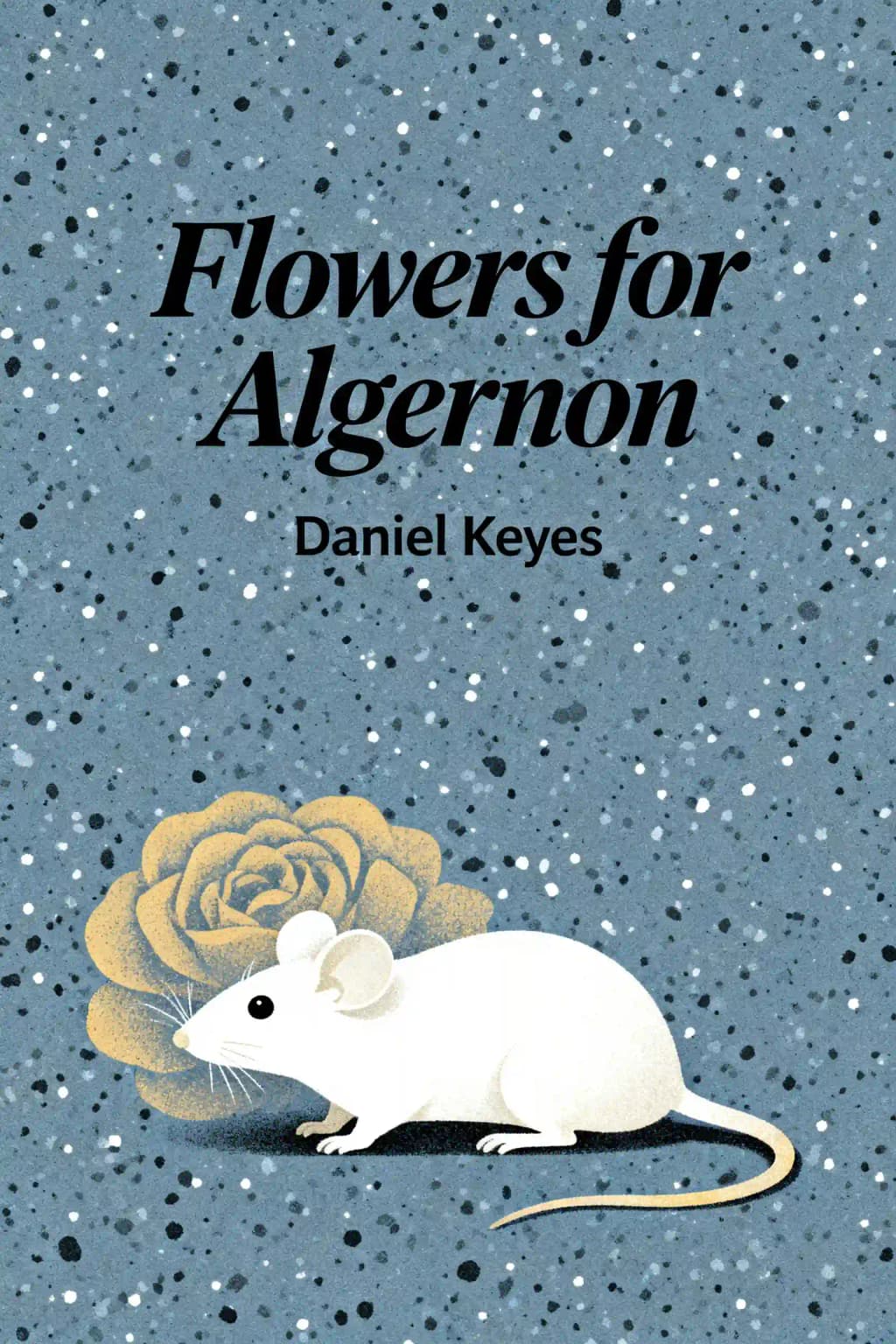
Flowers for Algernon
Panoramica di Flowers for Algernon
Charlie Gordon's journey from 68 to 185 IQ through experimental brain surgery unfolds in uniquely evolving diary entries. This Nebula Award-winning masterpiece, translated worldwide, outpolled nearly all science fiction classics combined. What happens when intelligence becomes both gift and curse?

Temi chiave in Flowers for Algernon
- intellectual disability ethics
- cognitive enhancement consequences
- emotional vs intellectual maturity
- human dignity and dehumanization
- scientific research morality
Citazioni da Flowers for Algernon
smart like other people.
Intelligence without the ability to give and receive affection leads to mental and moral breakdown.
Personaggi di Flowers for Algernon
- Charlie GordonA bakery worker who undergoes brain surgery
- AlgernonA laboratory mouse used in the experiment
- Miss KinnianCharlie's teacher at Beekman College
- Professor NemurThe ambitious lead researcher of the experiment
- Dr. StraussThe empathetic neurosurgeon on the research team
Sull'autore
Sull'autore di Flowers for Algernon
Daniel Keyes (1927–2014) was an American author and professor best known for the science fiction classic Flowers for Algernon, a groundbreaking exploration of intelligence, human dignity, and the emotional complexities of knowledge versus happiness. Born in Brooklyn, New York, Keyes drew inspiration from his experiences as an English teacher working with both intellectually gifted and challenged students, which shaped his empathetic portrayal of protagonist Charlie Gordon.
Originally published as a Hugo Award-winning short story in 1959 and expanded into a novel in 1966, Flowers for Algernon earned Keyes the Nebula Award and has sold over five million copies worldwide, translated into 27 languages.
The novel was adapted into the Academy Award-winning film Charly (1968), starring Cliff Robertson. Keyes also authored notable works including The Minds of Billy Milligan and served as a professor at Wayne State University and Ohio University, where he was honored as professor emeritus. Flowers for Algernon remains a literary landmark taught in English classes globally.
Scarica il riassunto di Flowers for Algernon
Ottieni il riassunto di Flowers for Algernon in formato PDF o EPUB gratuito. Stampalo o leggilo offline quando vuoi.
FAQ su questo libro
Flowers for Algernon is a science fiction novel about Charlie Gordon, a 32-year-old man with an IQ of 68 who undergoes experimental brain surgery to increase his intelligence. Told through Charlie's journal entries, the story follows his transformation from intellectually disabled to genius-level intelligence (IQ 185), then his tragic decline back to his original state. The novel explores profound themes of identity, human dignity, and what it means to be truly intelligent.
Daniel Keyes wrote Flowers for Algernon, originally publishing it as a short story in 1959 before expanding it into a novel in 1966. Keyes, an English teacher who worked with educationally challenged students, drew inspiration from asking himself during a 1945 train ride: "What would happen if it were possible to increase a person's intelligence?". His experiences with intellectually disabled students informed his empathetic portrayal of Charlie Gordon's journey.
Flowers for Algernon is widely considered a modern classic that has sold over five million copies and been translated into 27 languages. The novel won both the Hugo Award (1960) and Nebula Award (1967), and remains frequently taught in schools worldwide. Its innovative storytelling through Charlie's evolving journal entries and its exploration of timeless themes about humanity, intelligence, and empathy make it a compelling read that remains relevant decades after publication.
Flowers for Algernon appeals to readers interested in thought-provoking science fiction, psychological fiction, and ethical dilemmas surrounding human enhancement. The novel is ideal for those who appreciate character-driven narratives, exploring themes of identity and societal treatment of disabilities. Students, educators, and anyone questioning the value we place on intelligence versus empathy will find Daniel Keyes's work deeply moving and intellectually stimulating.
The Algernon-Gordon Effect is a theory Charlie Gordon develops after observing Algernon's deterioration, stating that "artificially induced intelligence deteriorates at a rate of time directly proportional to the quantity of the increase". This discovery represents Charlie's tragic realization that his enhanced intelligence is temporary and that he will regress to his original intellectual state. The concept serves as the novel's central scientific premise explaining why the experimental procedure ultimately fails for both the mouse and Charlie.
Algernon is the laboratory mouse who first underwent the intelligence-enhancing surgery successfully before Charlie. Algernon serves as both Charlie's competitor in maze-solving tests and a predictor of Charlie's fate—when Algernon's intelligence begins deteriorating and he eventually dies, Charlie realizes he faces the same tragic outcome. The mouse symbolizes the experimental nature of Charlie's procedure and the ethical implications of scientific advancement without understanding long-term consequences.
Daniel Keyes uses Charlie Gordon's progress reports to brilliantly demonstrate his intellectual transformation through evolving spelling, grammar, and linguistic complexity. Early entries contain numerous spelling errors and simple sentence structures reflecting Charlie's limited intelligence, while his genius-phase writing shows sophisticated vocabulary and complex analytical thinking. As his intelligence declines, his writing deteriorates again, creating a heartbreaking literary device that allows readers to track Charlie's journey without explicit narration.
Flowers for Algernon presents a scathing critique of using intelligence as a metric for human value, advocating instead for empathy and emotional connection. The novel reveals that Charlie possessed kindness, determination, and genuine friendships before the surgery, qualities that become complicated as his intelligence increases. Daniel Keyes suggests that intellectual capacity doesn't determine worth—Charlie's emotional awareness and capacity for empathy prove more valuable than his IQ score in defining his humanity.
At the end of Flowers for Algernon, Charlie's intelligence fully regresses to his pre-surgery state after he discovers the flaws in the experimental procedure. In his final days of lucidity, Charlie decides to move to a state institution for the intellectually disabled, not wanting to burden those around him. His last request is for someone to place flowers on Algernon's grave, a poignant gesture symbolizing remembrance and the dignity of all beings regardless of intelligence.
Flowers for Algernon exposes society's cruel treatment of intellectually disabled individuals through Charlie's painful realizations about his past. As Charlie's intelligence increases, he discovers that his bakery coworkers—whom he considered friends—had actually mocked and exploited him for entertainment. The novel demonstrates how society dehumanizes those with disabilities while also showing Charlie's pre-surgery kindness and post-surgery isolation, questioning whether intelligence truly elevates human value or connection.
Alice Kinnian is Charlie Gordon's former teacher at the Beekman Center for Retarded Adults who becomes his romantic interest after the surgery. Their relationship becomes strained as Charlie's intelligence surpasses hers and he develops critical views of everyone around him. The romance in Flowers for Algernon explores how intellectual compatibility affects relationships and highlights Charlie's struggle to balance his newfound genius with emotional intimacy and human connection.
While Flowers for Algernon won major awards and critical acclaim, some readers find its emotional manipulation heavy-handed or its premise scientifically implausible by modern standards. The novel's tragic trajectory—intelligence gained then lost—follows a predictable arc once Algernon's decline begins. However, Daniel Keyes's innovative narrative technique and profound exploration of human dignity have ensured the book's status as a literary classic that continues resonating with readers despite any perceived flaws in plotting or scientific accuracy.