Capitolo 1
Rewilding Our World: A Journey Back to Nature's Abundance
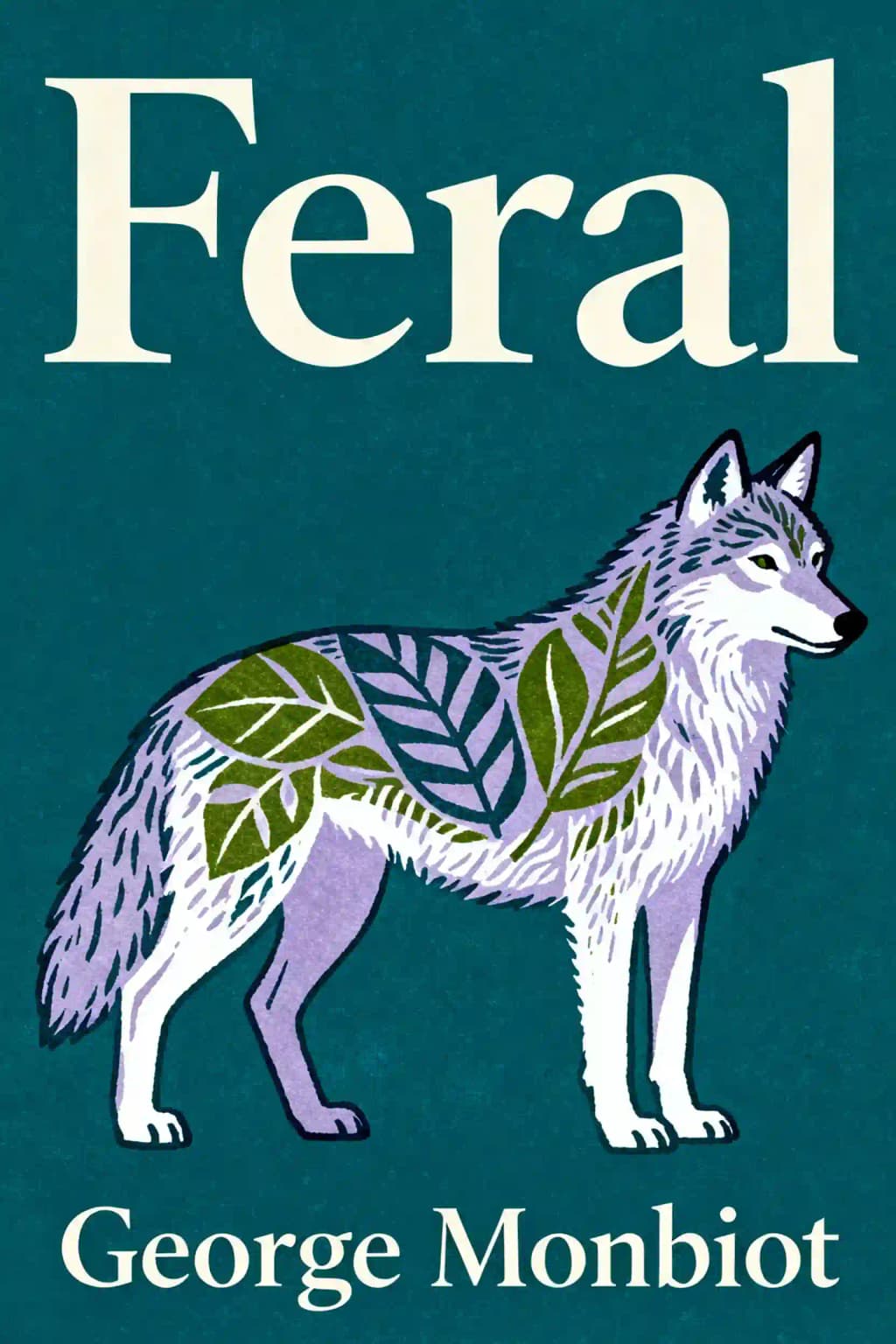
When was the last time you felt truly alive in nature? For George Monbiot, it happened while kayaking alone at sea, surrounded by diving shearwaters, with nothing but water cradling him and freeing his mind from knowing. This powerful reconnection with the natural world forms the heart of "Feral," a book that has transformed how we think about conservation. Since its 2013 publication, "Feral" has become a cornerstone of the rewilding movement, endorsed by figures ranging from musician Brian Eno to primatologist Jane Goodall. The book challenges our perception of what's "natural" in landscapes we've managed for centuries, asking provocative questions: What if the barren hills we consider pristine are actually ecological deserts? What if the greatest threat to British biodiversity isn't development but sheep? And most thrillingly - what if wolves could return to transform not just our ecosystems, but our relationship with the wild?
Capitolo 2
The Ecological Awakening
Monbiot's journey begins with a profound sense of dissatisfaction - a feeling that something essential is missing from modern life. Despite his adventurous past tracking poachers in the Amazon, living with indigenous tribes, and running with Maasai warriors across Kenya, he finds himself trapped in a comfortable but spiritually diminished existence in rural Wales. He calls this condition "ecological boredom" - the nagging sense that our evolutionary traits designed for crisis and challenge are wasted in our sanitized, predictable lives.
This ecological boredom manifests in curious ways throughout society. Our obsession with phantom big cats - thousands report seeing "panthers" in the British countryside despite zero concrete evidence - reveals our yearning for encounters with dangerous predators. The bizarre public admiration for fugitive murderer Raoul Moat, who evaded police in Northumberland woodlands, similarly reflects our fascination with those who break free from civilization's constraints. Even our shopping habits and violent entertainment may represent displaced hunting and conflict instincts.
Monbiot's solution isn't a return to primitive living. He acknowledges that Britain supported only 5,000 hunter-gatherers before agriculture, each requiring 54 square kilometers of territory. Instead, he proposes rewilding - allowing natural processes to resume without human management, particularly in marginal agricultural lands maintained only through subsidies. This doesn't mean human retreat from nature but re-involvement through different relationships. It means reintroducing missing species, including apex predators, and letting ecosystems become self-willed rather than preserved in arrested states.
Most importantly, rewilding offers hope that ecological change can reverse direction - creating what Monbiot calls a "raucous summer" instead of Rachel Carson's "silent spring." It promises to expand rather than constrain human opportunities, offering new freedoms in self-willed lands where we might freely roam among reintroduced species that once shaped our evolutionary history.
Capitolo 3
The Cambrian Desert: A Landscape in Crisis
The stark reality of Britain's ecological impoverishment hits hardest in Monbiot's descriptions of the Cambrian Mountains - what he provocatively calls "the Cambrian Desert." Walking through these Welsh uplands on All Hallows' Eve, he first passes through a remnant ancient woodland where the forest floor has been scrubbed clean by sheep. Beyond this last wooded outpost stretches a landscape that appears almost post-apocalyptic - treeless slopes extending for miles, the land "flayed bare, its fur peeled off to expose every contoured muscle and bone."
This plateau proves more devoid of life than almost anywhere in Britain except intensively farmed East Anglia. The nibbled sward contains just two flowering plant species: purple moorgrass and tormentil, the only plants sheep prefer not to eat. No birds start up - not even crows or pipits. Neither fieldfares nor redwings, larks nor lapwings break the silence. The emptiness feels overwhelming, especially considering these mountains cover 460 square miles of territory where two friends once walked for six days without encountering another human being.
What many celebrate as "unspoiled" wilderness and "utter solitude," Monbiot sees as bleak and broken - like the set of a post-apocalyptic film. Their paucity of wildlife creates the impression of poisoned land. Yet pollen cores reveal these mountains were once densely forested. Eight thousand years ago, trees accounted for about 30% of the pollen record. By 4,500 years ago, as the climate warmed, trees produced over 70% of the pollen, creating deep, dark woods of hazel, oak, alder, willow, pine, birch, elm, lime and ash.
Neolithic farmers gradually cleared this landscape, running sheep and cattle on the hills and burning remaining trees. This clearing, burning and grazing stripped the soil's fertility, encouraging heather to grow on the poor land. The pollen core shows a brief forest recovery during the plague and economic collapse of the fourteenth century, but this regeneration didn't last. By 1900, the proportions had inverted: trees supplied just 10% of pollen, heather 60%.
What we now see as the natural state of the hills - open landscapes, heaths, moors, blanket bogs, rough grassland and bare rock - are actually the result of human activity, mostly grazing sheep. This grazing has depleted the soil, but when grazing pressure eases, trees can return. The western seaboard of Europe was once covered by temperate rainforest - not tropical, but wet enough for trees to carry epiphytes like the moss-covered oaks and polypody ferns Monbiot discovers in a rare remnant gorge near his home.
Capitolo 4
The Woolly Invader and Its Impact
The main agent of these upland transformations is an animal we've come to accept as part of British life: a woolly ruminant from Mesopotamia. No wild animal resembling sheep has ever existed in Britain or western Europe. The mouflon, the "wild" sheep of Corsica and Cyprus, is actually one of the earliest feral invasive species - escaped domestic animals from the Neolithic.
Because sheep were never part of our native ecosystem, Britain's vegetation evolved no defenses against them. In the uplands, they rapidly deplete nutritious plants, leaving behind an impoverished flora - mostly moss, moorgrass and tormentil. The sheep has caused more extensive environmental damage in this country than all building development combined.
Despite claims that upland grazing is essential for food production, the numbers tell a different story. Over three-quarters of Wales is devoted to livestock farming, yet Wales imports seven times more meat than it exports. Ecologically, sheep farming causes floods downstream by removing vegetation that would otherwise absorb rainfall. Sheep compact soil and drainage systems accelerate water runoff, with the River Wye seeing floods triple over seventy years without corresponding increases in rainfall.
Economically, hill farming contributes just over 400 million to the Welsh economy despite vast land use and subsidies, while walking produces over 500 million and wildlife-based activity generates 1,900 million. Converting from farming to multi-purpose woodland would actually produce economic gains across most Welsh uplands.
Most strikingly, hill farming survives entirely on taxpayer subsidies. In Wales, the average subsidy for sheep farms is 53,000 while average net farm income is 33,000 - meaning farmers lose 20,000 from actual farming activities. The subsidy rules actively promote ecological destruction, requiring farmers to prevent "the encroachment of unwanted vegetation" and disqualifying pastures with more than fifty trees per hectare from funding.
Capitolo 5
Rewilding Experiments: Trees Return
Despite this bleak assessment, Monbiot finds hope in small-scale rewilding experiments across Britain. His guide through much of this journey is Ritchie Tassell, a remarkable naturalist with an almost supernatural connection to the natural world. Walking through woods, Ritchie will suddenly whisper "sparrowhawk," having heard not the bird itself but the distinct alarm calls of other birds signaling its presence.
Ritchie's experimental plot in the Cambrian Mountains seems among the most unpromising places for rewilding - grazed and cleared for thousands of years, infertile, naturally acidic and further acidified by pollution, scourged by Atlantic storms and constant wind. Yet starting with a treeless sheep pasture, he discovered what worked. When sheep were excluded, bracken and coarse grasses initially challenged seedlings. To help, Ritchie and friends turned turf with mattocks in some places and cut bracken in summer to prevent it smothering seedlings.
Twenty years later, the transformation is remarkable. Blue tits, coal tits and long-tailed tits follow visitors through the young woods, working through branches and picking insects from bark. The trees are as thick as a man's calf and twenty feet high. "Somehow," Ritchie remarks, "I didn't think I'd live long enough to see this." The habitat now qualifies as woodland, and it's already hard to imagine the sheep pasture it replaced.
Most surprisingly, Ritchie discovered that planting trees was often unnecessary. Where they had turned over turf, exposed soil was colonized by birch seeds blown from surviving trees down the valley. "Almost every tree we planted has been overwhelmed by native birch. It grew so densely it looked like windowsill cress," he explains. "Even when planted trees survived, local birches did much better, being genetically suited to this site."
This experience demonstrates that birch is designed to chase retreating glaciers by seeding into exposed soils before coarse grass establishes. Its slightly alkaline leaf litter prepares acid soils for other trees. At the foot of the twisted trunks grow birch boletus toadstools, while foxgloves and ferns flourish beneath - the beginnings of a complex ecosystem emerging from what was barren pasture.
Capitolo 6
Keystone Species: The Beaver's Return
Beyond passive rewilding through tree regeneration, Monbiot explores the active reintroduction of species that once shaped Britain's ecosystems. The beaver stands out as a prime candidate - a "keystone species" having a larger impact on its environment than its numbers alone would suggest, creating conditions that allow other species to thrive.
On a raw November day, Monbiot witnesses the first concrete step toward reintroducing this extinct mammal in Wales. Two chocolate-colored creatures are released into a fenced pond at Blaeneinion. When one emerges from its shelter, it raises its blunt head, sniffs the air, then waddles forward "like an ankylosaur: hunched and heavy, dragging its belly over marshy ground." Slipping into the pond, it transforms - suddenly slick and graceful, swimming with its flat head and back just an inch above water. Half seal, half hippo, it paddles in a circle until startled by a cameraman's movement, when it flips over, slaps the water with its tail and disappears beneath the surface.
Beavers likely persisted in Britain until the mid-eighteenth century before being hunted to extinction for their fur and for castoreum, a scent gland secretion used in perfumes and medicines. They once lived throughout our river systems, leaving their mark in place names like Beverley in Yorkshire and Beverston in Gloucestershire.
Unlike North American beavers, European beavers build only small dams, but their modifications transform their surroundings. They alter river flow, drag branches into water, excavate burrows, create foraging ditches, and selectively fell riverside trees. These activities create habitats for water voles, otters, ducks, frogs, fish and insects. In Wyoming, beaver ponds harbor seventy-five times more waterbirds than streams without them. In Sweden and Poland, trout in beaver ponds grow larger than elsewhere in the same streams.
Our rivers have suffered from intensive management - straightened, canalized, dredged and cleared - harming both wildlife and increasing flood risk. In the River Wye catchment, authorities spent years removing "timber blockages" from tributaries, destroying prime habitat for salmon while likely worsening downstream flooding. Releasing beavers would achieve the same flood-prevention results as expensive engineering projects, but more economically and sustainably.
Capitolo 7
Trophic Cascades: The Wolf Effect
The most dramatic ecological concept Monbiot explores is the trophic cascade - when top predators change not just prey numbers but species with which they have no direct connection. These impacts cascade down the food chain, sometimes radically transforming ecosystems, landscapes and even soil chemistry.
The reintroduction of wolves to Yellowstone in 1995 demonstrates this dramatically. Wolves not only reduced deer numbers but altered their behavior - deer avoided valleys and gorges where they were vulnerable. Riverbank trees, previously suppressed by browsing, quintupled in height within six years. These trees shaded streams, provided cover for fish, and increased songbird populations. Beaver colonies increased from one to twelve between 1996 and 2009, creating habitats for otters, muskrats, fish and amphibians. The returning trees stabilized streambanks, reduced erosion, and narrowed channels.
By hunting coyotes, wolves allowed smaller mammal populations to rise, providing prey for hawks, weasels, foxes and badgers. Scavengers like eagles and ravens fed on wolf-killed deer remains. Bear numbers increased as they consumed both wolf-abandoned carrion and berries from resurgent shrubs. Throughout the wolves' absence, park managers failed to control deer despite intense hunting and culling. Human hunting differs fundamentally from wolf predation - wolves hunt continuously, pursue rather than shoot from distance, and select different prey individuals.
This example illustrates how a single species, allowed to pursue its natural behavior, can transform almost every aspect of an ecosystem. Similar cascades have been documented worldwide - in Africa, killing lions and leopards led to olive baboon population explosions, causing crop damage and disease transmission. In Florida, culling raccoons to protect sea turtle eggs backfired when ghost crabs, previously controlled by raccoons, flourished instead.
The old ecological belief that systems are controlled only from the bottom up (plants control plant-eater numbers, which control predator numbers) emerged because many studied ecosystems had already lost their top predators. We live in what Monbiot calls a "shadowland, a dim, flattened relic of what once existed and could exist again."
Capitolo 8
Bringing Back the Wolf
The most controversial aspect of rewilding is the potential return of large predators, particularly wolves. Monbiot confronts our cultural fear of wolves directly, noting that despite mythology portraying them as deadly killers, wolves cause virtually no human deaths in North America (0.08 per year) - far fewer than vending machines (2.2), cows (20), dogs (31), or even toothpicks (170).
A comprehensive review found unprovoked attacks by non-rabid wolves are "very rare" and mostly occurred before the 20th century. In the past twenty years, wolves have injured eight people in Europe but killed none, despite a population of nearly 20,000. Over fifty years, only nine people have been killed by wolves across Europe and Russia (where 40,000 wolves live), and none in North America (home to 60,000).
Wolves do pose a more realistic threat to livestock, especially sheep, though they generally prefer wild game. While industry-wide impacts are small (less than 0.1% of sheep in American wolf territories and 0.35% in Italy), individual farmers can suffer significant losses. Several deterrents could minimize these losses, including livestock protection collars containing emetics that could teach wolves to avoid sheep, or collars that monitor sheep heart rates and text farmers when distress is detected.
The Scottish Highlands offer ideal reintroduction habitat - abundant deer, low human population density, few roads, and enough space for about 250 wolves, a viable population. Reintroducing wolves to Scotland could actually benefit estate owners financially. One study suggests that while wolves would reduce stag numbers, they would eliminate the need for expensive hind culling, potentially increasing profits from 550 to 800 per ten square kilometers.
While wolves remain controversial, another large predator - the lynx - could be reintroduced with minimal risk. Once thought extinct in Britain since prehistoric times, recent discoveries have dramatically changed this assessment. Lynx bones from northern Scotland and Yorkshire have been dated to around 1,800 years ago, with another Yorkshire specimen about 1,500 years old.
The lynx is an ambush predator that specializes in hunting roe deer, which comprise about 70% of its diet. As forest dwellers rarely venturing into open areas, lynx pose minimal threat to sheep unless farmers allow livestock into woodlands. There is no record or even anecdote of lynx attacking humans. These elusive cats often remain undetected by people living near them.
Capitolo 9
Rewilding Europe: A Continental Renaissance
While Britain debates these possibilities, rewilding advances rapidly across Europe. Rewilding Europe aims to restore ecological processes across one million hectares by 2020 and inspire others to tackle ten million more. Their projects span the Danube delta's vast reedbeds, the Carpathian forests with their bison and bears, the Velebit Mountains rising from the Adriatic, and the Iberian dehesas where endangered lynx are recovering.
Large predators are returning almost everywhere except Britain and Ireland. Wolves, extinct in France between 1927-1993, now number over 200 in twenty packs. They've formed a dozen packs in Germany since the late 1990s and quintupled to 2,500 in Spain. Bears have more than doubled across Europe to 25,000, though they remain critically low in western countries. European lynx populations have tripled since 1970 to around 10,000, with successful reintroductions in Switzerland, Slovenia, Czech Republic and Germany.
The European bison, once extinct in the wild with only 54 remaining in captivity after World War I, now numbers around 3,000 after reintroductions across eastern Europe and parts of western Europe. Beavers have experienced a remarkable 1,000-fold increase to 700,000 from tiny remnant populations, with 161 reintroduction projects across Europe.
Slovenia offers a particularly striking example of accidental rewilding. In the Kobarid Museum, Monbiot notices something astonishing in century-old photographs from World War I - what isn't there. Where dense forests now grow up mountain walls to the treeline, the land in these photographs was almost treeless. Unlike Wales, which has been progressively deforested over the past century, Slovenia's hills and mountains have transformed from grassland and scrub to deep forest.
This great rewilding, Monbiot learns, was the accidental result of human tragedies: the end of feudalism, economic depression, and most significantly, the forced relocations during and after World War II when ethnic Germans were expelled, leaving the land to be reclaimed by trees. In north-western Slovenia's Soca Valley, Tito's ban on goats in the 1950s further accelerated forest regrowth. What began in tragedy transformed into opportunity - the region became a lucrative destination for high-end tourism, with the integrity of this regenerated land becoming a source of national pride.
Capitolo 10
The Conservation Prison
Ironically, one of the greatest obstacles to rewilding in Britain comes from an unexpected source - conservation organizations themselves. Visiting Glaslyn, described by the Montgomeryshire Wildlife Trust as their "biggest" and "wildest" reserve in the Cambrian Mountains, Monbiot finds a dismal reality. The reserve is a desolate place with heather nowhere higher than knee height, sparse tormentil flowers, and cropped bilberry plants without flowers or fruit. Sheep droppings reveal the cause of this desolation, while erosion gullies scar the ravine sides. Wildlife is nearly absent - just one small heath butterfly, two distant skylarks, an occasional pipit, and Canada geese on the lake.
Most shockingly, Monbiot discovers this ecological impoverishment is deliberate. The management plan actively maintains this "grazed-out shell of an ecosystem," removing "invasive" and "undesirable" native trees like rowan, sallow, birch and hawthorn. The trust even "strip-grazes" grassland areas with cattle "to maximize impact." When confronted, trust representatives claim they're legally bound to maintain these "interest features" in "favorable conservation status," with European rules dictating that trees should cover less than a tenth of bog and a fifth of heath areas.
The circularity is maddening - they preserve these degraded habitats to protect species like red grouse that only thrive in such degraded landscapes, which are then used as "key indicators" of ecosystem health. Even by its own standards, this approach is failing spectacularly. Bird surveys in the Pumlumon special scientific interest site show catastrophic declines in the very species the management regime aims to protect, with numbers falling faster inside conservation areas than across Wales generally.
Conservation has become inverted - protecting species that thrive in human-damaged landscapes rather than imagining what could flourish with less intervention. Wildlife groups build management plans around species like red grouse that happen to survive in degraded habitats, shutting down opportunities for natural recovery or reintroductions. While Monbiot doesn't object to preserving small areas as "culture reserves" or protecting particularly lovely meadows, he calls for a radical reassessment of conservation goals. Rewilding offers the best chance of protecting truly endangered species - around 40% of creatures extinct in Britain since 1800 lived in woodlands, with two-fifths needing mature trees and dead timber.
Capitolo 11
Rewilding the Sea
The sea holds its own potential for rewilding, as evidenced by Monbiot's encounters with spider crabs migrating in massive numbers along the coast. Swimming in the cold waters, he observes these armored creatures with their powerful ridged claws spanning two feet tip-to-tip, gathering in battalions before disappearing back to the depths.
The spider crab migration hints at a former natural abundance that was once universal. Almost every ecosystem resembled the Serengeti - great herds of animals in prodigious migrations. Callum Roberts in "The Unnatural History of the Sea" describes herring shoals that once "could block the light from 20 or even 40 square kilometres of seabed," with the water appearing "so black with them to a great distance, that the number seems inexhaustible." These shoals were pursued by dolphins, sharks, fin and sperm whales in British waters, along with bluefin tuna and numerous other predators.
Europe's waters once held remarkable abundance before human exploitation. Oysters formed reefs across bays that presented shipping hazards. Twenty-pound lobsters were so common they were used as bait or pig feed. Halibut reaching a fathom long were caught only for heads and fins. Everywhere, marine animals were both more numerous and larger - cod commonly reached five or six feet, great white sharks 8-9 meters, haddock a yard long, plaice the size of road atlases.
Marine reserves - areas where no fishing or industry takes place - offer the surest path to protection and restoration. Despite governments promising to protect 10% of world seas by 2012 and the World Parks Congress calling for 20-30% protection, less than 2% has any protection. Britain has protected a mere 0.01% of its territorial waters despite its own Royal Commission recommending 30% protection. When fishing stops, results are remarkable: across 124 studied reserves, total biomass quadrupled, with visible shifts within 2-5 years. These reserves create spillover effects that benefit surrounding fisheries, often increasing catches tenfold, making protection not just environmentally sound but economically profitable.
Despite government failures, nature shows remarkable resilience when given opportunity. The cessation of fishmeal operations and partial herring recovery has attracted marine predators back to British waters. Killer whales, minke whales and even fin whales have appeared off Welsh coasts in numbers unseen for decades. Humpbacks have been spotted in the Irish Sea, and bluefin tuna, though critically endangered, occasionally return to the North Sea.
Capitolo 12
A Work of Hope
In his final kayaking trip of the year, Monbiot paddles out to sea on a calm day. After hours without catching fish, the wind drops and the sea grows still as sunset approaches. Floating near shore, he watches the sun descend behind Yr Eifl mountain across the bay, with the entire coastal crescent visible in the fading light.
As he contemplates leaving Wales, he envisions a rewilded future for these landscapes - trees returning to bare slopes, fish and whales repopulating the bay. He reflects on how his five-year exploration of nature's regenerative capacity has enriched his life and resolves to continue seeking places where he might find that "rare and precious substance, hope." As darkness falls, a young dolphin calf surfaces beside his boat, circling close enough to almost touch his paddle before disappearing into the night - a fitting farewell encounter.
This vision of hope extends beyond individual encounters to broader ecological restoration. At Glen Affric in Scotland, Alan Watson Featherstone shows Monbiot what's considered Britain's least altered large woodland area. Inside a 50-hectare exclosure established in 1990, a mosaic of habitats flourishes compared to the bare, deer-nibbled landscape outside. Young pines grow alongside rowans, birch and juniper, with rare orchids appearing in the understory. Old trees within the fence die naturally, providing habitat for fungi, lichens, beetles, pine hoverflies, woodpeckers and bats.
Alan's vision extends to creating a corridor of native forest twenty-five miles long, part of restoring ecosystems across 1,000 square miles. "One of the things I've learnt is patience," Alan tells Monbiot. "We're talking about trees with a lifespan of 250 years." Despite initial resistance from landowners, attitudes are slowly changing, coinciding with Scotland's political reawakening.
"The environmental movement has necessarily been reactive," Alan concludes. "But we also need to say what we would like. Ecological restoration is a work of hope." This sentiment captures the essence of Monbiot's vision - rewilding not as a nostalgic attempt to recreate the past, but as a forward-looking project that expands possibilities for both human and non-human life. It offers a path beyond the ecological boredom that afflicts modern existence toward a richer, more engaged relationship with the natural world.