Capitolo 1
Justice Betrayed: How Misinformation Undermines Our Legal Rights
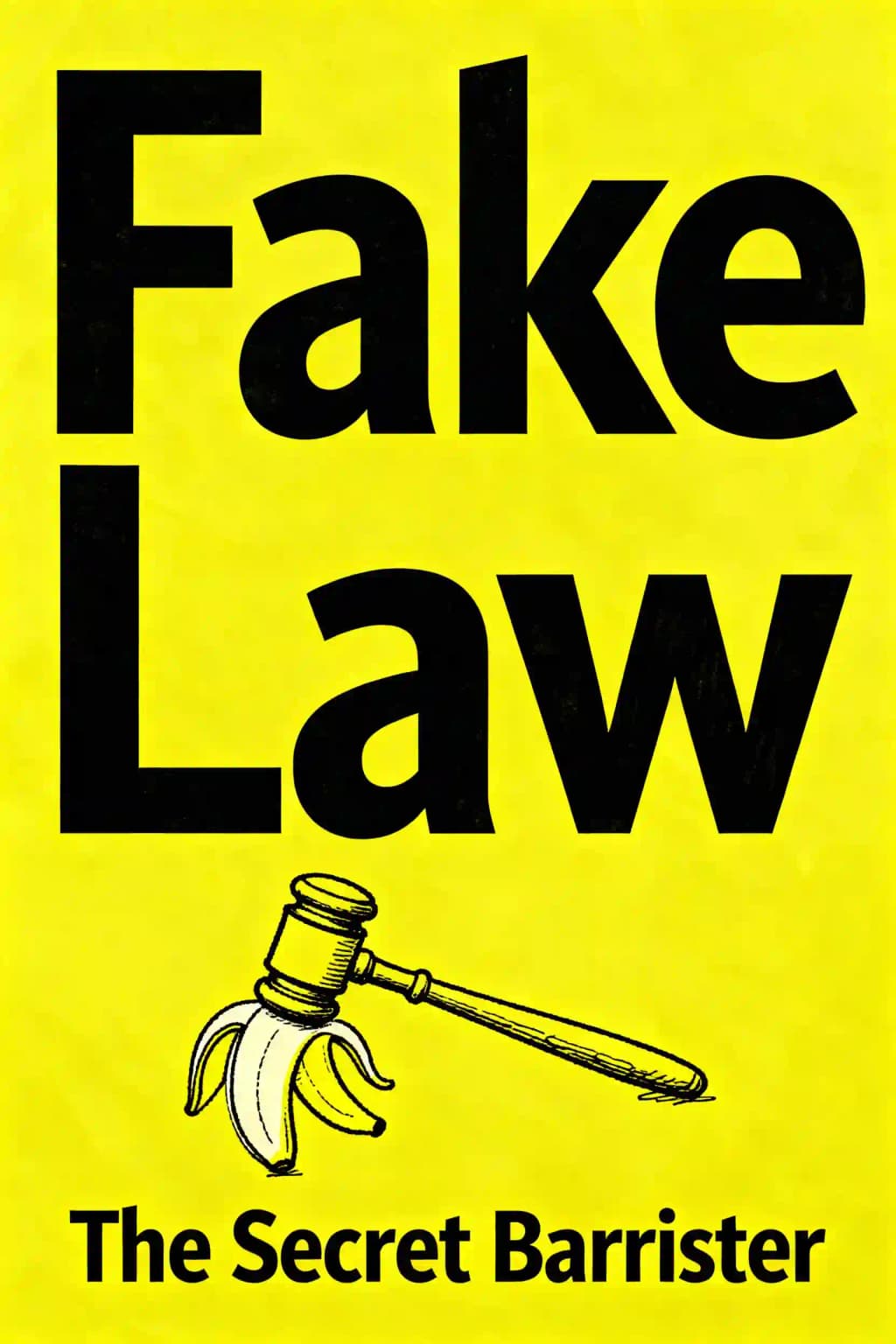
When was the last time you heard a news story about a legal case that made your blood boil? Perhaps it was about a homeowner prosecuted for defending their family against an intruder, a hospital "forcing" a child to die despite available treatment abroad, or a criminal walking free on a "legal technicality." These stories tap into our deepest emotions about justice and fairness-but what if they're fundamentally misleading? In "Fake Law," The Secret Barrister-an anonymous practicing barrister whose work has been praised by legal professionals and cited in Parliament-exposes how our understanding of law is systematically distorted by media, politicians, and our own misconceptions. The book has become required reading in many law schools and sparked parliamentary debates about legal education. Through meticulous research and compelling storytelling, the author reveals how this misinformation doesn't just mislead us-it actively harms our rights, undermines justice, and threatens the very foundations of our democracy.
Capitolo 2
The Myth of the Persecuted Homeowner
Picture this: you wake at night to the sound of breaking glass. Heart pounding, you creep downstairs to find a masked intruder wielding a baseball bat. In the ensuing struggle, you gain control of the weapon and strike the burglar, who collapses unconscious and bleeding. As police arrive and paramedics take away the injured intruder, you're left wondering: will I be prosecuted for defending my family?
This scenario taps into one of our most primal fears-and one of our most persistent legal myths. The belief that innocent homeowners face prosecution for defending themselves against intruders has become deeply embedded in British culture, fueled by sensationalist headlines and political opportunism.
The reality of self-defense law in England and Wales is actually quite permissive. It provides a "complete defense" to charges of violence-even murder-when someone uses force that is reasonable in the circumstances as they believe them to be. The law recognizes that in frightening confrontations, people cannot "weigh to a nicety" the exact amount of force needed. What matters is whether the defendant genuinely believed force was necessary (even if mistaken) and whether that force was reasonable given those beliefs.
So why do we believe otherwise? The answer lies in how cases like Tony Martin's are presented to the public. Martin, a Norfolk farmer who shot dead a teenage burglar in 1999, became a "folk hero" and "champion of victims' rights." What rarely made headlines were the crucial facts that undermined his self-defense claim: forensic evidence proved he shot the fleeing teenager in the back, he had previously stated at Farm Watch meetings that burglars should be "blown their heads off," and he was using an illegal shotgun after his license had been revoked.
Similarly, Munir Hussain's case is frequently misrepresented. Hussain wasn't prosecuted for defending himself during a home invasion but for organizing a group to hunt down a fleeing burglar and beat him with a cricket bat until he suffered permanent brain damage. At trial, Hussain didn't even claim self-defense but denied participating in the attack altogether.
A Crown Prosecution Service review found only eleven prosecutions between 1990-2005 against people who used force against intruders, with just seven involving domestic burglaries. The system generally works as intended: householders who kill intruders in genuine self-defense aren't prosecuted, while those who pursue fleeing trespassers or commit excessive violence face charges.
Despite this reality, politicians have exploited public fears for political gain. Labour's 2008 intervention merely copied existing common law into statute, allowing them to claim they'd "Done Something." The Conservatives then promised to "dispel doubts" where none existed. David Cameron proclaimed we should "worry less about burglars' rights," while Chris Grayling vowed to protect those using force that "in the cold light of day seems disproportionate"-ignoring that the law already did this.
Grayling's 2012 "Batter a Burglar" law purported to allow "disproportionate" (but not "grossly disproportionate") force against intruders. However, when challenged in the High Court, the government's own lawyers argued for a much narrower interpretation than what ministers had promised the public. The court confirmed the test remained whether force was "reasonable in the circumstances," rendering the legislative change effectively meaningless.
This disconnect between rhetoric and reality is dangerous. When politicians declare "burglars give up their rights" upon entering homes, they're not just misstating law but encouraging violence as a first resort. This vigilante mindset ignores that some intruders may be children making first mistakes. Without radical change in our understanding, we're stumbling toward a dystopia where disproportionate fatal violence goes uninvestigated.
Capitolo 3
When Children's Lives Hang in the Balance
"The British government has sentenced a baby to death." This shocking claim, circulated globally in 2017, exemplifies how medical cases involving terminally ill children become distorted in public discourse. The cases of Charlie Gard and Alfie Evans-both infants with terminal conditions-captured international attention and unleashed waves of misinformation about how the state supposedly overrides parental wishes.
Charlie Gard suffered from a rare mitochondrial disease that left him ventilator-dependent, unable to move his limbs, blind, deaf, and experiencing seizures. When Great Ormond Street Hospital sought court permission to withdraw life support, his parents raised 1.2 million for experimental nucleoside therapy in America. The case exploded globally, with Pope Francis expressing support, President Trump offering assistance, and the Vatican hospital proposing to admit Charlie.
Similarly, Alfie Evans suffered from an untreatable neurodegenerative condition leaving his brain beyond recovery. When Alder Hey Children's Hospital sought court permission to withdraw ventilation, Alfie's parents fought to transfer him to Rome's Bambino Gesu hospital. The Pope granted Tom Evans an audience, and the Italian government even granted Alfie citizenship in an attempt to circumvent British jurisdiction.
In both cases, courts ruled against the parents, prompting accusations that the state had overridden parental rights. But what actually happened was far more nuanced.
The legal framework governing these cases centers on the "best interests" principle, which has evolved since the 18th-19th centuries from a time when fathers had absolute authority over children. Today's Children Act 1989 establishes that "the child's welfare shall be the court's paramount consideration" in disputes about upbringing. This principle applies equally in cases involving withdrawal of life-sustaining treatment.
When doctors believe treatment limitation might serve a child's best interests, they apply to the High Court for a declaration. The court appoints an independent guardian to represent the child's interests and carefully weighs both medical and parental perspectives. The focus remains on whether continued treatment serves the child's best interests, not on parental rights.
In Charlie Gard's case, evidence revealed the proposed nucleoside therapy had never been used on patients with Charlie's condition, hadn't even reached experimental stage on mice, and the American doctor offering it had never treated anyone with encephalopathy. After reviewing Charlie's records, even this doctor concluded treatment was "very unlikely" to improve Charlie's condition and agreed the brain damage was irreversible.
Similarly, in Alfie Evans' case, medical evidence confirmed his brain was beyond recovery. When ventilation was withdrawn, Alfie breathed unaided for several days as doctors had predicted, though this was misreported as an unexpected improvement suggesting doctors were wrong.
Behind the public campaigns lurked a network of religious and political operatives with self-serving agendas. These tragic cases were weaponized for political gain, particularly by American right-wing media and politicians attacking "socialized medicine." Donald Trump's tweeted offer of "help" was followed by attacks on "Universal HealthCare" in subsequent tweets. Nigel Farage told Fox News viewers that what was happening was "a form of state-sponsored euthanasia," despite his own previously expressed preference for privatizing healthcare.
As misinformation piled up, a "conspiracy of global misinformation" developed where nobody corrected anyone else because the confusion benefited all parties pushing their agendas. The result was a toxic environment where hospitals were stormed, doctors threatened with death, and judges called Nazis-all while the truth became "just one among many innocent victims."
Capitolo 4
The Compensation Culture Myth
We've all heard the stories: McDonald's customers winning millions for spilling hot coffee, drivers receiving massive payouts for minor whiplash injuries, and frivolous lawsuits clogging our courts with undeserving claimants seeking lottery-sized windfalls. This narrative of a rampant "compensation culture" pervades our culture so thoroughly that we rarely question it.
But what if this entire narrative is fundamentally flawed? What if our legal system providing fair compensation for those injured through others' fault is actually a hallmark of a just society rather than a sign of moral decay?
Personal injury compensation has ancient roots in English law, dating back to Anglo-Saxon times when the concept of "weregeld" (literally "man price") established standard payments for specific injuries. This evolved into modern personal-injury law, underpinned by the concept that when someone breaches a legal duty and causes injury, they must compensate the injured party. This philosophical framework places costs on those at fault rather than abandoning victims or spreading costs across society.
For a successful personal injury claim, three questions must be answered affirmatively: Is there a duty of care? Has there been a breach of that duty? Has a reasonably foreseeable injury resulted? Importantly, genuine accidents where nobody is at fault do not create liability.
Compensation aims to restore claimants to their pre-injury position, not punish defendants with excessive punitive damages as sometimes depicted in American legal dramas. Damages are calculated in two parts: general damages for pain, suffering and loss of quality of life (following Judicial College guidelines that set brackets for different injuries); and special damages covering financial losses like lost earnings, travel costs for medical appointments, and future care needs.
Multi-million-pound awards typically involve catastrophic injuries requiring lifetime care, like thirteen-year-old Ben Harman's case against Kent Canterbury Hospital. His 20 million settlement reflected the intensive care needs for severe autism, cognitive impairment, and behavioral issues resulting from negligence at birth.
When examining sensationalist headlines about compensation "jackpots" and "windfalls," what you actually find are stories of profound human suffering for which monetary compensation offers only partial relief. Media outlets employ two common tactics: implying claimants were responsible for their own misfortune or exaggerating their injuries, while rarely acknowledging fault by the paying organization; and presenting decontextualized figures that make settlements seem excessive without explaining how they were calculated or what injuries were suffered.
The reality is that successful claims require proof of negligence, with contributory negligence reducing awards. Most settlements (96%) don't go to trial, leaving limited public information, which allows media to exploit this informational void. When facts emerge, the truth contradicts the headlines-like the debunked Winnebago self-driving myth or the McDonald's coffee case where the victim suffered third-degree burns requiring skin grafts.
Despite perceptions, personal injury claims have actually decreased-falling to a seven-year low by 2018, with a 20% decrease over twelve months. While clinical negligence claims against the NHS have risen 34% since 2010/11, this coincides with austerity and funding deficits.
The government and press claim Britain has a particular problem with fraudulent whiplash claims increasing insurance costs. However, this narrative lacks solid evidence. Professor Ken Oliphant traced the "whiplash capital" claim to a flawed 2004 European study selectively interpreted by insurers. Despite falling whiplash claims (15% decrease between 2015-2017), the government has used this narrative to justify sweeping reforms affecting genuine injury victims.
While drivers might save 35 annually on insurance premiums (with no guarantee), the real beneficiaries are insurance companies standing to save 1.3 billion. The insurance industry created the "Whiplash Capital of Europe" fallacy and spread it through public consciousness, leading to barriers to justice for injured citizens. We've been manipulated to resent our injured neighbors rather than question whose agenda this serves, forgetting that we ourselves might one day need these legal protections when injured through no fault of our own.
Capitolo 5
The Employment Rights You Didn't Know You Had
Employment is central to our existence, with 85% of the working population (28 million people) spending an average of 37 hours weekly at work-totaling 85,840 hours over a fifty-year career. Despite this, four out of five Britons remain unaware of their basic employment rights. This information void leaves workers ignorant about crucial protections regarding maternity leave, pregnancy discrimination, and other workplace rights.
Media outlets routinely portray employment tribunals as a "compensation gravy train" and "bonanza for parasites" where "jackpot tribunal payouts" reward opportunistic employees with frivolous grievances. The Daily Express described tribunals as "a gigantic racket fuelled by whingeing trade unions, parasitical lawyers and money-grabbing litigants." During the Conservative-Liberal Democrat coalition government, business groups successfully lobbied for reform, claiming the system was "overwhelmingly weighted in favor of the employee."
The government's response was to introduce tribunal fees in 2013, resulting in a 70% drop in claims. This meant that recovering 70 in docked wages for antenatal classes would cost 390 in fees, while discrimination cases required 1,200 upfront-effectively pricing justice beyond the reach of ordinary workers. The Supreme Court eventually declared the fee scheme "unlawful" in 2017, ruling that it "effectively prevents access to justice."
Employment law exists because of the fundamental inequality of bargaining power between employers and employees. Unlike standard contractual relationships where parties have relatively equal footing, employment relationships typically begin with unequal power-you need the job more than the employer needs you. Employment law therefore provides minimum standards and rights beyond the formal contract, including minimum wage, notice periods, holiday pay, working hour limits, equal pay provisions, parental rights, and protections against discrimination and unfair dismissal.
Claims that employment law unfairly burdens employers don't stand up to scrutiny. Unfair dismissal protections have existed since 1971 but only apply to employees with two years' continuous service-giving employers ample time to assess performance. In claims, employees must prove dismissal occurred, while employers need only show a "potentially fair reason" such as capability issues, misconduct, redundancy, legal restrictions, or "some other substantial reason." Tribunals don't ask if they would have dismissed the employee, but whether dismissal fell within a "band of reasonable responses" available to the employer.
Discrimination law doesn't prohibit all differentiation between employees-only discrimination based on protected characteristics like age, disability, gender reassignment, marriage/civil partnership, race, religion, sex, pregnancy, or sexual orientation. These protections serve both to safeguard human dignity and eliminate irrational economic behavior.
Employment tribunal compensation isn't a lottery win but aims to restore employees to their pre-unlawful treatment position. Awards typically include statutory redundancy equivalents plus compensation for losses during unemployment. Unlike personal injury claims, unfair dismissal compensation is artificially capped-a political gift to bad employers. Only discrimination cases allow "injury to feelings" awards, typically between 800-8,400. Despite media headlines about "jackpot payouts," the median awards are modest: 5,400 for race discrimination, 6,300 for sex discrimination, and 8,600 for disability discrimination.
Despite employer claims of widespread malicious complaints, government reviews found "weak and vexatious claims make up only a small minority of tribunal claims" and only 6% of businesses considered employment regulation problematic. Claims of a compensation culture are largely based on employers' subjective perceptions rather than empirical evidence.
From 2011, the government enacted a series of pro-business reforms despite warnings of their potential impact. Though the Supreme Court struck down the fees as unlawful in 2017, with Lord Reed delivering a scathing judgment about access to justice, the government appears determined to reintroduce them. Meanwhile, misleading headlines continue to appear, such as the woman who supposedly "won 9,000 after bosses forgot to invite her to a party" (actually primarily for unfair dismissal while on maternity leave). Notably, over half of tribunal awards - legally binding court orders - are never paid in full by employers, yet this rarely makes headlines.
Capitolo 6
The Human Rights Act: Protecting Us All
"The Human Rights Act guarantees the right to a family life for everyone, including criminals and terrorists." This claim, repeated endlessly in tabloid headlines and by politicians, exemplifies how human rights protections have been systematically misrepresented in British public discourse. The reality is far more nuanced and reveals how these protections benefit ordinary citizens far more than the "villains" who dominate the headlines.
Consider the story of Fiona and Manisha, victims of serial rapist John Worboys. Despite reporting their assaults to police, both women experienced catastrophic investigative failures. Police failed to record Fiona's initial attendance, didn't interview a key witness, neglected to collect CCTV evidence, and dismissed her as "a drunk with a coke habit." When Worboys was finally caught in 2008, his "rape kit" confirmed he had methodically drugged and assaulted over 100 women.
Despite the police's admitted failures, the women initially had no legal recourse since negligence law doesn't apply to police investigations. It was only through the "hated Human Rights Act" that they eventually won compensation in a landmark 2018 Supreme Court judgment.
Despite common confusion, the European Convention on Human Rights (ECHR) and European Court of Human Rights have nothing to do with the European Union. The ECHR was created by the Council of Europe, formed in 1949 to promote human rights and democracy after WWII. Far from being "un-British," the ECHR had distinctly British origins-Winston Churchill called for the Council of Europe as early as 1943, and Churchill's Solicitor General David Maxwell Fyfe was the key drafter.
Conservative MPs and tabloids have claimed the UK "loses" most cases at the European Court of Human Rights (ECtHR), but these statistics deliberately ignore the overwhelming majority of applications struck out at early stages. The actual proportion of cases the UK lost was just 1.3% in 2010, dropping to 0.6% in 2012-13. Claims of institutional anti-British bias are contradicted by the facts: the institution was inspired by a British prime minister, operates on rules influenced by British common law, and resolves 99.4% of cases in Britain's favor.
The Human Rights Act 1998 (HRA) "brought rights home" by enabling UK courts to handle human rights cases domestically rather than forcing citizens to spend 30,000 and wait five years for Strasbourg hearings. Contrary to popular belief, the HRA doesn't allow courts to override Parliament. When legislation conflicts with the ECHR, senior courts can issue a "declaration of incompatibility," but cannot strike down Acts of Parliament, which remain supreme.
The European Convention on Human Rights comprises fifty-one articles and fifteen protocols, with key provisions including: the right to life (Article 2); prohibition of torture (Article 3); prohibition of slavery (Article 4); right to liberty (Article 5); right to fair trial (Article 6); no retroactive criminalization (Article 7); right to private and family life (Article 8); freedom of thought, conscience and religion (Article 9); freedom of expression (Article 10); freedom of association (Article 11); right to marry (Article 12); right to effective remedy (Article 13); and prohibition of discrimination (Article 14).
Media misrepresentations frequently distort human rights cases. The Daily Mail falsely claimed an "Iraqi insurgent caught red-handed with a bomb" won 33,000 for being detained too long, when in reality Abd Al-Waheed was neither an insurgent nor terrorist, was not caught with a bomb (described by the court as "pure fiction"), and received just 3,300 for unlawful detention plus compensation for inhuman treatment after being beaten and abused by British soldiers.
Article 8's right to family life is often misrepresented in media coverage of deportation cases. When Article 8 arguments succeed, courts provide detailed explanations of how they balanced competing interests against the "exceptional circumstances" requirement. Many successful appeals involve the rights of British children who would face impossible choices if their non-British parent were deported.
Human rights legislation has delivered justice in numerous high-profile cases where the state failed citizens. The Hillsborough inquest, which finally delivered justice to families of the 96 victims, was only possible because Article 2 required a full investigation into deaths. Similarly, Article 2 helped families of soldiers killed in inadequate "mobile coffin" Land Rovers in Iraq and Afghanistan secure compensation from the Ministry of Defence.
Despite media portrayal of human rights as a "charter for terrorists," statistics show that between 1975-2015, only 14 successful ECtHR cases involved terrorists, while 203 involved ordinary citizens. As Lady Hale notes, human rights are "premised on the inherent dignity of all human beings whatever their frailty or flaws"-they must apply equally to all, not just those we deem deserving.
Capitolo 7
Access to Justice: The Silent Crisis
Legal aid has been systematically dismantled through a campaign of misinformation. Despite government claims of an overly generous system, the reality is starkly different. Ken Clarke's 2011 assurance that Britain would maintain "by far the most expensive legal system of legal aid in the world" with protection for those at risk of losing their homes or facing domestic violence has proven false.
Consider these heartbreaking examples: Rachel, a domestic violence survivor with ample evidence of abuse, denied help when her abuser sought contact with their children; Florence, an undocumented child abandoned in the UK facing deportation; Rita, wrongfully evicted with her daughter and deemed "intentionally homeless"; and Jenna, a severely burned acid attack victim unable to challenge the DWP's decision to strip her disability benefits.
Legal aid matters because without it, citizens are voiceless when facing life-altering circumstances like divorce, injury, job loss, homelessness, or criminal accusations. True access to justice requires not just physical entry to courtrooms but professional legal advice and representation-much as medical access requires trained professionals, not just hospital buildings. While those who can afford legal services might reasonably pay, justice available only to those who can pay "is not justice at all."
Legal aid emerged from the 1944 Rushcliffe Committee, leading to the Legal Aid and Advice Act 1949, which aimed to ensure no one would be financially unable to pursue just claims or defend legal rights. When first introduced, 80% of the population qualified for legal aid, maintaining around 79% eligibility through 1979. However, as costs increased, successive governments tightened means-testing, froze rates, and reduced coverage, dropping eligibility to 51% by 1999 and just 29% by 2010, when the budget peaked at 2.2 billion.
The public perception of legal aid has been deliberately warped by a coordinated campaign across political parties and media outlets. Headlines focus on "undeserving" recipients-terrorists, pedophiles, murderers-creating a false impression that legal aid primarily benefits society's villains. This reporting misleadingly suggests recipients "pocket" or are "handed" money, when in reality funds go directly to solicitors and barristers at below-market rates.
From around 2010, the Ministry of Justice adopted a new catchphrase: "The most expensive legal-aid system in the world." This mantra appeared relentlessly in news reports and Commons debates, with ministers solemnly reminding the public that England and Wales had the "most expensive" or "most generous" legal aid system, costing 2.2 billion annually.
This claim was fundamentally dishonest. While 2.2 billion sounds substantial out of context, it amounts to just nine pence per day per person across a population of 65 million. The entire Ministry of Justice spent 9.3 billion that year, compared to 116 billion on health and 156.15 billion on the Department of Work and Pensions.
The claim itself was based on a deeply flawed 2009 report comparing just eight justice systems using data from 2001-2007. The report's authors themselves warned that the data was "insufficiently robust to support much in the way of inferences." A proper comparison of overall justice system costs by the Council of Europe showed England and Wales spent precisely the European average (0.33% of GDP) on courts, legal aid and prosecution combined.
The Legal Aid, Sentencing and Punishment of Offenders Act 2012 (LASPO) devastated access to justice in England and Wales. The cuts meant children like Florence had to self-represent in complex legal proceedings against Home Office lawyers, while adults with legitimate cases-including Windrush victims-faced insurmountable barriers without legal aid, on top of the 2,389 application fee for indefinite leave to remain.
Multiple legal challenges to LASPO succeeded, with courts repeatedly finding the Ministry of Justice acted unlawfully. Rather than accepting these rulings, Chris Grayling attacked "Left-wing campaigners" and introduced restrictions on judicial review, cutting off 50% of claims between 2013-2017.
The government achieved its goal: removing legal aid to prevent millions from challenging the state, then preventing challenges to that removal. This constitutional vandalism affected everyone, not just those directly harmed. The damage extends beyond individual injustices to the entire legal system: cases never pursued, judgments never written, precedents never set, and unjust policies never challenged.
Capitolo 8
The Golden Thread: Presumption of Innocence
Criminal justice uniquely engages public opinion because crimes represent societal wrongdoings prosecuted by the state, making all citizens stakeholders. While sympathy naturally flows to victims, the accused's perspective often gets overlooked, risking crucial procedural protections.
In England and Wales' adversarial system, only 1% of 1.37 million annual criminal prosecutions involve jury trials, with most cases handled in magistrates' courts. The cornerstone principle "presumed innocent until proven guilty," established by William Garrow in 1791, requires prosecution to prove guilt to the standard of "sure" (formerly "beyond reasonable doubt").
This high standard reflects conviction's severe consequences. Unlike civil cases requiring 51% certainty, criminal cases demand near-certainty given the stakes of liberty and reputation. While this creates painful outcomes-victims feeling scrutinized, some guilty parties walking free-it protects against wrongful convictions, which have no remedy.
A "not guilty" verdict simply indicates insufficient proof of guilt, not proven innocence. Without jury explanations, verdicts leave an interpretive void that fuels misconceptions about the system's fairness.
Politicians frequently exploit these misconceptions, portraying criminal justice as a simple "criminal versus victim" dynamic rather than acknowledging its complexity. This has led to three major erosions of defendants' rights: weakened evidence rules, limited legal representation, and restricted jury trials.
The 1994 abolition of the right to silence, allowing juries to interpret silence as guilt, marked a significant shift. More recently, cuts to criminal legal aid have undermined access to representation, while those paying privately face enormous costs with limited reimbursement even if acquitted.
Defense lawyers increasingly face hostility, sometimes violently, as seen in the Jack Shepherd case where a solicitor received death threats. The jury system faces particular scrutiny in sexual offense cases, where low conviction rates have prompted calls to abolish juries in these trials.
This creates a concerning trend toward a two-tier justice system-standard trials for most cases and more conviction-focused tribunals for particularly reviled crimes. Rather than weakening fundamental protections, solutions should focus on improving investigations, support services, and education, though these require greater investment than expedient "rebalancing" measures.
Capitolo 9
Democracy Under Threat: The Rule of Law
In October 2008, as the global financial system teetered following Lehman Brothers' bankruptcy, the Royal Bank of Scotland ran out of money. Without the UK government's unprecedented 500 billion rescue plan, the bank couldn't have opened its doors the following Monday, potentially causing what Chancellor Alistair Darling feared could lead to a "breakdown of law and order."
As part of the bailout, RBS CEO Sir Fred Goodwin stepped down with a contractually guaranteed pension of 703,000 annually. When this became public in February 2009, public outrage erupted. The government, finding no legal avenues to recover the money, faced mounting pressure. Harriet Harman, Leader of the House of Commons, declared on BBC that "It might be enforceable in a court of law, this contract, but it is not enforceable in the court of public opinion and that is where the government steps in."
While few sympathized with Goodwin, Harman's comments represented a constitutional crisis-a minister explicitly calling for government to override a legally binding contract for an unpopular individual. This violated the principle that everyone from Crown to citizens must be subject to democratically created laws.
The rule of law, while subject to centuries of academic debate, is well defined by former Lord Chief Justice Tom Bingham as the principle that "all persons and authorities within the state, whether public or private should be bound by and entitled to the benefit of laws publicly made, taking effect (generally) in the future and publicly administered in the courts." Equal treatment is its cornerstone-the law must apply equally to everyone with the same rights, obligations and fair process.
Our constitutional system depends on the separation of three branches: Parliament makes laws, ministers govern according to those laws, and independent courts apply and interpret legislation. This separation is vital for democracy to function. The Act of Settlement in 1701 established judicial independence by protecting judges from dismissal except by Parliament.
Ministers frequently violate their statutory duty to uphold judicial independence. Theresa May, as Home Secretary, declared in the Daily Mail she would "fight any judge" who prevented her from deporting foreign criminals, accusing judges of "subverting democracy" and "ignoring the will of Parliament." Boris Johnson's government provoked constitutional crisis in 2019 when the Supreme Court unanimously ruled his five-week prorogation of Parliament unlawful.
MPs regularly undermine judicial independence through inflammatory rhetoric and interference with court proceedings. After the Miller and prorogation cases, some MPs called for "gruelling hearings" to examine judges' personal lives and even demanded the Supreme Court be abolished. Philip Davies MP exemplifies this problem, having called for the electric chair, criticized sentences without ever having attended court, and labeled a judge "lily-livered" in Parliament, asking "how can we make sure that idiots like this are no longer in the judiciary?"
While a free press must hold the justice system accountable, there's a responsibility to ensure criticism is fair and accurately represents facts. The Daily Mail's "Enemies of the People" headline following the Miller case exemplifies this problem, placing judges' photos under a term historically used by authoritarian regimes against political opponents.
Social media has amplified threats to judicial independence through mob pressure. Leave.EU, which once claimed "unelected judges" had "declared war on British democracy," shifted post-referendum to focus on "the Muslim issue," tweeting about "Londonistan" and Sharia courts. The group exploited cases like Marine A's appeal, tweeting "It seems our judges prefer paedophiles to patriots!" and supported Tommy Robinson when he was imprisoned for contempt of court.
While judges are robust enough to handle criticism, the cumulative effects are showing. After the "Enemies of the People" headline, the Lord Chief Justice sought police protection for the first time in his career. Judges have been confronted in court, called "enemies of the people," and required security equipment and panic alarms in their homes. Over half of surveyed judges reported fearing for their personal safety, with threats of hostage-taking, assault and death becoming common.
If judicial independence is lost, the rule of law collapses, as seen in Poland, Turkey, and Hungary where authoritarian regimes have systematically removed unfavored judges.
Capitolo 10
Reclaiming Our Legal Birthright
The remedy to legal misinformation lies in public legal education. In 2018, then-Solicitor General Robert Buckland MP published a ten-year vision statement for public legal education (PLE), bringing together organizations including Young Citizens, the Law Society, the Bar Council, Citizens Advice, and many others to improve public understanding of legal issues and access to legal information from school through adulthood. However, Citizenship Education in schools has degraded to a "parlous state" according to a House of Lords report, with specialist teachers declining from 240 in 2010 to just 54 in 2016, and funding for the Citizenship Foundation falling to "virtually 0 percent."
The legal system must improve transparency through simple fixes: ensuring all legislation is freely available online, properly funding BAILII to publish all significant judgments with explanations, publishing judges' sentencing remarks, and improving access to court transcripts. Currently, transcripts cost 100-120 per audio hour, making a week-long trial transcript approximately 3,000, when new technology could cut costs by 90%. The UK lags behind the US, Canada and Australia in using technology for public access to law.
We need a politically independent guardian of the rule of law and judicial independence-someone to rapidly refute Fake Law stories, explain court decisions when they face criticism, and defend the justice system against political attacks. The Lord Chancellor should be recast as this non-partisan defender, separated from the role of Justice Secretary. Rather than a political stepping stone, the position should be filled by someone like a retired judge or legal academic who views it as a career pinnacle and will fight fearlessly for the rule of law.
Our polarized society risks forgetting that shared legal principles underpin both our democracy and our humanity. We increasingly "other" those we disapprove of, demanding removal of rights we assume will never apply to ourselves. Despite a decade of devastating cuts to legal aid, prison funding, and access to justice-leaving domestic violence victims unprotected, workers unable to claim unpaid wages, and children representing themselves in deportation proceedings-a 2018 YouGov survey found Britons felt unrepresented on justice not because the system was inaccessible, but because it wasn't "harsh enough."
We've been convinced to "surrender our rights," punching ourselves in the face while asking for more. We need to rediscover our role as defenders of justice, not just for ourselves, but for all.