Capitolo 1
When Einstein's Nightmare Became Our Reality
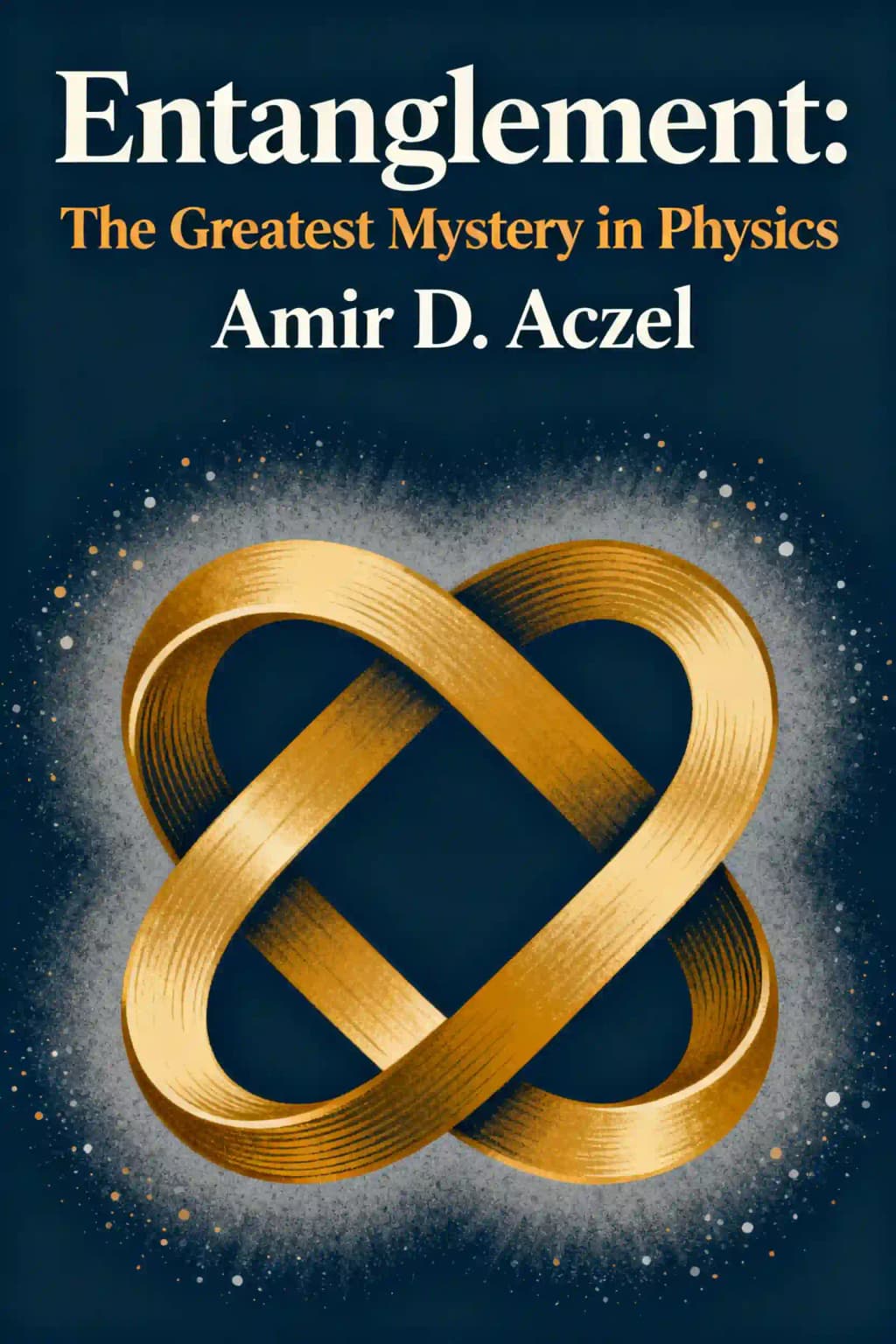
Imagine holding two coins in your closed fists, separating your hands by miles, then opening one palm to reveal heads-and somehow knowing instantly, without looking, that the coin in your other hand must be tails. This "spooky action at a distance" so disturbed Einstein that he spent his final decades trying to disprove it. Yet quantum entanglement-this seemingly magical connection between particles-has now been conclusively proven through increasingly sophisticated experiments. The phenomenon has captured public imagination through references in Marvel's "Ant-Man and the Wasp" and inspired technologies that could revolutionize computing and cryptography. Amir Aczel's exploration of this fundamental mystery takes us on a journey through the minds of history's greatest physicists as they grappled with a phenomenon that challenges our very understanding of reality. As Stephen Hawking once noted, "Entanglement may be the most profound discovery in all of physics."
Capitolo 2
The Quest to Understand Light and Matter
Humanity's fascination with light stretches back to our earliest civilizations. The ancient Egyptians worshipped Ra, the sun god, while the Greeks believed Apollo drove his chariot of light across the sky each day. The Phoenicians made a revolutionary breakthrough by crafting the first glass lenses 3,000 years ago, developing techniques that would influence optics for millennia. The Romans not only learned glassmaking from them but also documented detailed observations about light's behavior, including how prisms break white light into colors and how mirrors could focus sunlight to start fires.
Early attempts to understand light's properties were remarkably innovative despite limited tools. Galileo's ambitious 1607 experiment using lanterns on distant hilltops to measure light's speed failed, but it demonstrated scientific thinking far ahead of its time. The breakthrough came in 1676 when Danish astronomer Olaf Romer ingeniously used astronomical observations of Jupiter's moons to calculate light's speed. By timing the eclipses of Jupiter's moon Io, he determined light traveled at approximately 140,000 miles per second - an impressive calculation given the era's technological limitations, coming remarkably close to the modern value of 186,282 miles per second.
The fundamental nature of light sparked one of science's greatest debates. Christian Huygens and Robert Hooke championed the wave theory, proposing light propagated through an invisible medium called "ether," much like sound waves through air. They explained reflection and refraction using wave principles. Isaac Newton forcefully opposed this view, arguing instead that light consisted of tiny particles he called "corpuscles," which traveled in straight lines and could explain shadows. Newton's tremendous scientific authority meant his particle theory dominated for nearly a century, despite its inability to explain certain phenomena.
Thomas Young's landmark double-slit experiment in 1801 seemed to definitively prove light's wave nature. By shining sunlight through two closely spaced slits onto a screen, Young observed interference patterns - alternating bright and dark bands that could only be explained if light waves were combining or canceling each other out. This elegant experiment appeared to resolve the wave-particle debate and became a cornerstone of classical optics. Richard Feynman would later declare it contained "the heart of quantum mechanics."
The quantum revolution of the early 20th century revealed an even deeper mystery. When the double-slit experiment was conducted with individual particles - first electrons, then neutrons, atoms, and even large molecules like buckyballs (C60) - it produced identical interference patterns. Each particle somehow seemed to pass through both slits simultaneously, interfering with itself in a way that defied classical physics. This demonstrated the quantum principle of superposition, where particles exist in multiple states simultaneously until measured. This bizarre behavior laid the groundwork for understanding quantum entanglement and became central to modern quantum theory, showing that the classical divide between waves and particles was fundamentally incorrect. The quest to understand light had led science to one of its most profound insights about the nature of reality itself.
Capitolo 3
The Birth of Quantum Theory
On December 14, 1900, in a presentation to the German Physical Society, Max Planck reluctantly introduced an idea that would forever change physics. The problem he addressed, known as the "ultraviolet catastrophe," represented a profound crisis in classical physics. According to the prevailing theories, a heated object should emit radiation with infinite energy at high frequencies - a clearly impossible prediction that contradicted experimental observations of blackbody radiation.
Planck's revolutionary solution proposed that energy comes in discrete packages called quanta, rather than flowing continuously. This seemingly simple modification had profound implications. His formula, E=h (where h is Planck's constant and is frequency), perfectly matched experimental data by introducing fundamental granularity to energy exchanges. When an oscillator required energy smaller than the available quantum package, radiation intensity decreased instead of rising catastrophically. The value of Planck's constant-6.6262x10^-34 joule-seconds-is remarkably tiny, which explains why quantum effects remain invisible in our macroscopic world of daily experience.
Though his discovery revolutionized physics, Planck himself struggled with its philosophical implications throughout his career. As a traditionalist who had been trained in classical thermodynamics, he never fully embraced the quantum revolution he had inadvertently initiated. He continued to believe in strict determinism and causality, viewing his quantum hypothesis as a mathematical necessity rather than a fundamental feature of nature. When pressed about his motivation, he famously described it as "an act of desperation," implemented solely to resolve the mathematical inconsistencies in classical theory.
Albert Einstein's 1905 paper on the photoelectric effect marked the next major advancement in quantum theory. This phenomenon, where light striking metal surfaces causes electron emission, exhibited several puzzling characteristics: electrons were only emitted above specific threshold frequencies regardless of light intensity; their kinetic energy increased linearly with frequency; and different metals showed different threshold frequencies. Classical wave theory of light failed to explain any of these observations.
Einstein boldly proposed that light itself was quantized into discrete particles (later called photons), each carrying energy E=h. His photoelectric effect equation, K=h-W (where K is electron kinetic energy and W is the work function representing the minimum energy needed to free an electron), provided a complete explanation of the experimental results. This work earned him the 1921 Nobel Prize - notably not for his better-known theory of relativity but for advancing quantum theory, which he would later question on philosophical grounds.
By the 1920s, quantum theory had attracted a new generation of brilliant physicists who would transform these early insights into a comprehensive framework. Niels Bohr developed his model of the atom with quantized energy levels. Werner Heisenberg introduced the uncertainty principle and matrix mechanics. Erwin Schrodinger developed wave mechanics and his famous equation. Wolfgang Pauli contributed the exclusion principle. Together, their work explained atomic structure, chemical bonding, spectral lines, and laid the groundwork for understanding quantum phenomena like superposition and entanglement that would later prove crucial for quantum computing and cryptography.
Capitolo 4
Waves of Probability and Particles of Light
In 1923, French aristocrat Louis de Broglie made a revolutionary proposal in his doctoral dissertation: if light waves could behave as particles (photons), perhaps particles like electrons could behave as waves. His elegant equation connected a particle's momentum (p) to its associated wave's wavelength () through Planck's constant: p=h/. This wave-particle duality would become fundamental to quantum mechanics.
Two years later, during Christmas 1925 in Arosa, Switzerland, Erwin Schrodinger developed his famous wave equation while on holiday with a girlfriend (despite being married). His equation, H=E, describes quantum particles as probability waves rather than definite objects. The wave function represents not the particle itself but the probability of finding it at various locations.
Schrodinger's equation introduced two crucial concepts: probability and superposition. Unlike classical physics with its precise predictions, quantum mechanics only offers probabilities-the likelihood of finding a particle at a given location equals the square of the wave function's amplitude (Probability=||2). Additionally, the superposition principle allows quantum states to exist as combinations of other states, explaining phenomena like interference and ultimately leading to entanglement.
Meanwhile, Werner Heisenberg developed an alternative but mathematically equivalent approach called matrix mechanics. His most significant contribution was the uncertainty principle, which states that the product of uncertainties in a particle's position and momentum must be greater than or equal to Planck's constant (xp>=/2). Using his famous microscope thought experiment, he demonstrated that attempting to locate a particle with gamma rays inevitably disturbs its momentum-making precise simultaneous measurement of both properties impossible.
This inherent uncertainty isn't a limitation of our measuring instruments but a fundamental property of nature. The more precisely we know a particle's position, the less precisely we can know its momentum, and vice versa. This principle introduced probability fundamentally into quantum mechanics, challenging the deterministic worldview of classical physics.
These developments culminated in the "Copenhagen Interpretation" of quantum theory, developed at Niels Bohr's institute. According to this interpretation, quantum systems exist in superpositions of states until measured, at which point they "collapse" into definite states. This interpretation, with its emphasis on probability and measurement, would eventually lead to the concept of entanglement-and to Einstein's famous objections.
Capitolo 5
Einstein's Challenge to Quantum Reality
Despite helping birth quantum theory, Einstein grew increasingly uncomfortable with its probabilistic nature. He famously declared, "God does not play dice," believing chance had no place in fundamental physics. Throughout his life, Einstein insisted that a good theory of nature should be deterministic, include all elements of reality, and be local-principles eventually shown incompatible with quantum mechanics.
The Solvay Conferences became battlegrounds for quantum theory debates, with Einstein persistently challenging quantum mechanics through ingenious thought experiments. At breakfast during these conferences, Einstein would present objections that Pauli and Heisenberg dismissed, while Bohr carefully analyzed each challenge, working all day to find answers he would present at dinner.
During the 1930 Solvay Conference, Einstein proposed a counterexample to the uncertainty principle involving a box with a clock-controlled door that would release a photon. By weighing the box before and after, Einstein claimed one could determine both the photon's energy and time of passage with arbitrary precision. Bohr was initially devastated, fearing "the end of physics," but found Einstein's flaw the next morning-Einstein had neglected that weighing the box displaces it in the gravitational field, affecting the clock's rate and creating exactly the uncertainty relationship quantum theory predicted.
Einstein's most formidable challenge came in 1935 when he collaborated with Nathan Rosen and Boris Podolsky to publish what became known as the EPR paper. They argued that quantum mechanics must be incomplete because it couldn't explain how measuring one particle could instantaneously affect another distant particle after all physical interaction had ceased.
The EPR paper argued that any attribute of a physical system predictable without disturbing the system must be an "element of physical reality." Using entangled particles, they demonstrated that measuring one particle allows prediction of its distant partner's properties without disturbing it. Since quantum mechanics prohibits simultaneous precise knowledge of certain paired properties (like position and momentum), yet both could be determined through measurements on the partner particle, they concluded quantum theory must be incomplete.
Niels Bohr was devastated by the paper, abandoning all other work to formulate a response. After three months, he published a rebuttal arguing that EPR misunderstood the complementary nature of quantum measurements. While most physicists accepted Bohr's response or considered the debate merely philosophical, Einstein remained unconvinced until his death in 1955, rejecting the "spooky action at a distance" implied by quantum entanglement.
Capitolo 6
The Mathematical Proof That Changed Everything
John Stewart Bell, born to a working-class family in Belfast, Northern Ireland, would ultimately resolve the Einstein-Bohr debate through pure mathematical reasoning. His humble beginnings - his father was a horse dealer and his mother a seamstress - made his eventual impact on quantum physics all the more remarkable. While working at CERN in Geneva, Bell maintained three separate careers: particle accelerator research, theoretical particle physics, and his "hobby"-exploring fundamental concepts in quantum mechanics. This division of focus was characteristic of Bell, who believed that the most profound insights often came from pursuing multiple lines of inquiry simultaneously.
During a sabbatical in 1963-64 at Stanford University and the University of Wisconsin, Bell made his breakthrough discovery. Working in relative isolation from the mainstream physics community, he realized that Einstein and his colleagues were actually correct, but not in the way they thought. Bell recognized that quantum mechanics and Einstein's insistence on both realism (that particles have definite properties before measurement) and locality (that no influence can travel faster than light) couldn't both be right. If quantum theory was correct, locality must be wrong; if locality held true, quantum theory must be incomplete. This insight represented a fundamental shift in understanding the nature of reality itself.
Bell formulated this insight as a mathematical theorem containing certain inequalities, now known as "Bell's Inequalities." He proposed that if experimental tests violated these inequalities, it would provide evidence favoring quantum mechanics over Einstein's local realism. If the inequalities were preserved, quantum theory would be proven wrong. The elegance of Bell's approach lay in its ability to transform a philosophical debate into a testable mathematical framework.
Bell's inequality is expressed as: -2 < S < 2, where S represents the sum of possible experimental outcomes from measurements of entangled particles. If this inequality is violated in actual experiments, it constitutes evidence of non-locality-proving that something happening to one particle instantaneously affects the other, regardless of distance. This mathematical formulation was revolutionary because it provided a clear experimental pathway to resolve what had previously been purely theoretical arguments.
The challenge of experimentally testing Bell's theoretical breakthrough would fall to three physicists with unique backgrounds: John Clauser, a Caltech-trained physicist who discovered Bell's paper while at Columbia and was immediately captivated by its implications; Abner Shimony, who held doctorates in both philosophy and physics, bringing a unique perspective to the interpretation of quantum mechanics; and Michael Horne, a Mississippi-born physicist who joined Boston University's graduate program in 1965 and brought fresh mathematical insights to the problem.
When Shimony discovered Clauser had independently been working on the same problem, he called him directly. Rather than territorial competition, they found mutual excitement in discovering someone else interested in their obscure problem. This collaboration, which grew to include Richard Holt, led to the groundbreaking CHSH paper (Clauser-Horne-Shimony-Holt) in 1969. Their work improved upon Bell's inequality by removing his restrictive assumptions and making the theorem more practically testable. The CHSH inequality became the standard form used in most experimental tests of quantum entanglement, laying the groundwork for future quantum technologies and our modern understanding of quantum mechanics.
Capitolo 7
The Experiments That Proved Einstein Wrong
Clauser and graduate student Stuart Freedman conducted the first definitive test of Bell's inequalities at Berkeley in the early 1970s. They constructed an apparatus where excited calcium atoms produced entangled photon pairs that were directed toward polarizers set at different angles. Despite the weak signal-only one in a million photon pairs was detected in coincidence-their 200+ hours of experimentation yielded results that strongly supported quantum mechanics over Einstein's local realism by five standard deviations.
The experiment provided the first definitive confirmation that quantum mechanics is intrinsically non-local. By 1978, multiple experiments by various teams had overwhelmingly validated quantum mechanics and entanglement, though some experimental loopholes remained to be addressed.
French physicist Alain Aspect conducted three increasingly sophisticated experiments in the early 1980s that closed many of these loopholes. His most innovative design used time-varying polarizers that could switch orientation while photons were in flight. With photons 6.5 meters from the source and switching occurring in less than 43 nanoseconds, this experiment definitively established non-local entanglement as real, dealing a decisive blow to Einstein's locality principle.
Later experiments used spontaneous parametric down-conversion (SPDC) to create entangled photons more efficiently. In this process, a laser "pumps" special crystals like lithium iodate, causing some photons to "break down" into two entangled photons with frequencies that sum to equal the original. Unlike earlier methods, SPDC produces precisely directed entangled photon pairs, allowing for cleaner experiments.
Nicholas Gisin of the University of Geneva took entanglement testing to unprecedented distances. Using fiber-optic cables spanning 10.9 kilometers (7 miles) as the crow flies, Gisin's results overwhelmingly confirmed quantum entanglement, with Bell's inequality violations suggesting any hypothetical signal between photons would need to travel at ten million times light speed.
These experiments conclusively demonstrated that Einstein's intuition about locality was wrong. The universe permits-indeed requires-instantaneous connections between entangled particles regardless of distance. This non-locality is now considered a fundamental feature of quantum mechanics, not a bug or misunderstanding.
Capitolo 8
Beyond Pairs: Multi-Particle Entanglement
While two-particle entanglement had been conclusively demonstrated, physicists Daniel Greenberger, Michael Horne, and Anton Zeilinger (GHZ) wondered what would happen with three entangled particles. During the 1980s, this trio developed a breakthrough: a perfect correlation among three particles that proved Bell's theorem without requiring inequalities-a conceptually simpler yet more powerful demonstration. This development marked a crucial turning point in quantum mechanics, as it moved beyond the binary relationships that had dominated early quantum theory.
The GHZ proof demonstrates the impossibility of Einstein's "elements of reality" by showing mathematical contradictions. When three entangled particles are measured with specific settings, quantum mechanics predicts certain correlations that simply cannot be explained by any local hidden variables theory. Unlike Bell's statistical approach, which required multiple measurements to reach a probabilistic conclusion, the GHZ theorem provides a direct, non-statistical refutation of Einstein's local realism. This made the contradiction with classical physics more stark and immediately apparent, as the results could be seen in a single experimental run rather than requiring statistical analysis of many trials.
The experimental creation of three entangled photons was achieved through a bizarre quantum property demonstrated by Zeilinger and colleagues in 1997 and implemented in 1999. By arranging two pairs of entangled photons such that one member from each pair becomes indistinguishable from the other and capturing one of these indistinguishable photons, the remaining three photons become entangled. This entanglement occurs precisely because an observer can no longer determine which pair produced the captured photon-a truly counterintuitive quantum phenomenon. The technique, known as "entanglement swapping," has since become a fundamental tool in quantum optics laboratories worldwide.
Mathematician P.K. Aravind later discovered fascinating connections between triple-entangled states and topological structures like Borromean rings, where breaking one ring releases all three-a perfect metaphor for the GHZ entangled state. This connection between quantum entanglement and topology hints at deeper mathematical structures underlying quantum reality. Similar topological connections have since been found in other quantum systems, suggesting a fundamental relationship between quantum mechanics and geometric topology that continues to intrigue theoretical physicists.
The creation of multi-particle entanglement opened new possibilities for quantum information processing. While two-particle entanglement enables quantum cryptography, three or more entangled particles enable quantum computing operations that could potentially solve problems intractable for classical computers. These applications include quantum error correction, which requires at least three qubits to protect against single-qubit errors, and quantum teleportation networks that can distribute quantum information across multiple nodes. The potential applications have attracted massive investment from governments and technology companies worldwide, with organizations like Google, IBM, and Microsoft racing to develop practical quantum computers utilizing multi-particle entanglement.
The GHZ experiment has also led to the development of increasingly complex multi-particle entangled states, with researchers now regularly working with systems of 10-20 entangled particles. Each additional particle exponentially increases the complexity of the quantum state, making these systems both challenging to create and control, but also potentially more powerful for quantum computing applications. Recent experiments have even demonstrated entanglement between thousands of atoms in quantum gases, though maintaining and utilizing such large-scale entanglement remains a significant challenge.
Capitolo 9
Quantum Teleportation and the Future of Entanglement
Perhaps the most fascinating application of entanglement is quantum teleportation-not of matter as in Star Trek, but of quantum states from one particle to another. First proposed theoretically in 1993 and demonstrated experimentally in 1997, quantum teleportation requires both quantum and classical channels.
The quantum channel consists of entangled particles shared between sender (Alice) and receiver (Bob), creating an invisible yet delicate connection. When a third party (Charlie) gives Alice a particle containing information to be sent, Alice can't simply read and transmit this information because measurement would alter it unpredictably.
Instead, she measures a joint property of Charlie's particle and her entangled particle, causing Bob's particle to respond immediately through entanglement. Alice then sends Bob the partial information she obtained through classical means (like a phone call), telling him how to transform his entangled particle to perfectly match Charlie's original state.
Remarkably, neither Alice nor Bob ever know the actual quantum state being transmitted-only that it has been successfully transferred. This process has now been demonstrated over increasingly long distances, including between ground stations and satellites.
Entanglement has moved from philosophical curiosity to technological reality. Quantum cryptography systems using entangled photons are already commercially available, offering theoretically unbreakable encryption. Quantum computers using entangled qubits are being developed by IBM, Google, Microsoft, and numerous startups, with the potential to revolutionize fields from drug discovery to materials science.
Yet despite these practical applications, entanglement remains deeply mysterious. We can mathematically describe it and experimentally verify it, but truly understanding why particles behave this way remains elusive. Perhaps the best approach is to stop thinking of entangled particles as separate entities sending messages to each other. As physicist Yanhua Shih argues, entangled particles transcend space-they're components of a single system that acts as one entity regardless of the physical distance between its parts.
What's remarkable is that this bizarre property was first discovered mathematically before being experimentally verified. Yet truly understanding entanglement remains beyond our reach, as it requires us to abandon Einstein's "elements of reality" without fully explaining why particles behave this way. A complete comprehension will only come when we can answer physicist John Wheeler's fundamental question: "Why the quantum?"
As we continue exploring this quantum mystery, one thing is certain: Einstein's nightmare has become our reality-and potentially the foundation for our technological future.