Capitolo 1
America's Dreamland: How a Quiet Epidemic Became a National Crisis
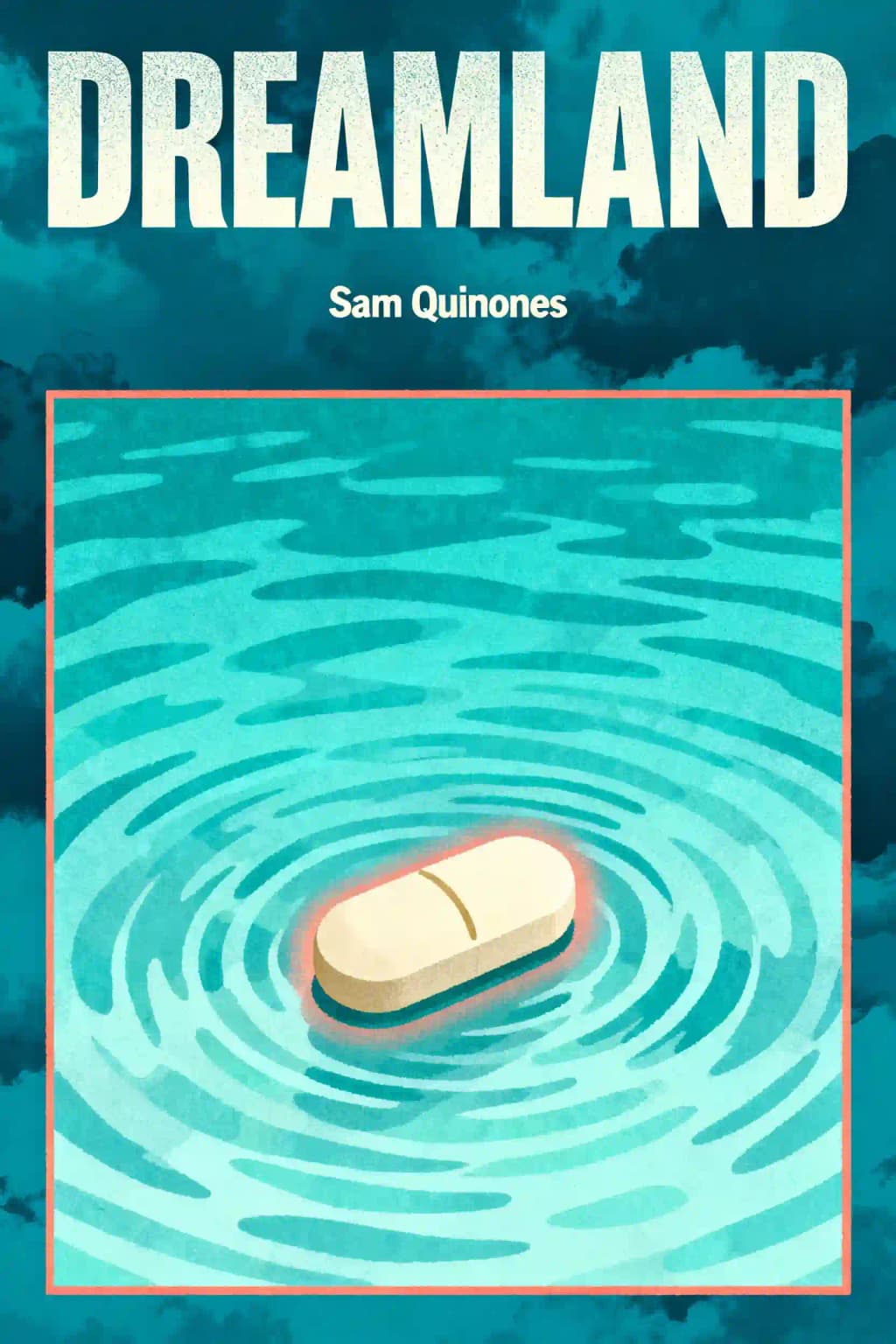
In the quiet corners of America's heartland, a silent epidemic was brewing. Sam Quinones' "Dreamland" chronicles how prescription painkillers and black tar heroin devastated communities across the United States, creating what would become the deadliest drug crisis in American history. The book has been hailed by addiction specialists as required reading for understanding America's opioid crisis, with The New York Times calling it "a stunning journalistic achievement." Even former President Barack Obama listed it among his essential reads for understanding America's complex social challenges. What makes this investigation particularly haunting is how it reveals the perfect storm of corporate greed, medical misinformation, economic despair, and entrepreneurial drug trafficking that transformed America's relationship with pain-and created a generation of addicts in places where heroin had never before been a problem.
Capitolo 2
The Pill and the Powder: A Deadly Convergence
In 2012, Matt Schoonover died of a heroin overdose at age twenty-one, just one day after completing rehab. His parents, Paul and Ellen, were bewildered-how had their middle-class son from Columbus, Ohio gone from prescription painkillers to heroin? Their story epitomizes the epidemic sweeping America: young, white, suburban kids transitioning from prescription opiates to black tar heroin when pills became too expensive.
This crisis emerged from a remarkable convergence of two separate phenomena. From the east came OxyContin, aggressively marketed by Purdue Pharma as virtually non-addictive despite containing large doses of oxycodone, a chemical cousin to heroin. From the west came an entrepreneurial group of heroin traffickers from Xalisco, Nayarit in Mexico, who revolutionized heroin distribution with a pizza delivery-like system targeting suburban areas.
These forces collided most dramatically in central and southern Ohio, creating ground zero for America's opioid epidemic. Dr. Peter Rogers at Nationwide Children's Hospital in Columbus witnessed this firsthand when, in February 2003, he treated his first teenage heroin addict-a sixteen-year-old girl from wealthy Powell suburb who looked like a cheerleader but had track marks up her arms. She had started with pain pills from friends before transitioning to heroin supplied by "Mexicans" when pills became too expensive.
"After that first case," Rogers recalled, "it felt like floodgates had opened." Hundreds of white, suburban teenagers-many from affluent families-began showing up at his clinic. All had started with pills before progressing to heroin. By year's end, Nationwide Children's Hospital had established protocols for treating teenage heroin addicts-something previously unheard of. When Rogers presented his findings at the American Academy of Pediatrics annual meeting, he faced a sparse, confused audience who couldn't understand why they needed to learn about teenage heroin addiction-a problem that hadn't yet reached their communities but soon would.
Capitolo 3
The Pain Revolution: How Good Intentions Paved the Road to Addiction
The roots of America's opioid epidemic trace back to a single paragraph published in 1980. Dr. Hershel Jick at Boston University School of Medicine examined records of 12,000 hospitalized patients who had received opiates and found only four had developed addictions. He handwrote a paragraph summarizing this data, which was published as a letter to the editor in the New England Journal of Medicine with the title "Addiction Rare in Patients Treated with Narcotics."
This brief paragraph contained no information about dosages, treatment duration, or specific conditions being treated. "That's all it pretended to be," Dr. Jick would later explain. After publication, he filed it away and gave it little thought. Yet somehow, this letter transformed into what became known simply as "Porter and Jick"-a supposedly landmark study claiming that less than 1 percent of patients treated with narcotics developed addictions.
This statistic became medical gospel, cited repeatedly in educational seminars and medical textbooks as "extensive research" despite being merely a paragraph about hospitalized patients receiving controlled doses under direct supervision-not chronic pain patients taking bottles of pills at home. This misinterpretation, along with other influential work, created a new conventional wisdom that opiates wouldn't addict pain patients.
Meanwhile, a genuine revolution in pain management was underway. John Bonica, a Sicilian immigrant who wrestled professionally as the Masked Marvel to pay for medical school, established the first pain clinic at the University of Washington in 1960 after experiencing chronic pain from wrestling injuries. His revolutionary multidisciplinary approach brought together specialists from fourteen disciplines to create comprehensive pain management strategies requiring active patient participation.
By the 1990s, however, insurance companies increasingly refused to fund crucial non-medical components like physical and psychological therapy, leaving doctors with fewer tools just as patients were being taught they had a right to immediate pain relief. In 1996, the American Pain Society president Dr. James Campbell advocated treating pain as a "vital sign." By 1998, both the Veterans Health Administration and the Joint Commission for Healthcare Organizations adopted this approach. California required hospitals to screen for pain alongside other vital signs, and its Board of Pharmacy assured members that opiates had "extremely low potential for abuse."
As this revolution progressed, states passed laws protecting doctors who prescribed opiates "responsibly." Medical education shifted dramatically, teaching that these drugs weren't addictive when used for pain. However, crucial flaws emerged in this approach-no serious long-term studies had confirmed opiates' safety for chronic pain, and primary care physicians with little pain management training were targeted to prescribe these medications.
Capitolo 4
The Corporate Push: Marketing a Molecule
In 1996, Purdue Pharma released OxyContin, a simple pill containing only oxycodone, a painkiller synthesized by Germans in 1916. Molecularly similar to heroin, OxyContin built on Purdue's earlier MS Contin, using the same timed-release formula to deliver large doses (40-80mg) of oxycodone over several hours.
Purdue claimed its timed-release mechanism made OxyContin virtually non-addictive, instructing salespeople to cite the misleading "less than one percent" addiction statistic to doctors. The FDA even allowed unique labeling claiming lower abuse potential, inadvertently telling addicts how to misuse it by warning against crushing tablets.
The marketing campaign was unprecedented in its scale and incentives. Sales representatives received extraordinary bonuses while the company distributed 34,000 coupons for free OxyContin prescriptions and branded merchandise. Purdue sponsored about forty pain-management seminars at luxury resorts, recruiting physicians for its speakers bureau to promote oxycodone use. By 2003, primary care doctors with little pain-management training wrote over half of OxyContin prescriptions, with prescriptions for chronic pain skyrocketing from 670,000 in 1997 to 6.2 million in 2002.
In October 2006, U.S. Attorney John Brownlee filed criminal charges against Purdue after investigating their OxyContin marketing for four years. Federal investigators found that Purdue had misled physicians with inaccurate graphs that exaggerated differences between OxyContin and short-acting opiates. As plaintiff's attorney Paul Hanly noted, they "phonied up graphs to show a steady level of oxycodone in blood plasmas" when the true graph showed "an incredible spike" followed by a crash.
Purdue pleaded guilty to a felony count of "misbranding" OxyContin and paid a $634.5 million fine. Three executives paid $34.5 million and pleaded guilty to misdemeanors. At their sentencing, Lee Nuss, mother of a Florida overdose victim, told them: "You are nothing more than a large corporate drug cartel."
Capitolo 5
The Xalisco Boys: Heroin Like Pizza Delivery
As prescription opiates created new addicts east of the Mississippi, a revolutionary heroin distribution system was spreading from the west. Unlike violent drug gangs making headlines, a network of young men from Xalisco, Nayarit in Mexico operated with business-like efficiency, managing young workers who sold black tar heroin in balloons they kept in their mouths.
The Xalisco Boys' operation was fueled by surprising motivations. A woman who had married one of the drivers revealed that these traffickers weren't from the poorest families but were often sons of middle-class Mexican farmers with resources to invest. After building houses back home, what they wanted most were Levi's 501s-the gold standard of pantswear in Mexico's ranchos.
Their system operated like a fast-food franchise-each cell had an owner in Mexico who supplied heroin, a local manager, a telephone operator taking orders, and drivers who carried balloons of heroin in their mouths. They delivered to white customers in suburban parking lots, working 8AM-8PM daily, grossing $5,000-15,000 per cell. Their business principles included avoiding violence, carrying no guns, blending in, rotating drivers frequently, and selling only small retail quantities.
By the mid-1990s, this system had spread to a dozen major metro areas despite hundreds of arrests. Denver police officer Dennis Chavez called them "the Xalisco Boys"-a nationwide operation motivated by the immigrant dream of returning home wealthy heroes. Unlike traditional violent drug gangs, they competed peacefully through better customer service and quality. They were "like ants in a garden"-barely visible until you knew what to look for, and when stamped out, more would take their place.
The Xalisco system rewarded drivers handsomely-$1,500 weekly plus expenses for beer and prostitutes, with opportunities to earn enough to build houses or businesses back home, making heroin trafficking an attractive path for poor young men from Nayarit seeking economic advancement.
The dealers used just-in-time supply chains, carrying only small amounts to minimize charges if caught, and learned sophisticated counter-surveillance techniques. This business model represented marketing expertise never before seen in drug dealing-dealers who actually gave away free samples to hook customers, a practice previously thought to be just anti-drug propaganda.
Capitolo 6
Pill Mills and Prescription Pathways: How Legal Drugs Created an Illegal Market
In tiny South Shore, Kentucky (population 2,100), across the Ohio River from Portsmouth, a Canadian doctor named David Procter established Plaza Healthcare on Biggs Lane in 1979. Procter stood out dramatically in the conservative Ohio River valley with his diamond rings, fur jackets, and Porsche-nurses said "he dressed like Little Richard or Liberace."
By the mid-1990s, Procter was prescribing diet pills and stimulants liberally. In 1996, a prison guard named Randy visited Procter for back bruises from an inmate fight. Procter prescribed OxyContin, a new painkiller, and Randy became unwittingly addicted. When he tried to stop after 30 days, withdrawal symptoms forced him back. Soon Randy was paying $200 cash monthly for three-minute visits and prescriptions, joining a waiting room full of people clearly scamming prescriptions with the doctor's connivance.
By the late 1990s, Dr. Procter had amassed considerable wealth in economically devastated Portsmouth, Ohio. After a 1998 car accident, Procter claimed short-term memory loss and relinquished his medical license but kept his pain clinic open. He hired fifteen compromised doctors over three years, paying them $2,500 weekly to prescribe narcotics. These doctors, with histories of drug use, suspended licenses, and mental problems, eventually left to establish their own pill mills throughout the region, spreading Procter's business model "like a virus."
The DEA eventually investigated Procter, who pleaded guilty to conspiring to distribute prescription medication but fled to Canada before sentencing with $40,000 and tickets to the Cayman Islands. Captured at the border, he testified against other doctors for a lighter sentence and served eleven years.
As the epidemic worsened, the pill economy transformed Portsmouth. Pills became currency, with different denominations functioning like bills of different values. Pill mills served as central banks maintaining a steady supply that kept the economy stable for about a decade. People became unrecognizable, constantly scheming for money to feed their habits. Addicts trudged zombie-like along Highway 52, stealing anything for copper or resale value. Portsmouth transformed into a "junkie kingdom" where pills became more valuable than cash, purchasing everything from DVDs to school supplies.
Capitolo 7
The Data Tells a Story: Recognizing an Epidemic
In December 2005, epidemiologist Jennifer Sabel presented alarming findings to fourteen prominent doctors at Seattle's Warwick Hotel: Washington state's opiate overdose deaths had increased sixteenfold, from 24 deaths in 1995 to 386 in 2004. The doctors responded with disbelief and skepticism, suggesting coding errors or unreliable death certificates rather than accepting the disturbing data.
Jaymie Mai from Labor and Industries, who had first noticed overdose patterns among disabled workers years earlier, watched in disbelief as doctors dismissed Sabel's findings. Mai's stress from tracking the mounting deaths had grown so severe she found relief only through obsessively tending her rose garden. The data clearly showed overdose deaths outpacing those from the crack epidemic and 1970s heroin wave, increasing in direct proportion to prescribed opiates.
In Washington State, Jaymie Mai and Gary Franklin continued documenting what Franklin called "the worst man-made epidemic in history, made by organized medicine." By 2010, Washington's opiate addiction treatment numbers had exploded from about 600 to 8,600 patients, mostly young, suburban, and white. Overdose deaths peaked at 512 in 2008.
Meanwhile, in Ohio, epidemiologist Ed Socie noticed something alarming in his data in 2005: poisoning deaths were climbing dramatically. Digging deeper, he discovered these were actually drug overdoses, primarily from opiates. When Christy Beeghly became his supervisor in 2007, they made a stunning discovery: drug overdoses were about to surpass fatal auto crashes as Ohio's top cause of injury death-something unprecedented in American public health history.
Their analysis revealed that prescription painkiller dispensation and overdose deaths had both risen over 300 percent between 1999 and 2008. Oxycodone specifically had skyrocketed by almost 1,000 percent. The human toll was staggering: more Ohioans died from drug overdoses between 2003 and 2008 than U.S. soldiers in the entire Iraq War; three times more died from prescription pills between 1999 and 2008 than during the peak years of the crack epidemic.
Dr. Joe Gay, director of a rehabilitation clinic serving four Appalachian counties, discovered an almost perfect statistical correlation (0.979) between prescription painkillers dispensed and overdose deaths-so close it was as if dispensing the pills was virtually the same as causing deaths. Ohio could predict approximately one overdose death for every two months' worth of prescription opiates dispensed.
Capitolo 8
From Silence to Action: Communities Respond
The opiate epidemic remained largely invisible to the general public until Philip Seymour Hoffman's overdose death on Super Bowl Sunday 2014. The Oscar-winning actor was found with a syringe in his arm and heroin packets nearby, despite having recently completed rehab. Just as Rock Hudson's death had awakened America to AIDS, Hoffman's death forced recognition of the opiate crisis, prompting Attorney General Eric Holder to describe an "urgent and growing public health crisis."
Breaking the silence around opiates became the task of grieving parents and activists like Brad Belcher, who plastered Marion, Ohio with signs reading "HEROIN IS MARION'S ECONOMY" to force public acknowledgment of the crisis. Wayne Campbell formed Tyler's Light after his son, a University of Akron football player, died from heroin in 2011. Tyler's addiction began with Percocet after shoulder surgery, part of a team-wide problem where, according to another player, trainers handed out opiates "like candy" to keep injured players on the field.
After Tyler's death, Wayne discovered many families hiding the same "dirty little secret," prompting him to educate schools about opiates. A year after Wayne Campbell formed Tyler's Light, Paul and Ellen Schoonover reached out after their son Matt died from black tar heroin overdose just one day after leaving rehab. At Matt's funeral, Paul told hundreds of mourners the truth about his son's dual life-how despite playing tennis and golf, working, and maintaining a normal appearance, Matt had progressed from pills to OxyContin to heroin.
The Schoonovers transformed their grief into purpose, now understanding addiction as a disease rather than a moral failing, realizing rehabilitation alone wasn't enough-recovery required years of treatment followed by lifetime maintenance. Paul explained they hadn't known dopamine receptors take two years to normalize after opiate use, and had they understood this, they would never have let Matt go alone to his first NA meeting, where instead of turning right toward recovery, he turned left toward drugs and death.
Capitolo 9
Rising from the Ruins: Hope in America's Heartland
In 2012, Jeremy Wilder arrived in Portsmouth, Ohio-a hollow-eyed addict with needle-scarred arms, missing teeth, and ten dollars to his name. At thirty-five, his entire adult life had coincided with America's opiate epidemic and the decline of small towns. From Aberdeen in Brown County, where OxyContin had devastated the community, Jeremy sought escape. He'd spent years in pill clinics, dealing drugs, buying heroin from Mexican delivery networks, and cycling through prison. Leaving his cell phone behind to break ties with dealers and users, his father dropped him off with a childhood friend in Portsmouth-ironically the pill mecca of America.
Though Portsmouth couldn't escape the heroin epidemic, the town began taking control of its destiny. Clint Askew and his friends formed Raw Word Revival, creating powerful rap music about their hometown's struggles. Their song "7-4-0" became an anthem, chronicling Portsmouth's decline from pill mills and drug deals while expressing hope for revival despite the "big black cloud hanging over our town."
Portsmouth was transforming, throwing off old dependencies and holding itself accountable. Most remarkably, nearly 10% of the town was in recovery. With pill mills closed, many addicts returned home and found employers willing to give second chances. The Counseling Center doubled in size, employing 200 people-many in recovery themselves-and opened the Clubhouse, Ohio's largest drug-free hangout. Former addicts like Mary Ann Henson, Jarrett Withrow, and Kathy Newman now helped others recover.
Despite persistent problems, Portsmouth had developed a confident recovery culture that competed with addiction. The town that led America into the opioid epidemic was now leading the way out, with addicts from across Ohio migrating there to get clean. Portsmouth had become a beacon for those struggling with addiction-a place that, like them, had lost much but was finding its way back to Dreamland.
In the aftermath of the epidemic, America was changing too. The crisis had produced some unexpected developments, including a remarkable shift in attitudes toward treatment versus incarceration, especially among Republican politicians. Parents were also losing their fear of stigma. Barbara Theodosiou, a PR consultant with two addicted sons, started addictsmom.com and a Facebook page with the motto "Sharing without shame." By 2014, fourteen thousand mothers were using these platforms for raw, unfiltered sharing about their experiences-creating a virtual "mass group therapy for a drug epidemic in the virtual age."
Central Ohio, ground zero of the opiate crisis, was rethinking community responses. Paul Schoonover found purpose sharing his son's story at the rehab center Matt left before his death. He also supported Ohio State's growing campus recovery movement-part of a nationwide trend of universities establishing drug-free dorms, counseling, and recovery programs in response to opiate addiction among middle and upper-class students. The epidemic had revealed how isolation had become endemic to both wealthy suburbs and the Rust Belt. As Paul observed, "Nobody can do it on their own. But no drug dealer, nor cartel, can stand against families, schools, churches, and communities united together."
Capitolo 10
The Reckoning: Lessons from an Epidemic
By 2014, medical consensus had shifted against using opiates for chronic pain conditions like back pain and fibromyalgia. Purdue Pharma reformulated OxyContin in 2010 with abuse deterrents, but this came too late-a nationwide population of addicts simply switched to heroin. The epidemic reached every corner of America: rural towns in Indiana and Oregon, Eastern Idaho, North Dakota, Wyoming, and throughout the Ohio River valley.
Dr. Nathaniel Katz faced an ethical dilemma with his patient Peter, an incontinent, unemployed alcoholic with spinal cord damage. Despite Peter's substance abuse history, Katz prescribed opiates following the prevailing medical philosophy. Peter charmed his way into more medication each month, and Katz struggled with determining whether Peter had genuine pain needs or an abuse problem. Before Katz could intervene, Peter died from an overdose of the prescribed medication.
Devastated, Katz searched medical literature for answers to two fundamental questions: Are opiates safe for chronic pain? Are they effective? He was shocked to find no research supporting the "expert" claims that opioids weren't addictive when used for pain-discovering he'd "uncovered the problem of our age, and of 500 BC" with questions that had remained unanswered for twenty-five hundred years.
The pharmaceutical industry faced massive lawsuits-Purdue's $634.5 million fine was dwarfed by Pfizer's $3 billion settlement for illegal marketing of painkillers. Medical institutions tempered their enthusiasm for opiate pain treatment. The JCAHO began promoting multidisciplinary approaches including psychological support and non-opiate medications. The FDA reclassified Vicodin as more restrictive and required better education about addiction risks.
Despite the devastation, there remained a troubling disconnect between pain and addiction specialists, who operated in separate worlds despite seeing the same patients. The Veterans Health Administration emerged as a leader in balanced pain management, opening seventy multidisciplinary pain clinics offering physical therapy, acupuncture, and psychological counseling alongside careful medication management. Unlike private insurers focused on short-term costs, the VHA took the long view of patient care.
The epidemic revealed America's contradictory relationship with pain and pleasure, comfort and suffering. As Dr. Alex Cahana observed: "We overtest, perform surgery, stick needles; these people are worse off. If we work on their nutrition, diet, sleep habits, smoke habits, helping [them] find work-then they improve." He saw America's technological mindset as problematic: "We got to the moon, invented the Internet... It's inconceivable to think there are problems that don't have a technological solution."
Perhaps the most profound lesson from America's opioid epidemic is that true healing-whether for individuals or communities-requires more than quick chemical fixes. It demands the harder work of rebuilding connections, finding purpose, and creating communities where people feel they belong. As Portsmouth demonstrated, recovery is possible, but it requires confronting painful truths and rebuilding from the ruins-finding our way back to Dreamland, one step at a time.