Capitolo 1
When Hedgehogs Challenged Plumbers: The Epic Battle for Gaming Supremacy
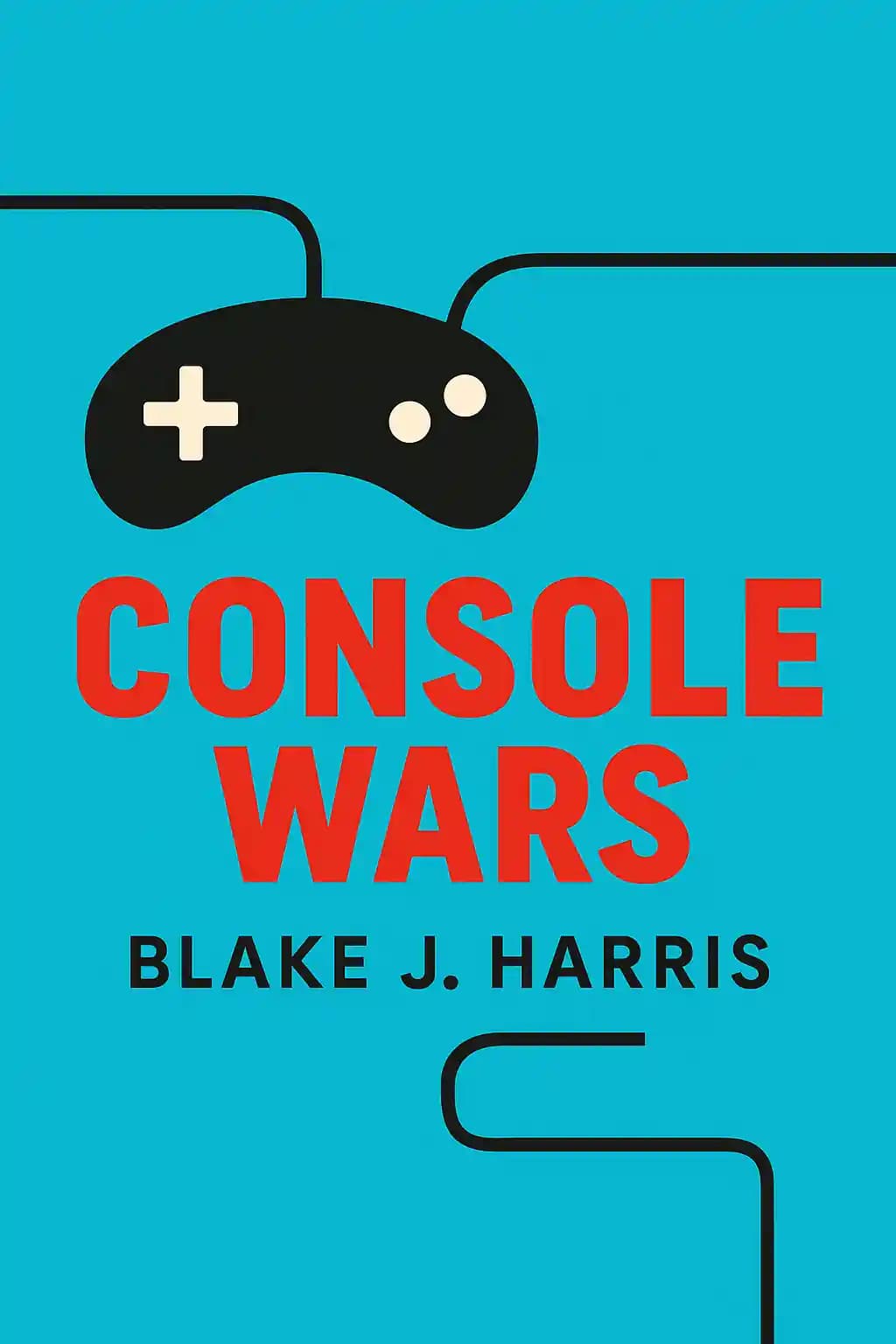
In the early 1990s, a blue hedgehog with red sneakers and an attitude problem sparked a revolution that would forever change the video game industry. Blake J. Harris's "Console Wars" chronicles this pivotal moment through the lens of Tom Kalinske, the maverick executive who transformed Sega from an industry afterthought into Nintendo's fiercest competitor. The book became an instant classic among gaming enthusiasts and business strategists alike, with Seth Rogen and Evan Goldberg (who penned the foreword) adapting it into a documentary. What makes this corporate battle so compelling is how it transcended business to become a cultural phenomenon that defined a generation's identity. As millions of children pledged allegiance to either Sega or Nintendo, they weren't just choosing game systems-they were declaring who they were and what they valued in this new digital frontier.
Capitolo 2
The Reluctant Revolutionary: Tom Kalinske's Journey to Sega
Tom Kalinske never intended to lead a gaming revolution. In 1990, after revitalizing Mattel with Barbie and creating He-Man, he was taking a well-deserved Hawaiian vacation with his family when Hayao Nakayama, Sega's enigmatic president, tracked him down with an unexpected proposition: become president of Sega of America and challenge Nintendo's seemingly unbreakable monopoly.
Initially reluctant, Kalinske was persuaded by his five-year-old daughter Ashley's surprising encouragement. In Tokyo, Nakayama showed him Sega's impressive technology-the Genesis console with its sleek design and superior graphics, the colorful Game Gear handheld, and experimental virtual reality headsets. Despite this impressive arsenal, Sega had captured barely 5% of the market while Nintendo controlled a staggering 90%.
Kalinske quickly identified Sega's fundamental problem: they were trying to beat Nintendo at their own game rather than creating a distinct identity. After assembling a core team including Japanese liaison Shinobu Toyoda, operations expert Paul Rioux, and marketing wizard Al Nilsen, Kalinske developed his revolutionary "Four-Point Plan": bundle Sonic the Hedgehog with the Genesis (instead of selling it separately), drop the console's price from $189 to $149, create edgy marketing targeting teenagers instead of children, and develop games specifically for American audiences.
When Kalinske presented this plan to Sega's Japanese board, they were horrified. Giving away their best game? Slashing prices? Abandoning their family-friendly image? The room erupted in opposition until Nakayama silenced everyone with words that would change gaming history: "No one agrees with anything you're saying. In fact, everyone in here thinks you are nuts. But this is why I hired you. You may go ahead with the plan."
This moment exemplifies what made Kalinske exceptional-his willingness to challenge conventional wisdom and his understanding that sometimes winning requires changing the rules of the game entirely. His background transforming Barbie from a $42 million product to a $550 million phenomenon had taught him that success often means reimagining what a product represents rather than simply improving its features.
Capitolo 3
Nintendo's Empire: How Mario Conquered America
To appreciate Sega's challenge, we must understand the empire they faced. Nintendo's American story began in 1980 when Minoru Arakawa, son-in-law of Nintendo president Hiroshi Yamauchi, established Nintendo of America in a tiny Manhattan office. After early struggles selling Radar Scope arcade cabinets, everything changed with Donkey Kong-a quirky game featuring a mustachioed plumber rescuing a princess from a barrel-throwing gorilla, created by a young designer named Shigeru Miyamoto. The game's success not only saved Nintendo of America but established the company's philosophy of prioritizing innovative game design over technical specifications.
Nintendo's dominance, however, wasn't just about great games. Their business practices were revolutionary and ruthless. After the video game market crashed in 1983, when companies like Atari flooded the market with low-quality games, retailers were extremely hesitant to stock new systems. Nintendo overcame this by brilliantly positioning the Nintendo Entertainment System (NES) as a toy rather than a video game, complete with R.O.B. (Robotic Operating Buddy) and a light gun to disguise its true nature. They even displayed it in toy aisles rather than electronics sections.
Once established, Nintendo implemented unprecedented control measures that would shape the industry for decades. The Nintendo Seal of Quality became a trusted symbol, ensuring consistent standards and quality control. Their strict licensing agreements limited third-party developers to five games annually, preventing market oversaturation. Nintendo's manufacturing control allowed them to create artificial scarcity, driving demand through careful supply management. They even designed security chips in their cartridges to prevent unauthorized games, giving them complete control over their platform.
Nintendo's executive team was formidable and strategically brilliant. Howard Lincoln, their legal mastermind, famously won a copyright battle against Universal Studios over Donkey Kong, establishing Nintendo's reputation for fierce legal defense. Peter Main, the marketing strategist, orchestrated the "storming of Normandy" nationwide retail blitz that made the NES a must-have item in American homes. Howard Phillips, the bow-tie-wearing "Game Master," became the face of Nintendo to millions of children through Nintendo Power magazine, which at its peak had over 1.5 million subscribers.
By 1990, Nintendo's success was unprecedented in both scale and cultural impact. They had sold nearly 30 million consoles, controlled 90% of the $5 billion video game industry, and created a cultural phenomenon where "Nintendo" became synonymous with video games-much like "Kleenex" for tissues. Mario was more recognizable to American children than Mickey Mouse, with surveys showing 95% recognition among school-age children. Nintendo's characters appeared on everything from breakfast cereals to bed sheets, and their games influenced popular culture in ways no other entertainment company had achieved. This wasn't just market dominance; it was cultural hegemony that would define a generation's relationship with interactive entertainment.
Capitolo 4
Creating Sonic: The Birth of a Rebellious Icon
When Tom Kalinske arrived at Sega in 1990, he discovered their potential "Mario-killer"-a teal hedgehog with red shoes and an attitude problem. The character, originally dubbed "Mr. Needlemouse," emerged from the creative minds of artist Naoto Oshima and programmer Yuji Naka during intense brainstorming sessions at Sega's Japanese headquarters. Despite showing early promise, the character faced significant internal resistance, with former CEO Michael Katz memorably dismissing it as "the stupidest thing I've ever seen." However, Sega's Japanese CEO Hayao Nakayama saw something special and green-lit development despite the skepticism.
Kalinske and product manager Madeline Schroeder immediately recognized the character's raw potential but knew substantial refinement was needed. The original design was far more aggressive and adult-oriented, featuring sharp fangs, a spiked leather collar, an electric guitar, and a provocative girlfriend character named "Madonna." The team spent months studying successful character designs at Toys "R" Us, analyzing everything from Mickey Mouse to the Teenage Mutant Ninja Turtles to understand what made mascots resonate with audiences. They developed a comprehensive character bible that gave Sonic a distinctly American backstory: born in Nebraska, losing his father at a young age, developing his supernatural speed through determination, and forming a complex relationship with a scientist who would eventually become his nemesis, Dr. Robotnik.
The transformation process sparked significant tension between Sega of America (SOA) and Sega of Japan (SOJ). When SOA presented their friendlier, attitude-filled redesign, Japanese executives initially rejected it, believing it strayed too far from their original vision. This led to a series of heated meetings, including a memorable showdown where Schroeder, despite cultural and gender barriers, stood firm before Japanese executives to defend the American team's vision. After weeks of back-and-forth and personal intervention from Nakayama, SOJ finally approved the western-influenced design.
Sonic's development represented more than just character creation-it embodied Sega's emerging identity as Nintendo's rebellious counterpart. While Mario embodied careful precision, moving methodically through levels with a friendly smile, Sonic tapped his foot impatiently, rolled his eyes, and blazed through stages at unprecedented speeds. This personality contrast became the cornerstone of Sega's marketing strategy, with campaigns explicitly positioning the Genesis as the console for sophisticated gamers who had outgrown Nintendo's family-friendly image. The "Genesis does what Nintendon't" campaign specifically highlighted Sonic's attitude and speed as symbols of Sega's technological superiority.
The creation process also highlighted fundamental philosophical differences between the two gaming giants. Nintendo maintained iron-fisted control over their intellectual property, with strict guidelines for character representation and game development. In contrast, Sega adopted a more flexible, culturally adaptive approach, allowing regional teams significant input in character development and marketing. This collaborative philosophy helped Sega connect strongly with American teenagers and created innovative marketing opportunities, but it also sowed seeds of internal conflict. The tensions between SOA and SOJ's different visions would eventually contribute to communication breakdowns and strategic missteps that would impact Sega's long-term success in the gaming industry.
Capitolo 5
The Summer of Sonic: How Sega Stole Nintendo's Thunder
With Sonic developed and Kalinske's four-point plan approved, Sega launched what they called the "Sixteen Weeks of Summer" in 1991-their critical window to establish market position before Nintendo's Super NES launch. Despite having less than Nintendo's quarterly marketing budget for their entire year, Sega executed strategic campaigns targeting older gamers.
Their "Graduate to Genesis" promotion offered free third-party games with system purchases, rewarding developers who had supported them while enticing others to defect from Nintendo. They dominated radio-a medium Nintendo ignored-partnering with stations like KIIS-FM for promotions at beaches and concerts. This unexpectedly led to a partnership with Blockbuster Video, who was in litigation with Nintendo over game rentals.
Sega created their own television special-the "Sega Star Kid Challenge"-featuring young sitcom stars from shows like "Saved by the Bell" and "Full House" competing in athletic events. When aired in June, the high ratings validated their creative approach to marketing.
The masterstroke came with bundling Sonic with the Genesis. This created a logistical nightmare: 250,000 Altered Beast systems sat unsold in warehouses and on retailer shelves. Sega devised a multi-phase strategy: drop the Genesis price to $149.95, offer free Sonic games by mail to recent purchasers, begin shipping Sonic bundles while clearing remaining inventory, and transition exclusively to Genesis+Sonic bundles by September. SOA and SOJ employees physically opened 150,000 boxes of old systems, removing the consoles and repackaging them with Sonic.
As Sonic began appearing in stores, word spread exponentially through schoolyards, college campuses, and offices. Genesis sales quadrupled. By bundling Sonic with the Genesis, Sega wasn't just selling $50 games but $150 consoles, and each console sold meant one less potential Super Nintendo customer.
The final component was direct comparative advertising. Using a clever strategy to slip past Japanese executives' approval, Sega created commercials directly challenging Nintendo. Their "The Salesman" ad showed a pushy retailer trying to sell a Super Nintendo while the customer kept noticing the Genesis's advantages. When Nakayama discovered this approach, he surprisingly approved, comparing it to Pepsi's taste-test challenges against Coca-Cola.
By the time Nintendo launched the Super NES in August 1991, Sega had created significant momentum. Despite Nintendo's superior technology (32,768 colors versus Genesis's 512), they faced unexpected challenges: parents' outrage over the lack of backward compatibility with NES games and Sega's rising popularity with Sonic The Hedgehog.
Capitolo 6
Blood and Games: The Mortal Kombat Controversy
If Sonic represented Sega's creative breakthrough, Mortal Kombat became their commercial watershed moment. When Acclaim's ultra-violent fighting game arrived in 1993, it presented both companies with a crucial decision that would define their identities. The game's realistic digitized graphics and unprecedented level of violence, including spine-ripping fatalities and fountains of blood, made it an instant arcade sensation but also a source of intense controversy.
Nintendo, staying true to their family-friendly values established since the NES era, chose to censor the game-replacing blood with gray "sweat" and removing the most graphic fatalities. This decision aligned with their long-standing content guidelines that had previously sanitized games like Contra and Wolfenstein 3D. Sega took a different approach, implementing a "blood code" (ABACABB on Genesis) that would allow players to unlock the arcade-authentic gore by entering a special button combination. This clever workaround let them maintain their new three-tiered rating system (GA, MA-13, and MA-17) while still offering the authentic experience Nintendo wouldn't provide. The blood code became a playground sensation, passed between students like a secret password.
The results were decisive: Sega's version outsold Nintendo's by nearly four to one, moving over 1.5 million copies in the first few months. For many teenagers, this moment crystallized the difference between the companies-Nintendo treated them like children, while Sega respected their maturity and choices. The success demonstrated that the gaming market had matured beyond purely family entertainment.
This victory came with serious consequences, however. In December 1993, Senator Joseph Lieberman held congressional hearings on video game violence, with Sega's Bill White finding himself in a hostile environment as Senators condemned violent games as "the Grinch who stole Christmas." The hearings featured dramatic footage of fatalities from Mortal Kombat and other violent games like Night Trap, leading to sensational media coverage. Nintendo's Howard Lincoln appeared poised and righteous, highlighting Nintendo's decision to censor Mortal Kombat while painting Sega as irresponsible. He even brought examples of Nintendo's sanitized version to contrast with Sega's bloodier edition.
Despite this public relations challenge, the hearings ultimately benefited the industry by leading to the creation of the Entertainment Software Rating Board (ESRB), which established a standardized rating system that remains in use today. The ESRB's rating categories (Early Childhood to Adults Only) provided parents with clear guidance while allowing publishers more creative freedom within defined boundaries. More importantly for Sega, the controversy reinforced their edgy brand identity and cemented their connection with teenage gamers who appreciated their willingness to push boundaries. The Mortal Kombat controversy marked a turning point in gaming history, where video games began to be taken seriously as a medium that could tackle mature themes and content.
Capitolo 7
The Partnership That Never Was: Sega, Sony, and Silicon Graphics
While Sega battled Nintendo in the marketplace, Kalinske recognized that long-term success would require technological partnerships. He pursued two potentially game-changing alliances that, had they materialized, might have dramatically altered gaming history.
The first opportunity came through Sony's Olaf Olafsson, who approached Kalinske after Nintendo publicly humiliated Sony by canceling their partnership to develop a CD-ROM add-on for the Super Nintendo. Sony was divided between an old guard who wanted to abandon gaming altogether and a newer generation who saw video games as consumer electronics' future. Olafsson developed a strategy he believed could satisfy both camps-a partnership with Sega.
Kalinske and Olafsson envisioned creating hardware, music, and even movies together, with Sony providing the technological expertise and Sega contributing gaming know-how. Despite promising negotiations and Nakayama's initial support, the partnership collapsed when Sega of Japan's engineers rejected Sony's technology, claiming it wasn't powerful enough for proper 3D graphics.
Following this disappointment, Kalinske pursued another partnership with Silicon Graphics, whose impressive real-time 3D technology could have given Sega a significant advantage. Despite Kalinske's efforts with Toyoda, Miller, and Glen to present the case that SGI's technology would be more powerful and cheaper than the Hitachi chipset planned for Saturn, SOJ again refused.
In a twist of corporate irony, Kalinske gave SGI founder Jim Clark a new contact: Howard Lincoln at Nintendo. The resulting "Project Reality" partnership would eventually produce the Nintendo 64, while Sony proceeded independently with the PlayStation under the leadership of Ken Kutaragi, who had secretly developed a powerful 3D console despite internal opposition.
These failed partnerships revealed a fundamental disconnect between Sega of America and Sega of Japan. While Kalinske recognized the need for technological alliances to compete in the next console generation, SOJ remained committed to developing technology in-house, even when superior alternatives were available. This tension would ultimately prove fatal to Sega's long-term prospects.
Capitolo 8
Welcome to the Next Level: Sega's Marketing Revolution
Sega's marketing transformation represented one of the most successful rebranding campaigns in business history. Under Kalinske's leadership, they abandoned traditional toy marketing approaches in favor of edgy, attitude-filled campaigns that spoke directly to teenagers.
The watershed moment came when Sega hired Goodby, Berlin & Silverstein to create their "Welcome to the Next Level" campaign. Unlike focus-group tested commercials that adults found acceptable, these ads featured chaotic, rapid-fire imagery with quick cuts, wild camera angles, and punk music-ending with someone shouting "Sega!" They spoke to kids' ability to process information at speeds adults couldn't comprehend.
Sega's mall tour campaign directly compared Sonic and Mario side-by-side, allowing consumers to vote on which was better. Ellen Beth Van Buskirk, who managed the tour, provocatively launched it in Bellevue, Washington-just five miles from Nintendo's headquarters. At the Alderwood Mall in Seattle, Nintendo's Peter Main was spotted lurking in the shadows, watching as eight out of ten people chose Sega over Nintendo.
These marketing efforts transformed Sega's public perception. Market Data Corporation research confirmed Nintendo was no longer "cool" compared to Sega, ranking lower in image, value, and technology (though still winning in fun, excitement, and game selection). Nintendo executives debated whether to accept this identity or adapt, with Bill White noting their top-selling game was now Street Fighter II, not a family-friendly Mario title.
Nintendo eventually responded with their "Play It Loud" campaign after research showed consumers associated Nintendo with slow animals like elephants and camels, while Sega was represented by cheetahs and gazelles. This represented a significant shift for Nintendo, acknowledging they needed to adapt their messaging to compete with Sega's edgy appeal.
Sega's marketing success demonstrated how powerful branding could overcome technical disadvantages. Despite the Genesis having objectively inferior hardware specifications compared to the Super Nintendo, Sega's positioning made technical limitations irrelevant to their target audience. They weren't selling technology-they were selling attitude, independence, and cultural identity.
Capitolo 9
The Fall: How Sega Lost Its Way
By 1994, Sega had achieved the seemingly impossible-capturing over 50% of the 16-bit console market and forcing Nintendo to adapt to their terms. Yet within two years, they would squander this advantage through a series of strategic missteps and internal conflicts.
The first warning signs appeared with the Sega CD and 32X-add-on peripherals that fragmented their user base and confused consumers. Rather than focusing on building a strong library for Genesis, Sega spread their resources across multiple platforms, diluting their impact and frustrating developers and retailers alike.
More fundamentally, Sega's success created tension between Sega of America and Sega of Japan. SOJ began reasserting control, rejecting Kalinske's strategic partnerships and pushing hardware developed in Japan regardless of its suitability for the American market. The relationship between the divisions was captured perfectly during a dinner in Japan when Nilsen fearlessly ate potentially lethal fugu (pufferfish) while his Japanese counterparts recoiled. This revealed the key distinction: SOJ's team wasn't willing to take risks like SOA. Despite being talented and hardworking, "they weren't as interested in winning as they were in not losing."
The final blow came at the inaugural E3 convention in May 1995. Kalinske announced the surprise immediate launch of Saturn at $399, with distribution to select retailers. Though the crowd's reaction was positive, Kalinske privately worried about alienating smaller retailers who wouldn't receive inventory due to limited supply.
When Sony's presentation followed, Steve Race delivered what might be the most devastating six-word speech in gaming history: "Two hundred ninety-nine," announcing PlayStation's price-a full $100 less than Saturn. Kalinske's response was equally brief but far less triumphant: "Oh, shit."
Ten months later, the Saturn had flopped with only 800,000 units sold-less than half of PlayStation's sales despite Sony's system being available for only half as long. Kalinske resigned in 1996, ending his remarkable tenure that had transformed Sega from a minor player to an industry leader before watching it crumble due to internal conflicts and strategic missteps.
Capitolo 10
Legacy: How the Console Wars Shaped Gaming Culture
The battle between Sega and Nintendo fundamentally transformed the video game industry in ways that persist today. What began as a competition between two companies evolved into a cultural phenomenon that defined how games were marketed, developed, and perceived by the public.
Perhaps the most significant legacy was the expansion of gaming's demographic appeal. Before Sega's challenge, video games were primarily marketed to children. By deliberately targeting teenagers and college students, Sega helped video games grow up with their original audience, establishing them as a legitimate entertainment medium for all ages. Today's mature, sophisticated gaming market owes much to Sega's recognition that games weren't just for kids.
The console wars also established competitive marketing as an industry norm. Prior to Sega's challenge, Nintendo had no need to advertise aggressively or position themselves against competitors. Sega's direct comparative advertising forced Nintendo to respond, creating a tradition of console rivalries that continues with PlayStation, Xbox, and Nintendo today. The passionate tribal loyalties gamers develop toward their preferred platforms began with children declaring themselves "Sega kids" or "Nintendo kids" in the early 1990s.
The industry's approach to content regulation was similarly shaped by this period. The creation of the ESRB in response to the Mortal Kombat and Night Trap controversies established a self-regulation model that helped the industry avoid government censorship while allowing more mature content to flourish. This balance between creative freedom and responsible content labeling remains the industry standard.
Perhaps most poignantly, the console wars demonstrated how corporate culture ultimately determines a company's fate. Nintendo's stubborn adherence to their core principles-quality over quantity, careful planning over rapid expansion-initially seemed like a liability against Sega's aggressive innovation. Yet Nintendo's consistency ultimately proved more sustainable than Sega's fractured corporate identity.
When Howard Lincoln sent Kalinske a personal letter after his resignation, expressing respect for his accomplishments and wishing him success in his new ventures, it represented more than professional courtesy. It acknowledged that beyond the corporate battle, both men had participated in something transformative-a competition that had elevated their industry from children's toys to a dominant cultural force that would eventually surpass Hollywood in revenue and cultural impact.
The blue hedgehog and the Italian plumber weren't just mascots-they were avatars in a battle that would define entertainment for generations to come. Though Sonic's star eventually faded while Mario endured, their rivalry created the modern gaming landscape we know today.