Revolutionizing youth mental health, this evidence-based CBT toolbox equips professionals with versatile strategies for anxiety, ADHD, and trauma. What makes top clinicians call it "indispensable"? Its unique ability to transform therapy through activities that connect with children's diverse learning styles.
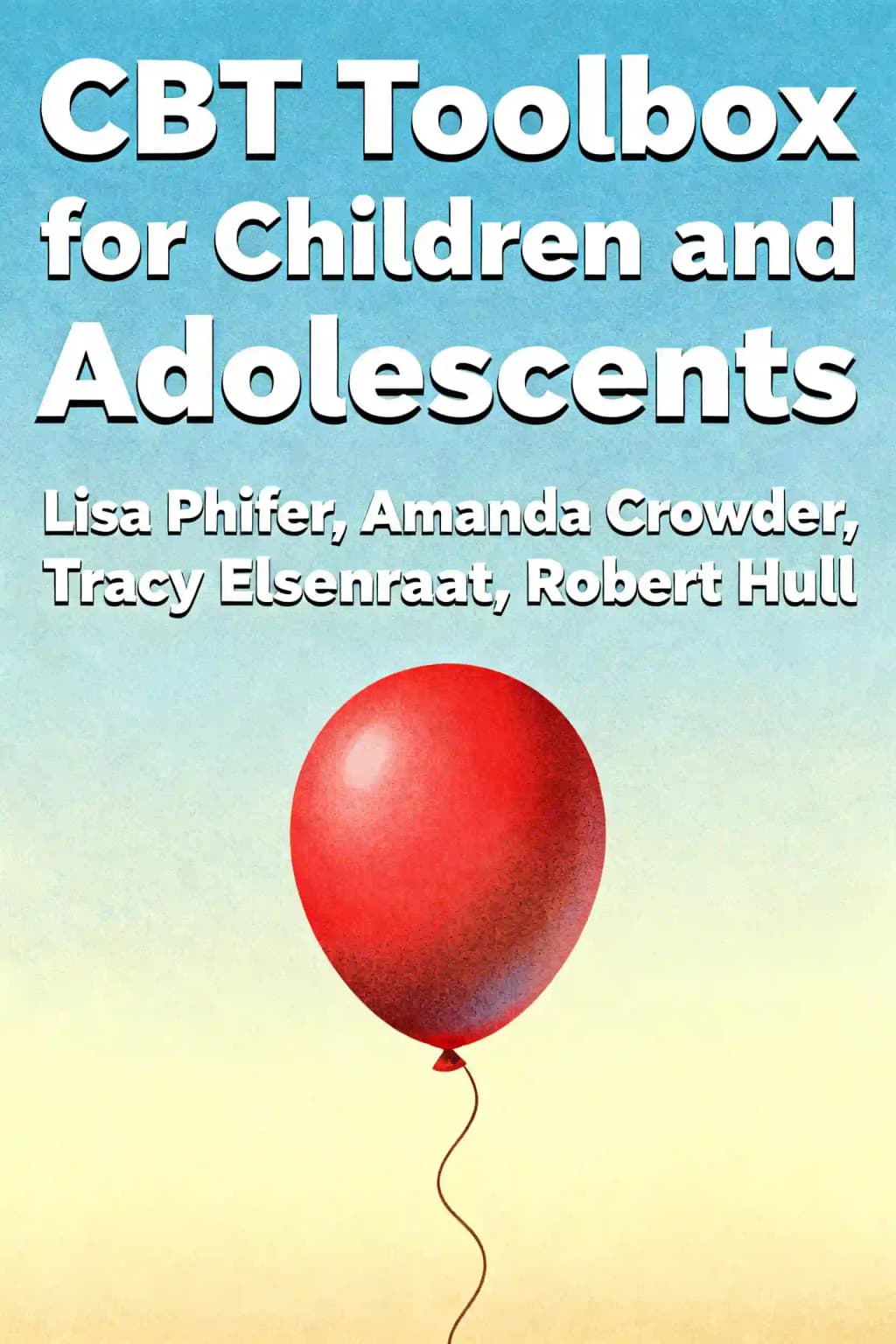
Lisa Weed Phifer, DEd, NCSP, is a Nationally Certified School Psychologist and co-author of CBT Toolbox for Children and Adolescents: Over 200 Worksheets & Exercises for Trauma, ADHD, Autism, Anxiety, Depression & Conduct Disorders, a comprehensive resource for mental health professionals and educators.
With decades of experience in school-based mental health services, Phifer specializes in cognitive behavioral therapy (CBT), trauma-informed care, and neurodevelopmental disorders. Her work integrates evidence-based practices with practical tools, reflecting her background in developing interventions for diverse youth populations.
Phifer has co-authored multiple CBT-focused guides, including The CBT Toolbox for Young Adults, which extends her framework to older adolescents. The CBT Toolbox for Children and Adolescents has become a go-to reference in clinical and educational settings, featuring over 200 adaptable worksheets praised for their efficacy in treating ADHD, autism spectrum disorder, and mood-related challenges.
Translated into multiple languages and adopted by therapists worldwide, this workbook exemplifies Phifer’s commitment to accessible, skill-building mental health solutions.
CBT Toolbox for Children and Adolescents provides over 200 worksheets and exercises to help mental health professionals address emotional and behavioral challenges in youth. It adapts cognitive-behavioral therapy (CBT) strategies for treating trauma, ADHD, autism, anxiety, depression, and conduct disorders, emphasizing practical tools like cognitive restructuring and behavioral activation.
This book is ideal for therapists, school psychologists, social workers, and educators working with children aged 5–18. It also offers caregiver worksheets, making it valuable for parents seeking to support their child’s mental health.
Yes—it’s praised for its hands-on, science-backed activities and adaptability across age groups. Critics note some exercises may require customization for very young children or those with non-verbal trauma.
Key strategies include cognitive restructuring (e.g., identifying negative thought patterns), behavioral activation (e.g., activity scheduling), and relaxation techniques. These are simplified with child-friendly exercises like thought records and emotion-focused games.
The book provides disorder-specific activities. For ADHD, it focuses on executive functioning skills via goal-setting worksheets. For autism, it uses social stories and sensory-based relaxation techniques.
Three types: In-session Exercises (guided therapy activities), Client Activities (take-home tasks), and Caregiver Worksheets (parent-guided skill-building). These target cognitive, behavioral, and relational growth.
Yes. It integrates insights from school psychology, social work, and clinical therapy to promote executive functioning, social skills, and mind-body connections through activities like role-playing and mindfulness.
Some users find the age range too broad, noting exercises may need adjustment for younger children. It also lacks explicit guidance for pre-verbal trauma.
While both focus on child mental health, CBT Toolbox is CBT-specific, with structured worksheets. The Trauma-Informed Toolbox emphasizes broader social-emotional learning and sensory regulation.
Core themes include interrupting negative thought cycles, fostering resilience through skill-building, and strengthening caregiver-child relationships via collaborative exercises.
Therapists can customize activities—for example, using Socratic questioning to challenge anxiety-driven thoughts or behavioral charts to track progress in conduct disorder cases.
With rising rates of childhood anxiety and ADHD diagnoses, the book remains a timely resource for evidence-based, adaptable interventions in school and clinical settings.
Senti il libro attraverso la voce dell'autore
Trasforma la conoscenza in spunti coinvolgenti e ricchi di esempi
Cattura le idee chiave in un lampo per un apprendimento veloce
Goditi il libro in modo divertente e coinvolgente
This structure makes the unbearable bearable.
Trauma lives not just in the mind but in the body.
Healing happens in relationships.
The world often feels like a constant barrage of stimuli.
Scomponi le idee chiave di CBT Toolbox for Children and Adolescents in punti facili da capire per comprendere come i team innovativi creano, collaborano e crescono.
Distilla CBT Toolbox for Children and Adolescents in rapidi promemoria che evidenziano i principi chiave di franchezza, lavoro di squadra e resilienza creativa.

Vivi CBT Toolbox for Children and Adolescents attraverso narrazioni vivide che trasformano le lezioni di innovazione in momenti che ricorderai e applicherai.
Chiedi qualsiasi cosa, scegli la voce e co-crea spunti che risuonino davvero con te.

Creato da alumni della Columbia University a San Francisco
"Instead of endless scrolling, I just hit play on BeFreed. It saves me so much time."
"I never knew where to start with nonfiction—BeFreed’s book lists turned into podcasts gave me a clear path."
"Perfect balance between learning and entertainment. Finished ‘Thinking, Fast and Slow’ on my commute this week."
"Crazy how much I learned while walking the dog. BeFreed = small habits → big gains."
"Reading used to feel like a chore. Now it’s just part of my lifestyle."
"Feels effortless compared to reading. I’ve finished 6 books this month already."
"BeFreed turned my guilty doomscrolling into something that feels productive and inspiring."
"BeFreed turned my commute into learning time. 20-min podcasts are perfect for finishing books I never had time for."
"BeFreed replaced my podcast queue. Imagine Spotify for books — that’s it. 🙌"
"It is great for me to learn something from the book without reading it."
"The themed book list podcasts help me connect ideas across authors—like a guided audio journey."
"Makes me feel smarter every time before going to work"
Creato da alumni della Columbia University a San Francisco

Ottieni il riassunto di CBT Toolbox for Children and Adolescents in formato PDF o EPUB gratuito. Stampalo o leggilo offline quando vuoi.
Imagine a world where children could understand their own thoughts and feelings as clearly as they understand how to play their favorite video game. This is the promise of cognitive behavioral therapy (CBT) for young people, and it's revolutionizing how we help children navigate emotional challenges. Unlike traditional approaches that rely heavily on talk therapy, CBT recognizes that children process experiences differently - through play, creativity, and concrete activities that make abstract concepts tangible. The fundamental premise is beautifully simple: our thoughts influence our feelings, which drive our behaviors. For children experiencing emotional or behavioral challenges, making this connection visible can be transformative. What makes this approach so powerful is how it bridges developmental realities with clinical expertise. Rather than expecting children to engage in adult-style self-reflection, CBT activities transform therapeutic concepts into games, art projects, and interactive exercises. Consider a child with anxiety who believes "everyone hates me." Instead of just talking about this belief, they might become a "thought detective," collecting evidence for and against this idea, creating a visual "thought court" where different perspectives get a fair hearing. Suddenly, the abstract process of cognitive restructuring becomes accessible - even fun. The true power of CBT for young people lies not in individual worksheets but in how they function as bridges between understanding and action. The most valuable moments often come through dialogue about completed activities rather than the worksheets themselves. When a child realizes they can question anxious thoughts, or when a parent discovers new ways to support their child's emotional regulation, transformation begins. These tools serve as means rather than ends - conversation starters that open doors to deeper understanding.