Capitolo 1
When Shakespeare's Words Were a Woman's Voice
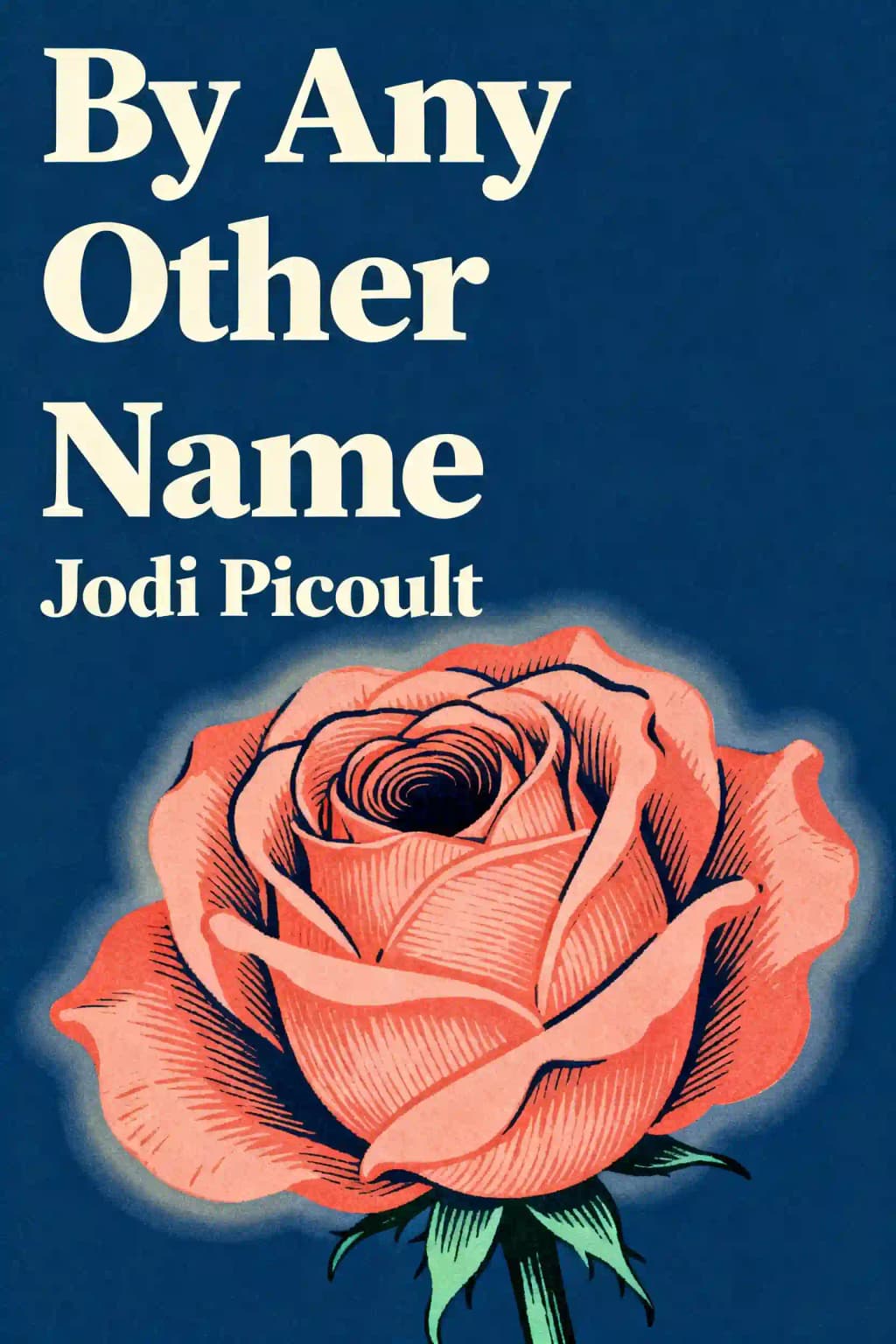
Have you ever wondered if history's greatest literary works might have been penned by someone entirely different from who we've been taught? What if the most celebrated playwright in the English language-whose works have been performed for over 400 years, studied by countless students, and quoted in everyday speech-was not the man from Stratford-upon-Avon at all? Jodi Picoult's "By Any Other Name" presents a provocative alternative history that has captivated readers worldwide, including celebrities like Reese Witherspoon who featured it in her book club. This New York Times bestseller reimagines Shakespeare's works through the lens of Emilia Bassano, England's first published female poet and possibly-as Picoult daringly suggests-the true author behind many of Shakespeare's most beloved plays. The novel weaves between Renaissance London and contemporary New York, exploring how women's voices have been systematically erased throughout history and how that erasure continues in modern creative industries.
Capitolo 2
The Dark Lady Behind the Bard's Brilliance
Emilia Bassano's story begins in 1581 as a twelve-year-old orphan living under the guardianship of the Countess of Kent. The daughter of Italian court musicians who had emigrated at King Henry VIII's request, Emilia receives an unusually thorough education for a girl of her time-studying languages, literature, and the arts. When the Countess remarries and moves away, Emilia is shuttled between London and Grimsthorpe with Baron Willoughby and his disapproving wife.
The Baron's diplomatic mission to Denmark proves pivotal in Emilia's development. During their journey, she experiences a terrifying storm at sea that nearly sinks their ship. In Denmark, she meets the astronomer Tycho Brahe and his cousins Rosenkrans and Guldensteren-names that would later appear in "Hamlet." Brahe's description of discovering a supernova that challenged conventional wisdom resonates deeply with Emilia, who connects it to how the world itself might change.
Upon returning to England, Emilia discovers the Baron's true intentions: he delivers her to Isabella, an Italian courtesan who will "tutor" her in becoming a mistress. Though initially devastated to learn her cousin Jeronimo arranged this fate in exchange for securing the Bassanos' position as court musicians, Emilia reluctantly accepts her circumstances. Isabella offers a perspective that transforms Emilia's understanding: being "kept" as a mistress offers more freedom than being "owned" as a wife. "Women are given nothing," Isabella teaches her. "You must learn how to take what you want."
This education prepares Emilia for her role as mistress to Lord Hunsdon, the Queen's forty-three-year-old cousin. Despite her initial apprehension, their relationship proves surprisingly respectful. Hunsdon treats her with unexpected tenderness, encouraging her interests and providing her with luxury beyond anything she's known. Rather than immediately bedding her, he shares his orangery and exotic plants, speaking of good hearts being "the sun and the moon."
Capitolo 3
A Woman's Mind in a Man's World
As Emilia settles into her role as Hunsdon's mistress, she discovers purpose by reading plays sent to him for censorship review. Her insightful critiques reveal her natural talent for understanding how theater works as both business and art. While attending a performance at the Rose Theatre, Emilia questions why women can perform at court but not on public stages-one of many moments where she recognizes the arbitrary limitations placed on her gender.
One night, unable to sleep, she reads plays in Hunsdon's study, including one by an unknown William Shakespeare that she finds poorly written. The experience awakens her desire to write plays herself, believing she could craft better stories than the men whose work she reads.
As she matures from 19 to 23, Emilia's body changes, drawing attention from men at court, but no one notices her expanding mind. Though publicly playing the role of decorative object as Hunsdon's mistress, privately she pours her emotions and intelligence into poetry and stories. She writes from perspectives of freedom-seeking characters, self-rescuing princesses, and women valued for both beauty and intellect. Her hundreds of hidden pages contain no happy endings-only truth, as any real poet knows.
At Wilton House, Emilia remains with Mary Sidney Herbert's literary circle after Hunsdon retires. When Mary presents her translation of Robert Garnier's play "Antoine," Emilia witnesses a transformative moment-a woman's work being performed, even if only as a closet drama. Later, Mary shows Emilia her alchemical creation-disappearing ink-remarking poignantly that "this is how men would prefer it, is it not? That anything written by a woman vanish forever."
Capitolo 4
Forbidden Love and Literary Birth
Emilia's life takes another turn when she meets the young Earl of Southampton in the palace gardens. Despite knowing she is Hunsdon's mistress, their attraction is immediate and powerful. Their passionate encounter leads to a stolen kiss where Emilia takes control, showing him that "a kiss is no soliloquy, but a dialogue." Though both recognize the impossibility of their situation-he faces a political marriage and she depends on Hunsdon's protection-their connection deepens.
Meanwhile, Emilia develops a profound literary friendship with playwright Christopher Marlowe. When he reads her poem "Venus and Adonis" and encounters the line "Sith in his prime Death doth my love destroy, / They that love best their love shall not enjoy," he immediately asks for her pen to make notes, telling her "that is what writers do for each other." Their friendship blossoms quickly-Kit becomes "the best friend Emilia had never had." They exchange letters, critique each other's writing, and meet secretly.
Marlowe helps Emilia disguise herself as a boy named "Emile Hammersmith" to accompany him to Grocers' Hall, where they meet John Heminges and a playwright named Will Shakespeare. Emilia recognizes Shakespeare's name, recalling his plays submitted to Hunsdon, which she thought were poorly written.
When Southampton appears beneath Emilia's window at Somerset House one rainy night, their forbidden relationship culminates in a passionate encounter in the orangery. Their intimacy is interrupted when Hunsdon returns unexpectedly, forcing Emilia to distract him while Southampton escapes. The incident leaves Emilia feeling like "a wraith, and every chamber of her heart was haunted."
Capitolo 5
The Shakespeare Arrangement
After witnessing Southampton's heartbreaking departure, Emilia retreats into profound isolation, channeling her anguish into completing her Venus and Adonis poem. The work, with its inevitably tragic conclusion, mirrors her own emotional devastation. In desperation, she sends it to Christopher Marlowe with a simple yet poignant plea: "Help me." Their subsequent partnership blossoms over the following year through weekly meetings at the Falcon Inn, where Kit serves not only as her editor but as a compassionate confidant while she processes her grief for Southampton. These sessions become a sanctuary where she can freely express both her literary ambitions and emotional turmoil.
Kit eventually shares a remarkable secret that will transform Emilia's life: the Earl of Oxford orchestrates a sophisticated network of anonymous writers who channel their works through a front man - a shrewd businessman-actor named William Shakespeare. This revelation arrives at precisely the moment when Emilia most needs a way to express her voice while maintaining social propriety. Recognizing both her extraordinary talent and desperate need for anonymity, Kit arranges a clandestine meeting with Shakespeare at the White Hart tavern. Despite her nerves, Emilia approaches the negotiation with calculated precision, facing a man whose jealousy and ambition are immediately apparent.
The arrangement she proposes is masterfully balanced: Shakespeare would gain the fame and recognition he craves by claiming authorship of her works, while she would secure both financial compensation and - most precious to her - the freedom to craft authentic female characters who transcend the period's conventional stereotypes. The deal they strike begins with a test: her play "Arden of Faversham" will be published anonymously, with Emilia receiving fifteen shillings for every forty-shilling play - a modest sum that nevertheless represents her first independent income as a writer.
The success of this initial venture becomes concrete when Kit delivers both the printed pamphlet of her play and her first payment. This moment marks not just a financial transaction but the birth of Emilia's secret career as the unacknowledged voice behind what will become some of "Shakespeare's" most celebrated works. Her hidden role allows her to explore themes and perspectives that would have been impossible for her to publish under her own name.
However, just as this new chapter of her life begins, London falls under the shadow of plague. When Emilia falls ill, the diagnosis reveals not plague but pregnancy - news that proves catastrophic to her relationship with Hunsdon. After a decade as his courtesan, this pregnancy crosses an unforgivable boundary. Hunsdon, unwilling to shame his legal wife with evidence of a second family, ends their long-standing arrangement. Though he promises to ensure her financial security, stating she'll "be taken care of," the termination of their relationship effectively closes her chapter at court, forcing her to rebuild her life around her new secret identity as a writer.
Capitolo 6
Marriage and Motherhood's Constraints
With plague ravaging London's crowded streets and death carts rolling through neighborhoods, Emilia finds herself cornered into marriage with Alphonso Lanier, a distant cousin whose pockmarked skin and sour demeanor reflect his bitter nature. The revelation that Alphonso received seven hundred pounds and a coveted court appointment as payment for marrying her strikes Emilia like a physical blow - reducing her worth to a mere transaction. Their wedding day perfectly captures their ill-fated union: the groom stumbling drunk through his vows, while the bride, dressed defiantly in black, scowls through the ceremony, her dreams of independence crumbling.
Alphonso's true nature emerges swiftly and brutally, particularly after discovering Emilia's pregnancy. His jealous rages intensify, and he frequently hurls "puttana" (whore) at her, confining her to their chamber for days at a time. The plague's devastation of London provides a grotesque backdrop to her domestic imprisonment, as she struggles to maintain a household with only one loyal servant, Bess, who becomes both confidante and lifeline. Her advancing pregnancy proves a double-edged sword - while it shields her from Alphonso's physical advances, she watches helplessly as he systematically destroys her financial security through a series of disastrous investments and gambling debts at the Bear Garden.
Determined to maintain some independence, Emilia secretly begins selling her jewelry piece by piece. She draws upon her knowledge of herbs and medicines to create remedies against the plague, selling them through Bess to desperate Londoners. Her entrepreneurial efforts provide both income and purpose, though she must hide every penny from Alphonso's greedy grasp.
The birth of her son brings both joy and complication - his striking red hair immediately raises questions of paternity, as both Lord Hunsdon and the Earl of Southampton share this distinctive trait. In naming him Henry, Emilia makes a bold choice laden with meaning, privately praying her son will inherit Hunsdon's legendary kindness and Southampton's fierce intelligence, along with her own resilient spirit that has carried her through so much adversity.
Alphonso's violent reaction to the name Henry reveals his deep-seated suspicions. Returning home in a drunken fury, he beats Emilia so severely she fears for her life. In desperation, she reaches out to Kit Marlowe, her trusted friend and fellow poet. Marlowe orchestrates a clever solution - arranging for Shakespeare to purchase her sensual poem "Venus and Adonis." The poem, published under Shakespeare's name with a carefully worded dedication to Southampton, provides Emilia with much-needed funds while protecting her from Alphonso's wrath, though at the cost of her literary recognition.
Capitolo 7
The Writer Behind the Mask
With Alphonso absent on a military expedition to Brest, Emilia experiences newfound freedom. The summer of 1594 becomes one of her happiest-managing her household, meeting Southampton secretly, and writing feverishly. She pours her heart into a new play about doomed romance, drawing from her own experiences to create "Romeo and Juliet."
When Shakespeare sells Emilia's play to Philip Henslowe, who plans to stage "The Taming of the Shrew" at Newington Butts alongside her edited "Titus Andronicus," Emilia is determined to see her work performed. At the theater, she watches with satisfaction as the audience loves her play. She realizes the true power of her writing-not just what happens onstage but how it affects the audience. While men laugh at Kate's subjugation, women recognize their own frustrations. Emilia hopes the play might change minds under the guise of entertainment.
In her revision of "The Taming of the Shrew," Kate's final speech of submission becomes the longest monologue in the play-a subtle subversion as the supposedly silenced woman speaks at greatest length. Emilia crafts the speech as sarcastic rather than sincere, questioning why men find women's voices so threatening: "What was it about a woman's voice that was so terrifying to a man? Was it the thought that a lesser creature might have intelligence or agency?"
As Emilia continues her secret literary career, she revisits "Othello," giving her namesake character a powerful voice. She adds 160 lines, including a feminist monologue for the character Emilia that boldly asserts women's equality with men: "Let husbands know their wives have sense like them... And have not we affections, desires for sport, and frailty, as men have?" She also composes Desdemona's "Willow Song," drawing on memories of her father's music and her family's musical heritage. As she writes, Emilia realizes this revision is her swan song-her final chance to declare "I was here. I mattered."
Capitolo 8
History's Erasure and Modern Echoes
The novel shifts to present-day New York, where Melina Green, a struggling playwright and descendant of Emilia Bassano, confronts the persistent barriers women face in theater. After receiving scathing reviews from influential critic Jasper Tolle - who dismisses her work as "hysterical feminist revisionism" - and having her graduate thesis downgraded to a C+ for reporting her professor's sexual harassment, Melina finds herself increasingly disillusioned with the industry's power dynamics. During her research at the New York Public Library, she stumbles upon documents revealing her connection to Emilia Bassano, England's first published female poet and possible Dark Lady of Shakespeare's sonnets.
This discovery catalyzes Melina's most ambitious project yet: a meta-theatrical play called "By Any Other Name." The play interweaves two parallel narratives - Emilia's historical story and a contemporary character simply called The Woman - exploring how female voices are systematically silenced across centuries. Through innovative staging and dual timelines, Melina crafts a commentary on authorship, recognition, and the ways women must often hide their true identities to have their work taken seriously.
When her roommate Andre, a graduate student in theater design, secretly submits her play to the prestigious Downtown Fringe Festival under the gender-neutral name "Mel," Melina is initially furious. However, the play's selection as a finalist forces her to confront an uncomfortable reality: her work, previously rejected by twelve theaters, suddenly gains legitimacy when assumed to be written by a man.
The situation becomes increasingly complex when artistic director Felix Dubonnet - known for his "bold, masculine interpretations" of classical works - immediately assumes Andre is "Mel Green." Learning that Jasper Tolle, whose reviews have ended careers, will be attending the festival, Melina reluctantly agrees to maintain the charade. She attends rehearsals as Andre's assistant, watching her own words being interpreted and sometimes misunderstood through a male lens.
The deception reaches new levels of irony when producer Tyce D'Onofrio, who had previously dismissed Melina's pitch meeting without reading her work, now champions "Mel Green's" play as groundbreaking. He particularly praises how a "male voice" tackles women's historical erasure, calling it "exactly the kind of allyship theater needs." In production meetings, Melina must bite her tongue as male creative team members debate her intentions, mansplain her own metaphors, and congratulate themselves on their progressive programming - all while the actual female playwright sits silently in their midst, her presence as invisible as Emilia Bassano's was centuries before.
Capitolo 9
Confronting Truth and Finding Voice
When Jasper Tolle writes a column about gender inequality in theater, admitting his own unconscious bias in loving Melina's play when he thought it was written by a man, the deception collapses. Melina must confront her own complicity in the situation, realizing she was so focused on gender discrimination that she ignored the racial dynamics of asking Andre to pretend her play was his.
After a period of exile in her Connecticut hometown, Melina receives an unexpected email from the Athena Playhouse in Maine, expressing interest in producing "By Any Other Name." The meeting turns out to be with Jasper Tolle, who reveals he quit the Times three years ago and founded the playhouse specifically to produce works by women and nonbinary writers-keeping a promise he once made to her.
On opening night of "By Any Other Name," Melina sits in the front row as her play concludes with the powerful lines: "There once was a girl who became invisible so that her words might not be... There was a story, whether or not others ever chose to listen." After the blackout, she savors that precious moment between the final line and the audience's applause-proof that they've taken a journey and returned changed.
As she makes her way to the stage, Melina encounters a woman in period costume with silver eyes matching her own. When she turns back, the mysterious figure has vanished. Stepping into the spotlight to join the cast who brought her words to life, Melina thinks: "There once was a girl who was seen."
Capitolo 10
The Truth Behind the Fiction
In her detailed author's note, Picoult reveals how her extensive research into Shakespeare's authorship fundamentally challenged her long-held beliefs. She meticulously outlines what historical records actually show about William Shakespeare: the son of a Stratford glover, John Shakespeare; husband to Anne Hathaway at age eighteen; a working actor with documented pay stubs from various performances; and a shrewd businessman who owned shares in the Lord Chamberlain's Men theater company. Records also reveal a more complex character - a man who deliberately evaded taxes during difficult times, hoarded grain during a devastating famine while his neighbors struggled, and spent considerable money pursuing a family crest to elevate his social status.
What's conspicuously absent from these extensive historical records is any contemporary documentation of Shakespeare as an author or playwright. While preservation of documents from four centuries ago is naturally limited, other playwrights of the Elizabethan era left considerable evidence of their craft - they referenced each other in letters and publications, appeared in theater company ledgers as writers, received public acclaim and mourning at their deaths, were honored with burial in Westminster Abbey's Poets' Corner, and left behind personal libraries, books, and manuscripts. Shakespeare supposedly wrote thirty-seven plays independently - an extraordinary feat while maintaining a full-time career as both actor and theatrical producer. This stands in stark contrast to his contemporaries like Christopher Marlowe, Ben Jonson, and Thomas Kyd, who regularly collaborated with other writers and left clear paper trails of their literary work.
Picoult raises several compelling questions about Shakespeare's writing that have long troubled scholars. How could someone who never traveled outside England describe Italian locations with such precise detail that only locals would know - like specific streets in Padua and Venice's unique maritime laws? How did he acquire such extensive knowledge of legal proceedings and terminology without any documented legal training? His plays contain numerous sophisticated musical references and technical terms, yet there's no evidence he played any instrument or studied music formally. Perhaps most tellingly, Picoult finds it difficult to reconcile that the writer who created literature's most fierce, intelligent, and verbally dexterous female characters - from Beatrice to Rosalind to Lady Macbeth - never saw fit to teach his own daughters, Judith and Susanna, to read or write. Historical records show they remained illiterate their entire lives, signing legal documents with simple marks rather than signatures - an unusual circumstance for the daughters of England's greatest writer.
Capitolo 11
The Legacy of Women's Voices
"By Any Other Name" is ultimately about the power of storytelling and the persistence of truth. Through Emilia and Melina's parallel journeys, Picoult explores how women's voices have been systematically silenced throughout history and how that silencing continues today.
The novel challenges us to question accepted narratives and consider whose stories get told-and whose get erased. As Emilia reflects while watching her play performed, the true power of writing lies not just in what happens on the page or stage but in how it affects the audience. Stories have the power to change minds, to make the invisible visible, and to ensure that those who have been silenced can finally be heard.
In the end, both Emilia and Melina find ways to make their voices heard despite the constraints of their respective times. Their stories remind us that truth has a way of persisting, even when deliberately obscured. As Ben Jonson says to Emilia about the clues hidden in the First Folio: "With time and thought, and all these clues, how could they not?" discover the truth?
Perhaps the most powerful message of the novel comes from Kit Marlowe's words to Emilia as she worries her work might not have made a difference: "Even if you do not feel the shade of the tree you planted, others will." It's a reminder that the impact of our words and actions may not be felt in our lifetime, but they ripple outward nonetheless, creating change we cannot imagine.