Capitolo 4
The Legacy of RJ Reynolds: Tobacco's Empire in Winston-Salem
The RJ Reynolds Tobacco Company wasn't just a business in Winston-Salem, North Carolina-it was the lifeblood of an entire city. The company's influence permeated every aspect of community life, from the architectural gem of its headquarters (which inspired the Empire State Building's design) to the medical school, parks, mansions, and Wake Forest University campus built with Reynolds money. Even in poor neighborhoods, Reynolds influence was evident through hospitals and schools. On humid days, the pungent smell of tobacco hung over downtown, a constant reminder of the city's foundation.
Richard Joshua Reynolds, a six-foot-two Virginian, rode into Winston-Salem in 1874, attracted by excellent tobacco-growing land. Unlike the Old South aristocracy, R.J. embodied the New South's entrepreneurial spirit. He bought land from the Moravian church for $388 and established his factory in 1875, competing with fifteen other tobacco companies. Reynolds distinguished himself through innovation, making chewing tobacco sweeter with saccharin, and aggressive expansion. His business acumen combined with the local Moravian work ethic created the foundation for Reynolds's corporate culture.
In the 1890s, James B. "Buck" Duke's American Tobacco Company began acquiring regional tobacco companies. Though R.J. Reynolds vowed to fight, he surprisingly sold two-thirds of his company to Duke's trust for $3 million in 1899, while maintaining operating control. Under the trust, Reynolds expanded aggressively, becoming North Carolina's biggest employer. When Teddy Roosevelt's trustbusters finally broke Duke's monopoly in 1911, Reynolds celebrated with a giant electric advertisement in Manhattan declaring "The Nation's Joy Smoke."
To protect Reynolds from takeovers, Mr. RJ created "Class A" stock-locally called anticipation stock-that gave workers voting power and paid 10% of all profits above $2.2 million. Workers eagerly bought this stock, and annual dividend payments became local holidays when luxury purchases spiked. Reynolds took exceptional care of its employees, providing loans for property, operating lunchrooms at cost, supplying ice water in steamy factories, offering day care, running supervised housing for female workers, and providing affordable housing for 180 families.
In 1913, at age sixty-three, Mr. RJ took his biggest gamble: cigarettes. While smokers preferred rolling their own and existing packaged brands were regional with poor taste, Reynolds developed a unique blend of local, Kentucky burley, and Turkish tobaccos. Named "Camel" with a dromedary on the pack photographed from a visiting circus, the brand launched with a brilliant teaser campaign. Priced at twenty cigarettes for a dime-undercutting competitors by five cents-Camel became a phenomenon, selling 425 million packs within a year. In 1918, as Camel dominated the market, Mr. RJ died of pancreatic cancer, confident in his company's future: "I have written the book. All you need to do is follow it."
Capitolo 5
The Culture Clash: Old Tobacco Meets New Management
After Mr. RJ's death, Reynolds leadership passed out of family hands to locally-grown executives who maintained the company's deep connection to Winston-Salem. Under leaders like Bowman Gray, the company embodied Moravian values: Work (tobacco buyers were forced to cull their purchased leaves, contemplating the quality of their work); Thrift (employees returned pencil stubs to get new ones); and Ingenuity (developing "reconstituted tobacco" to use scraps and stems).
The town's elite formed a tight circle, marrying within their group and summering together at Roaring Gap. This fostered intense parochialism-one executive was fired partly because he wouldn't live in Winston-Salem. Under John Whitaker in the 1950s, Reynolds entered a golden age, introducing Winston in 1954 (the first major filtered cigarette) and Salem (the first mass-marketed menthol cigarette). By 1960, Reynolds dominated the tobacco industry with three of the top four cigarette brands.
Despite its success, Reynolds faced a dilemma: too much cash and limited opportunities for diversification. The company's insularity prevented it from pursuing overseas markets that rival Philip Morris was exploiting with Marlboro. Reynolds executives joked that from headquarters they could see everything they owned, and "if somebody out there in the world wants a Camel, let them call us."
This parochialism proved disastrous when Reynolds began diversifying under Alex Galloway, who purchased Sea-Land (a shipping company) and Aminoil (an oil company) while the tobacco factories slowly deteriorated. Paul Sticht, an outsider who engineered his own selection as Reynolds' leader in 1972, began transforming Reynolds from a family business into something approaching a modern conglomerate.
Under pressure from Philip Morris's growing Marlboro brand, Sticht brought in Northern executives to modernize Reynolds, including Tylee Wilson from Chesebrough-Pond. These outsiders, mistaking Southern gentility for weakness, proved remarkably inept at selling cigarettes. By 1976, Marlboro overtook Winston as America's bestselling cigarette.
The succession battle between Wilson, Ed Horrigan (who headed Reynolds' tobacco business despite never having smoked), and Joe Abely split Reynolds into warring camps, destroying the company's century-old "one-for-all" culture. Wilson eventually won, becoming CEO in 1983. He reshaped Reynolds by spinning off Sea-Land, selling Aminoil, and focusing on consumer products as tobacco sales declined.
Wilson's vision to transform Reynolds into a consumer-goods superpower led to the Nabisco acquisition for $4.9 billion in 1985. The merger immediately revealed stark cultural differences-Reynolds executives were shocked by Nabisco's ostentatious white limousines and lavish perks, while Nabisco's "wholesome" bakers were horrified at joining "Death Merchants." Johnson privately referred to the merger as "Mom and apple pie meet the skull and crossbones."
Capitolo 6
The LBO Revolution: Henry Kravis and the Rise of Debt-Fueled Takeovers
While Ross Johnson was building his corporate empire, Henry Kravis was quietly revolutionizing how businesses changed hands. Born to wealth in Tulsa, Kravis had risen meteorically on Wall Street through leveraged buyouts (LBOs). By 1988, his firm controlled businesses that would collectively rank among America's top ten corporations, with $45 billion in buying power exceeding the GNPs of Pakistan or Greece.
Kravis learned the art of "bootstrap deals" under Jerome Kohlberg at Bear Stearns. These LBOs began as solutions for aging company founders looking to cash out while preserving family control. Kohlberg's blueprint involved forming a shell company backed by investors to buy businesses using mostly borrowed money, letting original owners retain stakes and management roles, then selling shares to the public at higher prices.
When Bear Stearns' trading-focused culture clashed with their buyout business, Kohlberg, Kravis and his cousin George Roberts established Kohlberg Kravis Roberts & Co. in 1976. For five years, they followed Kohlberg's principles: friendly deals, management participation, and careful execution, claiming average annual returns of 62.7%.
Their obscurity ended in 1982 when William Simon's Gibson Greetings deal turned $330,000 into $66 million, drawing attention to the LBO world. The phenomenon was fueled by tax advantages and Michael Milken's junk bonds, which replaced insurance company funding and transformed LBOs from slow-moving operations to aggressive competitors in takeovers. Critics emerged, with an SEC chairman predicting "the more leveraged takeovers and buyouts now, the more bankruptcies tomorrow."
By 1983, Jerry Kohlberg grew uncomfortable with the industry he helped create, preferring small, friendly deals while Kravis and Roberts attracted younger investment bankers with ideas for larger transactions. After health problems and disagreements over the firm's direction, Kohlberg departed in 1987 to form Kohlberg & Co., focusing on small, friendly deals.
By 1987, the once-exclusive LBO industry was becoming crowded as institutional investors poured billions into firms hoping to replicate Kravis's success. This competition transformed once-quiet negotiations into bidding wars, driving prices skyward. To maintain dominance, Kravis and Roberts deliberately targeted megadeals-$5-10 billion buyouts few others could attempt. This strategy offered two advantages: less competition and higher fees that went directly to the partners.
In 1987, they raised a record $5.6 billion fund, controlling one dollar of every four in global LBO equity. Despite several failed attempts at major acquisitions in 1988, including Texaco and Kroger, Kravis remained interested in RJR Nabisco, having reconsidered his concerns about tobacco liability.
Capitolo 7
The Buyout Begins: Johnson's Fateful Decision
By 1988, Ross Johnson had completely reshaped RJR Nabisco in his image. He had purged Reynolds veterans, replacing them with his Nabisco cronies, and moved headquarters to Atlanta, abandoning Winston-Salem's conservative culture. Johnson's big-city ways-complete with bodyguards, helicopter arrivals at fundraisers, and weekends spent with celebrity friends-scandalized the tobacco company's traditional community.
Despite his apparent success, Johnson faced a persistent problem: RJR Nabisco's stock price remained stubbornly low. The October 1987 stock market crash had devastated RJR's share price, plunging it from the mid-sixties to the low forties where it languished for months. Despite posting a 25% profit increase in December, the market continued treating RJR as a tobacco stock, ignoring that 60% of sales came from food businesses.
This persistent undervaluation frustrated Johnson, who viewed stock price as his personal report card. As other food stocks recovered and soared, Johnson felt like "a wallflower at the orgy" and began considering strategic options. After a massive $1.1 billion stock buyback failed to boost the price, Johnson grew increasingly receptive to more dramatic solutions.
Investment bankers circled Johnson with various proposals, including an LBO (leveraged buyout) that would take the company private. Initially skeptical, Johnson spent five hours meticulously analyzing RJR Nabisco's numbers with his financial adviser Frank Benevento. By evening, he felt confident an LBO was feasible.
The next day, Peter Cohen and Tom Hill from Shearson Lehman Hutton arrived to discuss the potential buyout. When Johnson expressed concern about the enormous sum required, asking "Is this something you think is doable and viable? Because you're talking about a pissload of money here," Cohen confidently replied, "Yeah, we can do it."
Johnson's plan was unconventional from the start. Rather than the traditional "gun-to-the-head" strategy where management secretly arranges financing before presenting the board with a take-it-or-leave-it proposition, Johnson insisted on presenting an LBO as an idea for the board to consider. Having witnessed his predecessor Tylee Wilson's fate, he wouldn't risk angering directors with secretive maneuvers.
The proposed price of $75 per share (nearly $17.6 billion) would make it almost three times the size of the largest previous LBO. Johnson demanded unprecedented control for management, insisting on board control and veto power over strategic decisions. "For Christ's sake, I'm not going to have a bunch of bloody investment bankers on my board telling me what I can do," he declared. Even more outrageous was Johnson's profit-sharing demand-20% of the company stock, potentially worth $2.5 billion.
On October 19, 1988, Johnson presented his proposal to the RJR Nabisco board. The next morning, when the announcement hit the wires at 9:35, media chaos erupted-hundreds of calls flooded in, television crews surrounded the building, and a helicopter hovered overhead. The largest corporate takeover in history had begun.
Capitolo 8
The Bidding War: Wall Street's Greatest Contest
The announcement of RJR Nabisco's potential buyout reverberated through the financial world like a thunderclap. Wall Street's merger specialists-an elite, incestuous group of deal makers clad in designer suits and Hermes ties-immediately began positioning themselves to get involved in what could be the largest deal in history.
Henry Kravis was stunned when his secretary handed him a note: "RJR going private at 75 a share." Kravis nearly dropped the phone, quickly growing angry. "I can't believe this," he fumed to his right-hand man Paul Raether. "We gave them the idea! He wouldn't even meet with us!" Kravis was particularly bewildered by Johnson's choice of Shearson, telling his advisor Dick Beattie, "Why in the world is he doing this with Shearson, of all people? They've never done a deal."
The RJR Nabisco board, led by chairman Charlie Hugel, formed a special committee to evaluate Johnson's offer and any competing bids. Bankers from Lazard Freres and Dillon Read arrived to represent the special committee for $14 million each. Their job was to analyze Johnson's bid and any others that might emerge.
Within days, Kravis made his move, submitting an unsolicited tender offer of $90 per share-$21 billion-for RJR Nabisco. The announcement devastated Johnson, who had been confident no competitor could top his bid without a friendly management team. "As far as I'm concerned," Johnson told John Martin, "this is all over."
But Peter Cohen refused to surrender. Analyzing Kravis's bid, he realized it wasn't entirely cash-only $79 per share with the remainder in securities valued at $11. This gave Cohen hope they could counter by adding "paper" to their own bid. Johnson's team surprised Kravis with a $100 per share offer ($23 billion), swamping Kravis's $94 ($21.62 billion).
The committee was ready to declare Johnson the winner until First Boston's last-minute proposal arrived, suggesting a restructuring worth between $105 and $118 per share. This forced the special committee to extend the deadline by ten days, giving all bidders time to revise their offers.
As the new deadline approached, tensions mounted. Johnson's reputation had been severely damaged by a Time magazine cover story titled "A Game of Greed" that quoted him calling his potential $100 million payout "Monopoly money." The public and political backlash against LBOs intensified, with Senate Minority Leader Bob Dole beginning to discuss tax code reforms to curb the LBO frenzy.
In the final hours before the deadline, Cohen made the shocking decision to boost their bid to $112 per share-requiring Johnson to reduce the management stake to just 4% from the original 8.5%. Johnson, reduced to helpless giggles at the absurdity of the numbers, agreed with an ironic laugh: "But if we go any further, we're going to be owing them money."
Capitolo 9
The Fall of an Empire: Johnson's Defeat and the Aftermath
The final showdown came on November 30, 1988. The RJR Nabisco board gathered at Skadden Arps to evaluate the competing bids: the management group's $112 offer versus KKR's $108. The board's advisers struggled to find a solution, caught between KKR's seemingly solid but lower bid and the management group's higher but "softer" offer with unverified securities.
After intense negotiations, Kravis and Roberts made their final move, raising their bid to $109 per share with a 30-minute deadline. They presented their final offer to the board with a signed merger agreement, demanding it be returned with Hugel's signature within thirty minutes.
In the final moments, the board faced what appeared to be a dead heat between two essentially equivalent offers. After Rohatyn presented the differences between the bids-KKR's promise of 25% stock for shareholders versus Shearson's 15%, KKR's commitment to sell only part of Nabisco, and Shearson's lack of reset guarantees-the directors voted unanimously for Kravis's offer.
When Atkins delivered the signed contract to Kravis, the normally composed financier went numb, having lost eight pounds during the six-week battle. Johnson received the news at Scarlatti restaurant with resigned acceptance: "Surprise... Let's get together and see the guys." While Johnson remained gracious in defeat, opening the bar at Nine West and encouraging his team to take the high road, Horrigan grew bitter.
On February 9, 1989, the financial machinery activated as Drexel delivered $5 billion in checks, KKR transferred $2 billion from its account, and Manufacturers Hanover gathered $11.9 billion from banks worldwide-the massive funding required to complete the largest leveraged buyout in history. The financial river was so immense it temporarily bulged U.S. money-supply statistics as it coursed through the system. By 10:45 that morning, RJR Nabisco had changed hands.
Johnson resigned with his $53 million golden parachute, departing on his new Gulfstream jet to Jupiter, Florida. In Winston-Salem, where RJR stock had been "not a stock but a religion," residents received nearly $2 billion in checks, creating a community of "reluctant millionaires" who couldn't bear parting with their shares.
Kravis moved quickly to heal wounds inflicted during the fight, making peace with Peter Cohen, hiring Tom Hill, and even mending fences with Linda Robinson. The real balm, however, was money-firms collected hundreds of millions in fees, celebrated at a lavish closing dinner at the Pierre Hotel.
For RJR Nabisco, Kravis recruited Louis Gerstner from American Express as CEO. Gerstner immediately dismantled Johnson's empire, selling seven of eight corporate jets and numerous properties. Only 10% of Atlanta managers agreed to relocate when headquarters moved to New York. While the company reported a $1.15 billion loss in 1989 after debt payments, its cash flow remained strong and divestitures raised nearly $5 billion.
Capitolo 10
The End of an Era: Legacy of the Greatest Takeover Battle
The RJR Nabisco takeover battle both defined and ended an era. KKR's $25 billion winning bid remained the largest business deal for nearly a decade. By 1990, Wall Street's party had ended as the junk-bond market collapsed, bringing down Drexel Burnham Lambert and effectively ending the era of unfettered financial excess.
As Ted Forstmann had predicted, junk bonds ultimately proved their danger when abused. The market's collapse cut off Wall Street's takeover fuel, and Drexel Burnham's bankruptcy marked the symbolic end of an era. Public opinion turned sharply against Wall Street after the insider trading scandals involving Ivan Boesky and Michael Milken. By the 1990s, financial restructuring became the hot career path for MBAs, as thousands of Wall Streeters lost jobs fixing the broken takeovers of the previous decade.
Ironically, the 1990s saw CEOs themselves adopt the barbarians' tactics. As Dick Beattie observed, "CEOs learned two things from LBOs: First, the way to build significant wealth was through equity ownership, not salary and bonuses, and second, you didn't need to do any LBO to build equity. You could give yourself stock options." This led to even greater executive compensation that would make Ross Johnson's once-shocking $53 million parachute seem modest.
The infamous CEOs of later scandals-Tyco's Dennis Kozlowski, WorldCom's Bernie Ebbers, and others-can be seen as evolutionary descendants of Johnson's pioneering role as "the CEO as self-interested no-company man." While later corporate excesses involved far larger sums, the RJR saga remains unmatched for pure drama-not due to the authors' writing skills, but because those six weeks in 1988 perfectly captured the zeitgeist of an era through its raw emotions, colliding egos, and improbable characters and plot twists.
The battle for RJR Nabisco revealed fundamental truths about American business that remain relevant today: the tension between shareholder value and corporate stewardship, the corrupting influence of excessive compensation, and the dangers of financial engineering divorced from underlying business realities. Perhaps most importantly, it showed how personal ambition, ego, and rivalry can drive business decisions with consequences far beyond the boardroom.
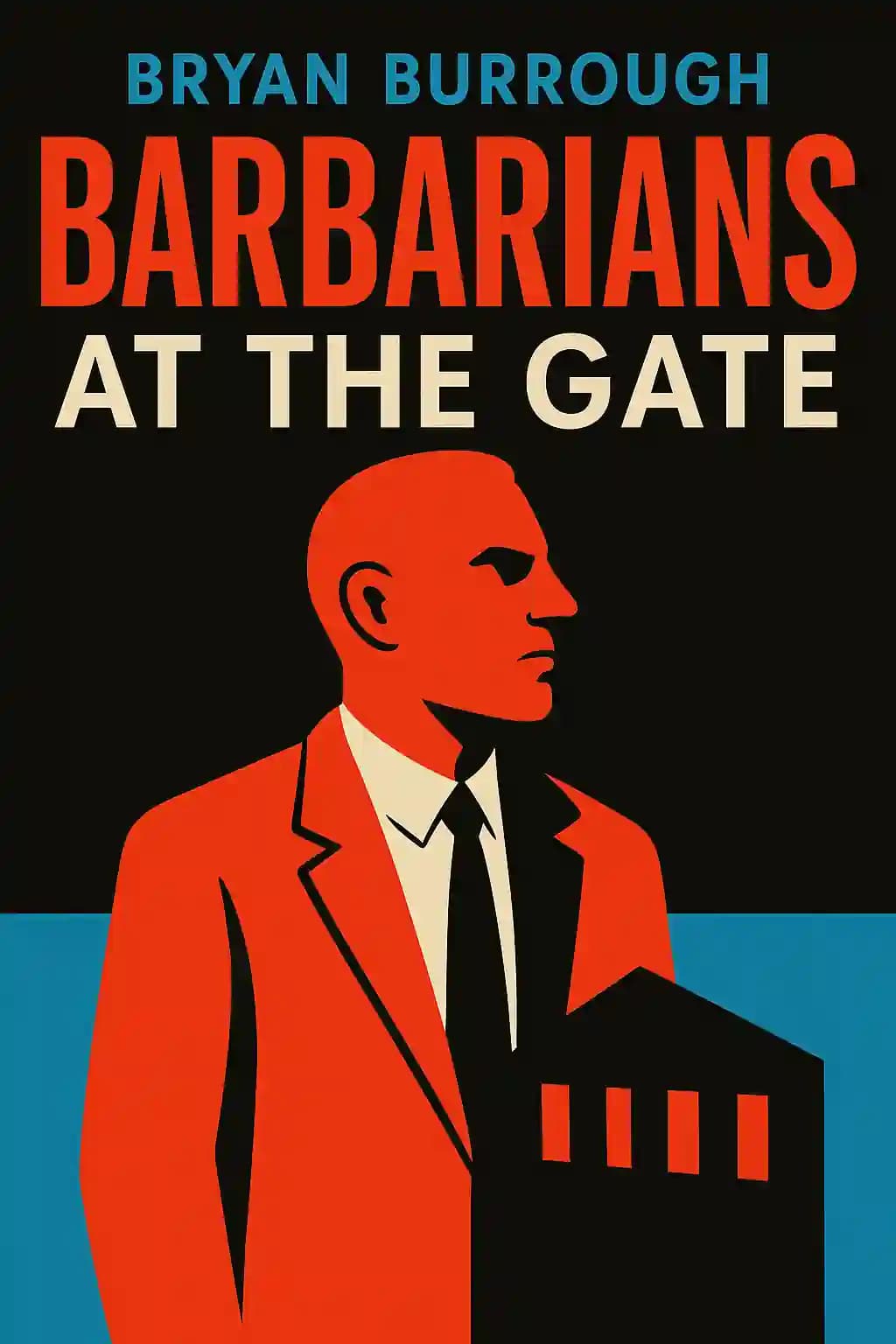
In the end, the shareholders did indeed win, as Johnson claimed in the roses he sent to directors. But the victory came at a cost-to employees who lost jobs, to communities disrupted by corporate relocations, and ultimately to a business culture that would increasingly prioritize short-term financial engineering over long-term value creation. The barbarians had not just stormed the gate; they had fundamentally changed the rules of engagement in American business.