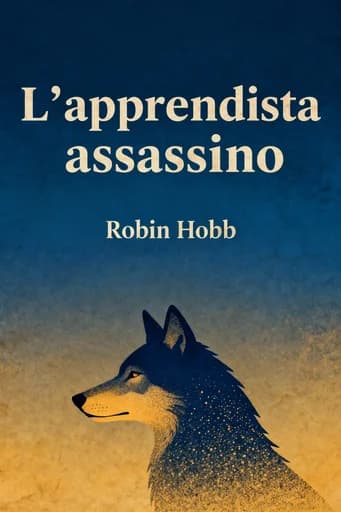
A royal bastard becomes history's deadliest assassin in Robin Hobb's fantasy masterpiece - translated into 20 languages and celebrating 25 years with special illustrated editions. What dark secrets lie behind this character-driven epic that captivated 180,000 Goodreads readers with a 4.21 rating?
Margaret Astrid Lindholm Ogden, known by her pen name Robin Hobb, is the bestselling author of Assassin's Apprentice and a master of character-driven epic fantasy. Born in California in 1952 and raised in Alaska's wilderness, Hobb's intimate knowledge of nature and isolation deeply informs her introspective narratives.
Assassin's Apprentice (1995) launched the Farseer Trilogy, the first in her acclaimed Realm of the Elderlings saga—a 16-book series exploring themes of identity, magic, belonging, and transformation. Known for her unusual first-person storytelling and emotional depth, Hobb has been called "one of the great modern fantasy writers" by The Times.
Her subsequent series—including the Liveship Traders, Tawny Man, Rain Wild Chronicles, and Fitz and the Fool trilogies—concluded the epic in 2017 with Assassin's Fate. Hobb's work has sold over 4 million copies, been translated into 22 languages, and earned her the World Fantasy Award for Life Achievement in 2021.
Assassin's Apprentice by Robin Hobb follows FitzChivalry Farseer, a royal bastard who is taken into the royal household at age six and secretly trained as an assassin. The novel spans roughly ten years of Fitz's life as he navigates court intrigue, learns two forbidden magic systems called the Skill and the Wit, and struggles with his illegitimate status while defending the Six Duchies from mysterious Red Ship Raiders. This character-driven epic fantasy explores themes of loyalty, identity, and sacrifice through intimate first-person narration.
Robin Hobb is the pen name of Margaret Astrid Lindholm Ogden, an American fantasy author born in 1952 who previously published under the name Megan Lindholm. She created the Robin Hobb pseudonym in 1995 specifically to launch a new writing style with Assassin's Apprentice, choosing first-person narrative instead of her usual approach. The androgynous name was selected deliberately, with "Hobb" referencing fantasy creatures like hobbits. This debut work achieved the commercial success that had eluded her earlier career and established the Realm of the Elderlings series.
Assassin's Apprentice appeals to readers who prefer character-driven fantasy over action-heavy plots, with intricate emotional depth and morally complex protagonists. This book suits those who enjoy introspective first-person narratives, political intrigue, and coming-of-age stories set in medieval-inspired worlds. Fans of intimate magic systems, complex mentor-student relationships, and slow-burn storytelling will find Robin Hobb's writing particularly rewarding. The novel also resonates with readers interested in themes of illegitimacy, belonging, and the psychological costs of duty and sacrifice.
Assassin's Apprentice remains worth reading as a foundational work in character-driven epic fantasy that influenced the genre's shift toward psychological depth. Robin Hobb's exploration of otherness, identity, and moral ambiguity feels increasingly relevant, and her nuanced characterization continues to earn critical acclaim, with The Times calling her "one of the great modern fantasy writers". The book has sold over 4 million copies worldwide and been translated into 22 languages, demonstrating enduring appeal. For readers seeking thoughtful fantasy that prioritizes emotional complexity over spectacle, this novel delivers timeless value.
The Skill and the Wit are two distinct magic systems in Assassin's Apprentice that FitzChivalry Farseer possesses. The Skill is a powerful telepathic magic used by the royal Farseer line, which Fitz struggles to learn under a cruel and sadistic instructor named Galen who tortures him during training. The Wit is a rare, socially taboo magic that allows telepathic communication and bonding with animals, which Fitz must keep hidden because using it would disgrace the Farseer house. His surrogate father Burrich views the Wit as a perversity and punishes Fitz whenever he suspects its use.
FitzChivalry Farseer is the illegitimate son of Prince Chivalry, abandoned at the royal stables at age six and raised as the king's secret assassin. Fitz faces constant prejudice for his bastard status, brutal training under a sadistic Skill master, and the need to hide his Wit magic or face severe punishment. His greatest internal conflict involves his strained relationship with Burrich, who loves him like a son but refuses to speak to him because of the Wit. Robin Hobb portrays Fitz as burdened with competing loyalties, forbidden powers, and a desperate desire for belonging despite nearly everyone viewing him as shameful or unworthy.
Assassin's Apprentice explores sacrifice through characters making painful choices for duty, exemplified by Prince Chivalry abdicating after Fitz's existence is revealed. Robin Hobb examines illegitimacy and belonging as Fitz struggles with identity and acceptance in a world that views him as shameful. The novel addresses otherness and social prejudice through the taboo nature of the Wit magic and its users. Additional themes include the suppression of emotions for survival, moral ambiguity in assassin training versus personal ethics, and the psychological costs of loyalty and service.
Assassin's Apprentice uses first-person retrospective narration, with an older Fitz recounting his youth, creating an intimate and subjective perspective that allows deep connection with his thoughts and emotions. Robin Hobb employs character-driven plotting where events unfold through relationships, motivations, and internal conflicts rather than external action. The writing features subtle foreshadowing, recurring symbolism like the Skill and Wit, and sparse use of traditional fantasy battle sequences. This introspective approach was relatively uncommon when published in 1995 and helped establish Robin Hobb's distinctive voice in epic fantasy.
These quotes emphasize Robin Hobb's exploration of difficult choices, emotional restraint, and the personal costs of honor.
Assassin's Apprentice differs from traditional epic fantasy like The Lord of the Rings by prioritizing character psychology and relationships over world-saving quests and large-scale battles. Unlike action-heavy series, Robin Hobb's work focuses on political intrigue, coming-of-age struggles, and the intimate costs of magic and duty. The first-person retrospective narration creates a more introspective tone than typical third-person epic fantasy. Readers who enjoy character-driven works like Patrick Rothfuss's The Name of the Wind or slower-paced court intrigue similar to George R.R. Martin's early A Song of Ice and Fire will appreciate Robin Hobb's approach to the genre.
Assassin's Apprentice is the first book in the Farseer Trilogy and opens the much larger Realm of the Elderlings series spanning sixteen books. Robin Hobb continued FitzChivalry Farseer's story across three trilogies: the Farseer Trilogy, the Tawny Man Trilogy, and the Fitz and the Fool Trilogy, which concluded in 2017 with Assassin's Fate. The Realm of the Elderlings also includes the Liveship Traders Trilogy and the Rain Wild Chronicles, which explore the same world from different perspectives. This interconnected series structure rewards long-term readers while allowing each trilogy to function independently.
Assassin's Apprentice receives criticism for its slow pacing, as Robin Hobb prioritizes character development and introspection over plot momentum, which may frustrate readers expecting action-driven fantasy. The protagonist Fitz is sometimes viewed as passive, enduring abuse and manipulation rather than taking decisive action, though this reflects his position as a powerless bastard child. Some readers find the training sequences repetitive and the cruelty inflicted on Fitz by characters like Galen and the court excessive. The ending feels inconclusive to some, functioning more as setup for the trilogy's continuation than providing standalone resolution.
Senti il libro attraverso la voce dell'autore
Trasforma la conoscenza in spunti coinvolgenti e ricchi di esempi
Cattura le idee chiave in un lampo per un apprendimento veloce
Goditi il libro in modo divertente e coinvolgente
"Now you are mine."
"the fine art of diplomatic assassination."
"return" them if the village refuses to pay.
The Raiders employ a particularly insidious strategy.
Scomponi le idee chiave di Ci ke xue tu in punti facili da capire per comprendere come i team innovativi creano, collaborano e crescono.
Distilla Ci ke xue tu in rapidi promemoria che evidenziano i principi chiave di franchezza, lavoro di squadra e resilienza creativa.

Vivi Ci ke xue tu attraverso narrazioni vivide che trasformano le lezioni di innovazione in momenti che ricorderai e applicherai.
Chiedi qualsiasi cosa, scegli la voce e co-crea spunti che risuonino davvero con te.

Creato da alumni della Columbia University a San Francisco
"Instead of endless scrolling, I just hit play on BeFreed. It saves me so much time."
"I never knew where to start with nonfiction—BeFreed’s book lists turned into podcasts gave me a clear path."
"Perfect balance between learning and entertainment. Finished ‘Thinking, Fast and Slow’ on my commute this week."
"Crazy how much I learned while walking the dog. BeFreed = small habits → big gains."
"Reading used to feel like a chore. Now it’s just part of my lifestyle."
"Feels effortless compared to reading. I’ve finished 6 books this month already."
"BeFreed turned my guilty doomscrolling into something that feels productive and inspiring."
"BeFreed turned my commute into learning time. 20-min podcasts are perfect for finishing books I never had time for."
"BeFreed replaced my podcast queue. Imagine Spotify for books — that’s it. 🙌"
"It is great for me to learn something from the book without reading it."
"The themed book list podcasts help me connect ideas across authors—like a guided audio journey."
"Makes me feel smarter every time before going to work"
Creato da alumni della Columbia University a San Francisco

Ottieni il riassunto di Ci ke xue tu in formato PDF o EPUB gratuito. Stampalo o leggilo offline quando vuoi.
The six-year-old boy stood bewildered at Buckkeep Castle's gates as his grandfather declared, "He's Prince Chivalry's bastard, fed at my table for six years with never a word or coin from his father." With those harsh words, the child was abandoned to a new life that would shape his destiny. Delivered to Burrich, the Prince's stableman, the boy's unmistakable Farseer features confirmed his royal blood-and created immediate political turmoil. Prince Chivalry, heir to the Six Duchies throne and renowned for his honor, had produced a bastard while his wife Patience remained childless. Without ever meeting his son, Chivalry abdicated his claim to the throne and retreated to a distant estate-a gentle exile for a man who would have been King. Housed in the stables under Burrich's stern care, the nameless boy discovered an innate ability to mentally connect with animals-a magic called the Wit that was considered unnatural and dangerous. When Burrich discovered this bond, he separated the boy from his beloved puppy Nosy, believing the magic would make him "less than human." The separation left the child feeling as if part of himself had been torn away. For years, the boy lived as a shadow in the stables, occasionally sneaking into Buckkeep Town to meet his few friends-including a girl called Molly who stood up to bullies despite her own troubles. These brief moments of freedom were his only escape from the loneliness of being unwanted and unnamed.


