Capitolo 1
The Book That Sparked a Revolution
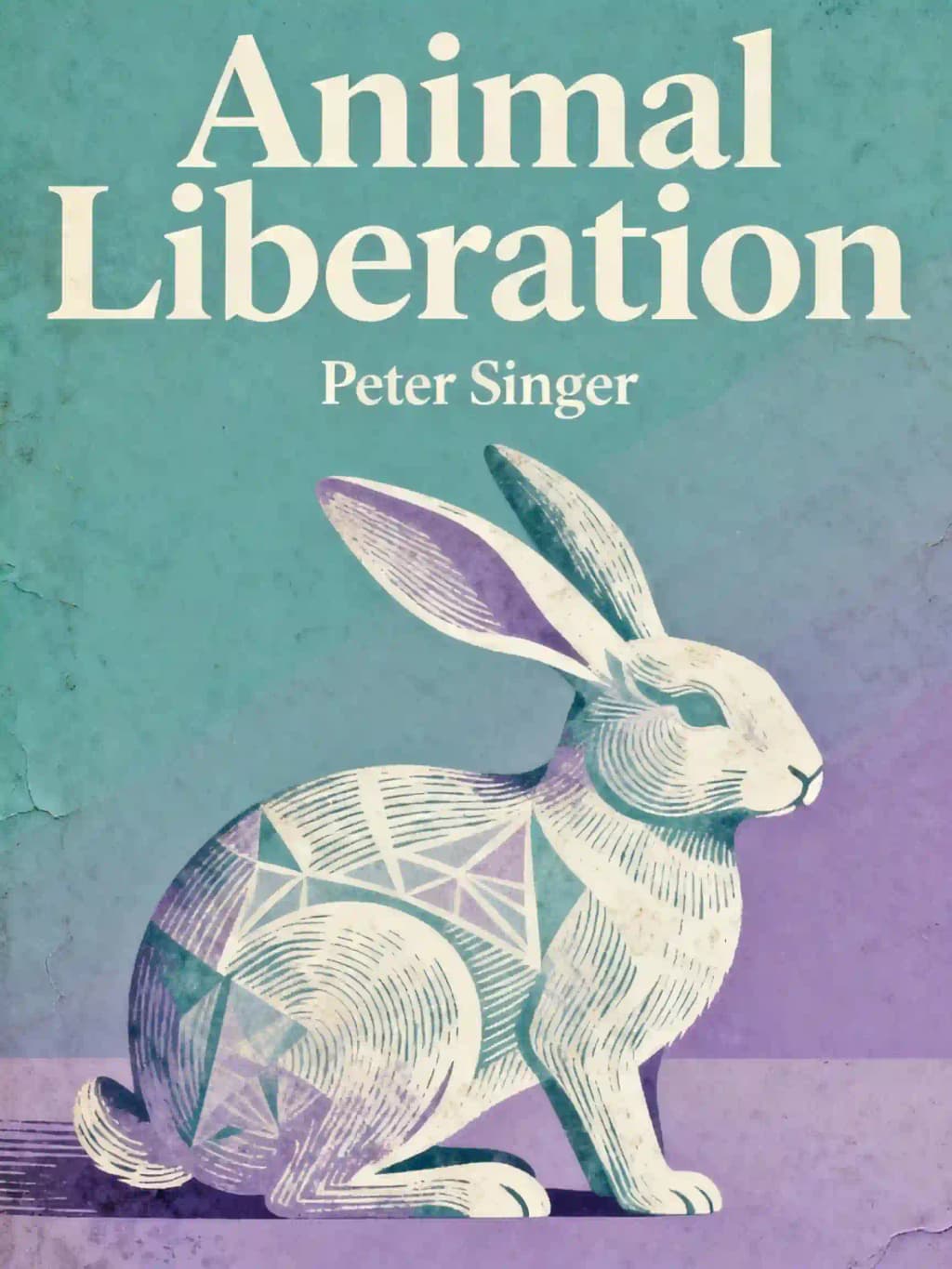
When "Animal Liberation" first appeared in 1975, few could have predicted its seismic impact on how we view our relationship with animals. Written on a manual typewriter by a young philosopher named Peter Singer, this groundbreaking work would remain continuously in print for decades, translated into more than 20 languages, and earn the title "Bible of the Animal Rights Movement" from The New York Times. The book's influence extends far beyond academic circles-celebrities from Paul McCartney to Natalie Portman cite it as their inspiration for adopting plant-based diets. What makes this philosophical treatise so compelling is Singer's methodical dismantling of speciesism-the assumption that human interests automatically trump those of other species-through clear, rational arguments that are accessible to anyone willing to confront uncomfortable truths about how we treat our fellow creatures.
Capitolo 2
The Moral Foundations of Animal Equality
The central argument of "Animal Liberation" challenges us to extend our moral consideration beyond the boundaries of our own species. Singer demonstrates that the principle of equality isn't based on actual equality of intelligence, strength, or other abilities-humans vary widely in these attributes, yet we consider discrimination based on such differences morally wrong. Instead, equality is a moral idea about how we should treat others, giving equal consideration to their interests regardless of their characteristics.
This principle of equal consideration naturally extends beyond humans. If we reject racism and sexism because they arbitrarily favor one group over another, we must also reject speciesism-prejudice favoring one's own species against others. The capacity for suffering, not intelligence or rationality, is the vital characteristic that gives a being the right to equal consideration. As the philosopher Jeremy Bentham wrote regarding animals: "The question is not, Can they reason? nor, Can they talk? but, Can they suffer?"
Singer methodically addresses objections to this position. Some claim animals can't feel pain, but this contradicts overwhelming scientific evidence. Animals display all the external signs of pain that humans do-writhing, facial contortions, moaning, attempts to avoid pain sources. Their nervous systems respond physiologically as ours do, with increased blood pressure, dilated pupils, and increased pulse rate. The scientific community overwhelmingly agrees that animals feel pain, with three separate British government committees accepting this conclusion.
Others argue that language is crucial to pain, suggesting animals without language can't truly suffer. This position fails on multiple counts. Pain is primitive and unrelated to language, and non-linguistic communication often conveys emotional states more effectively than words. Human infants cannot use language yet clearly suffer pain. There are therefore no good scientific or philosophical grounds for denying animal pain.
If we accept that animals feel pain, we must give equal moral consideration to their suffering. This doesn't mean identical treatment-a horse's thick skin might withstand a slap that would hurt a baby-but equal consideration of equal suffering. The principle of minimizing suffering alone is sufficient for most conclusions in the book, including vegetarianism.
Capitolo 3
Inside the Laboratory: Animal Experimentation Exposed
The reality of animal experimentation reveals institutional cruelty that most people never witness. In military research facilities like Brooks Air Force Base, monkeys are subjected to radiation and chemical warfare agents while forced to manipulate control sticks to avoid electric shocks. The training procedure is brutal-monkeys are restrained in chairs until compliant, then subjected to thousands of electric shocks during training phases lasting over a month.
At the Armed Forces Radiobiology Research Institute, monkeys are tied in chairs and irradiated, or trained to press levers while researchers observe radiation effects. In "activity wheel" experiments, monkeys receive electric shocks unless they keep a cylindrical treadmill moving above one mile per hour. In one particularly cruel experiment, thirty-nine monkeys received varying radiation doses. Those receiving higher doses vomited repeatedly yet were forced back into activity wheels where they received painful electric shocks if they stopped moving. The monkeys continued vomiting while in the wheel and took between 1.5 to 5 days to die.
Beyond military research, mainstream scientific experimentation often involves similar cruelty. Professor Harry F. Harlow's work at the Primate Research Center in Wisconsin exemplifies this. Despite being a respected psychology journal editor, Harlow conducted horrific experiments, including raising monkeys in total isolation for up to 12 months, reducing them to creatures whose primary social response was fear. He created "monster mothers"-cloth surrogate mothers that would blast high-pressure air, rock violently, or extend brass spikes into clinging baby monkeys. When these failed to produce the desired "psychopathology," he created real "monster mothers" by rearing female monkeys in isolation, forcibly impregnating them, and observing as these disturbed mothers brutally killed their infants.
The scale of animal experimentation is staggering. The Department of Agriculture's incomplete 1988 report listed 1,635,288 animals used in experimentation (excluding rats and mice), with over 90,000 experiencing "unrelieved pain or distress." This likely represents only 10% of the total suffering.
Only a tiny fraction of animal experiments contribute to important medical research. Countless animals suffer in university departments and commercial testing of inessential products like cosmetics and food coloring. Psychology laboratories are particularly notorious for painful experiments, with millions spent on studies involving electric shocks, sleep deprivation, stress, fear, and anxiety. The futility of many such experiments is revealed by researchers themselves, who often conclude after decades of animal suffering that previous results might not even be valid.
Capitolo 4
The Hidden Reality of Factory Farming
Our relationship with animals is most direct at mealtime, where we consume them in staggering numbers-over 100 million cows, pigs and sheep, and 5 billion poultry annually in the U.S. alone. Yet we remain largely ignorant of the abuse behind our food, distancing ourselves through packaging and language-eating "beef" not cow, "pork" not pig, "veal" not baby calf. This linguistic sleight-of-hand helps maintain emotional distance from the reality of our food choices, allowing consumers to avoid confronting the ethical implications of industrial animal agriculture.
The idyllic image of farms with red barns, grazing animals, and caring farmers bears virtually no resemblance to modern reality. Agriculture has transformed into agribusiness, controlled by large corporations rather than simple country folk. Just fifty large corporations virtually control all U.S. poultry production, with individual producers housing 500,000 to over 10 million laying hens. Modern farming treats animals like production units in a factory, using sophisticated algorithms and industrial processes to maximize output while minimizing costs. Every aspect of the animals' lives is analyzed through the lens of efficiency and profit.
The chicken industry exemplifies this transformation most dramatically. Today, 102 million broilers are slaughtered weekly in the U.S., with eight corporations controlling over 50% of the 5.3 billion birds killed annually. Modern facilities confine chickens in long, windowless sheds housing 10,000 to 50,000 birds, with each chicken allotted less space than a sheet of typing paper - roughly 67 square inches. Their environment is completely controlled-automated feeding systems dispense precise portions, while lighting is manipulated to maximize growth and minimize aggression. Temperature, humidity, and ventilation are all computer-controlled to optimize weight gain.
The extreme crowding causes severe behavioral problems or "vices" like feather-pecking, cannibalism, and aggressive pecking. Rather than addressing the root cause by reducing overcrowding, farmers control these behaviors through "debeaking"-cutting off the ends of chicks' beaks with hot blades without anesthesia. This painful procedure damages highly sensitive tissue containing numerous nerve endings, causing both acute pain during the procedure and chronic pain throughout the birds' lives. Many birds struggle to eat properly afterward, leading to poor nutrition and additional suffering.
Modern poultry farming has completely abandoned individual animal care-one worker might "manage" 60,000-88,000 birds, making meaningful inspection or attention to individual animals impossible. Birds live their entire seven-week lives in windowless sheds with artificial ventilation, never seeing natural daylight until transported to slaughter. Their genetically engineered "super-charged" growth multiplies their weight 50-60 times in just 7 weeks, causing widespread leg deformities, heart problems, and skeletal issues. Many birds can barely walk, spending their final weeks lying in their own waste. Leading poultry researchers have concluded these birds "might have been bred to grow so fast that they are on the verge of structural collapse." The industry's response has largely been to develop even faster-growing breeds, prioritizing profit over welfare.
Capitolo 5
The Suffering of Food Animals
For laying hens, suffering begins immediately at hatching. Male chicks, having no commercial value in egg production, face immediate elimination through various brutal methods. They are either gassed with carbon dioxide, ground up alive in industrial macerators for animal feed, or simply dumped into plastic sacks to suffocate. At least 160 million male chicks meet these fates annually in the US alone, with global numbers reaching into the billions. This practice, known as "chick culling," remains standard across the industry despite growing ethical concerns.
All major egg producers confine hens in "battery cages"-wire enclosures stacked in tiers with automated feeding and waste removal systems. These cages severely restrict movement, with typical 12 by 20 inch cages housing 4-5 birds, providing just 48-60 square inches per bird-less space than a standard sheet of paper, and far less than the 30-inch wingspan a hen needs to stretch properly. In these cramped conditions, every natural instinct is frustrated. Hens cannot walk, scratch, dust-bathe, build nests, or stretch their wings. Scientific studies demonstrate that hens will work as hard to reach nesting boxes as they will for food after 20 hours of deprivation, indicating the psychological importance of these denied behaviors. The constant wire floor causes severe foot deformities and painful lesions.
Pigs, recognized for their intelligence level comparable to that of dogs and three-year-old children, face particularly cruel conditions in modern farming. Factory farming treats sows as "living reproduction machines," confining them in gestation crates-metal stalls just two feet wide and six feet long where they cannot turn around or take more than a single step forward or backward. These highly social animals spend nearly their entire adult lives in isolation. When first confined, sows react with violent resistance-throwing themselves backwards, thrashing their heads, and crashing against the stalls in desperate attempts to escape. After this initial resistance, they develop stereotypical behaviors like bar-gnawing, head-waving, and vacuum chewing-symptoms of psychological distress comparable to obsessive-compulsive disorders in humans. Many develop painful pressure sores from lying constantly on concrete floors.
The veal industry represents perhaps the most morally repugnant form of intensive farming, deliberately engineering suffering for aesthetic preferences. Calves are purposefully kept anemic to produce the pale flesh that commands premium prices in high-end restaurants. Their iron-deficient diet creates such intense cravings that they desperately lick any iron fittings within reach, often causing mouth injuries. To maximize weight gain, calves receive no water-only milk replacer with added fat. This creates a cruel cycle where thirsty calves consume more food than they need, causing them to sweat, become even thirstier, and overeat again. Producers maintain barns at uncomfortably warm temperatures to prevent calves from burning calories through movement or thermogenesis, and often keep them in total darkness except during feeding to reduce restlessness from boredom. The wooden crates restricting their movement are so narrow that they cannot even turn around or lie down comfortably, leading to chronic joint pain and muscle weakness.
Capitolo 6
Transportation and Slaughter: The Final Indignities
Modern cattle transportation has evolved into a complex, multi-stage journey that extends far beyond the final trip to slaughter. Today's cattle typically endure multiple relocations throughout their lives - born in one state, trucked hundreds of miles to grazing pastures in another, then shipped to industrial feedlots in yet another location. These combined journeys can total up to 2,000 miles, with each leg of transport introducing new stresses and risks to the animals' welfare.
While railway transport of livestock falls under federal regulation requiring rest stops every thirty-six hours for feeding and watering, truck transportation - now the dominant mode of livestock movement - operates in a regulatory vacuum. This lack of oversight has severe consequences, as cattle regularly spend 48-72 hours confined inside trucks without any opportunity for rest or relief. The animals, already distressed by unfamiliar surroundings, face a barrage of physical and psychological challenges: severe motion sickness from constant movement, extreme dehydration, prolonged hunger, and exposure to temperature extremes ranging from freezing cold to sweltering heat. Industry records indicate significant mortality during transport - animals freeze to death in winter, suffocate in overcrowded conditions, succumb to heat exhaustion in summer, or perish from the cumulative effects of stress and exhaustion.
The slaughter process itself remains one of the most carefully concealed aspects of modern meat production, deliberately hidden from public scrutiny due to its disturbing nature. While humane slaughter methods exist in theory - involving proper stunning before killing - the reality in many facilities falls far short of these ideals. Economic pressures drive slaughterhouses to increase their killing speeds continuously, with some facilities processing up to 400 cattle per hour. This relentless pace not only compromises animal welfare but also creates hazardous conditions for workers. A comprehensive congressional investigation revealed the meat processing industry maintains the highest injury rate of any U.S. industry, with an average of 160 workers suffering serious injuries daily.
Even in countries with stricter regulations, like Britain, significant welfare problems persist. Studies have shown that a concerning percentage of animals remain conscious during the slaughter process, experiencing pain and distress. Two major exemptions seriously undermine humane slaughter legislation: allowances for religious slaughter methods and inadequate enforcement resources. Religious slaughter requirements, including both kosher and halal practices, mandate that animals be fully conscious when killed, often while suspended upside down. In kosher processing specifically, only the forequarters of cattle are typically used after the removal of forbidden tissues, with the hindquarters entering conventional markets without any indication of the slaughter method used. This practice results in a volume of unstunned slaughter far exceeding actual religious market demands, effectively multiplying the number of animals killed without stunning.
Capitolo 7
Becoming a Vegetarian: A Practical Response
Now that we understand speciesism and its consequences for animals, we must ask what we can do. While political advocacy, education and protest are important, one action stands supreme: taking responsibility for our own lives by ceasing to eat animals. Becoming vegetarian is not merely symbolic but a highly practical step toward ending animal suffering. The decision represents both an individual ethical stance and a broader social statement against institutionalized cruelty.
Vegetarianism functions as a boycott, operating on both economic and social levels. By refusing to purchase products of modern animal farming, we withdraw financial support from cruel practices. This economic impact extends beyond direct meat purchases to affect related industries like leather goods and animal-based fertilizers. This moral obligation applies even to those who only oppose suffering rather than killing itself. When asked about our "strange diets," we have opportunities to inform others about cruelties they may not know exist, creating ripple effects of awareness. Even if the boycott doesn't achieve widespread success, individual vegetarianism still reduces suffering. As George Bernard Shaw noted, each vegetarian spares numerous animals - estimates suggest hundreds per year per person.
Becoming a vegetarian also provides a practical refutation of the false claim that factory farming is necessary to feed the world's population. The truth reveals the opposite-animal agriculture is astonishingly wasteful in terms of resources, land use, and energy efficiency. When animals consume crops that humans could eat directly, they become protein factories in reverse, creating a devastating inefficiency in our food system. A calf returns less than 5% of the protein it consumes, while chickens return about 15%. Land planted with beans or peas yields 300-500 pounds of protein per acre, while the same land used for meat production yields only 40-55 pounds. These statistics become even more striking when considering that it takes up to 16 pounds of grain to produce just one pound of beef.
The implications for world hunger are staggering and immediate. If Americans reduced meat consumption by just 10% for one year, it would free enough grain to feed 60 million people. The food wasted by animal production in affluent nations could end hunger worldwide if properly distributed. Studies show that the grain currently fed to livestock could feed an additional 3.5 billion people if used directly for human consumption.
Meat production also devastates our environment and squanders resources in multiple ways. One pound of feedlot steak requires five pounds of grain, 2,500 gallons of water, energy equivalent to a gallon of gasoline, and causes thirty-five pounds of topsoil erosion. The water usage alone is staggering - it takes more water to produce a pound of beef than an average person uses for showers in an entire year. Perhaps the greatest environmental folly caused by meat demand is deforestation. In Central America, nearly half the tropical rainforests have been destroyed over twenty-five years, largely to provide beef for North America. This destruction continues at an alarming rate, with an estimated 1-2 acres of rainforest cleared every second for cattle ranching and feed crop production. The resulting loss of biodiversity and contribution to climate change makes meat consumption one of the leading drivers of environmental degradation globally.
Capitolo 8
The Historical Roots of Human Dominion
To understand human tyranny over animals, we must examine its ideological foundations in Western thought. The biblical creation story perfectly encapsulates the human-animal relationship as conceived by Hebrew people: humans have dominion over animals. After the Fall and flood, God blessed Noah saying: "Every moving thing that liveth shall be meat for you... into your hands are they delivered."
Christianity merged Jewish and Greek ideas about animals while developing under the Roman Empire. While Christianity expanded moral concern for all humans-introducing the concept that every human life possesses sanctity through an immortal soul-it simultaneously hardened the boundary between humans and other species. Thomas Aquinas codified Christian speciesism, declaring that "the imperfect are for the perfect" and animals exist for human use. He excluded animals from moral consideration, denying that cruelty to them constituted sin.
The nadir came with Descartes, who declared animals mere machines without consciousness or feeling. This convenient "solution" eliminated theological problems about animal suffering while justifying vivisection. Experimenters at Port-Royal seminary tortured animals with "perfect indifference," dismissing their cries as merely mechanical responses.
The Enlightenment fostered a gradual improvement in attitudes, with philosophers like Hume arguing humans were "bound by the laws of humanity to give gentle usage to these creatures." Bentham provided the definitive rebuttal to speciesism: "The question is not, Can they reason? nor Can they talk? but, Can they suffer?" Bentham was perhaps the first to denounce "man's dominion" as tyranny rather than legitimate government.
Darwin's theory of evolution should have revolutionized human attitudes toward animals. His diary entry-"Man in his arrogance thinks himself a great work, worthy of the interposition of a deity. More humble and, I believe, true, to consider him created from animals"-challenged humanity's presumed supremacy. Darwin demonstrated that the mental powers humans boast of-"love, memory, attention and curiosity, imitation, reason"-exist in "incipient, or even sometimes well-developed condition" in other animals. Despite the overwhelming scientific evidence for our common origin with other species, humanity's "hand of tyranny" remains clamped on other species.
Capitolo 9
The Path Forward: Progress and Challenges
Despite formidable obstacles, the Animal Liberation movement has seen dramatic growth. Once dismissed as crackpot, organizations with genuinely liberationist philosophies now boast substantial memberships. Concrete gains include the prohibition of veal crates in Britain, the phasing out of battery cages in Switzerland and the Netherlands, and Sweden's comprehensive legislation eliminating veal crates, battery cages, sow stalls and requiring cattle grazing access. The anti-fur campaign has significantly reduced fur sales worldwide.
In the United States, while farm animal reforms lag, several objectionable experiments have been halted. Cosmetics testing has seen major progress, with Benetton, Avon, Revlon, and many others ending animal testing. The European Commission now accepts alternatives to LD50 and Draize tests, which have been banned in parts of Australia.
The movement continues gaining momentum with student activism, cultural support from musicians and actors, and the mainstreaming of cruelty-free products. Yet Animal Liberation requires greater altruism than any other liberation movement since the animals cannot demand their own freedom through votes or protests.
The fundamental question remains: Will human tyranny continue, proving morality worthless against self-interest? Or will we demonstrate genuine altruism by ending our exploitation of other species not because we're forced to, but because we recognize our position is morally indefensible? The answer depends on each of us, individually.
Contrary to the stereotype that animal advocates care more about animals than people, historically the leaders of animal welfare movements have shown extraordinary commitment to human rights. The RSPCA was founded by William Wilberforce and Fowell Buxton, leaders in the fight against slavery. Early feminists like Mary Wollstonecraft, Lucy Stone, and Susan B. Anthony were connected to the vegetarian movement. The animal welfare movement even initiated the fight against child abuse, with Henry Bergh successfully prosecuting a case of child abuse under animal protection laws in 1874, leading to the creation of the New York Society for the Prevention of Cruelty to Children.
As we face the moral challenge of our relationship with animals, we can draw inspiration from these historical connections between human and animal liberation. The path forward requires both personal commitment to dietary change and collective action to reform our institutions and practices. By extending our circle of moral consideration beyond the boundaries of our own species, we not only liberate animals but also take an important step toward our own moral evolution.