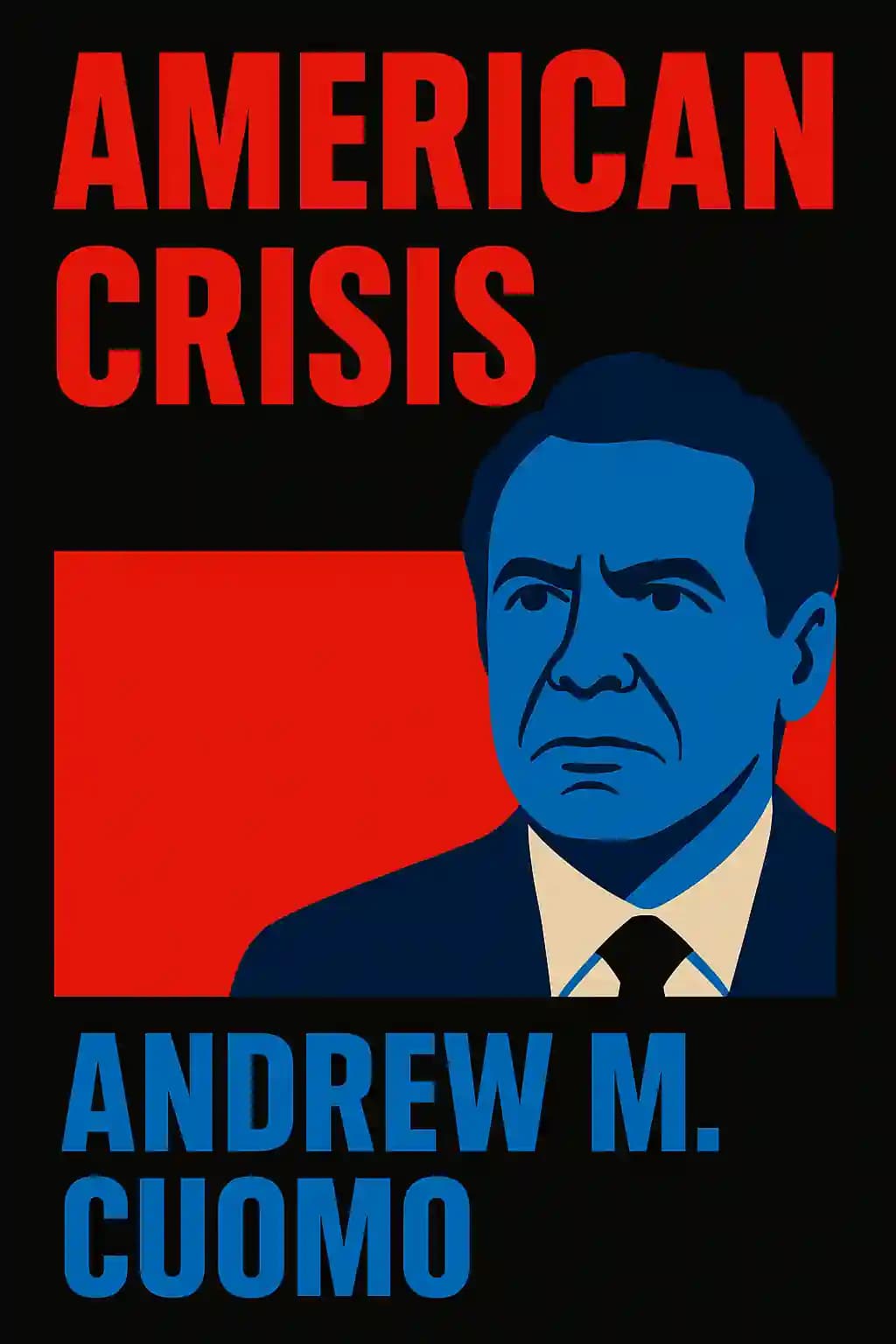
Capitolo 1
Leadership in the Eye of the Storm: Cuomo's Battle Against COVID-19
When my phone rang late on March 1, 2020, I had no idea that call would mark the beginning of the greatest challenge of my governorship. My secretary Melissa DeRosa was calling to inform me of New York's first confirmed coronavirus case. Within days, it became clear that the federal government was woefully unprepared, with testing bottlenecked through a single CDC lab in Atlanta known for faulty results. As a former HUD Secretary and son of a governor, I sensed the federal government would soon abandon its responsibilities once they understood the depth of the problem. The appointment of Vice President Pence to head the Coronavirus Task Force initially seemed positive-his intervention with the FDA allowed New York to run our own COVID tests just as the virus was taking hold in our state. This moment would change history, as New York stood at the precipice of becoming the global epicenter of a pandemic that would test our resolve, our systems, and our very humanity.
Capitolo 2
Facing an Unprecedented Crisis with Clarity and Truth
At sixty-two, life has taken me through many roles: outer-borough middle-class guy, campaign manager, nonprofit founder, assistant DA, lawyer, federal cabinet secretary, state attorney general, and governor. I know myself well-I'm obsessive about getting things done, disdain political theater, don't suffer fools, and am admittedly controlling. When COVID hit, I recognized immediately that our divided country lacked the capacity to handle it effectively.
From the beginning, I established a simple communication strategy: provide unbiased factual evidence about the virus and its progress. These mundane government briefings quickly became required viewing first for New Yorkers, then for the entire nation. The challenge was communicating data that established credibility while instilling confidence. As my daughter Mariah wisely noted, "Don't tell me to relax; tell me why I should be relaxed."
While New Yorkers are a diverse international community, they can be parochial-believing something isn't real until it happens in New York. Even with the announcement of the first case, most hadn't reached high anxiety. But I had. We had no idea how bad things would become. For weeks, federal authorities directed our attention to Asia and the West Coast, but we'd soon discover the coronavirus had actually come from Europe, silently circulating among thousands for weeks or months.
When New Rochelle emerged as our first "hot spot," I knew attitudes would change. This suburban community quickly became ground zero because "patient zero," lawyer Lawrence Garbuz, had been infected well before he knew it. As a "super-spreader," he attended a Bat Mitzvah, a funeral, worked at his law office, took public transportation, and visited a doctor's office-spreading the virus to dozens before anyone realized what was happening. If COVID could explode in New Rochelle, it could happen anywhere.
Capitolo 3
Building a Government Response from Scratch
I found myself constantly switching between two distinct roles: calming communicator during briefings and aggressive operations manager afterward. The operational challenges were enormous, complicated by unclear boundaries between state and federal responsibilities. We needed to establish entire systems for testing, quarantine, hospital capacity, equipment, and staffing-most of which were either inadequate or nonexistent.
Testing quickly became our top priority. The CDC and FDA maintained tight control over testing, routing every test through a single Atlanta lab. When their test kits produced false positives and relied on limited reagent supplies, New York's Wadsworth Center immediately mobilized to create its own COVID test. By the third week of February, they had developed a more reliable test using commercially available reagents, which the FDA approved on February 29-the first non-CDC test to receive approval.
With permission to conduct our own tests, we announced the ambitious goal of increasing capacity from four hundred to a thousand tests daily within a week. What seemed pie-in-the-sky then would eventually need to exceed fifty thousand tests per day. Within the first two weeks of March, eight top-quality labs were equipped and approved for testing, and by March 13, the FDA authorized New York's Department of Health to approve all labs within the state. We ultimately built a network of more than 850 collection sites across the state and activated more than 250 laboratories.
Meanwhile, projections suggested New York would need 110,000-140,000 hospital beds at the apex, but we only had 53,000 beds and 3,000 ICU beds statewide. My first request to hospital leaders seemed insane: every hospital had to increase capacity by 50% and stop elective surgeries. Even with this increase to 75,000 beds, we'd only meet about 60% of projected need.
Capitolo 4
The Ventilator Crisis and Federal Failures
Ventilators became my all-consuming obsession. These sophisticated $15,000 machines, which breathe for patients when their lungs fail, were suddenly the most precious commodity in healthcare. New York normally maintained a supply of about 4,000-6,000 ventilators, but epidemiological models and healthcare experts estimated we'd need 30,000 more to handle the incoming surge of COVID patients. Every state was desperately seeking ventilators, but New York, as the epicenter of the outbreak, needed them most urgently. The federal strategic national stockpile had only 10,000 units for the entire nation - a woefully inadequate number for a crisis of this magnitude.
President Trump interpreted my increasingly urgent ventilator requests as personal attacks rather than desperate pleas for help, openly mocking them during a Fox News interview with Sean Hannity. He consistently downplayed the severity of the crisis, comparing COVID to "just like the flu" or insisting it would "magically disappear" with warmer weather. While the federal response stalled, I mobilized every possible resource, calling business leaders, diplomats, and anyone with Chinese manufacturing contacts to help us secure more ventilators. We simultaneously pursued creative alternatives - converting BiPAP sleep apnea machines into emergency ventilators, experimenting with splitting single ventilators to serve multiple patients, and even preparing manual bag-valve-mask devices (nicknamed "ambu bags") as a desperate last resort.
The mounting evidence made it clear that we were increasingly on our own. The federal government's failures were becoming not just problematic but catastrophic. Trump's European travel ban, announced on March 12, came weeks or even months too late - genetic analysis would later confirm that the virus had been silently circulating in New York since January. The ban's chaotic implementation made matters worse, as it was announced just two days before taking effect. This triggered a mass exodus of potentially infected travelers rushing to airports before the deadline, creating dangerous overcrowding in terminals on both sides of the Atlantic. The scenes of packed airports during a pandemic highlighted the administration's failure to properly manage the crisis.
I came to view this as comparable to Pearl Harbor - a massive intelligence and detection failure that allowed an enemy to strike. COVID had invaded America primarily through European travelers entering via JFK and Newark airports, silently seeding infections throughout the dense Northeast corridor while federal authorities remained oblivious or indifferent. The consequences would prove staggering - this failure to detect and contain COVID's initial spread would ultimately claim more than ten times the number of American lives lost at Pearl Harbor. The parallel was stark: just as military intelligence missed the signs of an impending attack in 1941, our federal disease surveillance systems had failed to detect this biological invasion until it was far too late.
Capitolo 5
Surge and Flex: Reimagining Healthcare Delivery
With experts projecting 110,000-140,000 needed hospital beds against our 53,000, I drew inspiration from Churchill's Dunkirk rescue. We sketched out a "Surge & Flex" plan that would treat all 100+ hospitals as one unified system. Working closely with Michael Dowling of Northwell, we created a hospital capacity coordination center where any hospital could request transfers, staff, PPE or ventilators 24/7. The system would balance patient loads across facilities, centralize purchasing to prevent hospitals competing against each other, and share staff where needed.
The Surge & Flex system expanded hospital reporting requirements to include detailed inventories of supplies and equipment, creating a statewide database. An executive order gave the state authority to distribute items to hospitals in greatest need based on data showing which facilities faced the most critical shortages. A transportation logistics system was mobilized to move equipment throughout the state, ensuring no patient would lack a ventilator while nearby hospitals had available ones.
To coordinate this system, New York created a Hospital Capacity Coordination Committee (HCCC) that operated 24/7 as a command center. Staffed by the Department of Health, senior hospital system officials, and logistical experts from the New York National Guard, the HCCC was accessible to every healthcare facility via a hotline answered at any time. Throughout the crisis, the HCCC facilitated thousands of patient transfers, delivered millions of PPE items, and deployed hundreds of ventilators, significantly reducing COVID's impact on New York.
The challenge wasn't simply announcing closedown policies but ensuring public compliance. With only about 6,000 state troopers and limited local enforcement capabilities, compliance would be essentially voluntary. The public needed to understand and accept these measures as necessary.
Capitolo 6
Politics, Power, and Presidential Relations
Working with the Trump administration proved challenging at every turn, revealing deep divisions between public health priorities and political considerations. The White House consistently viewed the pandemic through a political lens rather than a public health one, creating significant obstacles for state-level response efforts. Trump appeared convinced that COVID-19 was primarily a "Democratic state problem" that wouldn't significantly affect Republican states, despite mounting evidence of the virus's indiscriminate spread. This partisan framing extended aggressively to reopening discussions, with Trump characterizing it as Republicans wanting to restore the economy versus Democrats allegedly trying to prolong shutdowns to damage his reelection prospects.
I maintained a deliberate strategy of working to preserve a functional relationship with Trump to maximize federal support for New York, consistently expressing gratitude when warranted-despite finding it personally distasteful. White House officials repeatedly emphasized that public praise was the primary currency for securing Trump's response, creating an uncomfortable dynamic where political theater seemed to outweigh public health concerns. While the federal government did provide some meaningful assistance with converting the Javits Center into a medical facility, deploying the USNS Comfort hospital ship, and eventually helping secure ventilators and PPE, these isolated instances of cooperation stood in stark contrast to their broader negligence that allowed the virus to arrive unchecked from Europe in the first place.
The political dynamics became particularly apparent during an unexpected moment while having dinner with my daughters. We were stunned to see Trump playing video clips of me praising him during his COVID briefing, using these selective moments to craft a narrative of widespread gubernatorial support. I found myself having to explain to my skeptical daughters the complex distinction between politics and governance-that sometimes effective leadership requires working with people you fundamentally disagree with for the greater good of your constituents.
The transactional nature of the administration's approach became even more evident in June, when Trump awarded Governor Murphy $2 billion for a New Jersey bridge project, explicitly framing it as "repayment" because Murphy was "gracious" and consistently positive in his public comments about Trump. White House officials made it increasingly clear they wanted unconditional praise from governors, not substantive criticism or policy discussions. I maintained my position of expressing genuine gratitude for specific assistance like the Javits Center conversion and the USNS Comfort deployment, while refusing to ignore the federal government's broader neglect of critical needs and systematic failures in the pandemic response.
This period highlighted the challenging balance between maintaining necessary federal cooperation and standing firm on critical public health principles, all while navigating an unprecedented crisis that demanded both decisive leadership and diplomatic finesse.
Capitolo 7
The Human Side of Leadership
The daily briefings had gained worldwide attention, bringing an outpouring of support from across America and beyond. I received thousands of handmade masks, many with beautiful letters and cards-a daily "B12 shot for the soul." We displayed these masks on a large board at one briefing, calling it "Self-Portrait of America," showcasing the beauty in our unity amid crisis.
The outreach was extraordinary and often touching. Henry Winkler called after learning I was a Fonz fan. Hillary Clinton checked in to offer help. Robert Redford wrote from Utah. Winston Churchill's granddaughter inscribed a book praising my "inspirational leadership" during "Your finest hour!" Most moving were the tens of thousands of ordinary citizens asking how they could help.
One letter particularly touched me-from a Kansas farmer who sent one of his five N95 masks for a New York doctor or nurse, keeping the other four because his wife had only one lung. I read this letter at a briefing without using his full name, but a reporter tracked down Dennis Ruhnke, generating more press. Ultimately, Kansas State University awarded him his degree, which he'd abandoned decades earlier to care for his mother and the family farm after his father died. When I called to congratulate him, his humility overwhelmed me-he was simply doing what he considered right, unaware of how special his gesture truly was.
Each COVID death took a piece of me. I felt personally responsible for every essential worker who died-like the bus driver who went to work because I determined buses had to operate. Though exhausted, I refused to skip the daily briefings. Every morning I'd consider reasons to take a day off: being too tired, avoiding press questions, giving my team a break. But the relationship I'd formed with the public was paramount. People were reading my emails and calling me; they relied on me. They never quit on me, and I wouldn't quit on them.
Capitolo 8
Flattening the Curve Against All Odds
Six weeks after New York's first case, we had defied expert projections by flattening the curve faster than anticipated. Despite our tenuous position, we'd avoided needing the projected 110,000-140,000 hospital beds. The initial models, developed by leading epidemiologists and healthcare experts, predicted catastrophic hospital bed requirements at our apex. Despite expanding capacity from 53,000 to nearly 90,000 beds through emergency measures - converting convention centers, dormitories, and hotels into medical facilities - experts remained skeptical we could bend the curve below 110,000 through social distancing and behavior changes alone. New Yorkers proved them wrong-we never exceeded 19,000 beds, less than one-fifth of the projected need.
By mid-April, mounting evidence and real-world data had convinced me that masks were significantly more effective than experts initially claimed. I'd grown increasingly skeptical of so-called experts who had failed to anticipate the virus's European pathway to America, focusing instead almost exclusively on China and Asia. Despite the U.S. Surgeon General's earlier emphatic statements against mask-wearing for the general public, I became the first governor to mandate masks for all New Yorkers in public spaces-a significant action that risked substantial public backlash and political consequences. The decision was driven by data from countries like South Korea and Japan, where widespread mask usage appeared to correlate with lower transmission rates.
Our comprehensive antibody testing program across New York revealed surprising and counterintuitive results: essential workers had markedly lower infection rates than the general population. NYC police showed 10.5% infection versus 19.9% in the general NYC population, while doctors and nurses working in emergency rooms had just 12% infection rates. Transit workers, grocery store employees, and other frontline workers similarly showed lower-than-expected rates. This was both an enormous relief and a scientific puzzle-how could workers with the highest exposure have lower rates? The explanation emerged through careful analysis: PPE worked effectively, particularly masks, which experts increasingly believed could prevent both transmission and inhalation of the virus. This finding fundamentally challenged initial assumptions about mask effectiveness and helped shape public health policy nationwide. The data demonstrated that proper protective measures, consistently applied, could significantly reduce transmission even in high-risk environments.
Capitolo 9
Reopening Safely: A Data-Driven Approach
We needed to reopen, and do it intelligently. While experts across the country talked about economic reopening plans with testing and data-driven approaches, no coherent methodology existed yet. The stakes were enormous - rushing would risk a deadly second wave, while moving too slowly would deepen the economic crisis. I assembled my team of health experts, data scientists, and policy advisors to develop what would become the most comprehensive, science-based reopening plan in the country.
Our plan meticulously tracked specific metrics like infection rate (R0), daily hospital capacity, testing volumes, and contact tracing capabilities. We established two distinct data thresholds: first, a set of stringent metrics showing the virus was definitively under control before any reopening could begin, and second, ongoing monitoring metrics to adjust the reopening pace if virus spread increased. I illustrated this complex system with a PowerPoint slide showing dashboard gauges measuring specific metrics and a valve representing reopening pace - a visual that became iconic in our daily briefings and helped New Yorkers understand the process.
We strategically divided New York into ten distinct regions based on healthcare capacity and population patterns, with each region needing to meet seven specific metrics before initiating reopening: 14 days of declining COVID-19 hospitalizations, declining death rates over the same period, fewer than two new hospitalizations per 100,000 residents, maintaining at least 30% hospital bed capacity, preserving 30% ICU capacity, achieving testing levels of 30 per 1,000 residents monthly, and establishing 30 contact tracers per 100,000 residents.
The reopening process followed four carefully calibrated phases, starting with low-risk essential businesses like construction and manufacturing, then gradually moving to higher-risk, less essential operations like retail, restaurants, and entertainment venues. Each phase was separated by a mandatory two-week monitoring period to assess virus spread patterns. We recruited prominent global experts including Dr. Michael Osterholm from the University of Minnesota and Dr. Samir Bhatt from Imperial College London to independently review regional data before approving advancement to subsequent phases.
We created and distributed "NY Forward: A Guide to Reopening New York & Building Back Better" - a comprehensive 156-page manual that provided detailed guidance to local governments on everything from PPE requirements to workplace protocols. All metrics and daily data were posted on a public website with an intuitive dashboard that allowed every New Yorker and local official to track progress in real-time. This unprecedented level of transparency and data sharing created a vital relationship of trust between citizens and government during a period of great uncertainty. The dashboard became a model for other states and even countries developing their own reopening frameworks.
Capitolo 10
Lessons for America's Future
After 110 consecutive days of briefings, I was ready to conclude my daily updates. The experts had underestimated New Yorkers, assuming our behavior would follow national patterns of government distrust and political division. Instead, we witnessed a unified population, informed and empowered, forging a strong sense of community. We had climbed the mountain, crossed the plateau, and survived the decline. We'd been through hell and emerged on the other side, with infection rates down to the minimum achievable level of around 1 percent during reopening.
COVID merely exposed America's underlying weaknesses that have been growing for years. Our national divisions and government incompetence allowed the virus to ravage our country. The irony is that stopping "community spread" required forging actual community. For too many years, government service has become a dying art, with rhetoric and positioning replacing actual performance. Our electoral process no longer selects competent officials who can distinguish between advocacy and accomplishment.
My model of real progressivism affirms aspirations while proving they can be achieved-showing that government can work to realize our goals: allowing same-sex marriage without interfering with others' rights, raising minimum wages without hurting the economy, building affordable housing without destroying neighborhoods, completing large construction projects on time and budget, and building infrastructure that serves the public good.
I believe once progressives demonstrate this capacity, they'll vindicate American optimism and unleash unlimited potential for good. But we must counter the skepticism conservatives have planted. Every day conservatives say "No we can't," and I say "Yes we can."
The COVID pandemic has been a potentially transformational political moment, making government relevant in ways not seen since the Great Depression. People now know which leaders were competent and which weren't. Progressives can change politics for the next fifty years as FDR did after the Depression-but only if we deliver results, not just words.
As we begin reopening, we must recognize that COVID-19 has permanently reshaped our nation and daily life. Rather than simply returning to how things were, we must seize this opportunity to "reimagine" and build back better than before-transforming our health, education, housing systems, and economy.
Most urgently, we need to restructure our public health infrastructure to combat future pandemics using the lessons learned. We must draw clear lines of responsibilities between levels of government during health crises, establish early detection systems for public health threats, and ensure public health organizations can operate free from political interference.
The experts had underestimated New Yorkers, assuming our behavior would follow national patterns of government distrust and political division. Instead, we witnessed a unified population, informed and empowered, forging a strong sense of community. Though challenges remained, we had gained a new confidence in what we could accomplish together. In some ways, this wasn't the end but only the beginning.