Capitolo 1
The Epic Battle of Perspectives: Reimagining India's Greatest Story
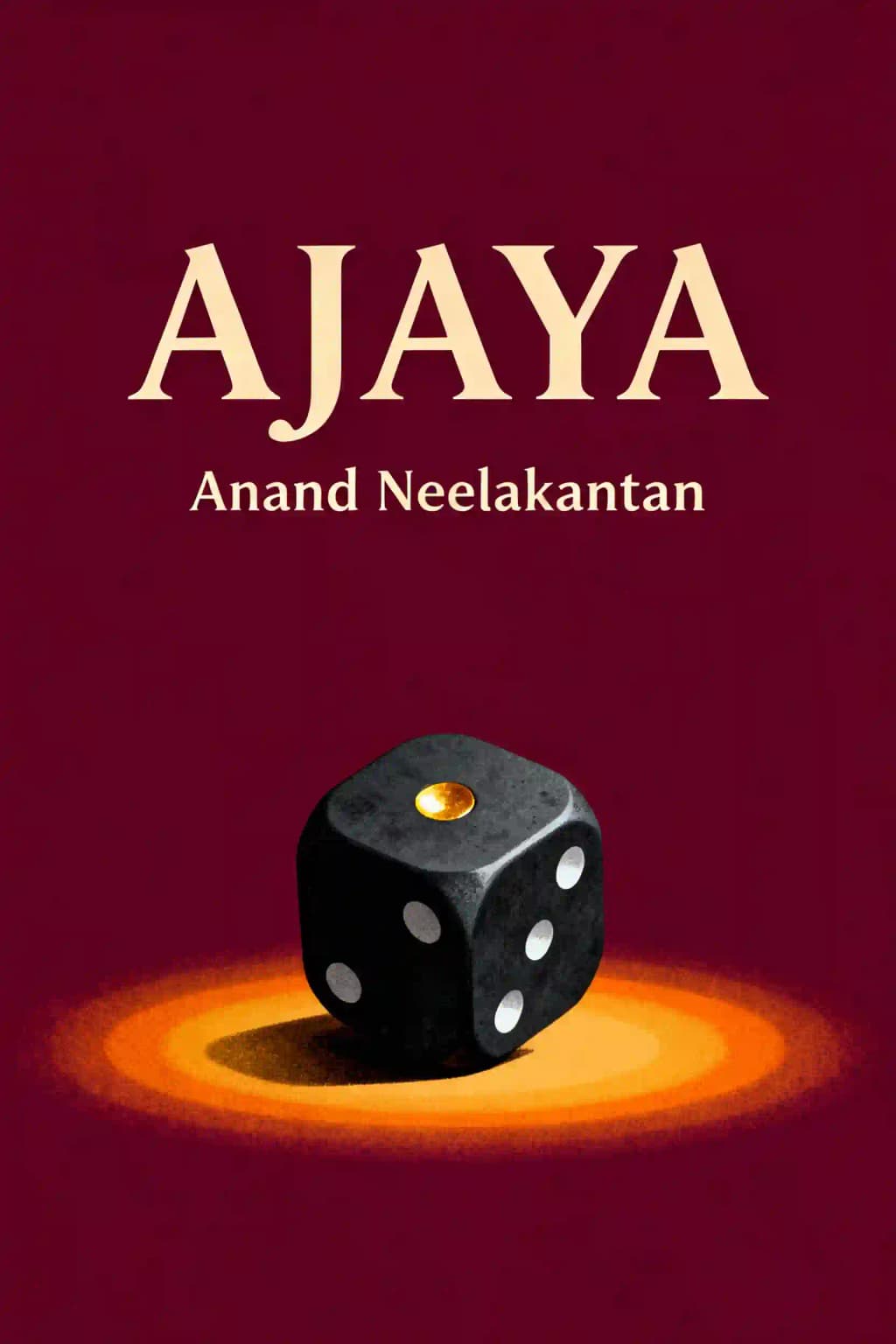
Have you ever wondered what it would be like if history's greatest villains could tell their side of the story? What if Duryodhana, the supposed antagonist of India's greatest epic, wasn't the monster we've been led to believe? This is precisely the question Anand Neelakantan explores in his revolutionary novel "Ajaya," which has captivated readers worldwide with its bold reimagining of the Mahabharata from the perspective of the "villains." When Oprah Winfrey featured the book in her reading club, she praised it as "a necessary perspective that makes us question our assumptions about good and evil." The novel's cultural impact extends beyond literature-it has inspired a wave of revisionist storytelling across Indian cinema and television, challenging the black-and-white morality that has dominated epic retellings for generations.
Capitolo 2
A Villain's Shrine: The Seed of a Revolutionary Retelling
The genesis of "Ajaya" emerged from an extraordinary discovery that challenged conventional interpretations of Indian mythology. While visiting the Malanada Temple in Kerala, Neelakantan encountered a remarkable phenomenon - over 100,000 devoted pilgrims gathering to celebrate a festival honoring Duryodhana, traditionally cast as the primary antagonist of the Mahabharata. This sacred site, nestled in the verdant landscapes of Kerala, stands as a testament to an alternative narrative that has persisted through generations.
According to deeply-rooted local tradition, Duryodhana once visited this village and demonstrated unprecedented compassion. When an Untouchable woman offered him toddy - a gesture that would have been considered sacrilegious by the standards of the time - he not only accepted but made a profound declaration that resonates even today: "There is no caste for hunger and thirst." This radical act of acceptance was followed by an even more revolutionary gesture. Duryodhana gifted the surrounding villages to a temple and, breaking every social convention of his era, instituted that a Kurava Untouchable would serve as its Priest - a decision that directly challenged the rigid hierarchical structure of ancient Indian society.
This encounter compelled Neelakantan to undertake a comprehensive reexamination of the Mahabharata. Through meticulous research and reflection, a different Duryodhana emerged - not the thundering villain popularized by television serials and conventional retellings, but a complex figure of principled conviction. This was a prince who elevated Karna to kingship when others mocked his lower-caste origins, who consistently challenged orthodox practices without apparent self-interest, and who maintained unwavering loyalty to his principles despite mounting adversity. His flaws and struggles made him profoundly human, standing in stark contrast to the Pandavas who frequently justified their actions through claims of dharma and divine intervention.
"Ajaya" - a title meaning "Unconquerable" - represents a paradigm shift in epic storytelling, viewing the Mahabharata through the lens of the defeated. The narrative focuses on those who fought believing in the justice of their cause, relying on human conviction rather than divine intervention. This perspective raises profound questions about the nature of historical truth and moral certainty. It challenges readers to consider whether our understanding of righteousness is as absolute as traditional interpretations suggest, and whether the distinction between justice and injustice might be more nuanced than the simple dichotomy of victory and defeat.
This alternative viewpoint transforms the epic from a straightforward tale of good versus evil into a complex exploration of human nature, social justice, and the perpetual struggle between tradition and progress. Through this retelling, readers are invited to question whether history truly represents the whole truth, or merely echoes the voice of its victors.
Capitolo 3
The Seeds of Conflict: Childhood Rivalries and Caste Politics
Young Prince Suyodhana - whose derogatory nickname "Duryodhana" meaning "evil one" would later overshadow his given name - emerges as a complex figure from his earliest years. Though physically less imposing than his cousins, he demonstrates remarkable emotional intelligence and philosophical depth. His relationship with cousin Bhima is particularly nuanced: while Bhima's physical bullying leaves lasting scars, it's the subtle psychological warfare from Yudhishtra that truly shapes Suyodhana's character. Behind closed doors, Yudhishtra's carefully cultivated image of righteousness falls away, revealing calculated cruelty that adults never witness.
The royal household presents a labyrinth of contradictions that young Suyodhana must navigate. His mother Gandhari's self-imposed blindfolding - a gesture of solidarity with her blind husband that simultaneously serves as a protest against arranged marriage - becomes his first lesson in the complexity of power and choice. His Uncle Shakuni, master of the dice and manipulation, drops carefully crafted hints about inheritance and birthright that plant seeds of doubt in Suyodhana's mind. These family dynamics interweave with broader societal tensions, particularly the rigid caste hierarchy that creates artificial barriers between people.
The relationship with his Uncle Vidhura proves especially formative. Despite Vidhura's renowned wisdom and compassionate nature, caste laws forbid physical contact between them - a restriction that young Suyodhana finds increasingly difficult to reconcile with his own observations of human worth. This personal experience becomes his first conscious encounter with systemic inequality, sparking questions that will shape his future philosophy.
Two landmark debates in the royal court crystallize these tensions. The first centers on Bhishma's controversial appointment of Vidhura as Prime Minister - a decision that challenges centuries of brahminical privilege. Bhishma's masterful defense of merit over birth status provides Suyodhana with a powerful example of how tradition can be challenged through reasoned argument. The second debate erupts when Kunti seeks entry to the royal assembly, traditionally a male-only space. Sage Vyasa's intervention, citing historical examples of women's leadership roles, demonstrates how appeals to even older traditions can sometimes overcome current prejudices.
These formative experiences lay the groundwork for Suyodhana's emerging worldview. He begins to see how the Pandavas, despite their reputation for dharma, actually benefit from and perpetuate social inequities while maintaining a veneer of righteousness. Their privileged position allows them to appear virtuous while never having to challenge the fundamental injustices of the system. Through Suyodhana's increasingly critical perspective, we see the emergence of a reformist mindset that questions not just individual actions but the entire social framework that enables them. His early experiences with hypocrisy - both personal and institutional - shape him into someone who values authentic behavior over performative virtue.
Capitolo 4
Education and Exclusion: The Weaponization of Knowledge
The arrival of Drona as the princes' teacher marks a crucial turning point in the narrative. Unlike the kindly Kripa who taught all students regardless of background, Drona represents rigid orthodoxy. When a hungry Nishada boy named Ekalavya steals a mango and is confronted, Drona is outraged at an "Untouchable" walking on the royal highway and questions the kingdom's enforcement of caste rules.
Rather than punishing Ekalavya, Suyodhana surprises everyone by giving him all their mangoes for his starving family. This small act of compassion reveals Suyodhana's fundamental decency and his rejection of caste prejudice-qualities that make him dangerous to the established order.
The contrast between the princes becomes even starker when Karna, a charioteer's son with extraordinary potential, seeks training. Despite Prime Minister Vidhura's personal recommendation and even Bhishma's approval, Drona refuses to teach him solely because of his low Suta caste. The confrontation grows heated, with Drona insulting both Vidhura and Karna for their lower castes.
This scene powerfully illustrates how education was weaponized in ancient India to maintain social hierarchies. By denying martial knowledge to lower castes, the elite ensured their continued dominance. Suyodhana's later friendship with Karna represents a radical challenge to this system-recognizing talent and character over birth, a revolutionary stance in his society.
Imagine being told your dreams are impossible not because you lack ability, but because of who your parents were. This is the reality Karna faces, and through his struggles, we confront uncomfortable questions about merit, opportunity, and justice that remain relevant today.
Capitolo 5
The Price of Talent: Karna's Journey and Parashurama's Curse
Karna's quest for education takes him on a remarkable journey that reveals the hypocrisy at the heart of the caste system. After being rejected by Drona, Karna contemplates suicide but is rescued by the maverick Brahmin Kripa, who delivers a passionate critique of India's corrupt caste system: "The Vedas never intended birth to determine one's varna, but rather one's nature and actions."
Kripa teaches Karna to behave like a Brahmin so he might study under Bhargava Parashurama, the greatest living warrior. This deception weighs heavily on Karna's conscience, but he sees no alternative in a society that values birth over merit.
After years of dedicated training, Karna becomes Parashurama's favorite student and wins the prestigious Dharmaveera competition. His victory is particularly meaningful because he shows mercy to his opponent Prince Uthayan when he could have killed him-demonstrating both superior skill and superior character.
The tragic moment comes when Parashurama discovers Karna's true caste. Despite Karna's extraordinary talent and noble character, Parashurama's fury erupts when he assumes Karna must be a Kshatriya, his sworn enemy. The revelation that Karna is actually a Suta-even lower than a Kshatriya-causes Parashurama to collapse in shock after cursing Karna to forget his knowledge at the most critical moment of his life.
This heartbreaking scene encapsulates the novel's central critique: a system that values birth over merit not only harms individuals but weakens society by wasting talent. When Karna flees aboard a Greek merchant ship, the captain offers him a new life abroad where his skills would be valued regardless of birth. Karna's response is both tragic and noble: "This is my country, my culture, my religion... Among all the Kings who cannot think beyond caste, there have to be some who recognize talent."
Capitolo 6
Moral Ambiguity: The Righteous Commit Atrocities
One of the most shocking revelations in "Ajaya" comes when we witness the supposedly righteous Pandavas commit horrific acts in the name of dharma. The House of Lac episode is particularly disturbing-when warned that Duryodhana planned to burn them alive in their palace, the Pandavas don't simply escape. Instead, they lure an innocent Nishada woman and her five sons into the palace, drug them, and lock them inside as decoys whose charred bodies will convince Duryodhana the Pandavas are dead.
When Arjuna objects to this cruelty, Yudhishtra invokes dharma and apat dharma (emergency ethics), arguing the Untouchables will be reborn as Brahmins for dying in their service. This chilling rationalization reveals the moral bankruptcy at the heart of the caste system-treating lower-caste lives as expendable tools for higher purposes.
This episode forces us to reconsider everything we thought we knew about the Mahabharata's heroes. If the supposedly righteous Pandavas could sacrifice innocent lives so callously, how can we accept their claims to moral superiority? The scene brilliantly inverts our expectations, making us question whether Duryodhana's straightforward opposition to the Pandavas might actually be more ethical than their manipulative righteousness.
The pattern continues when Draupadi rejects Karna at her swayamvara solely because of his caste, despite his superior skill. Later, when she is humiliated after being lost in the dice game, the narrative notes that "she could only think of Karna, whom she had rejected for being a Suta." This moment of regret highlights how adherence to caste prejudice ultimately harmed everyone, including those who enforced it.
Capitolo 7
The Revolutionary's Burden: Suyodhana's Vision for a Just Society
Throughout the novel, Suyodhana emerges not as a villain but as a revolutionary burdened with the vision of a more just society. When Balarama asks what makes him feel complex emotions simultaneously, Suyodhana admits his feelings about the Untouchables' plight. Balarama encourages him to pursue the "impossible dream" of a misery-free society-a vision that puts Suyodhana at odds with the established order.
Suyodhana's character development is beautifully portrayed through his relationships. His marriage to Bhanumati reveals his capacity for love and trust, particularly in the touching scene where he finds her alone with Karna in a compromising position but simply helps gather her scattered pearls, showing complete faith in both his wife and friend.
His friendship with Karna demonstrates his rejection of caste prejudice. When Karna is humiliated at Draupadi's swayamvara, Suyodhana doesn't just offer sympathy-he follows Karna to a leper colony and joins him in giving away his priceless ornaments to the poor. This scene powerfully contrasts with the Pandavas' treatment of lower castes, highlighting Suyodhana's genuine compassion versus their performative righteousness.
Perhaps most telling is Suyodhana's reaction during Drona's archery test. While Arjuna sees only the bird's eye as a target, earning Drona's praise for his singular focus, Suyodhana notices the birds are a loving pair and hesitates to kill one merely to demonstrate skill. After Arjuna's perfect shot, only Suyodhana witnesses the surviving bird's agony, walking away to mourn with the grieving creature. This beautiful scene reveals the fundamental difference in their characters-Arjuna's celebrated focus comes at the cost of compassion, while Suyodhana's wider awareness makes him a less perfect warrior but a more complete human being.
Capitolo 8
The Architects of Conflict: Krishna and Shakuni's Manipulations
"Ajaya" presents both Krishna and Shakuni as master manipulators driving the conflict for their own purposes. Shakuni, traumatized by Bhishma's destruction of Gandhara and his sister's forced marriage to the blind king, plots vengeance against Hastinapura. His famous dice game is revealed as the culmination of years of planning, using "Indians themselves as pieces in his vengeful game."
Krishna, meanwhile, emerges as a more complex and troubling figure than in traditional tellings. Rather than an avatar of righteousness, he appears as a political strategist determined to maintain the caste system that Suyodhana threatens to disrupt. When discussing the growing tensions with Kunti, Krishna supports sending the Pandavas away, expressing concern about Karna's influence on Duryodhana and warning that war seems inevitable to preserve the social order.
This portrayal of Krishna challenges readers to reconsider the traditional narrative of divine intervention supporting natural justice. Instead, we see how religion and claims of divine sanction can be used to justify maintaining an unjust status quo. When Krishna announces that the Pandavas are "divine sons" of various gods, he effectively uses religious authority to legitimize their claim to power despite questions about their birth.
The parallel manipulations of Krishna and Shakuni create a tragic inevitability to the conflict. Caught between these master strategists, even well-intentioned characters like Suyodhana and the Pandavas become pawns in a larger game, their personal grievances magnified and exploited to serve others' agendas.
Capitolo 9
The Outsiders: Ekalavya and the Nagas' Resistance
The novel dedicates considerable space to exploring characters traditionally pushed to the margins of the epic, with particular emphasis on Ekalavya and the Naga rebels. Ekalavya's narrative transcends the conventional portrayal of a devoted student willing to sacrifice his thumb, evolving into a complex examination of caste-based discrimination and its far-reaching consequences in ancient Indian society.
After Drona's rejection based purely on his lower-caste status, Ekalavya demonstrates remarkable determination and ingenuity. Hidden in the dense forest surrounding the training grounds, he meticulously observes and replicates the princes' training exercises. Through sheer persistence and natural talent, he achieves mastery comparable to - and in some aspects surpassing - Arjuna's skills. His extraordinary achievement stands as a powerful testament to the untapped potential lying dormant in countless lower-caste individuals who are systematically denied access to education and opportunities for advancement.
The novel delves deep into Ekalavya's psychological journey from an earnest youth seeking acceptance to a hardened revolutionary. His transformation accelerates after witnessing the brutal murder of his family members by upper-caste warriors who feared his growing influence. This personal tragedy, combined with years of systematic exclusion, drives him to join Takshaka's Naga rebellion - a decision that embodies the cyclical nature of oppression breeding resistance.
The Nagas emerge as a nuanced resistance movement rather than the one-dimensional antagonists of traditional narratives. Through Takshaka's perspective, we witness their struggle against generational marginalization. His prophetic words about Ekalavya - "He will come back with greater anger, once he sees what kind of world he is living in" - reveal deep insight into how systemic injustice radicalizes individuals. The novel shows how the Nagas' rebellion stems from centuries of displacement, exploitation, and cultural erasure.
The construction of Indraprastha serves as a powerful metaphor for the cost of empire-building. The magnificent city rises from the ashes of Khandava forest, but its foundations are built on the suffering of Naga communities. The use of Naga women and children as forced labor, their homes destroyed and lands seized, exposes the dark underpinnings of the Pandavas' ascent to power. This parallel to historical colonization and modern-day development projects forces readers to confront uncomfortable questions about progress and its human cost.
Through these intersecting narratives, the novel presents terrorism not as an inexplicable evil but as the predictable outcome of prolonged oppression. This framing resonates strongly with contemporary global conflicts, where marginalized communities' resistance often emerges from similar patterns of systematic exclusion and violence. The story challenges readers to examine how society's treatment of its most vulnerable members can create the very threats it fears most.
Capitolo 10
The Dice Fall: Inevitable Tragedy and the Price of Rigid Dharma
As the novel approaches its climax with the infamous dice game, we witness how inflexible adherence to dharma creates the perfect storm for tragedy. The game itself becomes a microcosm of society's fatal flaws, with each roll of the dice tightening the noose of destiny. When Yudhishtra, consumed by his gambling addiction and misguided sense of honor, loses everything - his kingdom, his brothers, and ultimately himself - the scene transforms into a crucible that tests the very foundations of their moral code.
The pivotal moment arrives when the question emerges of whether Yudhishtra can stake Draupadi. Dhaumya, the court priest, reluctantly confirms that according to dharma, "a man in distress could stake his property, including his wife." This ruling exposes the deep-seated patriarchal assumptions embedded within their social framework. The silence that follows his pronouncement speaks volumes about the moral paralysis gripping the assembly of kings and elders.
This moment lays bare multiple fundamental problems within their society. First, it reveals the inherent contradiction of a system that simultaneously venerates women as goddesses while treating them as transferable property. Second, it demonstrates how rigid adherence to rules can lead to moral blindness - where technically correct actions result in profoundly unethical outcomes. The assembled nobles, each bound by their own interpretations of dharma, become unwitting accomplices to this degradation.
The scene reaches its nadir with Shakuni - architect of this elaborate revenge - awaiting Sushasana to enter "dragging Draupadi by her hair." This physical violation of Draupadi becomes symbolic of the larger violation of human dignity that the system permits. Shakuni's vengeance for Gandhara, long in the making, uses the very rules of their society as weapons against itself. The dice game becomes not just a gambling match but a carefully orchestrated exposure of civilization's fatal flaws.
The novel builds toward its conclusion with an air of tragic inevitability. The society portrayed is so deeply invested in its hierarchies and rules that it would rather march toward self-destruction than acknowledge the need for reform. Bhishma's earlier observation becomes prophetic - by "driving away the poor and denying education to lower castes, creating desperate people willing to die for Takshaka's cause," they have sown the seeds of their own destruction. The approaching Great War, engineered through Shakuni's manipulation of social codes, will devastate not just armies but the very civilization whose inflexibility made such conflict inevitable.
This section serves as a powerful critique of systems that prioritize rules over humanity, showing how societies can become trapped in self-destructive patterns when they refuse to question inherited traditions or adapt to changing moral imperatives.
Capitolo 11
Beyond Heroes and Villains: The Revolutionary Message of "Ajaya"
"Ajaya" fundamentally challenges our understanding of the Mahabharata by asking us to look beyond simplistic notions of heroes and villains to the systemic injustices that drive conflict. By giving voice to traditionally vilified characters, Neelakantan creates a narrative that feels startlingly relevant to contemporary discussions about social justice, religious authority, and resistance to oppression. Through this retelling, characters once dismissed as antagonists emerge as complex individuals struggling against an oppressive social order.
The novel's most revolutionary aspect is its willingness to question whether dharma itself - at least as interpreted by the powerful - might be fundamentally flawed. When Kripa argues that "the Vedas never intended birth to determine one's varna, but rather one's nature and actions," he suggests that the problem isn't the abandonment of tradition but its corruption by those seeking to maintain power. This critique extends beyond mere theological debate to challenge the very foundations of social hierarchy and inherited privilege. The text illustrates how religious texts and traditions can be manipulated to serve the interests of the powerful, while marginalizing those deemed "lower-born."
Through characters like Suyodhana, Karna, and Ekalavya, we see how individuals challenging an unjust system are labeled villains by those benefiting from that system. Their tragedy isn't that they chose evil, but that they dared to imagine a more equitable world in a society determined to maintain its hierarchies at any cost. Suyodhana's resistance to Krishna's divine authority, Karna's rejection of caste limitations, and Ekalavya's pursuit of martial excellence despite his tribal origins all represent different facets of resistance against systemic oppression.
The novel particularly excels in its portrayal of Suyodhana (traditionally known as Duryodhana), showing him not as the embodiment of evil but as a reformer who questions the divine right of the Pandavas to rule. His opposition to Krishna isn't presented as mere jealousy or hatred, but as a principled stand against what he sees as the manipulation of faith for political ends. Similarly, Karna's struggle against caste discrimination becomes a powerful commentary on social mobility and merit versus birth.
In reimagining India's greatest epic from the perspective of its supposed villains, Neelakantan doesn't just tell an entertaining story - he invites us to question our own assumptions about righteousness, justice, and who gets to define good and evil. The novel suggests that history, often written by the victors, may have obscured legitimate grievances and alternative visions of social order. Perhaps the true hero isn't the one blessed by divine favor, but the one who stands against injustice even when labeled a villain for doing so. This reframing serves as a powerful reminder that moral complexity exists even in our most cherished narratives, and that yesterday's villains might have been tomorrow's revolutionaries.