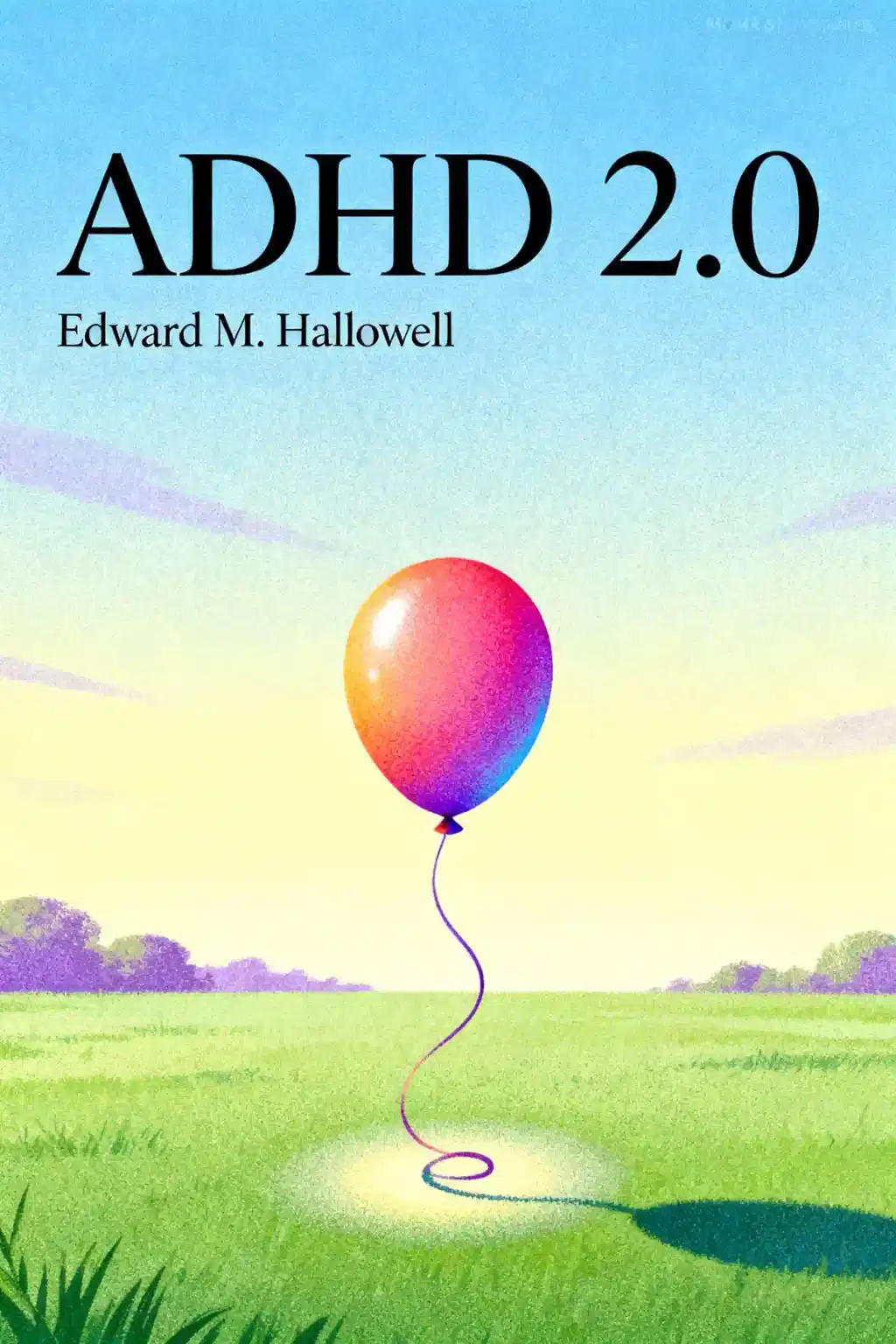
ADHD 2. 0
New Science and Essential Strategies for Thriving with Distraction - from Childhood Through Adulthood
Panoramica di ADHD 2. 0
ADHD 2.0 revolutionizes how we view attention differences, introducing VAST - Variable Attention Stimulus Trait - as a potential strength, not deficit. Endorsed by bestselling psychologist Michael Thompson, this guide reveals why the cerebellum may hold the key to unlocking ADHD's hidden superpowers.
Temi chiave in ADHD 2. 0
- neurodiversity strengths
- attention regulation
- executive function strategies
- default mode network
- cognitive reframing
Citazioni da ADHD 2. 0
If you can imagine ADHD as a Ferrari brain with bicycle brakes, you’ll be pretty close to the truth.
ADHD isn't simply an attention deficit, but rather an attention regulation difference.
Their kryptonite? Boredom.
ADHD brains function differently.
Understanding this paradox is crucial.
Personaggi di ADHD 2. 0
- Edward M. HallowellCo-author and psychiatrist specializing in ADHD
- John RateyCo-author and psychiatrist
- David NeelemanJetBlue founder and example of ADHD drive
Sull'autore
Sull'autore di ADHD 2. 0
Edward M. Hallowell is a renowned psychiatrist, New York Times bestselling author, and a leading authority on ADHD. He is best known for ADHD 2.0: New Science and Essential Strategies for Thriving with Distraction – From Childhood Through Adulthood.
A Harvard-trained clinician and founder of the Hallowell ADHD Centers, he combines four decades of clinical expertise with personal experience living with ADHD and dyslexia to reframe neurodiversity as a strength. Hallowell co-authored the groundbreaking Driven to Distraction series with Dr. John Ratey, which revolutionized global understanding of ADHD and sold millions of copies worldwide.
His 20+ books and ADDitude Magazine column blend scientific rigor with compassionate storytelling. His TEDx talks and media appearances on Oprah, 60 Minutes, and The Today Show have made him a household name in mental health advocacy.
ADHD 2.0 builds on his legacy of transforming stigmatized conditions into roadmaps for success, offering actionable strategies validated by his clinical network across Boston, New York, and Silicon Valley. His work is recommended by therapists, educators, and Fortune 500 leaders alike.
Scarica il riassunto di ADHD 2. 0
Ottieni il riassunto di ADHD 2. 0 in formato PDF o EPUB gratuito. Stampalo o leggilo offline quando vuoi.
FAQ su questo libro
ADHD 2.0 combines neuroscience and self-help to reframe ADHD as a "variable attention trait" (VAST) rather than a deficit. Drs. Hallowell and Ratey explore brain networks like the default mode (DMN) and task-positive (TPN), cerebellum function, and strategies like balance exercises, environmental tweaks, and fostering connection. The book emphasizes leveraging ADHD’s creative and entrepreneurial strengths while managing challenges.
This book is essential for adults with ADHD, parents of neurodivergent children, educators, and therapists. It’s also valuable for professionals seeking to optimize productivity and anyone interested in neurodiversity. Hallowell’s actionable advice on medication, lifestyle changes, and reframing ADHD as VAST makes it a roadmap for transformative self-management.
Yes—ADHD 2.0 offers cutting-edge insights from pioneers in ADHD research. With 25+ years of updates since Driven to Distraction, it provides science-backed tools like cerebellum-strengthening exercises and the "other Vitamin C" (connection). Readers praise its empowering tone and practical frameworks for turning distractibility into creative fuel.
Four core strategies include:
- Finding "the right kind of difficult": Pursue engaging tasks that activate focus.
- Environmental redesign: Optimize workspaces for ADHD-friendly productivity.
- Connection as "Vitamin C": Build relationships to counter negativity.
- Cerebellar workouts: Use balance boards to improve attention regulation.
VAST (Variable Attention Stimulus Trait) replaces the outdated "deficit disorder" label. It highlights ADHD’s fluid attention patterns, which enable hyperfocus on passions but struggle with mundane tasks. The authors argue VAST better reflects the trait’s duality of challenges and strengths like creativity and risk-taking.
The book details two key brain networks:
- Default Mode Network (DMN): Drifts into imagination/self-reflection.
- Task Positive Network (TPN): Manages focused work.
In ADHD, poor toggling between these networks causes distractibility. Strategies like physical activity help stabilize TPN dominance.
Traditionally linked to movement, the cerebellum also affects attention and emotional regulation. ADHD 2.0 advocates exercises like balance boards to strengthen cerebellar pathways, improving focus and reducing "glitchiness." Studies suggest even 5-minute daily sessions yield benefits.
Yes—the authors clarify medication’s role in regulating dopamine/norepinephrine while cautioning it’s not a standalone fix. They endorse combining prescriptions with lifestyle changes like exercise, sleep hygiene, and leveraging strengths. Case studies show meds enhancing (not replacing) behavioral strategies.
"The other Vitamin C" refers to connection—a antidote to ADHD-related shame. Hallowell stresses daily affirmations, physical touch, and collaborative work to boost self-worth. For example, parents are advised to replace criticism with "10-second hugs" to reinforce security.
While Driven to Distraction (1994) introduced ADHD to the mainstream, ADHD 2.0 integrates 21st-century neuroscience like DMN/TPN research and VAST. New tools include digital detox tactics, cerebellar training, and career-matching frameworks absent in prior works.
Some note limited new clinical trials for interventions like balance boards. Critics argue the VAST model, while destigmatizing, might understate severe ADHD’s disabling aspects. However, most praise its actionable advice and strengths-based approach.
Absolutely. The book advises ADHD-friendly workspaces: noise-canceling headphones, standing desks, and "focus sprints" aligned with hyperfocus cycles. It also guides career choices using the "right kind of difficult" principle—matching roles to passion-driven persistence.