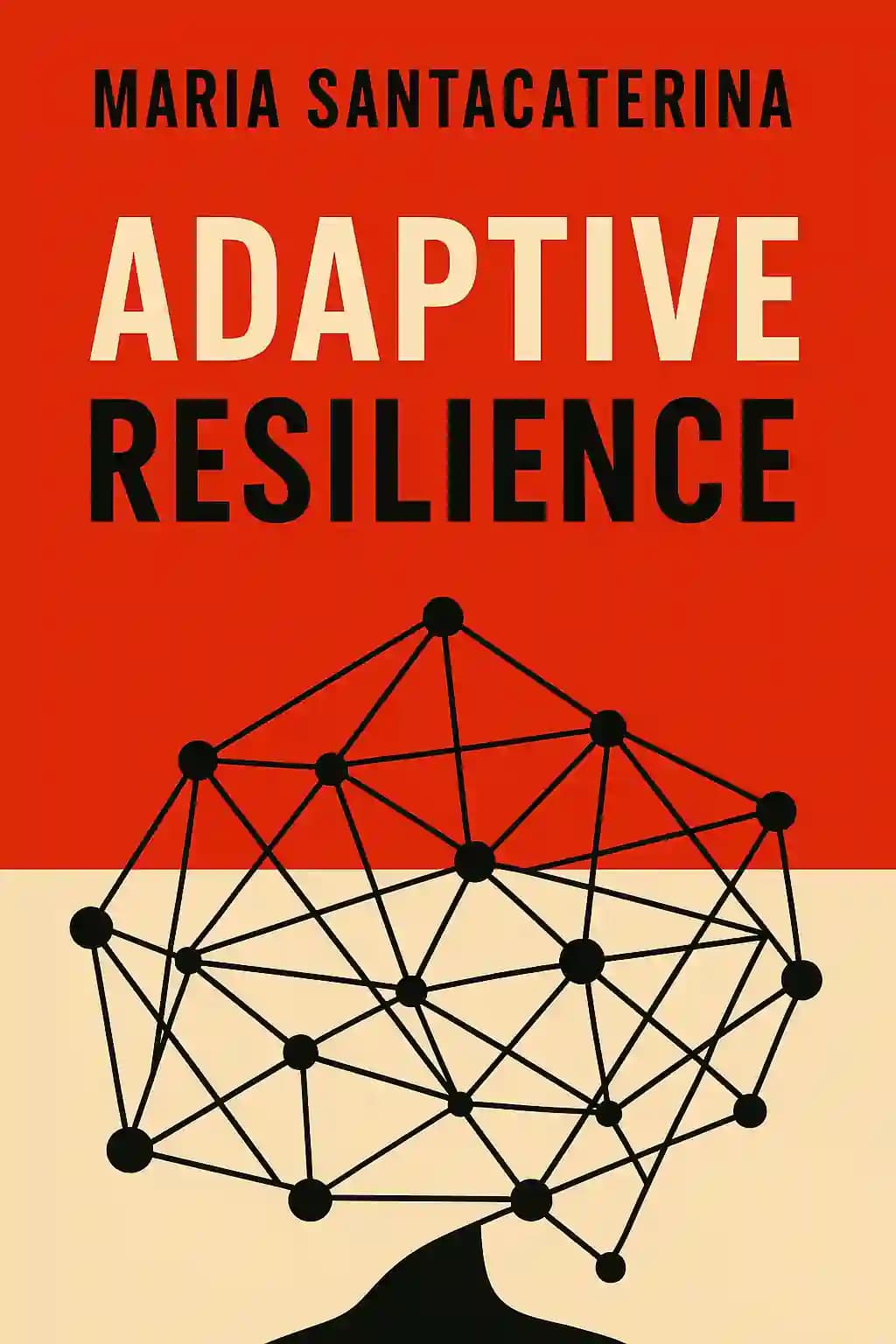
In "Adaptive Resilience," Maria Santacaterina offers a transformative guide for thriving amid digital disruption. What if the key to future success lies in reframing our relationship with AI? Endorsed by global leaders, this book reveals how human values drive sustainable innovation in an increasingly automated world.
Maria Santacaterina, author of Adaptive Resilience: How to Thrive in a Digital Era, is a global strategic leader and Thinkers50-nominated thought pioneer renowned for her expertise in AI-driven business transformation. With over 25 years of experience orchestrating large-scale digital transitions across 100+ countries, her work bridges technology, ethics, and sustainable growth in the luxury sector and beyond. Fluent in four languages, Santacaterina brings a multicultural perspective to her actionable frameworks for building organizational resilience.
A Computer Weekly-recognized "most influential woman in tech," she combines academic rigor (MA International Relations) with real-world boardroom insights, featured in acclaimed podcasts like Machine Learning Street Talk.
Her book synthesizes frontier technologies with equitable leadership principles, offering CEOs and executives a blueprint for navigating AI disruption. Santacaterina’s methodologies are trusted by Fortune 500 companies and ethical tech initiatives alike. Her work has been featured in top-tier business publications and technology podcasts, cementing her status as a leading voice in ethical, sustainable digital innovation.
Adaptive Resilience provides a strategic roadmap for organizations to thrive in the digital era by balancing technological innovation with ethical, human-centric values. It advocates transforming businesses "from the inside-out and outside-in," combining interdisciplinary research, real-world case studies, and actionable frameworks to foster sustainable growth, equitable practices, and long-term resilience amid AI-driven disruption.
This book is essential for CEOs, board members, and senior executives navigating digital transformation. It’s particularly valuable for leaders seeking evidence-based strategies to integrate AI ethically, reimagine business models, and cultivate adaptive organizational cultures. Santacaterina’s insights also resonate with entrepreneurs and policymakers addressing global technological challenges.
Yes—ranked as a top leadership guide for its timely analysis of AI’s societal impacts and practical tools for building future-proof organizations. Reviewers praise its blend of visionary thinking and executable strategies, making it a critical resource for maintaining competitive advantage in volatile markets.
Adaptive resilience is the capacity to continuously evolve through uncertainty by aligning technological adoption with human values. Unlike traditional crisis management, it emphasizes proactive adaptation, ethical decision-making, and systemic innovation to create self-sustaining growth cycles.
Key frameworks include:
Santacaterina argues AI should augment—not replace—human creativity, emphasizing governance models that prioritize transparency and accountability. The book contrasts human pattern recognition with machine learning limitations, advocating for balanced human-AI collaboration in strategic decision-making.
Case studies span luxury industries, global tech firms, and multinational corporations, illustrating how adaptive resilience principles drive successful pivots during market shifts. Examples include cultural overhauls to accommodate AI adoption and sustainability-focused supply chain transformations.
It champions visionary governance—leadership that combines strategic foresight with operational agility. Santacaterina stresses the need for executives to master complexity, foster psychological safety, and make values-driven decisions in fast-changing environments.
The text prioritizes equity, sustainability, and stakeholder capitalism, urging leaders to:
Unlike narrow tech-focused guides, Santacaterina’s work uniquely bridges organizational behavior, ethics, and AI strategy. It’s frequently compared to works by Amy Edmondson and Tim Brown for its systemic approach to innovation.
With AI adoption accelerating and global crises increasing volatility, the book’s focus on continuous adaptation offers a survival toolkit. Its interdisciplinary approach addresses gaps in conventional change management literature, making it indispensable for post-pandemic recovery strategies.
Senti il libro attraverso la voce dell'autore
Cattura le idee chiave in un lampo per un apprendimento veloce
Evolve or become obsolete.
Technology is a tool, not a solution in itself.
Continuous learning and personal growth are non-negotiable.
Scomponi le idee chiave di Adaptive Resilience in punti facili da capire per comprendere come i team innovativi creano, collaborano e crescono.
Chiedi qualsiasi cosa, scegli il tuo stile di apprendimento e co-crea intuizioni che risuonano davvero con te.

Creato da alumni della Columbia University a San Francisco
"Instead of endless scrolling, I just hit play on BeFreed. It saves me so much time."
"I never knew where to start with nonfiction—BeFreed’s book lists turned into podcasts gave me a clear path."
"Perfect balance between learning and entertainment. Finished ‘Thinking, Fast and Slow’ on my commute this week."
"Crazy how much I learned while walking the dog. BeFreed = small habits → big gains."
"Reading used to feel like a chore. Now it’s just part of my lifestyle."
"Feels effortless compared to reading. I’ve finished 6 books this month already."
"BeFreed turned my guilty doomscrolling into something that feels productive and inspiring."
"BeFreed turned my commute into learning time. 20-min podcasts are perfect for finishing books I never had time for."
"BeFreed replaced my podcast queue. Imagine Spotify for books — that’s it. 🙌"
"It is great for me to learn something from the book without reading it."
"The themed book list podcasts help me connect ideas across authors—like a guided audio journey."
"Makes me feel smarter every time before going to work"
Creato da alumni della Columbia University a San Francisco

Ottieni il riassunto di Adaptive Resilience in formato PDF o EPUB gratuito. Stampalo o leggilo offline quando vuoi.
In today's rapidly evolving digital landscape, the ability to adapt and thrive is no longer a luxury—it's a necessity. As we stand at the cusp of unprecedented technological advancements, businesses and individuals alike face a critical choice: evolve or become obsolete. This is the core message of "Adaptive Resilience," a concept I've developed through years of working with global leaders and organizations. Adaptive resilience isn't just about surviving change; it's about embracing it as an opportunity for growth and innovation. It's a mindset that allows us to navigate the complexities of our digital era with confidence and purpose. Throughout this book, we'll explore how to cultivate this essential quality, transforming challenges into stepping stones for success.
When we talk about digital transformation, many envision a world dominated by algorithms and artificial intelligence. While these are indeed crucial components, the true essence of this shift goes far beyond mere technological adoption. It's about reimagining how we work, interact, and create value in a connected world. Consider the case of a traditional manufacturing company I worked with. Initially, they viewed digitalization as simply upgrading their machinery and implementing new software. However, as we delved deeper, it became clear that the real transformation lay in rethinking their entire business model. By embracing data-driven decision-making and fostering a culture of continuous learning, they not only improved efficiency but also uncovered new revenue streams they hadn't previously considered. This example illustrates a fundamental truth: adaptive resilience in the digital age requires a holistic approach. It's not enough to simply keep pace with technological advancements. We must also cultivate the human skills and organizational cultures that allow us to leverage these tools effectively.
As we navigate this digital landscape, it's crucial to remember that technology is a tool, not a solution in itself. The true power lies in how we, as humans, choose to wield it. This brings us to a critical aspect of adaptive resilience: the cultivation of uniquely human qualities. Empathy, creativity, and critical thinking are skills that, as of now, cannot be replicated by machines. These are our competitive advantages in a world increasingly driven by algorithms. I've seen firsthand how organizations that prioritize these human elements alongside technological adoption are the ones that truly thrive. Take, for instance, a healthcare provider I advised. They implemented cutting-edge AI diagnostics tools, which significantly improved their accuracy and efficiency. However, the real breakthrough came when they coupled this technology with enhanced training in patient communication for their staff. The result was not just better diagnoses, but also improved patient trust and satisfaction. This synergy between human skills and technological capabilities is at the heart of adaptive resilience.
Creating an organization that embodies adaptive resilience requires a fundamental shift in how we approach leadership and organizational structure. The traditional top-down, hierarchical model is ill-suited for the rapid changes and uncertainties of our digital era. Instead, we need to foster environments that encourage experimentation, learning from failure, and quick pivots when necessary. I often use the analogy of a jazz ensemble to illustrate this point. In jazz, each musician must be highly skilled in their instrument, but the magic happens in their ability to improvise and respond to each other in real-time. Similarly, an adaptive organization needs individuals who are experts in their fields but also capable of collaborating fluidly and adjusting their approach as circumstances change. This might mean embracing flatter organizational structures, cross-functional teams, or agile methodologies. But more importantly, it requires a cultural shift. Leaders must create an environment where employees feel safe to take calculated risks, voice unconventional ideas, and learn from mistakes. I recall working with a tech startup that embodied this principle beautifully. They instituted a "failure of the month" award, celebrating team members who took bold risks, even if they didn't pan out. This seemingly counterintuitive approach fostered a culture of innovation and resilience that propelled the company to remarkable success.
As we harness the power of digital technologies, we must also grapple with the ethical implications of our innovations. Adaptive resilience isn't just about staying ahead of the curve technologically; it's about ensuring that our advancements align with our values and contribute positively to society. This is perhaps one of the most challenging aspects of leadership in the digital era. We're often faced with complex decisions where the right path isn't immediately clear. For instance, how do we balance the benefits of data-driven personalization with concerns about privacy? How can we ensure that AI systems are free from bias and promote fairness? These aren't just theoretical questions—they have real-world implications that leaders must address. I've worked with companies grappling with these very issues, and I've found that those who approach these challenges proactively, with a clear ethical framework, are better positioned to build trust with their stakeholders and navigate potential pitfalls. One approach I often recommend is the creation of an ethics board or committee, comprised of diverse voices from both within and outside the organization. This group can provide valuable perspectives and help guide decision-making on complex issues. Moreover, it sends a clear message about the company's commitment to ethical considerations in its digital initiatives.
While much of our discussion has focused on organizational adaptive resilience, it's equally important to develop this quality on a personal level. In a world where the half-life of skills is shrinking rapidly, continuous learning and personal growth are non-negotiable. This doesn't mean you need to become an expert in every new technology that emerges. Rather, it's about developing a growth mindset—a willingness to step out of your comfort zone, embrace new challenges, and view setbacks as opportunities for learning. I often encourage individuals to adopt a practice of regular self-reflection. Ask yourself: What new skills have I acquired recently? How have I adapted to changes in my industry? What areas do I need to develop to stay relevant and valuable? Moreover, cultivating adaptive resilience often means looking beyond your immediate field. Some of the most innovative solutions come from cross-pollination of ideas from different domains. So, make it a point to expose yourself to diverse perspectives and disciplines. I'm reminded of a marketing executive I mentored who revitalized her approach by studying improvisational theater. The principles of active listening, spontaneity, and collaborative creativity she learned there transformed her leadership style and helped her team become more adaptive and innovative.
As we conclude our exploration of adaptive resilience, I want to leave you with a sense of optimism and empowerment. Yes, the challenges we face in this digital era are significant, but so are the opportunities. By cultivating adaptive resilience—in ourselves, our organizations, and our communities—we can not only navigate these changes but shape them in ways that create value and meaning. Remember, adaptive resilience isn't about predicting the future; it's about creating the capability to thrive in whatever future emerges. It's about building the skills, mindsets, and cultures that allow us to turn disruption into opportunity, challenges into growth. As you move forward, I encourage you to embrace change with curiosity rather than fear. See each new development not as a threat to the status quo, but as an invitation to reimagine what's possible. With adaptive resilience as your guide, you have the power to not just survive in this digital era, but to lead, innovate, and make a lasting positive impact. The journey of adaptive resilience is ongoing, and it's one we're all on together. So let's step into the future with confidence, ready to adapt, learn, and grow in ways we might not yet imagine. The digital era is here, and with adaptive resilience, we're more than ready to thrive in it.