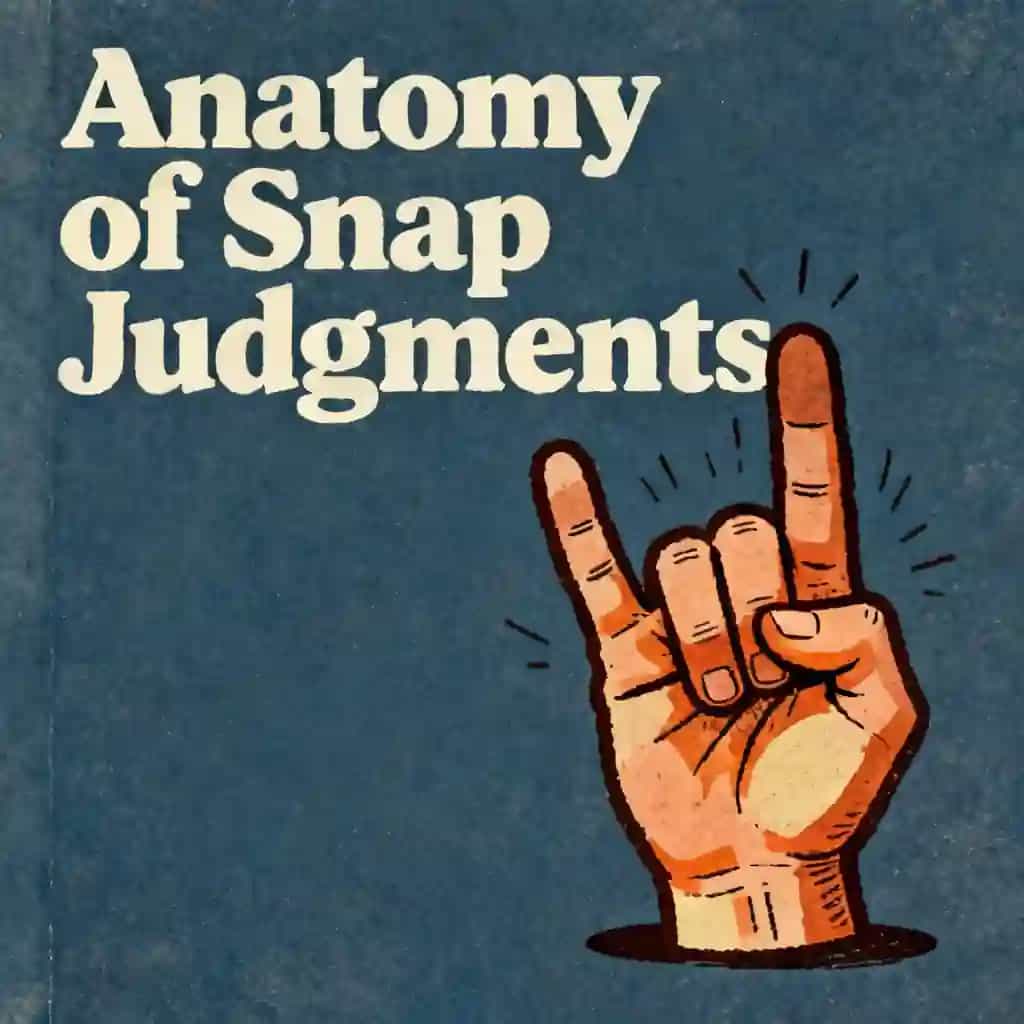
The Secret Science of Instant Hypnosis
Discover how to bypass the conscious mind using pattern interrupts and physical anchors to induce a trance in seconds.

Meilleure citation de The Secret Science of Instant Hypnosis
The secret isn't a 'magic frequency' or a special power; it’s about a pattern interrupt—a momentary mental 'reboot' that makes the brain hyper-suggestible by bypassing the critical factor.
Generated by Rocio
How to hypnotize anybody by just touching them or saying their name what to say do and what frequency guarantees hypnosis

Foire aux questions
A pattern interrupt targets the brain's "autopilot" routines, such as the social script of a handshake. When a physical action is unexpectedly altered—like lifting a hand upward instead of shaking it—the brain hits a snag called a transderivational search. For a few seconds, the critical part of the brain goes offline to search for a new script, creating a moment of high suggestibility where the mind is desperate for a clear direction or command.
There is no universal frequency or sound that acts as a shortcut to mind control. While deep hypnosis is often correlated with an increase in theta brainwaves (associated with meditation and creativity), these frequencies are a measurement of the state rather than the cause. Hypnosis is a collaborative process of narrowing a person's focus until their own brain naturally shifts into a more receptive neural state.
Conversational hypnosis uses specific language patterns, such as presuppositions and embedded commands, to slip suggestions past the conscious mind's inner gatekeeper. By using vague language or metaphors, the hypnotist keeps the critical faculty busy with a secondary task—like wondering "how quickly" a sensation will occur—while the unconscious mind accepts the primary suggestion as a fact.
Physical triggers like a shoulder tap or a "hand drop" only work if the subject feels fundamentally safe. Without established rapport and explicit consent, a sudden touch or movement is likely to trigger a "fight or flight" response rather than a trance. Professional hypnosis relies on building a "Yes-Set" of agreement and trust so the subject's brain feels secure enough to release control and follow the induction.
If an induction fails to produce a trance, the hypnotist should use a technique called "reframing." Instead of admitting failure, the hypnotist incorporates the subject's reaction into the process by suggesting that their active conscious mind is actually helping the unconscious mind relax even more deeply. This maintains the hypnotist's authority and keeps the session moving forward without breaking the psychological momentum.
Cree par des anciens de Columbia University a San Francisco
BeFreed rassemble une communauté mondiale d'esprits curieux


"Instead of endless scrolling, I just hit play on BeFreed. It saves me so much time."


"I never knew where to start with nonfiction—BeFreed’s book lists turned into podcasts gave me a clear path."


"Perfect balance between learning and entertainment. Finished ‘Thinking, Fast and Slow’ on my commute this week."
"Crazy how much I learned while walking the dog. BeFreed = small habits → big gains."
"Reading used to feel like a chore. Now it’s just part of my lifestyle."

"Feels effortless compared to reading. I’ve finished 6 books this month already."
"BeFreed turned my guilty doomscrolling into something that feels productive and inspiring."

"BeFreed turned my commute into learning time. 20-min podcasts are perfect for finishing books I never had time for."
"BeFreed replaced my podcast queue. Imagine Spotify for books — that’s it. 🙌"

"It is great for me to learn something from the book without reading it."
"The themed book list podcasts help me connect ideas across authors—like a guided audio journey."
"Makes me feel smarter every time before going to work"
Cree par des anciens de Columbia University a San Francisco
BeFreed rassemble une communauté mondiale d'esprits curieux
"Instead of endless scrolling, I just hit play on BeFreed. It saves me so much time."
"I never knew where to start with nonfiction—BeFreed’s book lists turned into podcasts gave me a clear path."
"Perfect balance between learning and entertainment. Finished ‘Thinking, Fast and Slow’ on my commute this week."
"Crazy how much I learned while walking the dog. BeFreed = small habits → big gains."
"Reading used to feel like a chore. Now it’s just part of my lifestyle."
"Feels effortless compared to reading. I’ve finished 6 books this month already."
"BeFreed turned my guilty doomscrolling into something that feels productive and inspiring."
"BeFreed turned my commute into learning time. 20-min podcasts are perfect for finishing books I never had time for."
"BeFreed replaced my podcast queue. Imagine Spotify for books — that’s it. 🙌"
"It is great for me to learn something from the book without reading it."
"The themed book list podcasts help me connect ideas across authors—like a guided audio journey."
"Makes me feel smarter every time before going to work"
"Instead of endless scrolling, I just hit play on BeFreed. It saves me so much time."
"I never knew where to start with nonfiction—BeFreed’s book lists turned into podcasts gave me a clear path."
"Perfect balance between learning and entertainment. Finished ‘Thinking, Fast and Slow’ on my commute this week."
"Crazy how much I learned while walking the dog. BeFreed = small habits → big gains."
"Reading used to feel like a chore. Now it’s just part of my lifestyle."
"Feels effortless compared to reading. I’ve finished 6 books this month already."
"BeFreed turned my guilty doomscrolling into something that feels productive and inspiring."
"BeFreed turned my commute into learning time. 20-min podcasts are perfect for finishing books I never had time for."
"BeFreed replaced my podcast queue. Imagine Spotify for books — that’s it. 🙌"
"It is great for me to learn something from the book without reading it."
"The themed book list podcasts help me connect ideas across authors—like a guided audio journey."
"Makes me feel smarter every time before going to work"
"Instead of endless scrolling, I just hit play on BeFreed. It saves me so much time."
"I never knew where to start with nonfiction—BeFreed’s book lists turned into podcasts gave me a clear path."
"Perfect balance between learning and entertainment. Finished ‘Thinking, Fast and Slow’ on my commute this week."
"Crazy how much I learned while walking the dog. BeFreed = small habits → big gains."
"Reading used to feel like a chore. Now it’s just part of my lifestyle."
"Feels effortless compared to reading. I’ve finished 6 books this month already."
"BeFreed turned my guilty doomscrolling into something that feels productive and inspiring."
"BeFreed turned my commute into learning time. 20-min podcasts are perfect for finishing books I never had time for."
"BeFreed replaced my podcast queue. Imagine Spotify for books — that’s it. 🙌"
"It is great for me to learn something from the book without reading it."
"The themed book list podcasts help me connect ideas across authors—like a guided audio journey."
"Makes me feel smarter every time before going to work"