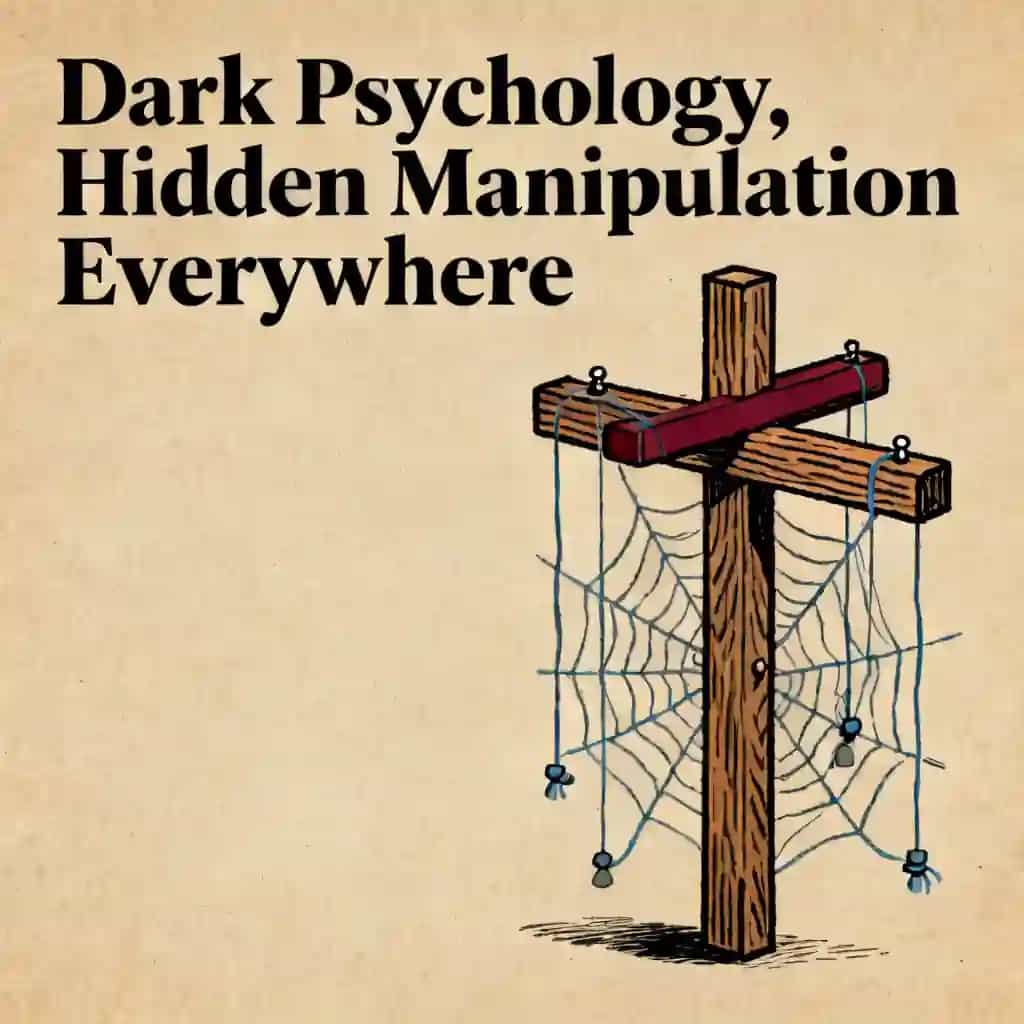
The Hidden Hand: Decoding the Psychology of Manipulation
Explore the thin line between healthy persuasion and psychological control. This episode uncovers the subtle tactics used to distort reality and provides tools to build your mental firewall.

Meilleure citation de The Hidden Hand: Decoding the Psychology of Manipulation
Manipulation is the difference between asking for a hand up and making you feel like you’re the cause of my fall so that you feel obligated to pull me up. It’s about the intent: persuasion seeks a win-win, while manipulation prioritizes the manipulator’s agenda at your expense.
Generated by Jonathan
Munipulation

Foire aux questions
The distinction lies in intent, transparency, and the outcome for both parties. In healthy persuasion, the process is transparent; the person making the request provides all the facts, allowing the other individual to make an autonomous decision that ideally results in a win-win. Manipulation, conversely, prioritizes the manipulator’s agenda at the other person's expense, often using distorted information, emotional exploitation, or power imbalances to guide someone toward a destination they didn't consciously choose.
DARVO is an acronym for Deny, Attack, and Reverse Victim and Offender. When a manipulator is confronted with their behavior, they first deny the event occurred. They then attack the credibility of the person confronting them, labeling them as "dramatic" or "sensitive." Finally, they reverse the roles so that they appear to be the victim of unfair accusations. This often results in a "blame flip," where the original accuser ends up apologizing to the manipulator.
Love bombing is an intense display of affection and flattery used at the start of a relationship to establish a deep bond before a person can form normal boundaries. Once the victim is "hooked" on this high level of validation, the manipulator switches to intermittent reinforcement, where affection becomes unpredictable. This creates a dependency where the victim will tolerate negative behavior or mistreatment in the hopes of receiving that initial "love bomb" feeling again.
Building a firewall begins with self-awareness and identifying your own psychological vulnerabilities, such as a high need for approval or a fear of conflict. Practical steps include grounding yourself in facts by documenting conversations to counter gaslighting, practicing assertive communication using "I" statements, and setting firm boundaries. Additionally, seeking external validation from a trusted support system or therapist can provide an objective reality check to break the isolation that manipulators often rely on.
Manipulation is often driven by "Dark Triad" traits—narcissism, Machiavellianism, and psychopathy—or learned as a survival mechanism in dysfunctional upbringings. While individuals with these traits often view manipulation as a useful asset, research suggests they can change by practicing "agreeable behaviors," such as acts of kindness or charity. Over time, manually changing these behaviors can shift their personality and help them learn empathy through a "back door" approach.
Cree par des anciens de Columbia University a San Francisco
"Instead of endless scrolling, I just hit play on BeFreed. It saves me so much time."


"I never knew where to start with nonfiction—BeFreed’s book lists turned into podcasts gave me a clear path."


"Perfect balance between learning and entertainment. Finished ‘Thinking, Fast and Slow’ on my commute this week."
"Crazy how much I learned while walking the dog. BeFreed = small habits → big gains."
"Reading used to feel like a chore. Now it’s just part of my lifestyle."

"Feels effortless compared to reading. I’ve finished 6 books this month already."
"BeFreed turned my guilty doomscrolling into something that feels productive and inspiring."

"BeFreed turned my commute into learning time. 20-min podcasts are perfect for finishing books I never had time for."
"BeFreed replaced my podcast queue. Imagine Spotify for books — that’s it. 🙌"

"It is great for me to learn something from the book without reading it."
"The themed book list podcasts help me connect ideas across authors—like a guided audio journey."
"Makes me feel smarter every time before going to work"
Cree par des anciens de Columbia University a San Francisco
"Instead of endless scrolling, I just hit play on BeFreed. It saves me so much time."
"I never knew where to start with nonfiction—BeFreed’s book lists turned into podcasts gave me a clear path."
"Perfect balance between learning and entertainment. Finished ‘Thinking, Fast and Slow’ on my commute this week."
"Crazy how much I learned while walking the dog. BeFreed = small habits → big gains."
"Reading used to feel like a chore. Now it’s just part of my lifestyle."
"Feels effortless compared to reading. I’ve finished 6 books this month already."
"BeFreed turned my guilty doomscrolling into something that feels productive and inspiring."
"BeFreed turned my commute into learning time. 20-min podcasts are perfect for finishing books I never had time for."
"BeFreed replaced my podcast queue. Imagine Spotify for books — that’s it. 🙌"
"It is great for me to learn something from the book without reading it."
"The themed book list podcasts help me connect ideas across authors—like a guided audio journey."
"Makes me feel smarter every time before going to work"
"Instead of endless scrolling, I just hit play on BeFreed. It saves me so much time."
"I never knew where to start with nonfiction—BeFreed’s book lists turned into podcasts gave me a clear path."
"Perfect balance between learning and entertainment. Finished ‘Thinking, Fast and Slow’ on my commute this week."
"Crazy how much I learned while walking the dog. BeFreed = small habits → big gains."
"Reading used to feel like a chore. Now it’s just part of my lifestyle."
"Feels effortless compared to reading. I’ve finished 6 books this month already."
"BeFreed turned my guilty doomscrolling into something that feels productive and inspiring."
"BeFreed turned my commute into learning time. 20-min podcasts are perfect for finishing books I never had time for."
"BeFreed replaced my podcast queue. Imagine Spotify for books — that’s it. 🙌"
"It is great for me to learn something from the book without reading it."
"The themed book list podcasts help me connect ideas across authors—like a guided audio journey."
"Makes me feel smarter every time before going to work"
"Instead of endless scrolling, I just hit play on BeFreed. It saves me so much time."
"I never knew where to start with nonfiction—BeFreed’s book lists turned into podcasts gave me a clear path."
"Perfect balance between learning and entertainment. Finished ‘Thinking, Fast and Slow’ on my commute this week."
"Crazy how much I learned while walking the dog. BeFreed = small habits → big gains."
"Reading used to feel like a chore. Now it’s just part of my lifestyle."
"Feels effortless compared to reading. I’ve finished 6 books this month already."
"BeFreed turned my guilty doomscrolling into something that feels productive and inspiring."
"BeFreed turned my commute into learning time. 20-min podcasts are perfect for finishing books I never had time for."
"BeFreed replaced my podcast queue. Imagine Spotify for books — that’s it. 🙌"
"It is great for me to learn something from the book without reading it."
"The themed book list podcasts help me connect ideas across authors—like a guided audio journey."
"Makes me feel smarter every time before going to work"