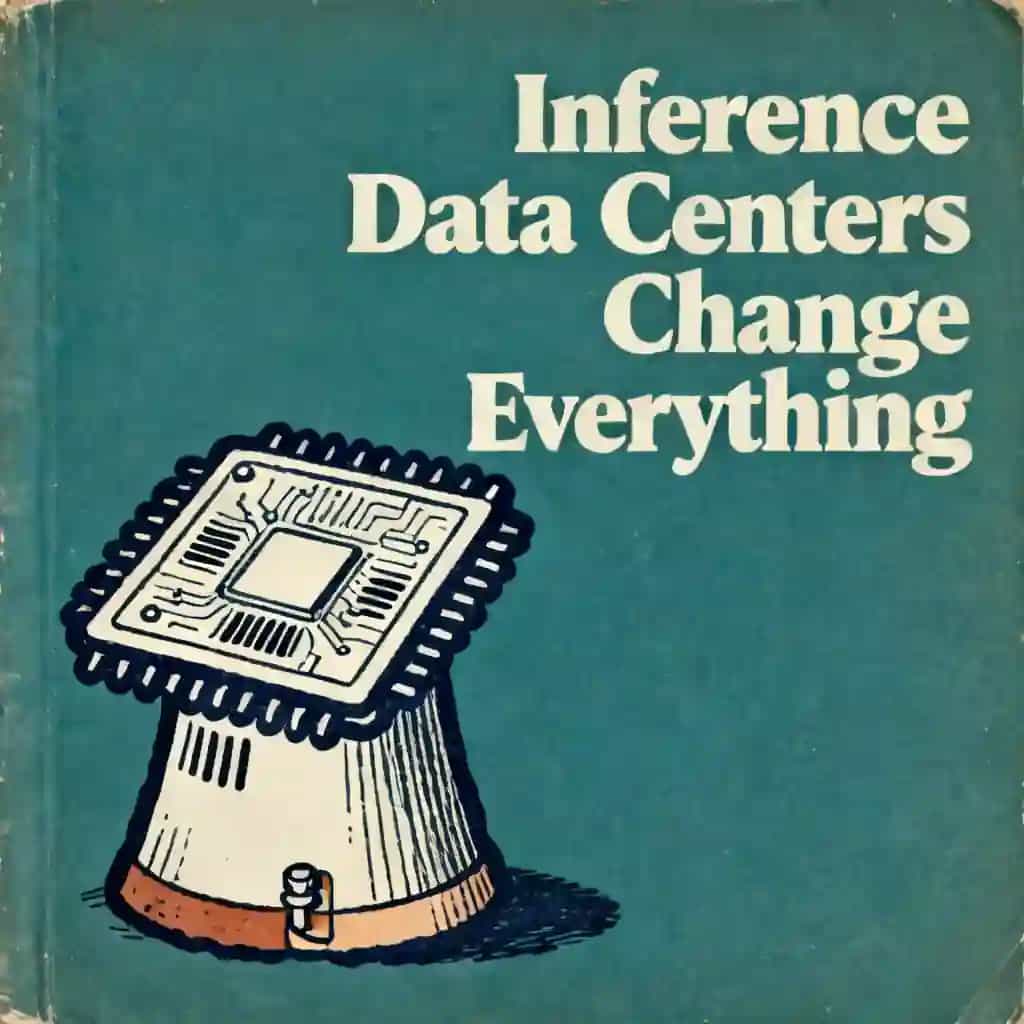
The Architecture of AI: GPU, TPU, and NPU
Standard processors can't keep up with the massive math of AI. Learn how specialized chips are reshaping the global economy and your own devices.
Meilleure citation de The Architecture of AI: GPU, TPU, and NPU
The winner of the 2026 hardware war isn't necessarily the company with the fastest chip, but the one that can provide the best performance per watt per dollar.

Cette leçon audio a été créée par un membre de la communauté BeFreed
GPU vs TPU





Foire aux questions
The Matrix Math problem refers to the logistical challenge of performing billions of simultaneous calculations required by neural networks. While a Central Processing Unit (CPU) is like a highly educated librarian capable of complex sequential logic, it is designed to handle tasks one after another. AI demands that massive amounts of data be multiplied all at once, which overwhelms the CPU's linear processing style. This has necessitated the rise of specialized chips like GPUs, TPUs, and NPUs that are built for parallel processing.
A GPU (Graphics Processing Unit) is a versatile "Swiss Army Knife" with thousands of cores designed for parallelism, making it the flexible default for training various AI models and experimenting with new architectures. In contrast, a TPU (Tensor Processing Unit) is a specialized "supercar" built by Google specifically for tensor mathematics. It uses a "systolic array" architecture where data pulses through a grid of processors rhythmically, reducing the need to constantly access memory. While GPUs offer flexibility across many platforms, TPUs offer superior efficiency and speed for large-scale operations within the Google Cloud ecosystem.
The NPU (Neural Processing Unit) is a highly specialized, energy-efficient chip found in consumer devices like smartphones and laptops. Unlike GPUs that consume hundreds of watts, an NPU sips only a few watts, making it ideal for "inference"—running pre-trained models locally on a device. By handling tasks like facial recognition or voice processing directly on the hardware, NPUs provide better privacy, near-instant response times (low latency), and zero cloud-computing costs for the developer.
Quantization is the process of shrinking an AI model by using lower-precision numbers, such as INT8 instead of long decimals, to perform calculations. This is a key technique used by NPUs to run sophisticated models on small devices. While high precision is necessary for the "surgeon-like" work of training a model on a GPU or TPU, "good enough" precision allows an NPU to execute math with fewer transistors and significantly less power, enabling AI to run all day on a single battery charge.
The "NVIDIA tax" refers to the high cost and massive profit margins associated with buying industry-standard NVIDIA GPUs. Because these chips are expensive and in high demand, major "Hyperscalers" like Google, Amazon, and Meta are increasingly designing their own custom silicon to save money. This shift is driven by the "Inference Tipping Point," where the ongoing cost of serving AI answers to millions of users outweighs the one-time cost of training the model, making custom, specialized hardware a competitive necessity.
Découvrir plus

how does gpu work
how does gpu work
As data-driven industries shift toward parallel computing, understanding GPU architecture is essential for developers and tech enthusiasts. This plan bridges the gap between basic hardware knowledge and advanced applications in AI and graphics, making it ideal for anyone pursuing a career in high-performance computing.

To build a new ai acitecture
To build a new ai acitecture
This curriculum is essential for engineers and researchers aiming to move beyond pre-built models to architecting original AI systems. It provides the technical depth required to design scalable, agentic, and transformer-based solutions for the next generation of intelligent software.

Become pro AI architect
Become pro AI architect
AI architecture has become one of the most critical and high-demand skills as organizations race to integrate intelligent systems into their products and operations. This learning path is designed for software engineers, data scientists, and technical professionals who want to move beyond basic AI implementation to become strategic architects capable of designing sophisticated, production-grade AI systems that solve complex business problems.

Deep Dive: AI Architecture & Model Training
Deep Dive: AI Architecture & Model Training
This comprehensive path is essential for engineers and data scientists looking to move beyond basic scripts into architectural design. It provides the technical depth needed to build, optimize, and scale robust AI systems in professional environments.
Learn AI and expand systems knowledge
Learn AI and expand systems knowledge
This plan bridges the gap between theoretical AI and production-level systems engineering. It is ideal for software engineers or data scientists looking to architect and deploy scalable, AI-driven applications in real-world environments.
AI & Machine/Deep Learning
AI & Machine/Deep Learning
This comprehensive learning plan is essential for anyone looking to understand and work with the technologies reshaping our world. Whether you're a software engineer expanding into AI, a data professional seeking deeper technical knowledge, or a technical leader needing to understand AI capabilities, this path takes you from foundational concepts through advanced implementations to future-focused perspectives on where AI is heading.
Learn about AI
Learn about AI
As AI continues to transform every industry, understanding its technical foundations and ethical implications is essential for any modern professional. This plan is ideal for aspiring developers and curious innovators who want to move beyond the hype to build and manage intelligent systems responsibly.
Explore Local AI Models and Infrastructure
Explore Local AI Models and Infrastructure
This plan is essential for developers and IT architects who need to maintain data sovereignty while leveraging powerful AI capabilities. It bridges the gap between theoretical model building and the practical infrastructure required to run private, secure, and automated AI systems.
Cree par des anciens de Columbia University a San Francisco
"Instead of endless scrolling, I just hit play on BeFreed. It saves me so much time."


"I never knew where to start with nonfiction—BeFreed’s book lists turned into podcasts gave me a clear path."


"Perfect balance between learning and entertainment. Finished ‘Thinking, Fast and Slow’ on my commute this week."
"Crazy how much I learned while walking the dog. BeFreed = small habits → big gains."
"Reading used to feel like a chore. Now it’s just part of my lifestyle."

"Feels effortless compared to reading. I’ve finished 6 books this month already."
"BeFreed turned my guilty doomscrolling into something that feels productive and inspiring."

"BeFreed turned my commute into learning time. 20-min podcasts are perfect for finishing books I never had time for."
"BeFreed replaced my podcast queue. Imagine Spotify for books — that’s it. 🙌"

"It is great for me to learn something from the book without reading it."
"The themed book list podcasts help me connect ideas across authors—like a guided audio journey."
"Makes me feel smarter every time before going to work"
Cree par des anciens de Columbia University a San Francisco
"Instead of endless scrolling, I just hit play on BeFreed. It saves me so much time."
"I never knew where to start with nonfiction—BeFreed’s book lists turned into podcasts gave me a clear path."
"Perfect balance between learning and entertainment. Finished ‘Thinking, Fast and Slow’ on my commute this week."
"Crazy how much I learned while walking the dog. BeFreed = small habits → big gains."
"Reading used to feel like a chore. Now it’s just part of my lifestyle."
"Feels effortless compared to reading. I’ve finished 6 books this month already."
"BeFreed turned my guilty doomscrolling into something that feels productive and inspiring."
"BeFreed turned my commute into learning time. 20-min podcasts are perfect for finishing books I never had time for."
"BeFreed replaced my podcast queue. Imagine Spotify for books — that’s it. 🙌"
"It is great for me to learn something from the book without reading it."
"The themed book list podcasts help me connect ideas across authors—like a guided audio journey."
"Makes me feel smarter every time before going to work"
"Instead of endless scrolling, I just hit play on BeFreed. It saves me so much time."
"I never knew where to start with nonfiction—BeFreed’s book lists turned into podcasts gave me a clear path."
"Perfect balance between learning and entertainment. Finished ‘Thinking, Fast and Slow’ on my commute this week."
"Crazy how much I learned while walking the dog. BeFreed = small habits → big gains."
"Reading used to feel like a chore. Now it’s just part of my lifestyle."
"Feels effortless compared to reading. I’ve finished 6 books this month already."
"BeFreed turned my guilty doomscrolling into something that feels productive and inspiring."
"BeFreed turned my commute into learning time. 20-min podcasts are perfect for finishing books I never had time for."
"BeFreed replaced my podcast queue. Imagine Spotify for books — that’s it. 🙌"
"It is great for me to learn something from the book without reading it."
"The themed book list podcasts help me connect ideas across authors—like a guided audio journey."
"Makes me feel smarter every time before going to work"
"Instead of endless scrolling, I just hit play on BeFreed. It saves me so much time."
"I never knew where to start with nonfiction—BeFreed’s book lists turned into podcasts gave me a clear path."
"Perfect balance between learning and entertainment. Finished ‘Thinking, Fast and Slow’ on my commute this week."
"Crazy how much I learned while walking the dog. BeFreed = small habits → big gains."
"Reading used to feel like a chore. Now it’s just part of my lifestyle."
"Feels effortless compared to reading. I’ve finished 6 books this month already."
"BeFreed turned my guilty doomscrolling into something that feels productive and inspiring."
"BeFreed turned my commute into learning time. 20-min podcasts are perfect for finishing books I never had time for."
"BeFreed replaced my podcast queue. Imagine Spotify for books — that’s it. 🙌"
"It is great for me to learn something from the book without reading it."
"The themed book list podcasts help me connect ideas across authors—like a guided audio journey."
"Makes me feel smarter every time before going to work"


![[file_gpu001:c0000] gpu_tpu_lesson_notes.md p1-1](/_next/image?url=https%3A%2F%2Fd1y2du6z1jfm9e.cloudfront.net%2Fassets%2Fpodcast%2Fblue.png&w=1024&q=50)
![[file_gpu001:c0001] gpu_tpu_lesson_notes.md p1-1](/_next/image?url=https%3A%2F%2Fd1y2du6z1jfm9e.cloudfront.net%2Fassets%2Fpodcast%2Fgreen.png&w=1024&q=50)
![[file_gpu001:c0002] gpu_tpu_lesson_notes.md p2-2](/_next/image?url=https%3A%2F%2Fd1y2du6z1jfm9e.cloudfront.net%2Fassets%2Fpodcast%2Fpurple.png&w=1024&q=50)