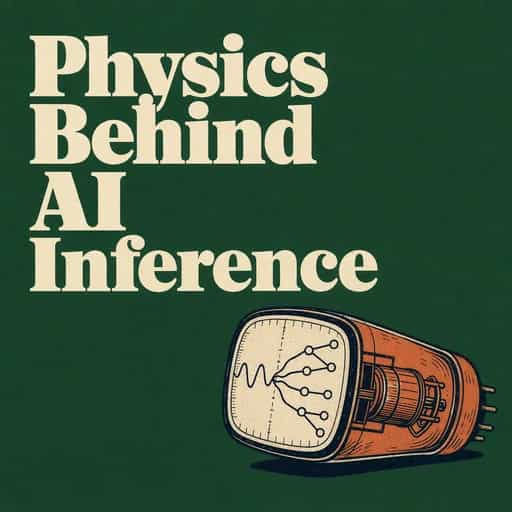
AI Inference Data Centers Are Changing Everything
Traditional server rooms can't handle the high-density power AI requires. Learn how inference is reshaping hardware design and the global power grid.

Meilleure citation de AI Inference Data Centers Are Changing Everything
We are moving away from the 'best-effort' model of the old cloud and into a deterministic world where downtime isn't just an inconvenience—it’s a massive loss of revenue.
Generated by Freedee_A9C1E17C
I would like to learn everything about data centers for AI inference

Foire aux questions
AI training involves "building the brain" by running massive, synchronized jobs for weeks or months to create a model. While training can be done in remote areas with cheap power, inference—the "live" use of the model—requires high-availability architectures and low latency. Because inference must provide real-time responses for users, these data centers are typically built in "Tier 2" markets closer to major fiber backbones and end-users to reduce round-trip time.
Traditional air cooling becomes ineffective once a server rack exceeds 30 to 40 kilowatts of power draw. Modern AI hardware, such as NVIDIA’s Blackwell chips, can pull significantly more power, with single racks reaching up to 130 kilowatts. Liquid cooling, including "direct-to-chip" methods, is nearly 50 percent more energy-efficient than air and is the only way to manage the extreme heat generated by high-density GPU clusters.
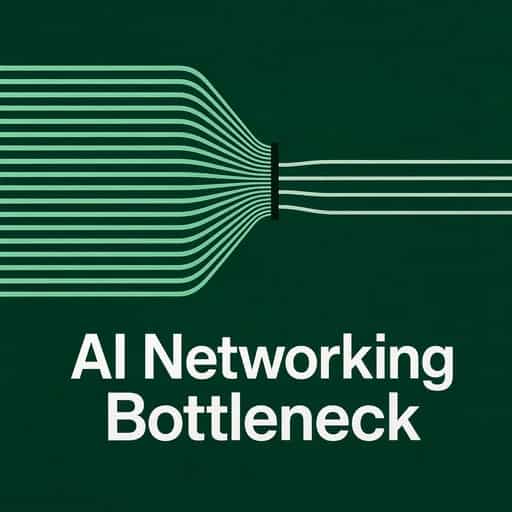
In a standard network, data moves in millions of tiny "mouse flows," but AI operations create "elephant flows"—massive, persistent bursts of data that can clog specific network paths. If these flows aren't managed, they create traffic jams that leave expensive GPUs idling while they wait for data. To solve this, engineers use "Adaptive Routing" or "Packet Spraying" to split these large flows across all available network links in real-time.
The "memory wall" refers to a bottleneck where the processor's speed outpaces the ability of the memory to provide data. For AI inference, memory bandwidth is often more important than raw compute speed. This is why chips like the NVIDIA H200 focus on increasing memory capacity and bandwidth (using HBM3e memory) rather than just raw math performance, allowing the AI to handle larger "context windows" like entire books or long conversations.
Due to massive power demands and long wait times for new grid connections—sometimes up to seven years—many companies are adopting a "grid-optional" strategy. This involves negotiating directly with power plants or building data centers next to nuclear plants and solar farms. Some are even using on-site generation like natural gas turbines or large-scale batteries to act as a buffer against power surges and oscillations caused by heavy AI workloads.
Cree par des anciens de Columbia University a San Francisco
"Instead of endless scrolling, I just hit play on BeFreed. It saves me so much time."


"I never knew where to start with nonfiction—BeFreed’s book lists turned into podcasts gave me a clear path."


"Perfect balance between learning and entertainment. Finished ‘Thinking, Fast and Slow’ on my commute this week."
"Crazy how much I learned while walking the dog. BeFreed = small habits → big gains."
"Reading used to feel like a chore. Now it’s just part of my lifestyle."

"Feels effortless compared to reading. I’ve finished 6 books this month already."
"BeFreed turned my guilty doomscrolling into something that feels productive and inspiring."

"BeFreed turned my commute into learning time. 20-min podcasts are perfect for finishing books I never had time for."
"BeFreed replaced my podcast queue. Imagine Spotify for books — that’s it. 🙌"

"It is great for me to learn something from the book without reading it."
"The themed book list podcasts help me connect ideas across authors—like a guided audio journey."
"Makes me feel smarter every time before going to work"
 Ask ChatGPT
 Ask Claude
Cree par des anciens de Columbia University a San Francisco
"Instead of endless scrolling, I just hit play on BeFreed. It saves me so much time."
"I never knew where to start with nonfiction—BeFreed’s book lists turned into podcasts gave me a clear path."
"Perfect balance between learning and entertainment. Finished ‘Thinking, Fast and Slow’ on my commute this week."
"Crazy how much I learned while walking the dog. BeFreed = small habits → big gains."
"Reading used to feel like a chore. Now it’s just part of my lifestyle."
"Feels effortless compared to reading. I’ve finished 6 books this month already."
"BeFreed turned my guilty doomscrolling into something that feels productive and inspiring."
"BeFreed turned my commute into learning time. 20-min podcasts are perfect for finishing books I never had time for."
"BeFreed replaced my podcast queue. Imagine Spotify for books — that’s it. 🙌"
"It is great for me to learn something from the book without reading it."
"The themed book list podcasts help me connect ideas across authors—like a guided audio journey."
"Makes me feel smarter every time before going to work"
"Instead of endless scrolling, I just hit play on BeFreed. It saves me so much time."
"I never knew where to start with nonfiction—BeFreed’s book lists turned into podcasts gave me a clear path."
"Perfect balance between learning and entertainment. Finished ‘Thinking, Fast and Slow’ on my commute this week."
"Crazy how much I learned while walking the dog. BeFreed = small habits → big gains."
"Reading used to feel like a chore. Now it’s just part of my lifestyle."
"Feels effortless compared to reading. I’ve finished 6 books this month already."
"BeFreed turned my guilty doomscrolling into something that feels productive and inspiring."
"BeFreed turned my commute into learning time. 20-min podcasts are perfect for finishing books I never had time for."
"BeFreed replaced my podcast queue. Imagine Spotify for books — that’s it. 🙌"
"It is great for me to learn something from the book without reading it."
"The themed book list podcasts help me connect ideas across authors—like a guided audio journey."
"Makes me feel smarter every time before going to work"
"Instead of endless scrolling, I just hit play on BeFreed. It saves me so much time."
"I never knew where to start with nonfiction—BeFreed’s book lists turned into podcasts gave me a clear path."
"Perfect balance between learning and entertainment. Finished ‘Thinking, Fast and Slow’ on my commute this week."
"Crazy how much I learned while walking the dog. BeFreed = small habits → big gains."
"Reading used to feel like a chore. Now it’s just part of my lifestyle."
"Feels effortless compared to reading. I’ve finished 6 books this month already."
"BeFreed turned my guilty doomscrolling into something that feels productive and inspiring."
"BeFreed turned my commute into learning time. 20-min podcasts are perfect for finishing books I never had time for."
"BeFreed replaced my podcast queue. Imagine Spotify for books — that’s it. 🙌"
"It is great for me to learn something from the book without reading it."
"The themed book list podcasts help me connect ideas across authors—like a guided audio journey."
"Makes me feel smarter every time before going to work"


![[51beafc9-04c8-4a6a-9aa2-a4b330db9827:c0000] The biggest computers in the world today are basically no… p1-1](/_next/image?url=https%3A%2F%2Fd1y2du6z1jfm9e.cloudfront.net%2Fassets%2Fpodcast%2Fblue.png&w=1024&q=50)
![[51beafc9-04c8-4a6a-9aa2-a4b330db9827:c0001] The biggest computers in the world today are basically no… p1-1](/_next/image?url=https%3A%2F%2Fd1y2du6z1jfm9e.cloudfront.net%2Fassets%2Fpodcast%2Fyellow.png&w=1024&q=50)