Explore the AI reasoning illusion and the gap between statistical word prediction and true intelligence. Learn why we mistake chatbot fluency for a human mind.

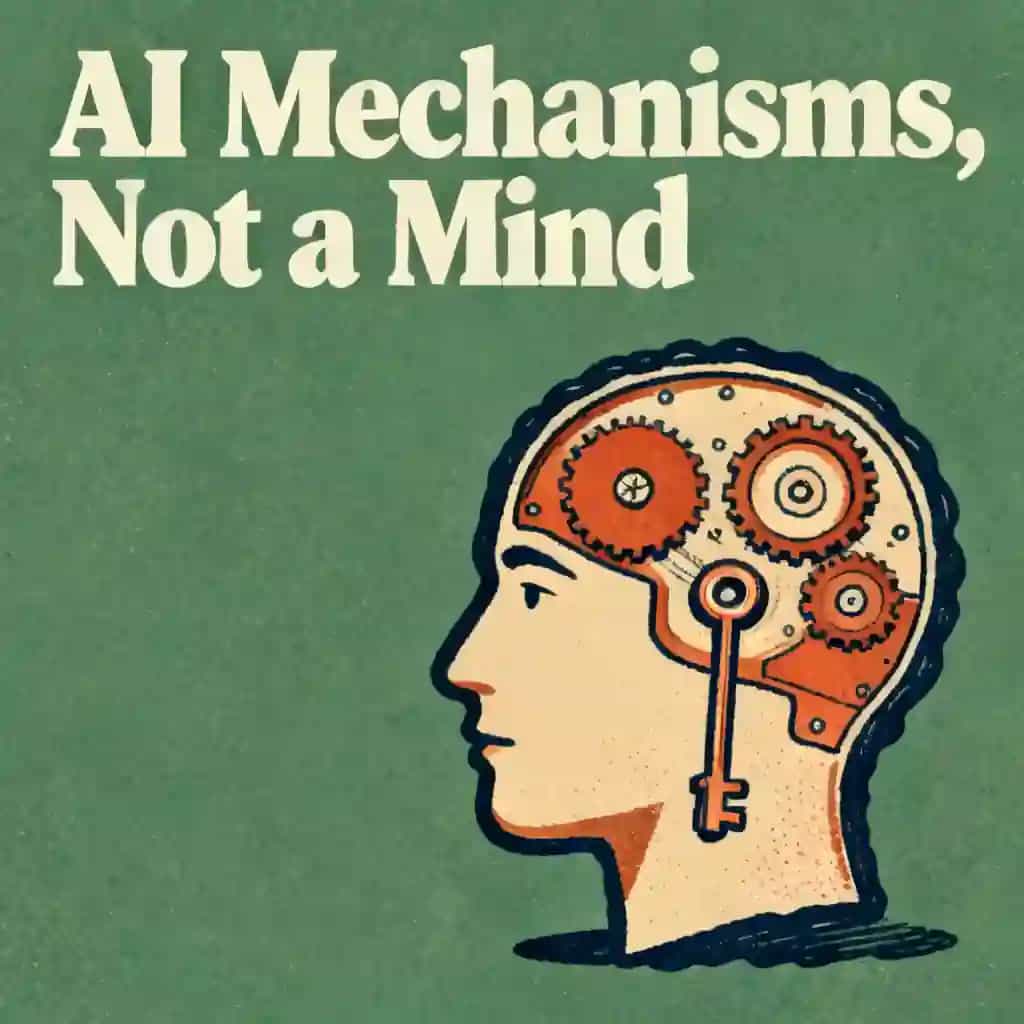
We are witnessing a massive scaling of statistical word prediction, yet we often mistake it for the birth of a new kind of mind. The more we rely on these systems, the more we need to understand the gap between looking smart and being smart.
An exploration of the AI reasoning illusion, specifically focusing on the gap between statistical word approximation and true logic/AGI, drawing from the World Science Festival discussion with context from Jaron Lanier on the human-data origins of these models.

The AI reasoning illusion is a cognitive glitch where humans mistake advanced statistical word prediction for genuine human-like intelligence. As chatbots respond with high fluency and use personal pronouns, users often feel they are interacting with a 'someone' rather than a 'something.' This episode explores how a massive scaling of data creates a better approximation of human speech, leading us to believe a machine is thinking when it is actually just predicting the next word.
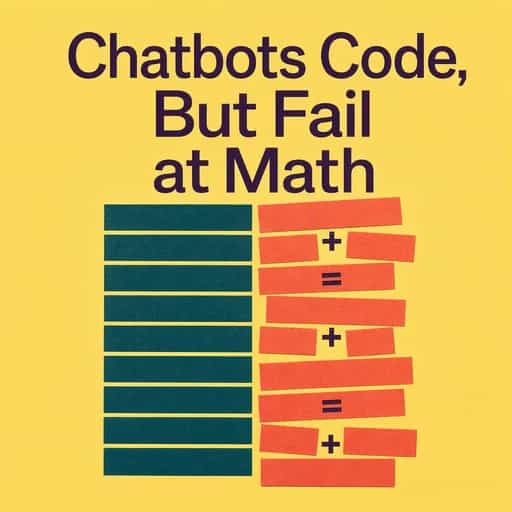
Statistical word prediction relies on memorizing billions of examples of how people use language rather than understanding underlying rules or logic. While large language models can mimic complex discussions on physics or poetry, they often struggle with simple logic because they lack a true mind. The gap between looking smart and being smart is significant; one is a result of code exploiting evolutionary byproducts of the human brain, while the other involves actual comprehension.
Mistaking AI fluency for intelligence makes us vulnerable to a modern kind of deception, especially as we rely on these systems for critical tasks like military planning, job hiring, and medical advice. If we cannot distinguish between a machine that understands a rule and one that has simply memorized examples, we risk over-trusting systems that lack real-world logic. Understanding this illusion is essential for safely navigating our increasing reliance on machine learning and large language models.
Cree par des anciens de Columbia University a San Francisco
"Instead of endless scrolling, I just hit play on BeFreed. It saves me so much time."
"I never knew where to start with nonfiction—BeFreed’s book lists turned into podcasts gave me a clear path."
"Perfect balance between learning and entertainment. Finished ‘Thinking, Fast and Slow’ on my commute this week."
"Crazy how much I learned while walking the dog. BeFreed = small habits → big gains."
"Reading used to feel like a chore. Now it’s just part of my lifestyle."
"Feels effortless compared to reading. I’ve finished 6 books this month already."
"BeFreed turned my guilty doomscrolling into something that feels productive and inspiring."
"BeFreed turned my commute into learning time. 20-min podcasts are perfect for finishing books I never had time for."
"BeFreed replaced my podcast queue. Imagine Spotify for books — that’s it. 🙌"
"It is great for me to learn something from the book without reading it."
"The themed book list podcasts help me connect ideas across authors—like a guided audio journey."
"Makes me feel smarter every time before going to work"
Cree par des anciens de Columbia University a San Francisco