Reclaiming Your Inner Reliability
Discover why self-doubt is a learned protection mechanism and learn practical, neuroscience-backed strategies to silence your inner critic and rebuild self-trust.

Meilleure citation de Reclaiming Your Inner Reliability
Confidence isn't the absence of doubt—it is the presence of self-efficacy. It is the quiet knowing that you can handle whatever comes, built one tiny choice at a time.
Generated by Freedee_95EEA0B0
Why im unable to trust myself and make myself better

Foire aux questions
While self-esteem is often a general feeling of being "great" or having high worth, self-efficacy is a functional trust in your own ability to navigate challenges and affect outcomes. It is the core belief that "I can handle this" rather than just "I feel good about myself." Building self-efficacy requires "earned trust," which is developed brick-by-brick through small actions and experiences rather than through surface-level affirmations.
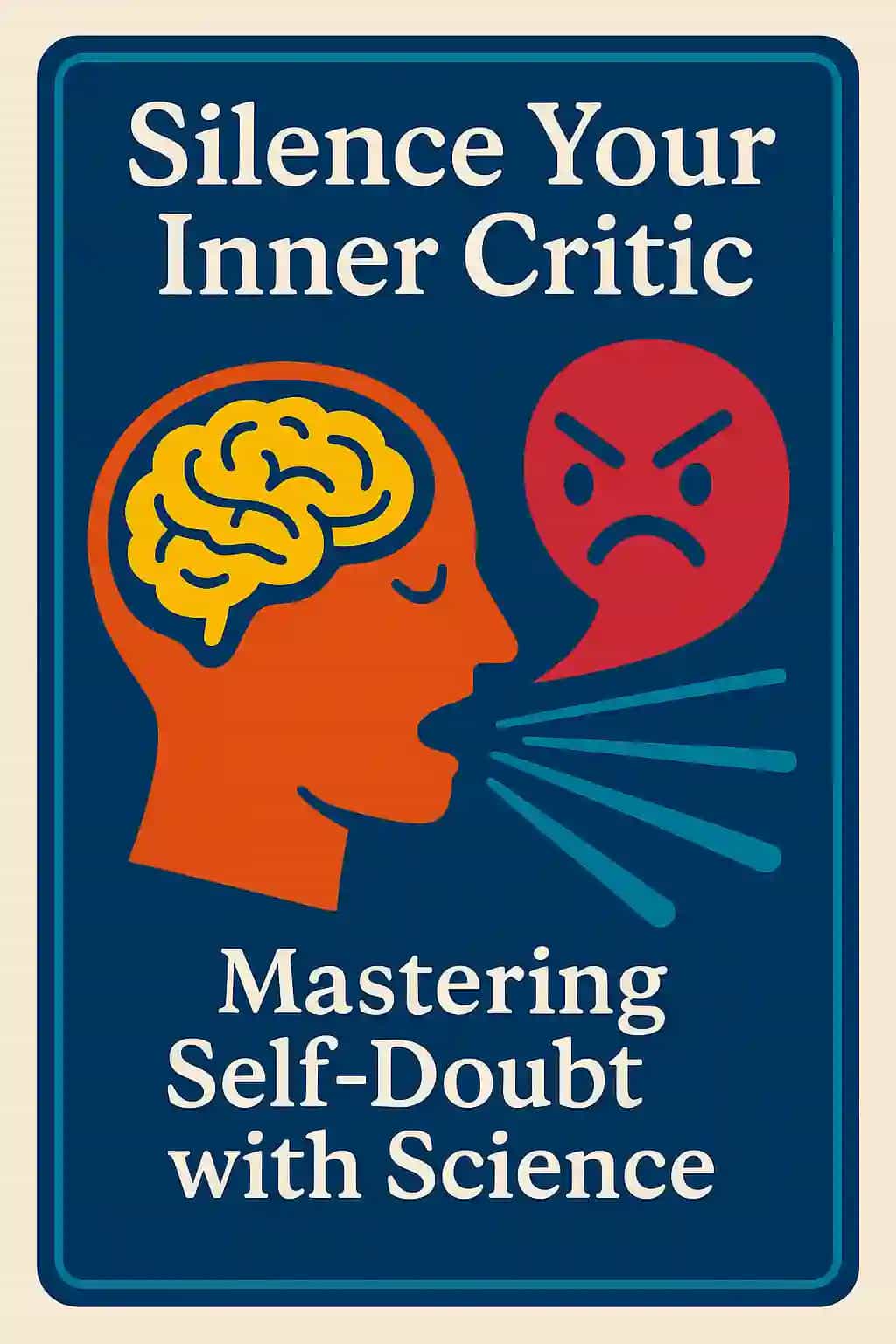
The script explains that chronic self-doubt is often a learned adaptation or a "shield" developed for protection. This often stems from early environments where validation was conditional, leading the brain to associate worth with perfection. Consequently, the "inner critic" creates doubt to stop you from taking risks that might lead to failure or criticism. For those with anxious attachment styles, this manifests as "sign-tracking," or constantly looking to others for approval because internal signals feel unreliable.
Cognitive fusion occurs when you mistake a thought for an absolute fact or prophecy. To break this cycle, the script suggests "cognitive defusion," which involves stepping back to observe thoughts as passing events rather than reality. Instead of saying "I am a failure," you practice saying "I am having the thought that I am a failure." This creates a mental "platform" where you can watch "doubt trains" pull into the station without actually hopping on them.
Micro-experiments are tiny, low-stakes choices designed to help you honor your internal signals instead of following "shoulds" or habits. An example provided is choosing what you actually want for breakfast rather than what you think you "should" eat. These small wins act as a "case study in resilience," providing your brain with physical evidence of your own competence. Over time, these tiny wins compound, allowing you to trust yourself with progressively larger decisions.
Yes, through the principle of neuroplasticity, you can physically change the architecture of your brain. Chronic self-doubt often involves a hyperactive "Default Mode Network" (the part of the brain that ruminates) and a hyper-responsive amygdala (the fear center). Practices like mindfulness meditation, cognitive restructuring, and even physical exercise help strengthen the prefrontal cortex. This allows the logical part of your brain to better regulate emotional spirals and lay down new neural pathways for self-acceptance.
Cree par des anciens de Columbia University a San Francisco
"Instead of endless scrolling, I just hit play on BeFreed. It saves me so much time."


"I never knew where to start with nonfiction—BeFreed’s book lists turned into podcasts gave me a clear path."


"Perfect balance between learning and entertainment. Finished ‘Thinking, Fast and Slow’ on my commute this week."
"Crazy how much I learned while walking the dog. BeFreed = small habits → big gains."
"Reading used to feel like a chore. Now it’s just part of my lifestyle."

"Feels effortless compared to reading. I’ve finished 6 books this month already."
"BeFreed turned my guilty doomscrolling into something that feels productive and inspiring."

"BeFreed turned my commute into learning time. 20-min podcasts are perfect for finishing books I never had time for."
"BeFreed replaced my podcast queue. Imagine Spotify for books — that’s it. 🙌"

"It is great for me to learn something from the book without reading it."
"The themed book list podcasts help me connect ideas across authors—like a guided audio journey."
"Makes me feel smarter every time before going to work"
Cree par des anciens de Columbia University a San Francisco
"Instead of endless scrolling, I just hit play on BeFreed. It saves me so much time."
"I never knew where to start with nonfiction—BeFreed’s book lists turned into podcasts gave me a clear path."
"Perfect balance between learning and entertainment. Finished ‘Thinking, Fast and Slow’ on my commute this week."
"Crazy how much I learned while walking the dog. BeFreed = small habits → big gains."
"Reading used to feel like a chore. Now it’s just part of my lifestyle."
"Feels effortless compared to reading. I’ve finished 6 books this month already."
"BeFreed turned my guilty doomscrolling into something that feels productive and inspiring."
"BeFreed turned my commute into learning time. 20-min podcasts are perfect for finishing books I never had time for."
"BeFreed replaced my podcast queue. Imagine Spotify for books — that’s it. 🙌"
"It is great for me to learn something from the book without reading it."
"The themed book list podcasts help me connect ideas across authors—like a guided audio journey."
"Makes me feel smarter every time before going to work"
"Instead of endless scrolling, I just hit play on BeFreed. It saves me so much time."
"I never knew where to start with nonfiction—BeFreed’s book lists turned into podcasts gave me a clear path."
"Perfect balance between learning and entertainment. Finished ‘Thinking, Fast and Slow’ on my commute this week."
"Crazy how much I learned while walking the dog. BeFreed = small habits → big gains."
"Reading used to feel like a chore. Now it’s just part of my lifestyle."
"Feels effortless compared to reading. I’ve finished 6 books this month already."
"BeFreed turned my guilty doomscrolling into something that feels productive and inspiring."
"BeFreed turned my commute into learning time. 20-min podcasts are perfect for finishing books I never had time for."
"BeFreed replaced my podcast queue. Imagine Spotify for books — that’s it. 🙌"
"It is great for me to learn something from the book without reading it."
"The themed book list podcasts help me connect ideas across authors—like a guided audio journey."
"Makes me feel smarter every time before going to work"
"Instead of endless scrolling, I just hit play on BeFreed. It saves me so much time."
"I never knew where to start with nonfiction—BeFreed’s book lists turned into podcasts gave me a clear path."
"Perfect balance between learning and entertainment. Finished ‘Thinking, Fast and Slow’ on my commute this week."
"Crazy how much I learned while walking the dog. BeFreed = small habits → big gains."
"Reading used to feel like a chore. Now it’s just part of my lifestyle."
"Feels effortless compared to reading. I’ve finished 6 books this month already."
"BeFreed turned my guilty doomscrolling into something that feels productive and inspiring."
"BeFreed turned my commute into learning time. 20-min podcasts are perfect for finishing books I never had time for."
"BeFreed replaced my podcast queue. Imagine Spotify for books — that’s it. 🙌"
"It is great for me to learn something from the book without reading it."
"The themed book list podcasts help me connect ideas across authors—like a guided audio journey."
"Makes me feel smarter every time before going to work"