Reclaiming Your Inner Compass: The Path to Self-Trust
Discover why self-doubt is a learned habit rather than a flaw and learn practical, science-backed micro-actions to silence your inner critic and reconnect with your intuition.

Meilleure citation de Reclaiming Your Inner Compass: The Path to Self-Trust
Self-trust isn't just about believing you’ll always make the 'right' choice; it’s about believing you’ll be okay even if you make the 'wrong' one. It is the quiet knowing that you won't abandon yourself when things get tough.
Generated by Freedee_95EEA0B0
Why im unable to trust myself and make myself better

Foire aux questions
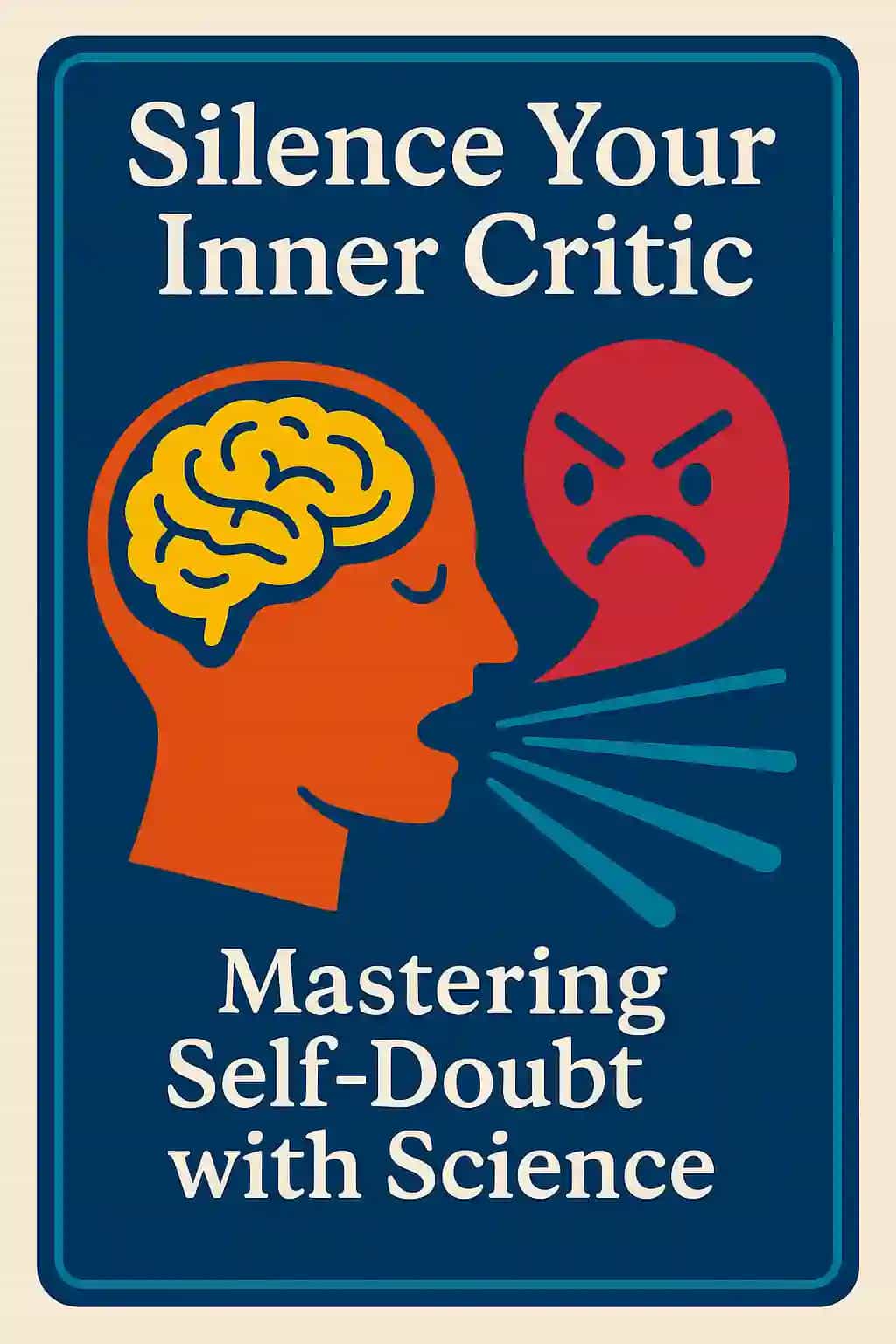
The script distinguishes between these two internal signals based on their tone and physical impact. The fear voice, often associated with anxiety, is typically loud, urgent, harsh, and focused on avoiding pain or judgment. In contrast, intuition or the "healthy inner voice" is described as quiet, steady, and grounded in personal values. Physically, intuition often feels "expansive," like a sense of relief or opening up, while fear feels "constricting," manifesting as tension in the chest or shoulders.
Self-doubt is often a learned adaptation rooted in early relationships with caregivers. If a caregiver was inconsistent or unresponsive, a child might learn that the world is unpredictable, leading to an unreliable relationship with their own judgment. Those with anxious attachment may grow up to be preoccupied with external approval, while those with avoidant attachment may develop "compulsive self-sufficiency," suppressing their emotions and refusing to ask for help because they don't trust others or themselves to handle vulnerability.
Cognitive fusion is the psychological state of becoming entangled in one's thoughts to the point where they are perceived as absolute truths rather than just mental events. When a person is fused with a negative thought like "I am a failure," they don't see it as a passing idea; they believe they are already failing. This fusion makes it difficult to distinguish between reality and the inner critic, leading to a cycle of overthinking and paralysis.
Overachievement can act as a mask for "Imposter Syndrome" or deep-seated insecurity. Because an individual doubts that their regular, everyday efforts are sufficient, they exert superhuman effort to prevent any possible mistake. This doesn't actually build self-trust; instead, it creates a "shaky emotional foundation" where success is attributed to luck or external factors rather than personal skill, leading to constant stress and the fear of being "found out."
Micro-experiments are small, manageable actions taken to challenge self-doubt and build "self-efficacy," which is the earned trust in one's ability to handle outcomes. Rather than making massive life changes, these experiments involve tiny risks—like speaking up in a meeting or saying "no" to a small request. These actions provide a "trust track record" or physical evidence of resilience, proving to the nervous system that one can survive discomfort or mistakes without collapsing.
Cree par des anciens de Columbia University a San Francisco
"Instead of endless scrolling, I just hit play on BeFreed. It saves me so much time."


"I never knew where to start with nonfiction—BeFreed’s book lists turned into podcasts gave me a clear path."


"Perfect balance between learning and entertainment. Finished ‘Thinking, Fast and Slow’ on my commute this week."
"Crazy how much I learned while walking the dog. BeFreed = small habits → big gains."
"Reading used to feel like a chore. Now it’s just part of my lifestyle."

"Feels effortless compared to reading. I’ve finished 6 books this month already."
"BeFreed turned my guilty doomscrolling into something that feels productive and inspiring."

"BeFreed turned my commute into learning time. 20-min podcasts are perfect for finishing books I never had time for."
"BeFreed replaced my podcast queue. Imagine Spotify for books — that’s it. 🙌"

"It is great for me to learn something from the book without reading it."
"The themed book list podcasts help me connect ideas across authors—like a guided audio journey."
"Makes me feel smarter every time before going to work"
Cree par des anciens de Columbia University a San Francisco
"Instead of endless scrolling, I just hit play on BeFreed. It saves me so much time."
"I never knew where to start with nonfiction—BeFreed’s book lists turned into podcasts gave me a clear path."
"Perfect balance between learning and entertainment. Finished ‘Thinking, Fast and Slow’ on my commute this week."
"Crazy how much I learned while walking the dog. BeFreed = small habits → big gains."
"Reading used to feel like a chore. Now it’s just part of my lifestyle."
"Feels effortless compared to reading. I’ve finished 6 books this month already."
"BeFreed turned my guilty doomscrolling into something that feels productive and inspiring."
"BeFreed turned my commute into learning time. 20-min podcasts are perfect for finishing books I never had time for."
"BeFreed replaced my podcast queue. Imagine Spotify for books — that’s it. 🙌"
"It is great for me to learn something from the book without reading it."
"The themed book list podcasts help me connect ideas across authors—like a guided audio journey."
"Makes me feel smarter every time before going to work"
"Instead of endless scrolling, I just hit play on BeFreed. It saves me so much time."
"I never knew where to start with nonfiction—BeFreed’s book lists turned into podcasts gave me a clear path."
"Perfect balance between learning and entertainment. Finished ‘Thinking, Fast and Slow’ on my commute this week."
"Crazy how much I learned while walking the dog. BeFreed = small habits → big gains."
"Reading used to feel like a chore. Now it’s just part of my lifestyle."
"Feels effortless compared to reading. I’ve finished 6 books this month already."
"BeFreed turned my guilty doomscrolling into something that feels productive and inspiring."
"BeFreed turned my commute into learning time. 20-min podcasts are perfect for finishing books I never had time for."
"BeFreed replaced my podcast queue. Imagine Spotify for books — that’s it. 🙌"
"It is great for me to learn something from the book without reading it."
"The themed book list podcasts help me connect ideas across authors—like a guided audio journey."
"Makes me feel smarter every time before going to work"
"Instead of endless scrolling, I just hit play on BeFreed. It saves me so much time."
"I never knew where to start with nonfiction—BeFreed’s book lists turned into podcasts gave me a clear path."
"Perfect balance between learning and entertainment. Finished ‘Thinking, Fast and Slow’ on my commute this week."
"Crazy how much I learned while walking the dog. BeFreed = small habits → big gains."
"Reading used to feel like a chore. Now it’s just part of my lifestyle."
"Feels effortless compared to reading. I’ve finished 6 books this month already."
"BeFreed turned my guilty doomscrolling into something that feels productive and inspiring."
"BeFreed turned my commute into learning time. 20-min podcasts are perfect for finishing books I never had time for."
"BeFreed replaced my podcast queue. Imagine Spotify for books — that’s it. 🙌"
"It is great for me to learn something from the book without reading it."
"The themed book list podcasts help me connect ideas across authors—like a guided audio journey."
"Makes me feel smarter every time before going to work"